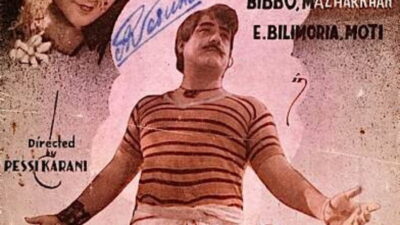
गीत विंग · गीत-पट्टिका · Song Plate
आये अकेला जाये अकेला चार दिनों का मेला
Aaye Akela Jaaye Akela Chaar Dinon Ka Mela
एक शीर्षक-गीत जो फ़िल्म के नाम को एक चिंतन में बदल देता है: हम अकेले आते हैं, अकेले जाते हैं — दुनिया तो बस चार दिनों का मेला है।
भावउदास · दार्शनिक
भाषाhindi गतिमध्यम स्वरूपSolo
श्रेय
The Creditsसूत्र-वाक्य · The Hook
सूत्र-वाक्य
एक शीर्षक-गीत जो फ़िल्म के नाम को एक चिंतन में बदल देता है: हम अकेले आते हैं, अकेले जाते हैं — दुनिया तो बस चार दिनों का मेला है।
In EnglishA title song that turns the film's name into a meditation: we arrive alone, we leave alone — the world is only a four-day fair.
पट्टिका-लेख
The Monographपरिचय Overview
अकेला (1941) का यह शीर्षक-गीत फ़िल्म के अकेलेपन के केंद्रीय विचार को रेखांकित करता है। ख़ान मस्ताना द्वारा संगीतबद्ध और पी. एल. संतोषी के बोलों में — जिन्होंने फ़िल्म के सभी ग्यारह गीत लिखे — यह उस लोकोक्ति-भाव पर टिका है कि मनुष्य संसार में अकेला आता है और अकेला ही जाता है, और संसार बस एक छोटा-सा मेला है। यह गीत लोहार बुधवा के सामाजिक मेलोड्रामा को थामता है, जो शीर्षक का 'अकेला' है।
अंग्रेज़ी में पढ़ें · Read in English
This title song from Akela (1941) frames the film's central idea of solitude. Composed by Khan Mastana to lyrics by P. L. Santoshi — who wrote all eleven songs of the film — it leans on the proverbial sentiment that a person comes into and departs the world alone, the world itself no more than a brief fair. The number anchors the social melodrama of the blacksmith Budhwa, the 'lone one' of the title.
काव्य The Poetry
इस गीत का दार्शनिक भार उत्तर भारतीय लोक-भक्ति विचार के दो सबसे टिकाऊ बिंबों पर टिका है। 'आये अकेला, जाये अकेला' — अकेले आना, अकेले जाना — कबीर की उस अंतर्दृष्टि की प्रतिध्वनि है जो कहती है कि संगति एक भ्रम है: जन्म और मृत्यु एकाकी यात्राएँ हैं। पी. एल. संतोषी ने इस लोकोक्ति-भाव को थामा और उसे एक अकेले लोहार की फ़िल्म का भावनात्मक केंद्र बनाया, एक आध्यात्मिक सत्य को चरित्र-विशिष्ट करुणा में रूपांतरित किया। दूसरा बिंब, 'चार दिनों का मेला' — उतना ही प्राचीन है: एक क्षणभंगुर जमावड़े के रूप में जीवन जो बिखर जाएगा। 'मेला' की छवि इस अमूर्त विचार को एक ठोस, आनंदमय दृश्य में आधारित करती है जो साथ ही अस्थायी भी है — यही गीत की भावनात्मक चाल है: संसार एक गाँव के मेले की तरह सुंदर और संक्षिप्त है। संतोषी ने इस फ़िल्म के सभी ग्यारह गीत लिखे; यह शीर्षक-गीत दार्शनिक गहराई के साथ लोक-स्वर को बनाए रखने की उनकी क्षमता दर्शाता है।
अंग्रेज़ी में पढ़ें · Read in English
The lyric's philosophical weight rests on two of the most durable figures in North Indian folk-devotional thought. 'Aaye akela, jaaye akela' — arriving alone, departing alone — echoes the Kabiran insight that companionship is an illusion: a person's birth and death are solitary journeys. P. L. Santoshi reached for this proverbial wisdom and made it the emotional centre of a film about a lonely blacksmith, transforming a metaphysical truism into a character-specific pathos. The second figure, 'chaar dinon ka mela' — a four-day fair — is equally ancient: life as a transient gathering that will disperse. The mela (fair) image grounds the abstract idea in a concrete, joyful scene that is also temporary, which is exactly the lyric's emotional move: the world is beautiful and brief, like a village fair that comes and goes. Santoshi wrote all eleven songs in this film; this title song shows his capacity for philosophical depth without obscuring the folk register.
कहानी The Story
अकेला (1941) के. बी. देसाई प्रोडक्शन्स द्वारा ग्रेट इंडिया पिक्चर्स के बैनर तले निर्मित और पेसी करानी निर्देशित फ़िल्म थी। इसमें बिब्बो, मज़हर ख़ान, ई. बिलिमोरिया, मिस मोती, प्रतिमा देवी, बोस और मोहम्मद हादी थे। कहानी बुधवा (मज़हर ख़ान) की थी — एक ईमानदार लोहार जिसका बदसूरत रूप उसे महिलाओं के पास जाने से झिझकाता है; एक पक्षी-प्रेमी उसके विवाह का प्रश्न उठाता है, बुधवा धीरे-धीरे संगाती की आशा की ओर आकर्षित होता है, और फ़िल्म उसकी अकेलेपन की दशा को गर्मजोशी से दिखाती है। उस दौर की समीक्षाओं में इसे 'बुद्धिजीवियों और आम जन दोनों के लिए एक समझदार चित्र' कहा गया। ख़ान मस्ताना ने संगीत रचा; पी. एल. संतोषी ने फ़िल्म के सभी ग्यारह गीत लिखे — एक असामान्य रूप से पूर्ण एकल-गीतकार कमीशन। 'आये अकेला जाये अकेला चार दिनों का मेला' फ़िल्म का शीर्षक-गीत है, जो बुधवा की स्थिति का दार्शनिक सार व्यक्त करता है: हम संसार में अकेले आते हैं, अकेले जाते हैं, और संसार स्वयं बस चार दिनों का मेला है।
अंग्रेज़ी में पढ़ें · Read in English
Akela (1941) was produced by K. B. Desai Productions under the banner of Great India Pictures and directed by Pessi Karani. The film starred Bibbo, Mazhar Khan, E. Billimoria, Miss Moti, Pratima Devi, Bose, and Mohammed Hadi. Its story followed Budhwa (Mazhar Khan), an honest blacksmith whose ugly appearance made him shy around women; a bird fancier raises the question of Budhwa's marriage, Budhwa warms to the prospect of companionship, and the film traces his solitary predicament with warmth and social observation. The film was described in contemporary notices as 'a sensible picture for the intelligentsia and the masses' and achieved commercial success. Khan Mastana composed the music; P. L. Santoshi wrote all eleven of the film's songs — an unusually complete single-lyricist commission. 'Aaye Akela Jaaye Akela Chaar Dinon Ka Mela' is the film's title song, expressing the philosophical heart of Budhwa's situation: we arrive in the world alone, we depart alone, and the world itself is only a four-day fair.
वर्गीकरण
Classification- Tempo
- Medium
Genre
अन्य विवरण
More Details- https://en.wikipedia.org/wiki/Akela_(film)
- https://atulmovies.wordpress.com/2013/01/21/akela-1941/
- https://www.hindigeetmala.net/singer/khan_mastana.php
References
रोचक तथ्य
Margin Notesपी.एल. संतोषी (1906–1978) ने अकेला (1941) के सभी 11 गीत लिखे — यह एक असामान्य व्यवस्था थी, जिसने फ़िल्म के साउंडट्रैक को असाधारण विषयगत एकसूत्रता दी; आगे चलकर उन्होंने बरसात (1949) और आवारा (1951) जैसी ऐतिहासिक फ़िल्मों के लिए भी लेखन किया।
अंग्रेज़ी में पढ़ें · Read in English
P. L. Santoshi (1906–1978) wrote all eleven songs of Akela (1941), an unusual arrangement that gave the film's soundtrack unusual thematic cohesion; he later wrote for landmark films including Barsaat (1949) and Awara (1951).
इस फ़िल्म में मज़हर ख़ान की मुख्य भूमिका थी, जो आरंभिक हिंदी सिनेमा के सर्वाधिक बहुमुखी चरित्र अभिनेताओं में से एक थे और उसी वर्ष वी. शांताराम की ऐतिहासिक फ़िल्म पड़ोसी (1941) में भी नज़र आये।
अंग्रेज़ी में पढ़ें · Read in English
The film starred Mazhar Khan, one of early Hindi cinema's most versatile character actors, who also appeared in Padosi (1941), V. Shantaram's landmark film, the same year.
ख़ान मस्ताना ने 1940 के दशक की कई प्रस्तुतियों में संगीत निर्देशक और अभिनेता — दोनों भूमिकाएँ निभाईं, और उस दौर के कलाकार-संगीतकार की परंपरा के अनुरूप रचना व प्रस्तुति को एक साथ जोड़ा।
अंग्रेज़ी में पढ़ें · Read in English
Khan Mastana served as both music director and actor in several 1940s productions, blending composing with performance in the tradition of the period's artist-musician.
अकेला की कथा — एक अकेले लुहार को साथी मिलने की — को समकालीनों ने 'बुद्धिजीवियों और आम जनता, दोनों के लिए एक समझदार फ़िल्म' कहकर सराहा था — यह असामान्य प्रशंसा फ़िल्म की वर्ग-निरपेक्ष लोकप्रियता की ओर संकेत करती है।
अंग्रेज़ी में पढ़ें · Read in English
Akela's narrative of a lonely blacksmith finding companionship was described by contemporaries as 'a sensible picture for the intelligentsia and the masses' — unusual praise suggesting cross-class appeal.
नमूना-पट्टी
The Specimen Table| शीर्षक | आये अकेला जाये अकेला चार दिनों का मेला · Aaye Akela Jaaye Akela Chaar Dinon Ka Mela |
|---|---|
| फ़िल्म | अकेला · 1941 |
| वर्ष · युग | 1941 |
| गीतकार | P.L. Santoshi |
| संगीतकार | Khan Mastana |
| स्वरूप | Solo |
| गति | मध्यम |
| भाषा | hindi |
| भाव | उदास · दार्शनिक |
| बोल-स्थिति | केवल झलक |
जुड़े हुए पन्ने
Connected Plates · The Graph Made Visibleअटलस में कोई पन्ना अकेला नहीं — इस गीत से जुड़े गीत, कलाकार, फ़िल्म, राग-ताल-विधा, सब यहाँ से खुलते हैं।
कलाकार · The Artists
फ़िल्म · The Film
साझा कीजिए · Share this Plate