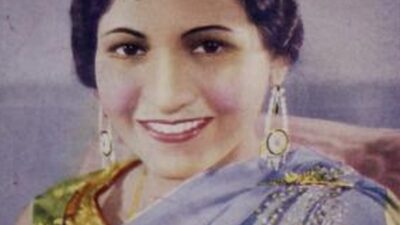
गीत विंग · गीत-पट्टिका · Song Plate
आँख मिला के बलमा मत आँख चुराना
Aankh Mila Ke Balma Mat Aankh Churana
सोलह बरस की सुरैया अपने प्रियतम से कहती हैं कि जो नज़र एक बार मिल गई, उसे चुपचाप वापस नहीं लिया जा सकता।
भावमीठा-कड़वा · रोमांटिक
भाषाhindi गतिधीमी स्वरूपएकल महिला
श्रेय
The Creditsसूत्र-वाक्य · The Hook
सूत्र-वाक्य
सोलह बरस की सुरैया अपने प्रियतम से कहती हैं कि जो नज़र एक बार मिल गई, उसे चुपचाप वापस नहीं लिया जा सकता।
In EnglishSixteen-year-old Suraiya telling a lover that a glance, once given, cannot be quietly taken back.
पट्टिका-लेख
The Monographपरिचय Overview
'मैं क्या करूँ' (1945) का सुरैया का एकल, बोल डी. एन. माधोक के और संगीत नीनू मजूमदार का। पूरा तर्क शीर्षक में ही है: नज़र मिला लेने के बाद बलमा अब नज़र नहीं चुरा सकता। हिंदीगीतमाला इसे संक्षिप्त रूप 'आँख मिला के' के नाम से दर्ज करती है; संग्राहक इसे पूरी पहली पंक्ति से पहचानते हैं। फ़िल्म का कोई प्रिंट बचा होना ज्ञात नहीं है, इसलिए यह गीत केवल ध्वनि-रिकॉर्डिंग के रूप में मौजूद है और इसका चित्रांकन कहीं दर्ज नहीं है। जिस संग्राहक ने इसे सूचीबद्ध किया, उनका मानना है कि कलाकारों की सूची देखते हुए यह गीत लगभग निश्चित रूप से सुरैया पर ही फ़िल्माया गया होगा।
अंग्रेज़ी में पढ़ें · Read in English
A Suraiya solo from Mai Kya Karun (1945), written by D. N. Madhok and composed by Ninu Majumdar. The title carries the whole argument: having met her eyes, the balma — the beloved — must not now steal his gaze away. HindiGeetMala files the number in the short form 'Aankh Mila Ke'; collectors index it by the fuller first line. No print of the film is known to survive, so the song exists only as audio and its picturisation is nowhere documented. The collector who catalogued it notes that, on the strength of the cast list, it was almost certainly filmed on Suraiya herself.
संगीत The Music
नीनू मजूमदार शास्त्रीय प्रशिक्षण पाए संगीतकार थे — मूक-फ़िल्म निर्माता नागेंद्र मजूमदार के पुत्र और उस्ताद फ़ैयाज़ ख़ाँ के शिष्य — जिन्होंने फ़िल्म संगीत में अपना उद्देश्य यही बताया कि पुराने उस्तादों से लेकर उसमें शास्त्रीयता का स्पर्श लाया जाए। 'मैं क्या करूँ' के उनके गीत उसी हल्के-शास्त्रीय स्तर पर बैठते हैं जो 1940 के दशक की बंबई नायिका के चिंतनशील गीतों के लिए रखती थी — मध्य सप्तक में टिकी एक इत्मीनान भरी अकेली स्वर-रेखा, पीछे हारमोनियम, तार-वाद्य और हल्की ताल का छोटा वृंद, और पूरे आर्केस्ट्रा-प्रस्तावना की जगह अंतरों के बीच छोटे वाद्य-अंश। सोलह वर्ष की सुरैया की आवाज़ हल्की और आगे की ओर सधी हुई थी — ज़ोहराबाई अम्बालेवाली या अमीरबाई कर्नाटकी जैसी समकालीनों के प्रशिक्षित भारीपन से अधिक बोलचाल के स्वर के निकट — और वह ऐसे बोलों पर कहीं बेहतर बैठती है जो शिकायत के हों, प्रदर्शन के नहीं।
अंग्रेज़ी में पढ़ें · Read in English
Ninu Majumdar was a classically schooled composer — a son of the silent-film producer Nagendra Mazumdar and a pupil of Ustad Faiyaz Khan — who described his aim in film music as bringing a classical touch to it by borrowing from the old masters. His Mai Kya Karun songs sit in the light-classical register that mid-forties Bombay reserved for the heroine's reflective numbers — an unhurried single melodic line kept in the middle of the voice, a small ensemble of harmonium, strings and light percussion behind it, and short instrumental passages between the antaras in place of a full orchestral prelude. Suraiya's voice at sixteen was light and forward-placed, closer to the speaking register than the trained weight of contemporaries like Zohrabai Ambalewali or Amirbai Karnataki, and it suits a lyric of quiet complaint far better than one of display.
काव्य The Poetry
यह गीत हिंदी-उर्दू फ़िल्मी काव्य की सबसे टिकाऊ परंपरा से जुड़ा है: मिली हुई नज़र को एक बंधनकारी कर्म मानने की परंपरा। इस काव्य-व्याकरण में 'आँख मिलाना' कोई सामान्य सामाजिक क्षण नहीं, लगभग एक अनुबंध है; और उसका उलटा — 'आँख चुराना' — उस अनुबंध का उल्लंघन। माधोक इन दो क्रियाओं को एक ही पंक्ति के भीतर आमने-सामने रख देते हैं, जिससे दायित्व और अपराध साथ-साथ कह दिए जाते हैं; इसलिए गाने वाली की स्थिति याचक की नहीं, बल्कि उस व्यक्ति की है जो पहले से स्वीकृत बात माँग रही है। 1945 तक माधोक एक दशक से अधिक हिंदी फ़िल्मी गीत लिख चुके थे और उनकी विशेषता यही सादा, मुहावरेदार हिंदुस्तानी थी, उच्च उर्दू नहीं — यही एक कारण है कि उस दौर में उनके गीत ग्रामोफ़ोन पर इतनी आसानी से फैले।
अंग्रेज़ी में पढ़ें · Read in English
The song belongs to the most durable convention in Hindi-Urdu film lyric: the exchanged glance as a binding act. In this poetic grammar aankh milana — to meet eyes — is not a casual social event but something close to a contract, and its opposite, aankh churana, to steal one's eyes away, is a breach of it. Madhok sets the two verbs against each other inside a single line, so that the obligation and the offence are stated together, and the singer's position is therefore not that of a supplicant but of someone claiming what has already been conceded. Madhok had been writing Hindi film lyrics for more than a decade by 1945 and worked characteristically in this plain, idiom-driven Hindustani rather than in high Urdu — one reason his songs of the period travelled so easily on gramophone.
कहानी The Story
'मैं क्या करूँ' बंबई के फ़्लोरा फ़िल्म्स में सुधीर सेन के निर्देशन में बनी और उसका कथानक एक बचपन के विवाह पर टिका है, जिसे दो झगड़ते पिताओं ने व्यवहार में तो तोड़ दिया पर वस्तुतः नहीं: बड़े होकर वे दोनों अजनबियों की तरह मिलते हैं, और नायिका (सुरैया) इसलिए झिझकती है क्योंकि उसे बालविधवा होने का विश्वास दिलाकर पाला गया है। नज़र मिलने और फिर बचाए जाने का उलाहना इस उलझन में सहज बैठता है — एक नायिका जो जो चाहती है उसी से बार-बार इनकार करती है — पर कथा में इस गीत की ठीक जगह कहीं दर्ज नहीं है। स्कोर की आठ रिकॉर्डिंग में से पाँच सुरैया की हैं, जिनमें तीन एकल — यह उन्हीं में से एक है।
अंग्रेज़ी में पढ़ें · Read in English
Mai Kya Karun was made at Flora Films, Bombay, directed by Sudhir Sen, and turns on a childhood marriage that two quarrelling fathers annulled in practice but never in fact: the grown children meet years later as strangers, the heroine (Suraiya) holding back because she has been raised to believe she is a child widow. A reproach about eyes met and then avoided sits naturally inside that predicament — a heroine who keeps refusing what she wants — but the song's exact place in the narrative is not recorded anywhere. Suraiya sings five of the score's eight recordings, three of them solos, of which this is one.
विरासत The Legacy
1945 में सुरैया सोलह वर्ष की थीं और उनका वर्ष व्यस्त रहा — 'फूल', 'तदबीर', 'सम्राट चंद्रगुप्त' और यह फ़िल्म, आदि — पर वे अभी वह गायिका-सितारा नहीं बनी थीं जो वे आगे बनीं: उस वर्ष के महिला-स्वर के सम्मान पुनरावलोकनों में नूरजहाँ और अमीरबाई कर्नाटकी को जाते हैं। जिन फ़िल्मों ने उन्हें भारत की सबसे अधिक पारिश्रमिक पाने वाली अभिनेत्री-गायिका बनाया — 'दर्द' (1947), 'प्यार की जीत' (1948), 'बड़ी बहन' (1949) — वे अभी आगे थीं। आज इस साधारण-से एकल का महत्व यही है: यह एक बड़ी आवाज़ की वह ध्वनि है जब उसे बड़ी मान लेने का फ़ैसला किसी ने नहीं किया था।
अंग्रेज़ी में पढ़ें · Read in English
In 1945 Suraiya was sixteen and had a busy year — Phool, Tadbir, Samrat Chandragupta and this film among others — but she was not yet the singing star she became: the year's female-vocal honours in retrospective surveys go to Noor Jehan and Amirbai Karnataki. The run of pictures that made her the highest-paid actress-singer in India — Dard (1947), Pyar Ki Jeet (1948), Badi Behen (1949) — was still ahead. That is what gives this modest solo its interest now: it is the sound of a major voice before anybody had decided it was one.
वर्गीकरण
Classification- Tempo
- Slow
Genre
अन्य विवरण
More Details- https://www.hindigeetmala.net/movie/main_kya_karun.htm
- https://en.wikipedia.org/wiki/List_of_Hindi_films_of_1945
- https://en.wikipedia.org/wiki/Suraiya
- https://atulsongaday.me/2014/05/08/aankh-mila-ke-balma-mat-aankh-churaana/
- https://www.hindigeetmala.net/song/aankh_mila_ke.htm
References
रोचक तथ्य
Margin Notes'मैं क्या करूँ' का कोई प्रिंट प्रचलन में होना ज्ञात नहीं है, और जिन स्रोतों को देखा गया उनमें से कोई फ़िल्म की अभिलेखीय स्थिति के बारे में कुछ नहीं कहता। जो दर्ज है वह यह कि साउंडट्रैक की सूची बनाने वाले संग्राहकों के पास हर गीत का, यह भी, केवल ऑडियो उपलब्ध था; किसी भी गीत का चित्रांकन दर्ज नहीं है।
अंग्रेज़ी में पढ़ें · Read in English
No print of Mai Kya Karun is known to be in circulation, and no source consulted states the film's archival status either way. What is documented is that the collectors who catalogued the soundtrack had only the audio of each side, including this one, and that none of the picturisations is recorded.
नीनू मजूमदार ने 1942 से 1967 के बीच लगभग बीस हिंदी फ़िल्मों के लिए संगीत दिया और फिर उद्योग छोड़कर आकाशवाणी, मुंबई चले गए, जहाँ दो दशकों से अधिक सुगम संगीत के निर्माता रहे और लोकप्रिय फ़रमाइशी कार्यक्रम 'जयमाला' की शुरुआत में भूमिका निभाई। आज उन्हें फ़िल्म संगीतकार से अधिक गुजराती सुगम संगीत के संस्थापकों में से एक के रूप में याद किया जाता है।
अंग्रेज़ी में पढ़ें · Read in English
Ninu Majumdar scored roughly twenty Hindi films between 1942 and 1967 and then left the industry for All India Radio, Mumbai, where he spent over two decades as a light-music producer and helped launch the long-running request programme Jaymala. He is remembered today mainly as a founder of Gujarati sugam sangeet rather than as a film composer.
हिंदीगीतमाला इस गीत को संक्षिप्त शीर्षक 'आँख मिला के' के अंतर्गत सूचीबद्ध करती है; संग्राहक-ब्लॉग 'अतुल्स सॉन्ग अ डे' इसे पूरी पहली पंक्ति 'आँख मिला के बलमा मत आँख चुराना' से दर्ज करता है। यहाँ पूरा रूप लिया गया है।
अंग्रेज़ी में पढ़ें · Read in English
HindiGeetMala catalogues the song under the shortened title 'Aankh Mila Ke'; the collector blog Atul's Song A Day indexes it under the fuller first line 'Aankh mila ke balma mat aankh churaana'. The fuller form is used here.
नमूना-पट्टी
The Specimen Table| शीर्षक | आँख मिला के बलमा मत आँख चुराना · Aankh Mila Ke Balma Mat Aankh Churana |
|---|---|
| फ़िल्म | मैं क्या करूँ · 1945 |
| वर्ष · युग | 1945 |
| गायक | Suraiya |
| गीतकार | D. N. Madhok |
| संगीतकार | Ninu Majumdar |
| स्वरूप | एकल महिला |
| गति | धीमी |
| भाषा | hindi |
| भाव | मीठा-कड़वा · रोमांटिक |
| लोकप्रियता | Known |
| बोल-स्थिति | केवल झलक |
जुड़े हुए पन्ने
Connected Plates · The Graph Made Visibleअटलस में कोई पन्ना अकेला नहीं — इस गीत से जुड़े गीत, कलाकार, फ़िल्म, राग-ताल-विधा, सब यहाँ से खुलते हैं।
मिलते-जुलते गीत · Related Songs
कलाकार · The Artists
फ़िल्म · The Film
साझा कीजिए · Share this Plate