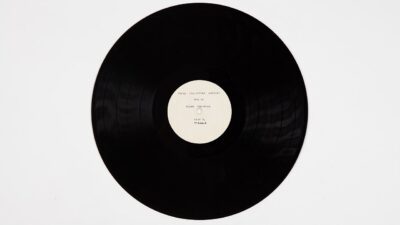
गीत विंग · गीत-पट्टिका · Song Plate
आज बस में नहीं दिल मेरा
Aaj Bas Mein Nahin Dil Mera
दिल अब क़ाबू में नहीं है, और गाने वाली को ख़ुद पता नहीं क्यों — रोशन आरा बेगम की दुर्लभ फ़िल्मी रिकॉर्डिंगों में से एक।
भावमीठा-कड़वा · चुलबुला · रोमांटिक
भाषाhindi-urdu गतिमध्यम स्वरूपएकल महिला
श्रेय
The Creditsसूत्र-वाक्य · The Hook
सूत्र-वाक्य
दिल अब क़ाबू में नहीं है, और गाने वाली को ख़ुद पता नहीं क्यों — रोशन आरा बेगम की दुर्लभ फ़िल्मी रिकॉर्डिंगों में से एक।
In EnglishThe heart has stopped obeying, and the singer has no idea why — Roshan Ara Begum in one of her rare film recordings.
पट्टिका-लेख
The Monographपरिचय Overview
'नीलम' के संगीत का सबसे अच्छी तरह दर्ज गीत, और वही जिसने 2021 में पूरी फ़िल्म को गुमनामी से बाहर खींच लिया। यह किराना घराने की गायिका रोशन आरा बेगम का एकल है — जिन्हें आगे चलकर पाकिस्तान में 'मलिका-ए-मौसीक़ी' कहा गया — और यह पहले प्यार का गीत है: गाने वाली का दिल रातों-रात उसके क़ाबू से निकल गया है और वह इसका कारण नहीं बता पाती। तीन मिनट से भी कम की यह रचना कसी हुई है, और इसका टेक बार-बार उसी हैरान सवाल पर लौटता है।
अंग्रेज़ी में पढ़ें · Read in English
The best-documented song in the Neelam score and the one that pulled the whole film back out of obscurity in 2021. It is a solo by Roshan Ara Begum, the Kirana gharana vocalist later titled Malika-e-Mauseeqi in Pakistan, and it is a first-love song: the speaker's heart has slipped out of her control overnight and she cannot account for it. At under three minutes it is a compact piece of writing, built around a refrain that keeps returning to the same bewildered question.
संगीत The Music
ख़ान मस्ताना बंदिश को छोटा और स्वर-प्रधान रखते हैं: हल्की लयकारी, सँकरा स्वर-दायरा, और वाक्यांशों के अंत में लंबे ठहरे हुए स्वर जो गायिका को लय तोड़े बिना सुर घुमाने की जगह देते हैं। संगीतकार जानते थे कि स्टूडियो में उनके पास क्या है — एक शास्त्रीय गायिका के लिए शास्त्रीय दिखावटी बंदिश लिखने के बजाय उन्होंने एक हल्की फ़िल्मी धुन लिखी और उसे इतना खुला छोड़ दिया कि रोशन आरा बेगम की सधी हुई सुर-पकड़ ही काम कर जाए। गीत को घेरने वाला बोल-रहित हमिंग इस फ़ैसले का सबसे साफ़ प्रमाण है।
अंग्रेज़ी में पढ़ें · Read in English
Khan Mastana keeps the setting small and voice-forward: a light rhythmic bed, a narrow melodic compass, and long held vowels at the end of phrases that let the singer bend a note without breaking the tempo. The composer knew exactly what he had in the studio — rather than write a classical showpiece for a classical singer, he wrote a light film melody and left it open enough for Roshan Ara Begum's trained control of sur to do the work. The wordless humming that frames the song is the clearest sign of that decision.
काव्य The Poetry
सी. एम. हुनर पूरा गीत बिना जवाब वाले सवालों की एक शृंखला की तरह लिखते हैं। गाने वाली न प्रिय का वर्णन करती है, न कोई परिस्थिति बताती है, न कुछ माँगती है; वह बस इतना कहती है कि दिल अब उसके हुक्म में नहीं और यह दोहराती है कि उसे कारण मालूम नहीं। इस टेक के इर्द-गिर्द वे एक छोटा-सा स्वप्न रखते हैं — बुलबुल का फूल को छेड़ना, और फूल का ओस में मुँह छिपा लेना — और यही पूरी भावनात्मक दलील है: कुछ घटनाओं के स्तर पर नहीं, बिंबों के स्तर पर घटा है, और जागा हुआ मन अभी उसके साथ नहीं आया। व्याख्या से यह इनकार ही इस बोल को उर्दू ग़ज़ल-परंपरा से जोड़ता है, जहाँ दिल की नाफ़रमानी अपने आप में एक विषय है — और यही इसे प्रणय-निवेदन के बजाय पहले प्यार का गीत बनाता है।
अंग्रेज़ी में पढ़ें · Read in English
C. M. Hunar writes the song entirely as a set of unanswered questions. The speaker does not describe the beloved, does not name a situation, and does not ask for anything; she simply reports that her heart is no longer under her command and repeats that she does not know why. Around that refrain he sets a small dream — a nightingale teasing a flower, the flower hiding its face in dew — which functions as the entire emotional argument: something has happened at the level of images rather than events, and the waking self has not caught up with it yet. The refusal to explain is what dates the lyric to the Urdu ghazal tradition, where the heart's disobedience is a subject in itself, and what makes the song read as first love rather than as courtship.
कहानी The Story
'नीलम' (1945) ए. एच. प्रोडक्शंस, बंबई की एक सामाजिक फ़िल्म थी, जिसका निर्देशन अहमद ईसा ने किया; नौ के नौ गीत सी. एम. हुनर ने लिखे और संगीत ख़ान मस्ताना का है। कास्ट का नेतृत्व हरीश और मीना ने किया, और उनके साथ जगदीश सेठी, यशोधरा काटजू, कन्हैयालाल, कल्याणी, सत्यरानी, मेहदी रज़ा, सयानी तथा अब्दुल हुसैन थे। फ़िल्म की कथा-रूपरेखा कहीं भी सुरक्षित नहीं है और न ही इसका कोई प्रिंट प्रचलन में जाना जाता है; गीत एचएमवी के बजाय स्वदेशी लेबल 'यंग इंडिया' पर जारी हुए, और वही शेलैक तवे इस फ़िल्म का संगीत आज तक ले आए हैं।
अंग्रेज़ी में पढ़ें · Read in English
Neelam (1945) was a social picture from A. H. Productions, Bombay, directed by Ahmed Essa, with all nine songs written by C. M. Hunar and composed by Khan Mastana. The cast was led by Harish and Meena, with Jagdish Sethi, Yashodhara Katju, Kanhaiyalal, Kalyani, Satyarani, Mehdi Raza, Sayani and Abdul Hussain in support. No plot summary of the film survives anywhere, and no print is known to circulate; the songs were issued on the indigenous Young India label rather than on HMV, and it is those shellac discs that carried the film's music into the present.
विरासत The Legacy
'नीलम' का यही एक गीत है जिसका आगे का जीवन दर्ज है। लगभग 2018 में एक निजी संग्राहक ने इसका ऑडियो ऑनलाइन डाला, और अगस्त 2021 में शोधकर्ता सदानंद कामत ने इसी के बहाने 'अतुल्स सॉन्ग अ डे' पर पूरी फ़िल्म का परिचय दिया — रिलीज़ के बाद इस फ़िल्म को मिला पहला सारगर्भित लेखन, और वही स्रोत जिससे 'नीलम' में रोशन आरा बेगम की मौजूदगी सार्वजनिक जानकारी बनी। यह गीत हिंदी फ़िल्म संगीत के जीवित भंडार का हिस्सा न है न कभी था; आज इसका मूल्य इस प्रमाण में है कि बीसवीं सदी की एक महान ख़याल-गायिका ने कुछ देर के लिए फ़िल्मी गीत के साँचे में काम किया।
अंग्रेज़ी में पढ़ें · Read in English
This is the one Neelam song with a documented afterlife. Audio of it was posted online by a private collector around 2018, and in August 2021 the researcher Sadanand Kamath used it to introduce the entire film on Atul's Song A Day — the first substantial write-up the picture had received since its release, and the source through which Roshan Ara Begum's involvement in Neelam became public knowledge. The song is not part of the living Hindi film repertoire and never was; its value now is as evidence that one of the twentieth century's great khayal singers briefly worked inside the film-song form.
वर्गीकरण
Classification- Tempo
- Medium
Genre
अन्य विवरण
More Details- https://www.hindigeetmala.net/movie/neelam.htm
- https://myswar.co/album/neelam-1945
- https://en.wikipedia.org/wiki/List_of_Hindi_films_of_1945
- https://atulsongaday.me/2021/08/24/aaj-bas-mein-nahin-dil-mera/
- https://archive.org/details/a_20210503_20210503_1724
- https://en.wikipedia.org/wiki/Khan_Mastana
- https://en.wikipedia.org/wiki/Roshan_Ara_Begum
- https://www.cinemaazi.com/people/khan-mastana-
- https://www.theheritagelab.in/young-india-record-label-homegrown/
- https://atulsongaday.me/tag/neelam/
- https://www.youtube.com/watch?v=7bs9RwTpRU0
References
रोचक तथ्य
Margin Notesरोशन आरा बेगम (1917–1982) ने किराना घराने में अब्दुल करीम ख़ाँ से तालीम पाई और आगे चलकर पाकिस्तान में उन्हें 'मलिका-ए-मौसीक़ी' की उपाधि मिली; उन्होंने गिनी-चुनी फ़िल्मों में ही पार्श्वगायन किया। 'नीलम' उन्हीं में से एक है — 'पहली नज़र' (1945) और 'जुगनू' (1947) के साथ।
अंग्रेज़ी में पढ़ें · Read in English
Roshan Ara Begum (1917–1982), trained in the Kirana gharana by Abdul Karim Khan and later honoured in Pakistan as Malika-e-Mauseeqi, the Queen of Music, sang playback in only a handful of films. Neelam is one of them, alongside Pehli Nazar (1945) and Jugnu (1947).
ख़ान मस्ताना का जन्म लगभग 1916 में आगरा में हाफ़िज़ ख़ान के रूप में हुआ; उनके पिता सितारवादक थे। 'बहादुर किसान' (1938) के समय संगीतकार मीर साहब ने उनके बेफ़िक्र मिज़ाज के कारण उन्हें 'मस्ताना' नाम दिया। 1950 के दशक के शुरू में पिता ने उन्हें हैदराबाद में संगीत सिखाने बुला लिया; लंबी अनुपस्थिति के कारण बंबई के निर्माताओं ने उन्हें काम देना बंद कर दिया और 1952 के बाद उन्हें असाइनमेंट मिलने लगभग बंद हो गए। 1972 में माहिम में ग़रीबी में उनका देहांत हुआ।
अंग्रेज़ी में पढ़ें · Read in English
Khan Mastana was born Hafiz Khan in Agra around 1916, the son of a sitar player, and was nicknamed 'Mastana' by the composer Mir Saheb on Bahadur Kisan (1938) for his carefree manner. In the early 1950s his father called him away to teach music in Hyderabad; Bombay producers refused him work over the long absence and his assignments dried up after 1952. He died in poverty in Mahim in 1972.
'नीलम' के गीत 'यंग इंडिया' पर जारी हुए — बंबई का वह लेबल जिसे नैशनल ग्रामोफ़ोन रिकॉर्ड मैन्युफ़ैक्चरिंग कं. लि. ने 1934 में विदेशी ग्रामोफ़ोन कंपनियों के स्वदेशी प्रतिद्वंद्वी के रूप में शुरू किया था। उसने सैकड़ों 78-आरपीएम शेलैक तवे दबाए और उभरते कलाकारों को प्रोत्साहित करने पर ज़ोर दिया, और 1955 में उसका वडाला कारख़ाना बंद हो गया — यही वजह है कि उस पर छपा लगभग कुछ भी दोबारा जारी नहीं हुआ।
अंग्रेज़ी में पढ़ें · Read in English
Neelam's songs were issued on Young India, the Bombay label founded in 1934 by The National Gramophone Record Manufacturing Co. Ltd. as an indigenous rival to the foreign-owned gramophone companies. It pressed hundreds of 78-rpm shellac discs and made a point of encouraging emerging talent, and its Wadala plant shut in 1955 — which is why almost nothing on it was ever reissued.
नमूना-पट्टी
The Specimen Table| शीर्षक | आज बस में नहीं दिल मेरा · Aaj Bas Mein Nahin Dil Mera |
|---|---|
| फ़िल्म | नीलम · 1945 |
| वर्ष · युग | 1945 |
| गायक | रोशन आरा बेगम |
| गीतकार | सी. एम. हुनर |
| संगीतकार | Khan Mastana |
| स्वरूप | एकल महिला |
| गति | मध्यम |
| भाषा | hindi-urdu |
| भाव | मीठा-कड़वा · चुलबुला · रोमांटिक |
| लोकप्रियता | Known |
| बोल-स्थिति | केवल झलक |
जुड़े हुए पन्ने
Connected Plates · The Graph Made Visibleअटलस में कोई पन्ना अकेला नहीं — इस गीत से जुड़े गीत, कलाकार, फ़िल्म, राग-ताल-विधा, सब यहाँ से खुलते हैं।
मिलते-जुलते गीत · Related Songs
कलाकार · The Artists
फ़िल्म · The Film
साझा कीजिए · Share this Plate