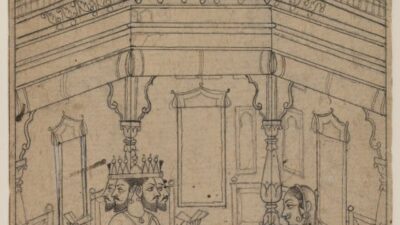
शास्त्र विंग · राग-पट्टिका · Raag Plate
रागेश्री
Rāgeśrī
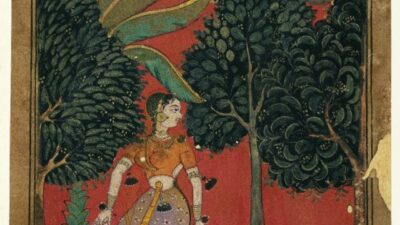
रागों की रानी · The Queen of Ragas
भावरोमांटिक · कोमल · गीतात्मक · विषादपूर्ण · अंतरंग
गतिvilambit ऊर्जाधीमी से मध्यम
अन्य नामRageshwari
स्वर-चित्र · The Swara Panel
आरोह — अवरोह · The Ascent and the Descent
कोमल स्वर — Ni — तीव्रित हरे रंग में।
आरोह · Aroha चढ़ती हुई सीढ़ी
अवरोह · Avaroha उतरती हुई सीढ़ी
कोमल स्वर — नीचे की ओर झुका चिह्न (◌॒)सˊ = तार सप्तक का षड्ज
रागेश्री एक कोमल स्वर का उपयोग करती है: नि॒। सभी अन्य स्वर शुद्ध हैं।
अंग्रेज़ी में पढ़ें · Read in English
Rageshri uses one komal (flat) note: Ni♭. All other swaras are shuddha (natural). The defining feature is that Ga (Gandhara) is OMITTED in the ascent but PRESENT in the descent. This creates an audav (5-note) ascent and sampurna (7-note) descent structure. The single komal note combined with the absence of Ga in ascent creates a distinctly tender, lyrical character.
पकड़ · पहचान वाक्यांश
रे म प ध नि॒
Re Ma Pa Dha Ni♭
रागेश्री की विशेषता वाली आरोही वाक्य — गीतात्मक और मीठा।
अंग्रेज़ी में पढ़ें · Read in English
The ascending phrase that characterizes Rageshri — lyrical and sweet.
वादी–संवादी टिप्पणी · Vadi–Samvadi note
Vadi — The most important note
Samvadi — The second most important note — appears in descent only
चलन · स्वर-यात्रा
सा रे म प, प ध नि॒ सˊ, सˊ नि॒ ध प म ग रे, रे म प ध नि॒ सˊ
Sa Re Ma Pa, Pa Dha Ni♭ Sa', Sa' Ni♭ Dha Pa Ma Ga Re, Re Ma Pa Dha Ni♭ Sa'
रागेश्री की कोमल, रोमांटिक विशेषता दिखाने वाली मधुर प्रगति।
अंग्रेज़ी में पढ़ें · Read in English
The melodic progression showing Rageshri's tender, romantic character.
न्यास स्वर — Sa, Ma, Dha अनुवादी — Re, Ma, Pa, Ni♭
विशेष स्वर-वाक्य
Characteristic Phrasesसमय और भाव
Time Theory & Moodसमय-सिद्धांत · Time Theory
देर रात (रात्रि साधारण)
देर रात का राग — आमतौर पर देर रात में गाया जाता है।
Late night raag — traditionally performed in late night hours, suited to romantic and contemplative contexts.
No strong seasonal restriction.
भाव और गति · Mood & Tempo
श्रृंगार · Love, Romance, Tenderness
रोमांटिक प्रेम, कोमल समर्पण, और अंतरंग स्नेह की भावना
vilambit
ऊर्जा · Energyधीमी से मध्यम
स्तर · Levelintermediate — रागेश्री मध्यम-स्तरीय है क्योंकि आरोहण में गा अनुपस्थित है।
लक्षण गीत · The Mnemonic Verse
लक्षण गीत
रागेश्री रे सा रे म प ध नि, उतरते ग आवे विदवान।
धा वादी गा संवादी, रात का राग मनभावन।
अंग्रेज़ी में पढ़ें · Read in English
Rageshri re Sa Re M P Dha Ni, utarte Ga aave vidwan.
Dha vadi Ga samvadi, raat ka rag manbhavan.
In Rageshri, ascending: Sa Re Ma Pa Dha Ni♭ (no Ga). Descending: Ga appears. Dha is vadi, Ga is samvadi. A charming night raag.
पट्टिका-लेख
The Monographपरिचय Introduction
राग रागेश्री (रागेश्री) देर रात के रोमांस और चिंतन का एक कोमल, गीतात्मक राग है।
अंग्रेज़ी में पढ़ें · Read in English
Raag Rageshri (रागेश्री) is a tender, lyrical raag of late-night romance and contemplation. The name 'Rageshri' means 'Queen of Ragas,' reflecting the raag's elegant, graceful character. Defined by its audav (5-note) ascent and sampurna (7-note) descent, Rageshri uniquely omits Gandhara (Ga) from the ascending scale but includes it in the descent, creating an asymmetrical structure with poignant emotional impact. With a single komal (flat) note — Nishada (Ni♭) — combined with this asymmetry, Rageshri creates a deeply romantic, tender mood perfectly suited to intimate late-night settings. Though less frequently heard in formal concert settings than some major raags, Rageshri holds a special place in Bollywood romantic music and in thumri traditions, where its lyrical character and emotional depth find full expression.
सांस्कृतिक महत्व Cultural Significance
राग रागेश्री को शास्त्रीय और फिल्म संगीत परंपराओं दोनों में एक विशेष स्थान है।
अंग्रेज़ी में पढ़ें · Read in English
Raag Rageshri occupies a niche in both classical and film music traditions, prized for its lyrical, romantic character. In classical contexts, it appears in late-night concert settings and intimate gatherings. In Bollywood, Rageshri has been used for romantic and devotional songs, bringing sophisticated classical raag concepts to mass audiences. The raag's tender, nocturnal character makes it ideal for intimate storytelling through music.
ऐतिहासिक महत्व Historical Significance
राग रागेश्री को शास्त्रीय ग्रंथों में खमाज थाट का एक व्युत्पन्न राग के रूप में प्रलेखित किया जाता है।
अंग्रेज़ी में पढ़ें · Read in English
Raag Rageshri is documented as a janya (derived) raag of the Khamaj thaat in classical texts, likely developing from romantic and devotional music traditions. The name 'Rageshri' — Queen of Ragas — suggests the raag's esteemed status. By the 18th-19th centuries, Rageshri had become formalized in the classical system. In the 20th century, the raag appeared in Bollywood films where its romantic, tender character made it suitable for love songs and devotional contexts.
शिक्षा
Teaching & Learning| बंदिश | ताल · लय | बोल |
|---|---|---|
| Hum Aapke Hain Koun Title Track Raam Laxman |
Keherwa | |
| Rageshri Khayal Traditional |
Teentaal |
औडव-संपूर्ण संरचना में महारत हासिल करें।
अंग्रेज़ी में पढ़ें · Read in English
Master the audav-sampurna structure: Ascent uses only 5 notes (Sa Re Ma Pa Dha Ni♭ — no Ga). Descent uses all 7 notes including Ga. This asymmetry defines Rageshri.
रागेश्री एक गीतात्मक, कोमल राग है।
अंग्रेज़ी में पढ़ें · Read in English
Rageshri is a lyrical, tender raag — use gentle, sustained tones. Avoid rapid movement or aggressive phrasing. This is a raag for contemplation and romantic expression.
कोमल नि॒ महत्वपूर्ण है।
अंग्रेज़ी में पढ़ें · Read in English
The komal Ni♭ is crucial — ensure correct intonation of this flat 7th. It's what gives Rageshri its tender character, different from the bright Khamaj.
अवरोहण में जब गा दिखाई देता है, इसे एक रंग के रूप में मानें।
अंग्रेज़ी में पढ़ें · Read in English
When Ga appears in descent, treat it as a 'color' that enriches the texture. Don't dwell on it as strongly as the other notes.
आरोहण में गा को शामिल करना।
अंग्रेज़ी में पढ़ें · Read in English
Including Ga in the ascent — violating the audav structure
सुधार: Strictly omit Ga in ascent. Only introduce it in descent. This defines the raag's character.
प्राकृतिक नि का उपयोग करना।
अंग्रेज़ी में पढ़ें · Read in English
Using natural (shuddha) Ni instead of komal Ni♭
सुधार: Always use komal Ni♭ (flat 7th). This is essential to Rageshri's identity, distinguishing it from brighter raags.
तुलना
A Specimen Comparisonदोनों खमाज थाट राग हैं।
| तुलनाSpecimen | रागेश्री | खमाज |
|---|---|---|
| स्वर-अंतर | Khamaj: Sa Re Ga Ma Pa Dha Ni♭ Sa' | Rageshri: Ascent: Sa Re Ma Pa Dha Ni♭ Sa'; Descent: Sa' Ni♭ Dha Pa Ma Ga Re Sa | |
| भाव-अंतर | Khamaj = Festive, Joyful | Rageshri = Romantic, Tender, Melancholic | |
| समय-अंतर | Khamaj = Evening/Flexible | Rageshri = Late Night/Strict | |
दोनों खमाज थाट के रोमांटिक राग हैं।
| तुलनाSpecimen | रागेश्री | तिलक कामोद |
|---|---|---|
| स्वर-अंतर | Tilak Kamod: Ascent: Sa Re Ga Pa Dha Sa'; Rageshri: Ascent: Sa Re Ma Pa Dha Ni♭ Sa' | |
| भाव-अंतर | Tilak Kamod = Graceful, sweet | Rageshri = Tender, lyrical, melancholic | |
| समय-अंतर | Tilak Kamod = Evening | Rageshri = Late Night | |
रोचक तथ्य
Margin Notes'रागेश्री' का नाम शाब्दिक रूप से 'रागों की रानी' अर्थ है।
अंग्रेज़ी में पढ़ें · Read in English
The name 'Rageshri' literally means 'Queen of Ragas' — a poetic title reflecting the raag's elegant, graceful, and esteemed character in the classical tradition.
रागेश्री की औडव-संपूर्ण संरचना एक विशिष्ट असममिति बनाती है।
अंग्रेज़ी में पढ़ें · Read in English
Rageshri's audav-sampurna structure (5-note ascent, 7-note descent with Ga absent in ascent but present in descent) creates a distinctive asymmetry that contributes to its tender, poignant character.
रागेश्री शास्त्रीय परंपरा में एक कठोरता से देर रात का राग है।
अंग्रेज़ी में पढ़ें · Read in English
Rageshri is a strictly late-night raag in classical tradition, suited to intimate, romantic contexts. Its use in Bollywood helped bring sophisticated night-raag concepts to popular audiences.
प्रस्तुति
Performance- Description
- देर रात का राग — आमतौर पर देर रात में गाया जाता है। Late night raag — traditionally performed in late night hours, suited to romantic and contemplative contexts.
- Prahar Number
- 8
- Prahar Name
- देर रात (रात्रि साधारण) Late Night (Ratri Sadharan)
- Time Start
- 22:00
- Time End
- 06:00
- Time Flexibility
- strict
- Time Notes
- Strongly associated with late night, intimate gatherings, and nocturnal romantic contexts.
Time
और जानें
More to Know- raag-khamaj — Khamaj — खमाज — Both are Khamaj thaat raags with komal Ni♭. Khamaj is festive with 7 complete notes; Rageshri is romantic with audav ascent (omits Ga). Rageshri is strictly late-night. — दोनों खमाज थाट राग हैं। — Khamaj: Sa Re Ga Ma Pa Dha Ni♭ Sa' | Rageshri: Ascent: Sa Re Ma Pa Dha Ni♭ Sa'; Descent: Sa' Ni♭ Dha Pa Ma Ga Re Sa — Khamaj = Festive, Joyful | Rageshri = Romantic, Tender, Melancholic — Khamaj = Evening/Flexible | Rageshri = Late Night/Strict
- raag-tilak-kamod — Tilak Kamod — तिलक कामोद — Both are romantic raags of Khamaj thaat with asymmetrical structures. Tilak Kamod omits Ma and Ni in ascent; Rageshri omits only Ga. Tilak Kamod is evening; Rageshri is late-night. — दोनों खमाज थाट के रोमांटिक राग हैं। — Tilak Kamod: Ascent: Sa Re Ga Pa Dha Sa'; Rageshri: Ascent: Sa Re Ma Pa Dha Ni♭ Sa' — Tilak Kamod = Graceful, sweet | Rageshri = Tender, lyrical, melancholic — Tilak Kamod = Evening | Rageshri = Late Night
Comparisons
सीखने के लिए
For Learners- Difficulty Level
- intermediate
नमूना-पट्टी
The Specimen Table| नाम | रागेश्री · Rageshri |
|---|---|
| थाट | खमाज |
| आरोह | सा रे म प ध नि॒ सˊ |
| अवरोह | सˊ नि॒ ध प म ग रे स |
| पकड़ | रे म प ध नि॒ |
| जाति | औडव-संपूर्ण · Audav-Sampurna |
| कोमल स्वर | Ni |
| समय | देर रात (रात्रि साधारण) |
| ऋतु | No strong seasonal restriction. |
| गति | vilambit |
| ऊर्जा | धीमी से मध्यम |
| प्रकृति | Shuddha |
| परिवार | खमाज परिवार |
| स्तर | intermediate |
| लोकप्रियता | Known |
| कर्नाटक समतुल्य | Dheerashankarabhharanam · Melakarta 29 |
| पाश्चात्य समतुल्य | Major scale with flattened 7th |
| अन्य नाम | Rageshwari |
जुड़े हुए पन्ने
Connected Plates · The Graph Made Visibleअटलस में कोई पन्ना अकेला नहीं — इस राग से गीत, प्रस्तुतियाँ, कलाकार, ताल, घराने और मिलते-जुलते राग, सब यहाँ से खुलते हैं।
प्रसिद्ध प्रस्तुतियाँ · Legendary Renditions
फ़िल्मी गीत इस राग में · Famous Film Songs
इस राग के कलाकार · Notable Artists
ताल-साथी · Taal Pairings
मिलते-जुलते राग · Similar Raags
श्रवण-कक्ष · The Listening Room
सुनिए — रागेश्री · Hear the Raag
Raag Rageshri: Pt. Jitendra Abhisheki
प्रश्नोत्तर
Questions & Answersरागेश्री में कितने नोट हैं?
आरोहण में 6 नोट (सा रे म प ध नि॒ — ग नहीं)। अवरोहण में 8 नोट (सˊ नि॒ ध प म ग रे स)।
अंग्रेज़ी में पढ़ें · Read in English
How many notes are in Raag Rageshri? — Ascent: 6 notes (Sa Re Ma Pa Dha Ni♭ — no Ga). Descent: 8 notes including Ga.
रागेश्री का नाम क्या मायने रखता है?
रागेश्री का नाम 'रागों की रानी' अर्थ है — राग की दुनिया में एक उच्च, सम्मानित स्थान को दर्शाता है।
अंग्रेज़ी में पढ़ें · Read in English
What does the name Rageshri mean? — Rageshri means 'Queen of Ragas' — reflecting the raag's elegant and esteemed status in classical music.
साझा कीजिए · Share this Plate