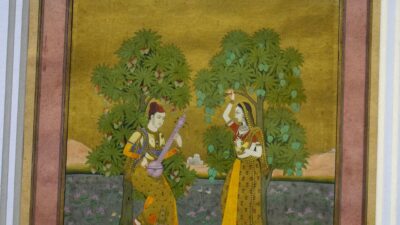
शास्त्र विंग · राग-पट्टिका · Raag Plate
गौड़ सारंग
Gaud Sarang
दिन का राजसी राग · The Majestic Midday Raag
भावराजसी · उज्ज्वल · रोमांटिक · भावुक · अभिजात
गतिmadhya_to_drut ऊर्जातीव्र
अन्य नामGaudsarang · Gaud-Sarang · गौड़-सारंग
स्वर-चित्र · The Swara Panel
आरोह — अवरोह · The Ascent and the Descent
आरोह · Aroha चढ़ती हुई सीढ़ी
अवरोह · Avaroha उतरती हुई सीढ़ी
सˊ = तार सप्तक का षड्ज
गौड़ सारंग सभी सात शुद्ध स्वरों का प्रयोग करता है। यह पूरी तरह से उज्ज्वल, शुद्ध, राजसी राग है।
अंग्रेज़ी में पढ़ें · Read in English
Gaud Sarang uses all seven shuddha (natural) swaras, making it a pure major scale. Every note is natural and unaltered, giving the raag an entirely bright, clean, majestic quality. This makes it one of the most luminous raags in Hindustani music — even brighter than Yaman, which has one tivra (sharp) note. Gaud Sarang is the brightness of full daylight.
पकड़ · पहचान वाक्यांश
ग रे स, रे ग म प ध नि सˊ
Ga Re Sa, Re Ga Ma Pa Dha Ni Sa'
गौड़ सारंग को परिभाषित करने वाला आरोही वाक्यांश — उज्ज्वल और राजसी।
अंग्रेज़ी में पढ़ें · Read in English
The characteristic identifying phrase of Gaud Sarang — bright and ascending, showcasing the raag's majestic, noble quality.
वादी–संवादी टिप्पणी · Vadi–Samvadi note
Vadi — The most important note in Gaud Sarang. Where the raag's bright, majestic character is most expressed.
Samvadi — The second most important note — supporting the vadi with perfect harmonic balance.
चलन · स्वर-यात्रा
ग रे स, रे ग म प, म ग रे स, ग रे ग प ध नि सˊ, नि ध प म, म ग रे स
Ga Re Sa, Re Ga Ma Pa, Ma Ga Re Sa, Ga Re Ga Pa Dha Ni Sa', Ni Dha Pa Ma, Ma Ga Re Sa
गौड़ सारंग को प्रदर्शन में कैसे गाया जाता है, इसकी पूर्ण मधुर प्रगति।
अंग्रेज़ी में पढ़ें · Read in English
The complete melodic progression showing how Gaud Sarang is traversed — emphasizing the Ga and Re, with smooth ascents and elegant descents throughout all registers.
न्यास स्वर — Sa, Re, Ma, Pa अनुवादी — Sa, Ga, Ma, Dha
विशेष स्वर-वाक्य
Characteristic Phrasesसमय और भाव
Time Theory & Moodसमय-सिद्धांत · Time Theory
पूर्व प्रहर
दिन का राग — दिन के उज्ज्वल समय में गाया जाता है।
Midday raag — traditionally performed during daytime hours when the sun is bright. The raag's majestic, luminous quality perfectly matches the full brightness of day.
All seasons — no seasonal restriction
भाव और गति · Mood & Tempo
श्रृंगार · Love / Romance / Passion
गौड़ सारंग का प्राथमिक रस — राजसी, भव्य रोमांच।
madhya_to_drut
ऊर्जा · Energyतीव्र
स्तर · Levelbeginner_friendly — गौड़ सारंग सीखना आसान है क्योंकि सभी स्वर शुद्ध हैं। लेकिन राग का राजसी चरित्र प्राप्त करना कला है।
लक्षण गीत · The Mnemonic Verse
लक्षण गीत
गौड़ सारंग बिलावल कुल में विशेष
रे वादी प संवादी के भेष
सा रे ग म प ध नि सा करे आरोहण
सो नि ध प म ग रे स अवरोहण
अंग्रेज़ी में पढ़ें · Read in English
Gaud Sarang Bilawal kul mein viseesh
Re vadi Pa samvadi ke bhesh
Sa re ga ma pa dha ni sa karey arohana
So ni dha pa ma ga re sa avarohana
Gaud Sarang is the special raag of Bilawal thaat. With Re as vadi and Pa as samvadi. Ascent and descent using all seven natural swaras.
पट्टिका-लेख
The Monographपरिचय Introduction
गौड़ सारंग बिलावल थाट का एक मिश्रित राग है जो गौड़ की चमक और सारंग की राजसी गरिमा को जोड़ता है। यह सभी सात शुद्ध स्वरों का उपयोग करता है और हिंदुस्तानी संगीत के सबसे उज्ज्वल रागों में से एक है।
अंग्रेज़ी में पढ़ें · Read in English
Gaud Sarang is a compound raag of the Bilawal thaat that combines the brightness of Gaud with the majesty of Sarang. Unlike simple Bilawal (which is the parent scale), Gaud Sarang is a sophisticated raag with its own distinctive character — luminous, passionate, and noble. The raag uses all seven shuddha (natural) swaras, making it one of the brightest, most transparent raags in Hindustani music. Gaud Sarang is a daytime raag, traditionally performed during midday when the sun is brightest, and its character perfectly mirrors this radiance. The raag is known for its capacity to express grand romantic passion, heroic nobility, and celebratory exuberance. In both classical concerts and film music, Gaud Sarang has been chosen for scenes of triumph, noble love, and majestic celebration.
सांस्कृतिक महत्व Cultural Significance
गौड़ सारंग दिन के शास्त्रीय संगीत में राजसी, भावुक प्रेम व्यक्त करने के लिए पसंदीदा है।
अंग्रेज़ी में पढ़ें · Read in English
Gaud Sarang holds significance in daytime classical concerts as the raag of choice for expressing majestic, noble passion. It has been extensively used in Bollywood film music for romantic and triumphant scenes. The raag's bright, celebratory character makes it popular for auspicious occasions and ceremonial performances. Its accessibility combined with its sophisticated character makes Gaud Sarang equally appealing to beginners and advanced musicians.
ऐतिहासिक महत्व Historical Significance
गौड़ सारंग को मिश्रित राग के रूप में विकसित किया गया जो गौड़ और सारंग के तत्वों को जोड़ता है।
अंग्रेज़ी में पढ़ें · Read in English
Gaud Sarang is documented in classical music texts as a compound raag combining elements of both Gaud and Sarang, both important raags in Hindustani tradition. The raag gained prominence in the late 19th and early 20th centuries as musicians developed more sophisticated raag structures. It became a favorite in khayal performances and remains central to the daytime raag repertoire. The raag has maintained its prominence in both classical concerts and film music throughout the 20th and 21st centuries.
शिक्षा
Teaching & Learning| बंदिश | ताल · लय | बोल |
|---|---|---|
| Rag Gaud Sarang Pakad Traditional |
Teentaal | |
| Basant Bahar Aayi Phire Traditional |
Teentaal |
पकड़ में महारत हासिल करें। यह गौड़ सारंग की पहचान है।
अंग्रेज़ी में पढ़ें · Read in English
Master the pakad (Ga Re Sa, Re Ga Ma Pa Dha Ni Sa'). This 8-note ascending phrase IS Gaud Sarang. Practice it slowly, feeling the bright, majestic quality.
गौड़ सारंग को पूर्ण उज्ज्वलता के रूप में समझें। कोई भी स्वर तीव्र या कोमल नहीं है।
अंग्रेज़ी में पढ़ें · Read in English
Understand Gaud Sarang as pure brightness — all seven notes are shuddha (natural). Unlike raags with komal or tivra notes, this one is entirely clean and luminous.
वादी (रे) और संवादी (प) के चारों ओर सजावट का अन्वेषण करें।
अंग्रेज़ी में पढ़ें · Read in English
The vadi (Re) and samvadi (Pa) form the emotional core. Explore ornamentation and meend around these notes extensively.
गौड़ सारंग गौड़ और सारंग का मिश्रण है। उन्नत प्रदर्शन में कभी-कभी तीव्र मध्यम भी आता है।
अंग्रेज़ी में पढ़ें · Read in English
Gaud Sarang is the compound raag mixing elements of both Gaud (brightness) and Sarang (majesty). Some advanced renditions use both natural Ma and tivra Ma♯ for added complexity.
गौड़ सारंग को नीरस तरीके से गाना, इसकी चमक न दिखाना
अंग्रेज़ी में पढ़ें · Read in English
Making Gaud Sarang sound dull or lifeless, not capturing its inherent brightness
सुधार: Gaud Sarang is about BRIGHTNESS and MAJESTY. Every note should be clear, luminous, and resonant. The ascending pakad should feel like a majestic procession.
गौड़ सारंग को बिलावल या सारंग से भ्रमित करना
अंग्रेज़ी में पढ़ें · Read in English
Confusing Gaud Sarang with Bilawal (the parent thaat) or Sarang (the sibling raag)
सुधार: Gaud Sarang is a compound raag with a specific identity. Bilawal is the parent thaat (a scale). Sarang is a different raag altogether. Gaud Sarang combines the brightness of Gaud with the majesty of Sarang.
कोमल स्वरों का प्रयोग करना जहाँ शुद्ध स्वर होने चाहिए
अंग्रेज़ी में पढ़ें · Read in English
Using komal notes where only shuddha notes should be used
सुधार: Gaud Sarang uses ONLY shuddha swaras. No komal notes at all. This is what makes it so bright.
तुलना
A Specimen Comparisonबिलावल एक थाट है जबकि गौड़ सारंग एक विशिष्ट राग है।
| तुलनाSpecimen | गौड़ सारंग | बिलावल |
|---|---|---|
| स्वर-अंतर | Both use identical swaras: Sa Re Ga Ma Pa Dha Ni | |
| भाव-अंतर | Bilawal = Neutral, foundational scale; Gaud Sarang = Actively bright, majestic, passionate | |
| समय-अंतर | Bilawal is time-neutral; Gaud Sarang is specifically a daytime raag | |
दोनों उज्ज्वल राग हैं, लेकिन यमन संध्या का है और गौड़ सारंग दिन का है।
| तुलनाSpecimen | गौड़ सारंग | यमन |
|---|---|---|
| स्वर-अंतर | Yaman: Sa Re Ga Ma♯ Pa Dha Ni | Gaud Sarang: Sa Re Ga Ma Pa Dha Ni | |
| भाव-अंतर | Yaman = Romantic, evening passion; Gaud Sarang = Majestic, daytime brilliance | |
| समय-अंतर | Yaman: evening (prahar 5); Gaud Sarang: daytime (prahar 3-4) | |
रोचक तथ्य
Margin Notesगौड़ सारंग सभी सात शुद्ध स्वरों का प्रयोग करता है, जो यमन से भी उज्ज्वल है।
अंग्रेज़ी में पढ़ें · Read in English
Gaud Sarang uses all seven shuddha (natural) swaras, making it even brighter than Yaman (which has one tivra note) — it is pure, unadulterated major scale brightness.
गौड़ सारंग का नाम गौड़ (चमक) और सारंग (राजसीता) के संयोजन से बना है।
अंग्रेज़ी में पढ़ें · Read in English
The name 'Gaud Sarang' comes from combining 'Gaud' (brightness) and 'Sarang' (majesty) — two essential qualities of this daytime raag.
कुछ उन्नत प्रदर्शनों में गौड़ सारंग में तीव्र मध्यम का प्रयोग भी होता है।
अंग्रेज़ी में पढ़ें · Read in English
Some advanced renditions of Gaud Sarang incorporate the tivra Ma♯ (sharp Madhyam) as a variant, blending elements of both Bilawal and Kalyan thaats for added complexity.
गौड़ सारंग परंपरागत रूप से दिन का राग है, जो दिन के सबसे उज्ज्वल समय में गाया जाता है।
अंग्रेज़ी में पढ़ें · Read in English
Gaud Sarang is traditionally a daytime raag (prahar 3-4, roughly 9am-12pm), the brightest daytime period matching the raag's luminous character.
प्रस्तुति
Performance- Description
- दिन का राग — दिन के उज्ज्वल समय में गाया जाता है। Midday raag — traditionally performed during daytime hours when the sun is bright. The raag's majestic, luminous quality perfectly matches the full brightness of day.
- Prahar Number
- 3
- Prahar Name
- पूर्व प्रहर Purva Prahar
- Time Start
- 09:00
- Time End
- 12:00
- Time Flexibility
- flexible
- Time Notes
- Primarily a daytime raag, though can be performed at other times in concert contexts.
Time
और जानें
More to Know- raag-bilawal — Bilawal — बिलावल — Bilawal is the parent thaat (scale) containing all seven shuddha notes. Gaud Sarang is a specific raag within Bilawal that adds distinctive character and specific vadi-samvadi relationships. Both are bright, but Bilawal is more neutral while Gaud Sarang is actively majestic. — बिलावल एक थाट है जबकि गौड़ सारंग एक विशिष्ट राग है। — Both use identical swaras: Sa Re Ga Ma Pa Dha Ni — Bilawal = Neutral, foundational scale; Gaud Sarang = Actively bright, majestic, passionate — Bilawal is time-neutral; Gaud Sarang is specifically a daytime raag
- raag-yaman — Yaman — यमन — Both are bright, uplifting raags. Yaman uses tivra Ma♯ (one sharp note) and is an evening raag. Gaud Sarang uses all shuddha notes and is a daytime raag. Gaud Sarang is brighter, while Yaman is more romantic. — दोनों उज्ज्वल राग हैं, लेकिन यमन संध्या का है और गौड़ सारंग दिन का है। — Yaman: Sa Re Ga Ma♯ Pa Dha Ni | Gaud Sarang: Sa Re Ga Ma Pa Dha Ni — Yaman = Romantic, evening passion; Gaud Sarang = Majestic, daytime brilliance — Yaman: evening (prahar 5); Gaud Sarang: daytime (prahar 3-4)
Comparisons
सीखने के लिए
For Learners- Difficulty Level
- beginner_friendly
नमूना-पट्टी
The Specimen Table| नाम | गौड़ सारंग · Gaud Sarang |
|---|---|
| थाट | बिलावल |
| आरोह | सा रे ग म प ध नि सˊ |
| अवरोह | सˊ नि ध प म ग रे स |
| पकड़ | ग रे स, रे ग म प ध नि सˊ |
| जाति | संपूर्ण-संपूर्ण · Sampurna-Sampurna |
| समय | पूर्व प्रहर |
| ऋतु | All seasons — no seasonal restriction |
| गति | madhya_to_drut |
| ऊर्जा | तीव्र |
| प्रकृति | Shuddha |
| परिवार | बिलावल परिवार |
| स्तर | beginner_friendly |
| लोकप्रियता | Very popular |
| कर्नाटक समतुल्य | Dhirashankarabharanam · Melakarta 29 |
| पाश्चात्य समतुल्य | Major / Ionian |
| अन्य नाम | Gaudsarang · Gaud-Sarang · गौड़-सारंग |
जुड़े हुए पन्ने
Connected Plates · The Graph Made Visibleअटलस में कोई पन्ना अकेला नहीं — इस राग से गीत, प्रस्तुतियाँ, कलाकार, ताल, घराने और मिलते-जुलते राग, सब यहाँ से खुलते हैं।
प्रसिद्ध प्रस्तुतियाँ · Legendary Renditions
फ़िल्मी गीत इस राग में · Famous Film Songs
इस राग के कलाकार · Notable Artists
ताल-साथी · Taal Pairings
घराने · Gharanas
मिलते-जुलते राग · Similar Raags
शास्त्र-सूत्र · Shastra Threads
श्रवण-कक्ष · The Listening Room
सुनिए — गौड़ सारंग · Hear the Raag
Raga Gaud Sarang | Amjad Ali Khan
प्रश्नोत्तर
Questions & Answersराग गौड़ सारंग का आरोहन-अवरोहन क्या है?
राग गौड़ सारंग का आरोहन: सा रे ग म प ध नि सˊ | अवरोहन: सˊ नि ध प म ग रे स
अंग्रेज़ी में पढ़ें · Read in English
What is the arohana and avarohana of Raag Gaud Sarang? — Raag Gaud Sarang arohana: Sa Re Ga Ma Pa Dha Ni Sa' | Avarohana: Sa' Ni Dha Pa Ma Ga Re Sa
गौड़ सारंग किस समय गाया जाता है?
राग गौड़ सारंग दिन का राग है। इसे सुबह 9 बजे से दोपहर 12 बजे तक गाया जाता है।
अंग्रेज़ी में पढ़ें · Read in English
When is Raag Gaud Sarang performed? — Raag Gaud Sarang is a daytime raag performed from 9am to 12pm, during the brightest part of the day.
गौड़ सारंग की पकड़ क्या है?
राग गौड़ सारंग की पकड़ है: ग रे स, रे ग म प ध नि सˊ। यह उज्ज्वल, राजसी आरोही वाक्यांश है।
अंग्रेज़ी में पढ़ें · Read in English
What is the pakad of Raag Gaud Sarang? — The pakad of Raag Gaud Sarang is: Ga Re Sa, Re Ga Ma Pa Dha Ni Sa'. A bright, majestic ascending phrase.
गौड़ सारंग कितने स्वरों का राग है?
गौड़ सारंग सभी सात शुद्ध स्वरों का उपयोग करता है: सा रे ग म प ध नि। यह हिंदुस्तानी संगीत में सबसे उज्ज्वल राग है।
अंग्रेज़ी में पढ़ें · Read in English
How many swaras does Gaud Sarang have? — Gaud Sarang uses all seven shuddha swaras, making it one of the brightest raags in Hindustani music.
साझा कीजिए · Share this Plate