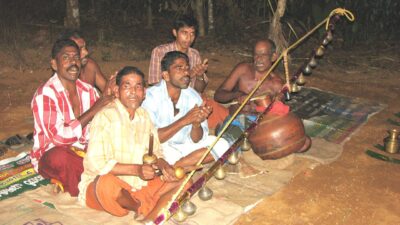
शास्त्र विंग · वाद्य-पट्टिका · Instrument Plate
विल्लु पाट्टु (विलाडी वाद्यम)
Villu Paatu (Villadi Vadyam)
अन्य नामविलाडी वाद्यम (Villadi Vadyam) · विल्लाडिचान पाट्टु (Villadichan Paatu) · विल्लाडिचम्पाट्टु (Villadichampaatu) · विल्लुप्पाट्टु (Villuppaattu)
परिचय
Overviewविल्लु पाट्टु दक्षिण भारत की एक जीवंत लोक-कला है जिसमें एक विशाल धनुष — विलाडी वाद्यम — कथा-मंच का हृदय बन जाता है। उलटे मिट्टी के घड़े पर टिका यह धनुष, उस पर बँधी काँसे की घंटियाँ, और दो लकड़ियों का ताल-प्रहार मिलकर तमिलनाडु-केरल के मंदिर-आँगनों को देवताओं की गाथाओं से भर देते हैं। यह वाद्य स्वर नहीं, धड़कन देता है; इसी पर कथा-गायक श्रोताओं को पौराणिक संसार में ले जाता है।
अंग्रेज़ी में पढ़ें · Read in English
Villu Paatu is a living folk art of South India in which a great bow — the villadi vadyam — becomes the heart of the storytelling stage. Resting on an inverted clay pot, strung with bronze bells and struck with two sticks, it fills the temple courtyards of Tamil Nadu and Kerala with the sagas of the gods. The instrument gives not melody but pulse; on it the balladeer carries the audience into a mythological world.
वर्गीकरण
ClassificationNatya Shastra Category
तत (Tata - तार वाद्य) — किंतु आघात से बजने के कारण घन/आनद्ध गुण भी
विल्लु एक विशाल धनुष है जिस पर एक तनी हुई डोरी होती है, इसलिए यह मूलतः तत (तार) वर्ग का वाद्य है। किंतु इसे उँगलियों से नहीं छेड़ा जाता — दो छोटी लकड़ियों से डोरी और धनुष पर आघात किया जाता है, जिससे लय और घंटियों की झंकार उत्पन्न होती है। इस कारण विल्लु तत, घन (झांझ-घंटी) और आनद्ध (मटका-ताल) की सीमाओं पर खड़ा एक संयुक्त (composite) वाद्य है।
The villu is a large bow bearing a single taut string, so it belongs fundamentally to the Tata (stringed) category. But it is never plucked with fingers — the string and bow are struck with two short sticks, producing rhythm and the jingle of attached bells. This makes the villu a composite instrument straddling Tata (string), Ghana (bells/idiophone), and Avanaddha (the beaten pot) — best described as a percussively-struck musical bow.
Western Category
Musical bow (percussion-struck chordophone / composite idiophone)
Western Family
Musical bow family (related to the ground bow and mouth bow; distantly kin to other bowed-stick idiophones), played as a rhythmic-melodic percussion instrument
Sub Classification
बनावट
PhysicalDescription Hindi
विल्लु एक बड़ा, चाप के आकार का धनुष है (प्रायः 6–9 फुट लंबा), जो पामीरा या अन्य लचीली-मज़बूत लकड़ी से बना होता है। इसकी लंबाई में एक मोटी डोरी तनी रहती है और धनुष की देह पर कई काँसे/पीतल की घंटियाँ बँधी होती हैं। धनुष को एक उलटे मिट्टी के घड़े (कुडम) के मुँह पर टिका दिया जाता है, जो अनुनादक (resonator) का काम करता है। मुख्य कलाकार दो छोटी लकड़ियों से डोरी और धनुष पर आघात करता है — हर प्रहार से डोरी की 'टंकार' और घंटियों की झनझनाहट एक साथ गूँजती है।
Description English
The villu is a large arc-shaped bow (typically 6–9 feet long) made of palmyra or other strong, springy wood. A thick string runs along its length, and rows of bronze/brass bells are lashed to the bow's body. The bow is rested on the mouth of an inverted clay pot (kudam), which acts as a resonator. The lead performer strikes the string and bow with two short sticks — each stroke sounds the twang of the string and the jingle of the bells together.
Body
Large single arc (bow), rested horizontally on an inverted resonating pot
बड़ा एकल चाप (धनुष), उलटे अनुनादक घड़े पर आड़ा टिका हुआ
Palmyra / bamboo / hardwood bow; thick fibre or gut string; bronze/brass bells; terracotta pot (kudam) resonator
पामीरा/बाँस/कठोर लकड़ी का धनुष; मोटी रेशा या ताँत की डोरी; काँसे/पीतल की घंटियाँ; मिट्टी का घड़ा (कुडम) अनुनादक
180-275 (bow length)
Inverted terracotta pot (kudam) placed mouth-down; the bow rests on its neck and the hollow pot amplifies the struck string and bells
Strings
A single thick playing string running the length of the bow, struck (not plucked) with sticks
The villu has no sympathetic strings; its 'shimmer' comes from the bronze bells attached along the bow that ring at every stroke
No drone strings; the sustained rhythmic bed is provided by the accompanying kudam pot and udukku drum
Bow
कोल / कट्टै (आघात-लकड़ियाँ)
Kol / Kattai (striking sticks)
Two short wooden beater sticks
20-30
Unlike a violin or sarangi bow, the villu is NOT bowed — the string and wooden arc are STRUCK with two short sticks in rapid rhythmic patterns, ringing the attached bells.
Tuning Pegs
नहीं (स्थिर बँधी डोरी)
None (fixed-tension string)
The villu has no tuning pegs; the single string is tied at fixed tension across the bow's ends, its rhythmic timbre adjusted by the bow's curvature and the resonating pot rather than by pitch tuning.
Bridge
कुडम (अनुनादक घड़ा)
Kudam (resonating pot)
In place of a conventional bridge, the inverted clay pot's neck supports the bow and transmits/amplifies the vibration of the struck string and bells.
Fired terracotta
Frets
विल्लु फ्रेट-रहित है और इसमें स्वर-स्थान नहीं होते — यह एक लयात्मक धनुष है, स्वर-वाद्य नहीं। संगीत की धुन कथा-गायक की आवाज़ से आती है, जबकि धनुष ताल, बल और नाटकीय आघात देता है।
The villu is fretless and has no pitch positions — it is a rhythmic bow, not a melodic instrument. The melody comes from the balladeer's voice, while the bow supplies pulse, drive and dramatic accent.
ध्वनि-चरित्र
SoundTonal Character Hindi
विल्लु की ध्वनि गहरी, गूँजती और उत्सवी है — मोटी डोरी का धमक भरा 'डम', उस पर घंटियों की तीखी झनझनाहट, और मिट्टी के घड़े की खोखली अनुगूँज। यह मंदिर-आँगन को भर देने वाली, नाटकीय और सम्मोहक ध्वनि है जो कथा को आगे धकेलती है।
Tonal Character English
The villu's sound is deep, resonant and festive — the thudding 'dum' of the thick string, the bright jangle of the bells above it, and the hollow boom of the clay pot beneath. It is a dramatic, hypnotic sound that fills a temple courtyard and propels the story forward.
Timbre
Percussive, buzzing and metallic-bright (from bells) over a warm hollow pot resonance
Range
Rhythmic rather than melodic; a narrow band of struck fundamentals coloured by bell overtones
Dynamic Range
Wide and powerful — from a soft rolling patter to thunderous, full-arm strokes that carry over a crowd without amplification
Techniques
सुनने का मार्गदर्शन
The Listening Guideविल्लु पाट्टु को एक 'सुनी जाने वाली कहानी' की तरह लीजिए। पहले धनुष की स्थिर लय और घंटियों की झंकार पकड़िए, फिर मुख्य गायक और सहगायक के कोंडु-पोरु (प्रश्न-उत्तर) संवाद पर ध्यान दीजिए — यही इस कला की आत्मा है। कथा के रोमांचक मोड़ पर प्रहारों की गति और घड़े की बास-गूँज को महसूस कीजिए।
अंग्रेज़ी में पढ़ें · Read in English
To enjoy Villu Paatu, approach it as a 'story to be heard' rather than pure raga music. First tune in to the steady pulse of the bow and the jangle of the bells. Then catch the question-and-answer between the lead and the co-singer (kondu-poru) — that is the life of this art. Watch how the strokes speed up at a thrilling turn and the pot's bass echo deepens. It is a communal, festive, theatrical experience.
अन्य विवरण
More DetailsTimbre
Percussive, buzzing and metallic-bright (from bells) over a warm hollow pot resonance
रोचक तथ्य
Margin Notesएक वाद्य जो तीन वर्गों में बँटा है — विल्लु पाट्टु का वाद्य वर्गीकरण अनोखा है: तनी डोरी के कारण यह 'तत' (तार-वाद्य) है, आघात-लकड़ियों और घंटियों के कारण 'घन' (झांझ-प्रकार) है, और बजाए जाने वाले मिट्टी के घड़े के कारण 'आनद्ध' (ताल) का भी अंश रखता है — इसलिए विद्वान इसे 'संयुक्त वाद्य' (composite instrument) कहते हैं।
Villu Paatu's classification is unique: its taut string makes it 'Tata' (stringed), its striking sticks and bells make it 'Ghana' (idiophone), and the beaten clay pot lends an 'Avanaddha' (membrane/percussion) element too — so scholars call it a 'composite instrument'.
घड़ा जो अनुनादक भी है और वाद्य भी — उलटा मिट्टी का घड़ा (कुडम) दोहरी भूमिका निभाता है — यह धनुष को टेक देता है और उसकी ध्वनि को गूँजाता है, और साथ ही एक सह-कलाकार उसी घड़े को हथेलियों से पीटकर बास-लय देता है।
The inverted clay pot (kudam) plays a double role — it supports the bow and amplifies its sound, while a co-performer simultaneously beats the same pot with the palms to supply a bass rhythm.
उत्तर का रावणहत्था, दक्षिण का विल्लु — जैसे राजस्थान में रावणहत्था के साथ 'पाबूजी की फड़' की वीर-गाथा गाई जाती है, वैसे ही दक्षिण में विल्लु के साथ देवता-कथाएँ गाई जाती हैं — दोनों भारत की साझा 'वाद्य-सहित कथा-गायन' परंपरा के दो छोर हैं।
Just as Rajasthan sings the heroic 'Pabuji ki Phad' with the ravanhatha, the South sings deity-tales with the villu — two ends of India's shared tradition of instrument-backed storytelling.
सवाल-जवाब
Questions & Answersविल्लु पाट्टु क्या है?
विल्लु पाट्टु ('धनुष-गीत') दक्षिण भारत की — विशेषकर तमिलनाडु और केरल की — एक प्राचीन कथा-गायन लोक-कला है, जिसमें एक विशाल धनुष (विलाडी वाद्यम) प्रमुख वाद्य होता है। इसे दो लकड़ियों से पीटा जाता है और इस पर बँधी घंटियाँ बजती हैं।
विल्लु पाट्टु का वाद्य कैसे बजाया जाता है?
बड़े धनुष को उलटे मिट्टी के घड़े (कुडम) पर टिकाया जाता है, जो अनुनादक का काम करता है। मुख्य कलाकार धनुष की डोरी और देह पर दो छोटी लकड़ियों से लयबद्ध प्रहार करता है, जबकि सह-कलाकार घड़ा बजाते और साथ गाते हैं।
विल्लु पाट्टु किस वर्ग का वाद्य है?
यह एक संयुक्त वाद्य है: तनी डोरी के कारण मूलतः 'तत' (तार) वर्ग का, किंतु आघात से बजने और घंटियों के कारण 'घन' (झांझ-प्रकार) गुण भी रखता है, और बजाए जाने वाले घड़े से 'आनद्ध' (ताल) का अंश भी।
विल्लु पाट्टु के सबसे प्रसिद्ध कलाकार कौन हैं?
'विल्लिसै सेल्वर' सुब्बु अरुमुगम को विल्लु पाट्टु का सबसे प्रसिद्ध आधुनिक कलाकार माना जाता है, जिन्होंने इसे मंच और रेडियो तक पहुँचाया और सामाजिक-संदेश का माध्यम बनाया। समकालीन कलाकारों में पुयल माधवी लोकप्रिय हैं।
क्या विल्लु पाट्टु आज भी जीवित है?
हाँ, किंतु यह एक संवेदनशील लोक-परंपरा है। अपर्याप्त आय के कारण कलाकारों की संख्या घटी है, फिर भी मंदिर-उत्सवों की माँग और यूट्यूब जैसे मंचों के कारण यह जीवित है और कुछ हद तक पुनर्जीवित हो रही है।
नमूना-पट्टी
The Specimen Table| नाम | विल्लु पाट्टु (विलाडी वाद्यम) · Villu Paatu (Villadi Vadyam) |
|---|---|
| अन्य नाम | विलाडी वाद्यम (Villadi Vadyam) · विल्लाडिचान पाट्टु (Villadichan Paatu) · विल्लाडिचम्पाट्टु (Villadichampaatu) · विल्लुप्पाट्टु (Villuppaattu) · धनुष-गीत / Bow Song |
| प्रकार | वाद्य · Instruments |
साझा कीजिए · Share this Plate