शास्त्र विंग · वाद्य-पट्टिका · Instrument Plate
तूणव
Tunava
अन्य नामतूणव · तूनव · Toonava · Tūṇava (IAST)
परिचय
Overviewतूणव भारतीय संगीत के भोर का काष्ठ-वायुवाद्य है — तैत्तिरीय संहिता, आपस्तम्ब श्रौतसूत्र और यास्क के निरुक्त में नामित एक वैदिक बाँसुरी-पूर्वज, जिसका कोई अवशेष आज नहीं बचा। इसे केवल शब्दों से जाना जाता है, फिर भी इसकी साँस बाँसुरी और वेणु में आज भी जीवित है; यही निरंतरता इसे सबसे प्राचीन नामित भारतीय वायु-वाद्यों में एक बनाती है।
अंग्रेज़ी में पढ़ें · Read in English
The Tunava is the wooden wind instrument of Indian music's dawn — a Vedic forerunner of the flute named in the Taittiriya-samhita, the Apastamba-srauta-sutra and Yaska's Nirukta, of which no relic survives. Known only through words, its breath nonetheless lives on in the bansuri and the venu; that continuity makes it one of the oldest named wind instruments of India.
वर्गीकरण
ClassificationNatya Shastra Category
सुषिर (Sushira — wind / hollow instruments)
भरत के नाट्यशास्त्र की चतुर्विध वर्गीकरण-प्रणाली में तूणव सुषिर वर्ग में आता है — अर्थात् वे वाद्य जो खोखली नली में फूँकी गई वायु से नाद उत्पन्न करते हैं। तूणव को अधिकांश वैदिक विद्वान बाँसुरी-कुल का पूर्वज मानते हैं।
In the fourfold classification of Bharata's Natya Shastra, the Tunava belongs to the Sushira (wind/hollow) category — instruments that produce sound from air blown through a hollow tube. Most Vedic scholars identify the Tunava as an early ancestor of the flute (bansuri/venu) family.
Western Category
Aerophone (edge-blown / reed woodwind)
Western Family
Flute family — an ancient wooden/reed tubular flute, forerunner of the transverse bansuri and the Carnatic venu
Sub Classification
बनावट
PhysicalDescription Hindi
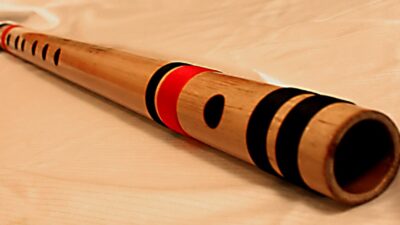
तूणव एक प्राचीन वैदिक वायु-वाद्य था जिसका कोई नमूना आज उपलब्ध नहीं है — यह लकड़ी अथवा बाँस/नरकट से बना था और समय के साथ नष्ट हो गया। ग्रंथों में इसे 'काष्ठ का वाद्य' कहा गया है और अधिकांश विद्वान इसे उँगली-छिद्रों वाली एक साधारण नली-बाँसुरी मानते हैं। नीचे दिया गया विवरण बाँसुरी-कुल के आधार पर अनुमानित पुनर्निर्माण है, प्रत्यक्ष पुरातात्त्विक प्रमाण नहीं।
Description English
The Tunava was an ancient Vedic wind instrument of which no physical specimen survives — it was made of wood or bamboo/reed and perished over the millennia. Texts describe it as an instrument 'of wood', and most scholars read it as a simple tube-flute with finger-holes. The construction detail below is an inferred reconstruction based on the flute family, not direct archaeological evidence.
Body
Straight hollow tube (edge-blown transverse or end-blown, exact form undocumented)
सीधी खोखली नली (आड़ी अथवा सीधी फूँक — मूल रूप अज्ञात)
Wood, bamboo or reed (Sanskrit sources emphasise 'daru'/wood)
काष्ठ, बाँस अथवा नरकट (संस्कृत स्रोतों में 'दारु' अर्थात् लकड़ी पर बल)
circa 30-45 (inferred from comparable ancient tube-flutes; not textually fixed)
The open hollow bore of the tube itself acts as the resonating air column
Strings
None — the Tunava is a wind instrument (aerophone) with no strings
Not applicable to a wind instrument
None; a related Vedic reed pair (algoza-like double flute) provided drone in some traditions, but the Tunava itself is described as a single pipe
Bow
लागू नहीं (फूँक-वाद्य)
Not applicable (blown instrument)
Not applicable — sound is produced by the breath, not a bow
0
The player's breath directed across or into the tube's blowing edge sets the air column vibrating
Tuning Pegs
लागू नहीं
Not applicable
A tube-flute has no pegs; the fundamental is fixed by bore length and holes
Bridge
लागू नहीं
Not applicable
No bridge — sound resonates within the open air column of the pipe
Not applicable
Frets
तूणव में फ्रेट नहीं होते। स्वर उँगलियों से छिद्रों को खोलने-बंद करने तथा फूँक की तीव्रता से बनते हैं; छिद्रों को आंशिक रूप से ढककर मींड (सूक्ष्म स्वर-सर्पण) भी संभव है — यही गुण आगे चलकर बाँसुरी में विकसित हुआ।
The Tunava has no frets. Pitch is formed by opening and closing finger-holes and by breath control; partially covering a hole allows meend (microtonal glide) — a quality that later matured in the bansuri.
Playing Technique Hindi
वादक नली के मुख-छिद्र पर वायु की धार छोड़ता है और शेष छिद्रों को उँगलियों से नियंत्रित करता है। फूँक की गति व दिशा बदलकर सप्तक और स्वर-भेद निकाले जाते हैं। यह तकनीक आज की बाँसुरी-वादन शैली की जननी मानी जाती है।
Playing Technique English
The player directs a stream of air at the tube's blowing hole while the fingers govern the remaining holes. By varying the speed and angle of the breath, octaves and pitch shades are produced. This technique is regarded as the mother of today's bansuri playing style.
ध्वनि-चरित्र
SoundTonal Character Hindi
तूणव का स्वर, जैसा उसके वंशज बाँसुरी व वेणु से अनुमानित होता है, मधुर, वायवीय और मानव-कंठ के निकट रहा होगा — शांत, गूँजदार और भक्ति-भाव जगाने वाला। वैदिक कर्मकांडों में इसकी ध्वनि पवित्र मानी जाती थी।
Tonal Character English
The Tunava's tone, inferred from its descendants the bansuri and venu, would have been sweet, airy and close to the human voice — calm, resonant and devotional. In Vedic ritual its sound was held to be sacred.
Timbre
Breathy, mellow, open woodwind tone (reconstructed from the flute lineage)
Range
Approximately two octaves for a simple tube-flute of this type (inferred; not textually recorded)
Dynamic Range
Soft to moderate — an intimate, breath-driven instrument suited to invocation and accompaniment
Techniques
सुनने का मार्गदर्शन
The Listening Guideतूणव को सीधे सुनना संभव नहीं, क्योंकि वह लुप्त वाद्य है। उसकी कल्पना के लिए किसी धीमी, बिना-ताल की बाँसुरी-आलाप को शांत मन से सुनिए। सोचिए कि यही सरल, वायवीय स्वर सहस्रों वर्ष पूर्व किसी यज्ञ-वेदी के निकट गूँजा होगा — और आज भी हर बाँसुरी में उसकी साँस बहती है।
अंग्रेज़ी में पढ़ें · Read in English
The Tunava cannot be heard directly — it is extinct. To imagine its sound, listen with a still mind to a solo bansuri alap, especially the slow rhythmless opening. Picture that this same plain, airy tone must have sounded near a sacrificial altar thousands of years ago. The Tunava is the bridge between that first breath into bamboo and today's bansuri.
परिचय
Identity- Year Of Origin
- -1000
अन्य विवरण
More DetailsTimbre
Breathy, mellow, open woodwind tone (reconstructed from the flute lineage)
रोचक तथ्य
Margin Notesनाम की जड़ में 'तूण' — 'तूणव' संस्कृत में एक काष्ठ-वाद्य को इंगित करता है; कुछ व्युत्पत्तियाँ इसे 'तूण' (खोखली नली/तरकश) से जोड़ती हैं, जो एक खोखली नली-वाद्य के रूप में इसकी पहचान को पुष्ट करता है।
'Tunava' in Sanskrit denotes a wooden instrument; some etymologies link it to 'tuna' (a hollow tube/quiver), reinforcing its identification as a hollow-pipe instrument.
महाव्रत का वाद्य — वैदिक महाव्रत अनुष्ठान में वाद्य-नाद कर्मकांड का अनिवार्य अंग था; तूणव उसी परंपरा का वायु-वाद्य माना जाता है, जहाँ संगीत उपासना का माध्यम था, मनोरंजन का नहीं।
In the Vedic Mahavrata rite, instrumental sound was an essential part of the ceremony; the Tunava is regarded as the wind instrument of that tradition, where music was a means of worship, not entertainment.
एक वाद्य, दो पहचान — अधिकांश वैदिक विद्वान (मैकडॉनेल-कीथ) तूणव को बाँसुरी मानते हैं, जबकि तिब्बती/पालि परंपरा में इसी नाम को कभी एक-तार वाद्य या ढोल से जोड़ा गया। यह दुर्लभ द्वैध किसी वाद्य की अत्यंत प्राचीनता का चिह्न है।
Most Vedic scholars (Macdonell-Keith) read the Tunava as a flute, while Tibetan/Pali traditions sometimes attached the name to a one-stringed instrument or a drum. This rare duality is a mark of an instrument of great antiquity.
बाँसुरी की जड़ — जब आप हरिप्रसाद चौरसिया की बाँसुरी सुनते हैं, तो आप एक ऐसी परंपरा सुन रहे होते हैं जिसकी जड़ तीन हज़ार वर्ष पुराने तूणव तक जाती है — भारतीय संगीत की जीवंत निरंतरता का विरल उदाहरण।
When you hear Hariprasad Chaurasia's bansuri, you are hearing a tradition whose root reaches back three thousand years to the Tunava — a rare example of the living continuity of Indian music.
सवाल-जवाब
Questions & Answersतूणव क्या है?
तूणव एक प्राचीन वैदिक वायु-वाद्य (सुषिर) है, जो काष्ठ या बाँस/नरकट से बना था। वैदिक ग्रंथों में इसे बार-बार नामित किया गया है और अधिकांश विद्वान इसे बाँसुरी-कुल का पूर्वज मानते हैं। यह आज लुप्त है।
तूणव का उल्लेख किन ग्रंथों में है?
तूणव का उल्लेख तैत्तिरीय संहिता (काण्ड VI), काठक संहिता, आपस्तम्ब श्रौतसूत्र (V.8.2) तथा यास्क के निरुक्त (XIII.9) में मिलता है; 'तूणव' और 'नाडी' नाम ऋग्वेद व सामवेद में भी वायु-वाद्यों के लिए आते हैं।
क्या तूणव और बाँसुरी एक ही हैं?
बिल्कुल एक नहीं, किंतु घनिष्ठ रूप से जुड़े हैं। तूणव बाँसुरी का प्राचीन पूर्वज माना जाता है — वही सुषिर-सिद्धांत और फूँक-आधारित स्वर। आज की बाँसुरी और दक्षिण भारत का वेणु उसी वंश के जीवित रूप हैं।
क्या तूणव आज भी बजाया जाता है?
नहीं। तूणव नाम से कोई वाद्य अब प्रचलन में नहीं है और उसका कोई नमूना नहीं बचा। हम इसे केवल वैदिक ग्रंथों से जानते हैं। इसकी परंपरा बाँसुरी और वेणु के रूप में जीवित है।
नमूना-पट्टी
The Specimen Table| नाम | तूणव · Tunava |
|---|---|
| अन्य नाम | तूणव · तूनव · Toonava · Tūṇava (IAST) · नाडी (Nadi — allied Vedic reed-flute term) |
| उद्गम | -1000 |
| प्रकार | वाद्य · Instruments |
साझा कीजिए · Share this Plate