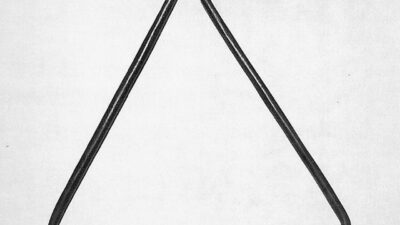
शास्त्र विंग · वाद्य-पट्टिका · Instrument Plate
ट्रायंगल
Triangle
अन्य नामट्रायंगल · त्रिकोण (हिंदी अनुवाद) · Triangle (also: Triangel, Triangolo)
परिचय
Overviewट्रायंगल — मुड़ी हुई इस्पात की एक साधारण छड़, जिसका एक कोना जानबूझकर खुला रखा जाता है ताकि वह मुक्त होकर गूँजे। धातु की छड़ से टकराने पर यह एक उज्ज्वल, अनिश्चित-स्वर वाली 'टिंग' छोड़ता है जो पूरे ऑर्केस्ट्रा के ऊपर तैरती है। पश्चिमी शास्त्रीय परंपरा का यह वाद्य हिंदी फिल्म संगीत के भव्य ऑर्केस्ट्रा तक पहुँचा, जहाँ यह विवाह, त्योहार और नृत्य-गीतों की चमक बन गया।
अंग्रेज़ी में पढ़ें · Read in English
The triangle — a simple bar of bent steel with one corner deliberately left open so it can ring freely. Struck with a metal beater, it releases a bright, indefinite-pitch 'ting' that floats above a whole orchestra. A Western classical instrument, it reached the grand orchestras of Hindi film music, where it became the sparkle of wedding, festival and dance songs.
वर्गीकरण
ClassificationNatya Shastra Category
घन (Ghana - solid/struck idiophones)
नाट्यशास्त्र के चार वाद्य-वर्गों में ट्रायंगल 'घन' वर्ग में आता है — वे ठोस धातु वाद्य जिनमें न तार होते हैं न झिल्ली, और जो सीधे प्रहार से अपने ही पदार्थ के कंपन से ध्वनि उत्पन्न करते हैं (जैसे मंजीरा, घंटा, करताल)।
In the four instrument-classes of the Natya Shastra, the triangle belongs to the 'Ghana' (solid idiophone) category — solid metal instruments with neither strings nor membrane, which sound through the vibration of their own material when struck directly (like manjira, bell, and khartal).
Western Category
Idiophone (struck metal percussion)
Western Family
Metal idiophone family — an untuned (indefinite-pitch) orchestral percussion instrument, kin to the bell, cymbal and triangle-beam; in Hornbostel-Sachs terms a directly-struck idiophone
Sub Classification
बनावट
PhysicalDescription Hindi
ट्रायंगल एक अत्यंत सरल किंतु विशिष्ट धातु वाद्य है — एक बेलनाकार इस्पात की छड़ को समबाहु त्रिभुज के आकार में मोड़ा जाता है, जिसका एक कोना खुला छोड़ा जाता है (दोनों सिरे नहीं मिलते)। यही खुला कोना इसे मुक्त रूप से गूँजने देता है। इसे एक धागे या नायलॉन के फंदे से लटकाया जाता है और एक धातु की छड़ (बीटर) से टकराकर बजाया जाता है।
Description English
The triangle is an exceptionally simple yet distinctive metal instrument — a cylindrical steel bar bent into an equilateral triangle shape, with one corner left open (the two ends do not meet). This open corner is precisely what lets it ring freely. It is suspended from a loop of thread or nylon and played by striking it with a metal beater (rod).
Body
Equilateral triangle bent from a single round metal bar, with one open (ungapped) corner
एक ही गोल धातु छड़ से मोड़ा गया समबाहु त्रिभुज, जिसका एक कोना खुला रहता है
Hardened steel (traditionally); modern variants use beryllium copper or other alloys for richer overtones
कठोर इस्पात (परंपरागत); आधुनिक संस्करणों में समृद्ध अनुनाद के लिए बेरिलियम-कॉपर या अन्य मिश्रधातु
10-25 (side length; common sizes 15-23 cm / 6-9 inches)
None — the metal bar itself vibrates; the open corner prevents the vibration from being damped, allowing long sustain
Strings
The triangle has no strings — it is an idiophone whose sounding body is the metal bar itself
None. The 'shimmer' of a triangle comes from its own rich, indefinite overtone spectrum, not from sympathetic strings
Not applicable — the triangle is a rhythmic/colouristic accent instrument, not a drone
Bow
बीटर (धातु छड़)
Beater / Triangle rod
Solid steel rod (thickness of the rod alters the tone — thin rods give a light 'ting', thick rods a fuller ring)
15-25
The triangle is struck, not bowed. The beater strikes the closed side; a rapid tremolo (roll) is made by moving the beater back and forth inside a closed corner
Tuning Pegs
लागू नहीं
Not applicable
The triangle has no tuning mechanism; pitch/timbre is fixed by the bar's size, thickness and alloy
Bridge
लटकन-फंदा (होल्डर)
Holder / suspension loop (clip)
A loop of thread, gut or nylon (often held in a spring clip) from which the triangle hangs, so the metal can vibrate completely freely without being touched
Nylon or gut cord in a metal/plastic clip
Frets
ट्रायंगल में फ्रेट या स्वर-स्थान नहीं होते — यह अनिश्चित स्वर वाला ताल-रंग वाद्य है; खिलाड़ी 'खुली' (गूँजती) और 'बंद' (हथेली से दबाई हुई, म्यूट) ध्वनि के बीच अंतर से अभिव्यक्ति रचता है।
The triangle has no frets or note positions — it is an indefinite-pitch colour instrument; the player creates expression through the contrast between 'open' (ringing) and 'closed' (hand-damped, muted) sounds.
ध्वनि-चरित्र
SoundTonal Character Hindi
ट्रायंगल की ध्वनि उज्ज्वल, ऊँची और चाँदी-सी झलकती है — एक साफ़ 'टिंग' जो पूरे ऑर्केस्ट्रा के ऊपर तैरती हुई सुनाई देती है। इसका स्वर अनिश्चित है, इसलिए यह किसी भी सुर या राग के साथ बिना टकराए मिल जाता है और संगीत में चमक तथा उत्सव का स्पर्श भर देता है।
Tonal Character English
The triangle's sound is bright, high and silvery — a clear 'ting' that floats above an entire orchestra. Because its pitch is indefinite, it blends with any key or raga without clashing, adding a touch of sparkle and festivity to the music.
Timbre
Brilliant, bell-like, shimmering; a rich cluster of high inharmonic overtones with a long, clean sustain
Range
Indefinite pitch — perceived register is very high; the sound sits above the melodic content and cuts through dense textures
Dynamic Range
Very wide relative to its size — from a barely-audible pianissimo ting to a piercing tremolo roll that can be heard over a full orchestra
Techniques
सुनने का मार्गदर्शन
The Listening Guideट्रायंगल को सुनना हो तो किसी उल्लासपूर्ण फिल्म-गीत या पश्चिमी ऑर्केस्ट्रा में उन क्षणों पर कान लगाइए जब संगीत अचानक चमक उठता है — कोरस से ठीक पहले या नृत्य-अंतरे में। उस साफ़, ऊँची 'टिंग' को पहचानिए जो सब वाद्यों के ऊपर तैरती है, और फिर देखिए कि वह किसी सुर से टकराती नहीं, बस उजाला जोड़ती है।
अंग्रेज़ी में पढ़ें · Read in English
To hear the triangle, listen in a grand film song or a Western orchestra for the moments where the music turns bright and celebratory — just before a chorus, or in a dance refrain. Find that clean, high 'ting' floating above every other instrument. Then hear the 'triangle' movement of Liszt's Piano Concerto No. 1, where this tiny instrument speaks almost like a soloist alongside the whole orchestra.
परिचय
Identity- Year Of Origin
- 1700
अन्य विवरण
More DetailsTimbre
Brilliant, bell-like, shimmering; a rich cluster of high inharmonic overtones with a long, clean sustain
रोचक तथ्य
Margin Notesखुला कोना — डिज़ाइन का रहस्य — ट्रायंगल पूरी तरह बंद त्रिभुज नहीं होता; उसका एक कोना खुला छोड़ा जाता है ताकि धातु स्वतंत्र रूप से कंपित हो सके। यह छोटी-सी बात ही उसकी लंबी, गूँजती ध्वनि का कारण है।
A triangle is not a fully closed triangle; one corner is left open so the metal can vibrate freely. This small detail is the very reason for its long, ringing sound.
अनिश्चित स्वर, असीम मेल — क्योंकि ट्रायंगल किसी निश्चित स्वर पर नहीं टिकता, संयोजक इसे किसी भी राग या पैमाने के गीत में जोड़ सकते हैं — यही कारण है कि यह हिंदी फिल्म संगीत के इतने विविध गीतों में उजाला भर पाया।
Because the triangle does not settle on a fixed note, arrangers can add it to a song in any raga or scale — which is exactly why it could bring light to such a wide range of Hindi film songs.
बीटर की मोटाई से बदलती आवाज़ — एक ही ट्रायंगल पतली छड़ से हल्की 'टिंग' और मोटी छड़ से भरी-पूरी झनकार देता है। पेशेवर ताल-वादक अलग-अलग मोटाई की कई छड़ें रखते हैं, ठीक वैसे जैसे चित्रकार अलग-अलग कूँचियाँ।
The same triangle gives a light 'ting' with a thin rod and a fuller ring with a thick one. Professional percussionists keep several beaters of different thicknesses, just as a painter keeps different brushes.
स्टूडियो के पश्चिमी-ताल विशेषज्ञ — हिंदी फिल्म संगीत के स्वर्ण युग में ट्रायंगल जैसे पश्चिमी ताल-वाद्य प्रायः विशेष स्टूडियो वादकों द्वारा बजाए जाते थे। कर्सी लॉर्ड जैसे बहुमुखी वादक पश्चिमी ताल-वाद्य और एकॉर्डियन दोनों में दक्ष थे और उन्होंने बड़े फिल्म-ऑर्केस्ट्रा में अनेक पश्चिमी ध्वनियाँ पेश कीं।
In the golden age of Hindi film music, Western percussion like the triangle was often played by specialist studio musicians. Versatile players such as Kersi Lord were skilled in both Western percussion and accordion, and introduced many Western sounds into the large film orchestras.
सवाल-जवाब
Questions & Answersट्रायंगल क्या है?
ट्रायंगल एक पश्चिमी ताल-वाद्य है — इस्पात की एक छड़ को त्रिभुज के आकार में मोड़ा जाता है जिसका एक कोना खुला रहता है। इसे धातु की छड़ से टकराकर बजाया जाता है और यह एक उज्ज्वल, अनिश्चित-स्वर वाली 'टिंग' देता है।
ट्रायंगल के एक कोने को खुला क्यों रखा जाता है?
यदि दोनों सिरे मिल जाएँ तो धातु का कंपन दब जाएगा और वह ठीक से नहीं गूँजेगा। खुला कोना धातु को स्वतंत्र रूप से कंपित होने देता है, जिससे लंबी, झिलमिलाती ध्वनि मिलती है।
क्या ट्रायंगल हिंदी फिल्म संगीत में इस्तेमाल हुआ है?
हाँ। हिंदी फिल्म संगीत के स्वर्ण युग (1940-1970) के बड़े पश्चिमी-शैली ऑर्केस्ट्रा में ट्रायंगल जैसे ताल-वाद्य विवाह, नृत्य और उत्सव-गीतों में उज्ज्वल संगत-रंग के रूप में प्रयोग होते थे।
ट्रायंगल का कोई निश्चित स्वर होता है?
नहीं। ट्रायंगल अनिश्चित-स्वर वाला वाद्य है — यह किसी एक स्वर के बजाय ऊँचे अनुनादों का समूह छोड़ता है। इसी कारण यह किसी भी राग या पैमाने के संगीत में बिना टकराए मिल सकता है।
ट्रायंगल किस नाट्यशास्त्र वर्ग में आता है?
अपनी बनावट के अनुसार ट्रायंगल 'घन' वर्ग में आता है — वे ठोस धातु वाद्य जो प्रहार से अपने ही पदार्थ के कंपन से बजते हैं, जैसे मंजीरा, घंटा और करताल।
नमूना-पट्टी
The Specimen Table| नाम | ट्रायंगल · Triangle |
|---|---|
| अन्य नाम | ट्रायंगल · त्रिकोण (हिंदी अनुवाद) · Triangle (also: Triangel, Triangolo) |
| उद्गम | 1700 |
| प्रकार | वाद्य · Instruments |
साझा कीजिए · Share this Plate