शास्त्र विंग · वाद्य-पट्टिका · Instrument Plate
टोकारी
Tokari
अन्य नामटोकारी नाम (Tokari Naam) · टुकारी (Tukari) · Tokari (also: Ṭokārī)
परिचय
Overviewटोकारी असम का लंबी गर्दन वाला लोक-लूट है — एक ही लकड़ी से तराशा खोल, बकरी की खाल का पटल और 'सा–प' पर मिले एक से चार तार। एकतारा-दोतारा परिवार का यह असमिया रूप शंकरदेव की नव-वैष्णव भक्ति परंपरा से जुड़ा है और 'टोकारी गीत' — कृष्ण-भक्ति व दार्शनिक 'देह-बिचार' के लोक-भक्ति गीतों — का प्राण-वाद्य है।
अंग्रेज़ी में पढ़ें · Read in English
The tokari is Assam's long-necked folk lute — a shell carved from a single block of wood, a goatskin soundtable, and one to four strings tuned to Sa–Pa. This Assamese member of the ektara–dotara family is bound to Sankardev's Neo-Vaishnavite bhakti tradition and is the lifeblood instrument of 'Tokari geet', the folk-devotional songs of Krishna-bhakti and philosophical 'deh-bichar'.
वर्गीकरण
ClassificationNatya Shastra Category
तत (Tata - stringed instruments)
तत वर्ग में टोकारी एक प्लक्ड (उँगली से झंकृत) लूट है — इसकी ध्वनि तारों को उँगली या मिज़राब से झनकाने से उत्पन्न होती है, न कि धनुष के घर्षण से। यह एकतारा-दोतारा परिवार का असमिया रूप है।
In the Tata (stringed) category, the tokari is a plucked lute — its sound is produced by plucking the strings with the fingers (or a plectrum), not by bowing. It is the Assamese form of the ektara–dotara family of drone lutes.
Western Category
Plucked string instrument (long-necked lute)
Western Family
Lute family — a fretless necked lute with a goatskin soundtable, comparable in principle to the Chinese ruan and to the North Indian ektara/dotara
Hornbostel Sachs
321.321 — necked bowl lute, sounded by plucking
Sub Classification
बनावट
PhysicalDescription Hindi
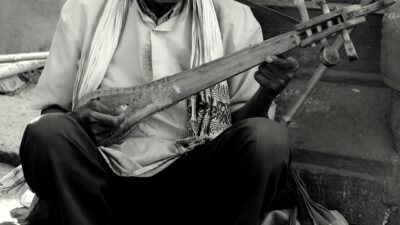
टोकारी एक लंबी गर्दन वाली असमिया लोक-लूट है जिसका खोल एक ही लकड़ी के टुकड़े से खोदकर बनाया जाता है, और ध्वनि-पटल पर बकरी की खाल मढ़ी जाती है। यह दोतारा से थोड़ी बड़ी और चौड़ी होती है। इसमें एक से चार तार होते हैं जिन्हें आमतौर पर 'सा' और 'प' पर मिलाया जाता है; इसे गोद में क्षैतिज रखकर उँगलियों से बजाया जाता है।
Description English
The tokari is a long-necked Assamese folk lute whose shell is hollowed from a single block of wood, with a goatskin membrane stretched over the soundtable. It is slightly larger and wider than the dotara. It carries one to four strings, usually tuned to Sa and Pa, and is held horizontally in the lap and plucked with the fingers.
Body
Rounded/gourd-like resonator with a long straight neck (single-piece construction)
गोलाकार अनुनादक कक्ष के साथ लंबी सीधी गर्दन (एक ही लकड़ी से तराशी हुई)
Single block of local wood — gomari/gamari (Gmelina arborea), jackfruit, mango, cham, or neem
स्थानीय लकड़ी का एक ही टुकड़ा — गोमारी/गमारी (Gmelina arborea), कटहल, आम, चाम या नीम
70-100
Hollowed wooden bowl closed by a stretched goatskin soundtable that projects and warms the sound
Strings
Playing / drone strings — a single string in the simplest form, up to four in richer instruments
Traditional tokari has no separate sympathetic (tarab) strings; its resonance comes from the goatskin membrane and open drone strings
The main strings themselves function as a continuous Sa–Pa drone under the sung melody
Bow
मिज़राब / उँगली
Plectrum / fingers
Plucked with the bare fingertips; some players use a plectrum, traditionally shaped from horn (e.g. deer horn)
N/A (plucked, not bowed)
Strings are plucked near the bridge with the fingers of the right hand while the left hand stops the string along the neck
Tuning Pegs
खूँटी (कान)
Tuning pegs (kaan)
Wooden friction pegs set into the head of the neck that tension the strings to the Sa–Pa drone
Bridge
घोड़ी / पुल
Bridge (ghori)
A small bridge resting on the goatskin soundtable that transmits string vibration into the membrane and wooden shell
Wood or bone, seated on the stretched skin
Frets
टोकारी फ्रेटलेस होती है — कलाकार गर्दन पर सीधे उँगलियाँ रखकर स्वर बनाता है, जिससे लोक-गायन की सहज मींड और झुकाव संभव होते हैं।
The tokari is fretless — the player stops the string directly with the fingers along the neck, allowing the gentle slides and inflections natural to folk singing.
ध्वनि-चरित्र
SoundTonal Character Hindi
टोकारी की ध्वनि सादी, गूँजती और मिट्टी की गंध लिए हुई है — बकरी की खाल के पटल से एक कोमल, ढोलक-सी थपथपाहट और खुले तारों की निरंतर 'सा–प' गुनगुनाहट मिलकर भक्ति-गायन के लिए एक ध्यानमग्न पृष्ठभूमि रचती है।
Tonal Character English
The tokari's tone is plain, resonant and earthy — the goatskin membrane lends a soft, drum-like thud while the open strings hum a steady Sa–Pa drone, together forming a meditative bed for devotional singing.
Timbre
Warm, buzzing, membrane-coloured drone; intimate rather than brilliant
Range
Narrow — essentially a tonic-and-fifth drone that supports a folk vocal range of about one to one-and-a-half octaves
Dynamic Range
Soft to moderate; designed to sit beneath and support a solo devotional voice, not to project over an ensemble
Techniques
सुनने का मार्गदर्शन
The Listening Guideटोकारी को समझने के लिए पहले पारंपरिक टोकारी गीत सुनिए — एक अकेली आवाज़, नीचे 'सा–प' की स्थिर गुनगुनाहट और खाल के पटल की कोमल थपकी। इसकी सुंदरता सादगी में है। फिर पापोन की 'टोकारी' सुनिए यह देखने के लिए कि यही लोक-धुन आधुनिक परतों में कैसे ढलती है।
अंग्रेज़ी में पढ़ें · Read in English
To understand the tokari, first hear a traditional Tokari geet — a lone voice, a steady Sa–Pa hum beneath, and the soft tap of the skin soundtable. Its beauty is in plainness, not ornament. Then hear Papon's 'Tokari' to see how the same folk melody folds into modern textures. Notice that the instrument never overwhelms the singer — it holds them up.
परिचय
Identity- Year Of Origin
- 1500
वर्गीकरण
Classification- Hornbostel Sachs
- 321.321 — necked bowl lute, sounded by plucking
अन्य विवरण
More DetailsTimbre
Warm, buzzing, membrane-coloured drone; intimate rather than brilliant
रोचक तथ्य
Margin Notesएक ही लकड़ी, एक ही खाल — टोकारी का पूरा खोल एक ही लकड़ी के टुकड़े — गोमारी, कटहल, आम या नीम — से खोदकर बनाया जाता है, और उसके मुँह पर बकरी की खाल मढ़ी जाती है। इसी सादगी में इसकी विशिष्ट, मिट्टी-सी गूँज बसती है।
The entire shell of a tokari is hollowed from a single block of wood — gomari, jackfruit, mango or neem — and its mouth is covered with goatskin. In this very simplicity lives its distinctive, earthy resonance.
शंकरदेव के नामघर से जन्मी विधा — टोकारी गीत का उदय 15वीं-16वीं सदी के महापुरुष श्रीमंत शंकरदेव के नव-वैष्णव भक्ति आंदोलन से जुड़ा है। बरदोवा के पहले नामघर और असम भर के सत्रों में यह भक्ति-गायन का साथी बनी।
Tokari geet's rise is tied to the 15th–16th century Neo-Vaishnavite bhakti movement of Srimanta Sankardev. In the first namghar at Bordowa and in satras across Assam it became the companion of devotional song.
नाम में ही झंकार — असमिया 'टोकर' का अर्थ है 'ठकठकाने से उत्पन्न ध्वनि'। इस तरह वाद्य का नाम ही उस झंकार से बना है जो वह उत्पन्न करता है — नाम और ध्वनि एक ही मूल के हैं।
The Assamese 'tokar' means 'the sound produced by knocking'. Thus the instrument's very name is made from the strum it produces — name and sound share one root.
मरती विधा को नई साँस — 20वीं सदी के उत्तरार्ध में टोकारी गीत लुप्तप्राय हो चला था। 2012 में पापोन की कोक स्टूडियो प्रस्तुति और ज़ुबीन गर्ग जैसे गायकों के भक्तिमूलक एल्बमों ने इसे लाखों नए श्रोताओं तक पहुँचाकर पुनर्जीवित किया।
By the later 20th century Tokari geet had become endangered. In 2012 Papon's Coke Studio performance, and devotional albums by singers such as Zubeen Garg, revived it by carrying it to millions of new listeners.
सवाल-जवाब
Questions & Answersटोकारी क्या है?
टोकारी असम का एक लंबी गर्दन वाला लोक-लूट (तत/प्लक्ड वाद्य) है, जिसका खोल एक ही लकड़ी से खोदा जाता है और मुँह पर बकरी की खाल मढ़ी होती है। इसमें एक से चार तार होते हैं और इसे 'टोकारी गीत' नामक भक्ति लोक-विधा के साथ बजाया जाता है।
टोकारी में कितने तार होते हैं और यह कैसे बजाई जाती है?
टोकारी में आमतौर पर एक से चार तार होते हैं, जिन्हें 'सा' और 'प' पर मिलाया जाता है। इसे गोद में क्षैतिज रखकर उँगलियों से (कभी-कभी सींग के मिज़राब से) झनकाया जाता है, जिससे गायन के नीचे आधार-स्वर और लय बनती है।
टोकारी गीत क्या है?
टोकारी गीत असम की एक भक्ति लोक-विधा है जिसे टोकारी बजाते हुए गाया जाता है। इसे पहले 'टोकारी नाम' भी कहते थे। ये गीत दार्शनिक-आध्यात्मिक होते हैं, प्रायः कृष्ण को समर्पित, और रामायण-महाभारत तथा शंकरदेव-माधवदेव की कथाओं पर आधारित।
टोकारी किस वाद्य परिवार से संबंधित है?
टोकारी एकतारा-दोतारा परिवार का असमिया रूप है — एक फ्रेटलेस, खाल-मढ़ा प्लक्ड ड्रोन-लूट। यह दोतारा से थोड़ी बड़ी और चौड़ी होती है, और इसकी संरचना की तुलना कभी चीनी 'रुआन' से भी की जाती है।
टोकारी को पापोन ने कैसे लोकप्रिय बनाया?
2012 में पापोन ने सुगंधा गर्ग के साथ कोक स्टूडियो @ MTV पर पारंपरिक असमिया गीत 'टोकारी' प्रस्तुत किया, जिसमें उन्होंने स्वयं टोकारी बजाई। सवा करोड़ से अधिक बार देखी गई यह प्रस्तुति इस लुप्तप्राय लोक-वाद्य को राष्ट्रीय श्रोताओं तक ले गई।
नमूना-पट्टी
The Specimen Table| नाम | टोकारी · Tokari |
|---|---|
| अन्य नाम | टोकारी नाम (Tokari Naam) · टुकारी (Tukari) · Tokari (also: Ṭokārī) |
| उद्गम | 1500 |
| प्रकार | वाद्य · Instruments |
साझा कीजिए · Share this Plate