शास्त्र विंग · वाद्य-पट्टिका · Instrument Plate
टिम्बालेस
Timbales
अन्य नामटिम्बेल्स · पैला / पाइला (Pailas / Paila criolla) · Timbales (also: Timbal, Timbales criollos)
परिचय
Overviewटिम्बालेस क्यूबा के डांसहॉलों में जन्मी धातु-खोल वाली जुड़वाँ ढोल-जोड़ी है — यूरोपीय टिम्पानी की हल्की, चमकती संतान। खोल पर खनकती कास्कारा, काउबेल की कटीली टन-टन और फूटता अबानिको इसकी भाषा है। टीटो प्युएंते के हाथों यह संगत से मंच-नायक बना, और भारतीय फ़िल्म-संगीत में इसका अफ्रो-क्यूबन परिवार 1960-70 के कैबरे व पार्टी-गीतों की धड़कन बनकर आया।
अंग्रेज़ी में पढ़ें · Read in English
The timbales are a metal-shelled pair of twin drums born in Cuba's dancehalls — the light, gleaming children of the European timpani. The ringing cáscara on the shell, the cutting clank of the cowbell, and the bursting abanico are its language. In Tito Puente's hands it rose from accompaniment to a stage star, and in Indian film music its Afro-Cuban family became the pulse of 1960s-70s cabaret and party numbers.
वर्गीकरण
ClassificationNatya Shastra Category
अवनद्ध (Avanaddha - membranophone / covered percussion)
नाट्यशास्त्र की चार वाद्य-श्रेणियों में टिम्बालेस 'अवनद्ध' (चमड़े/झिल्ली से मढ़े हुए ताल-वाद्य) वर्ग के अनुरूप है — यह भारतीय वर्गीकरण में विदेशी वाद्य होने के कारण केवल सादृश्य से रखा गया है, क्योंकि इसकी ध्वनि खिंची हुई झिल्ली पर आघात से उत्पन्न होती है।
Among the four Natya Shastra instrument categories, timbales map by analogy to 'Avanaddha' (skin/membrane-covered percussion) — a placement by analogy only, since timbales are a non-Indian instrument, because their sound arises from striking a stretched head over an open metal shell.
Western Category
Percussion — single-headed, open-bottomed metal-shell drums (membranophone)
Western Family
Latin / Afro-Cuban percussion; a shallow, higher-pitched descendant of the orchestral timpani (pailas), played in pairs and mounted on a stand with cowbells and a cymbal
Sub Classification
बनावट
PhysicalDescription Hindi
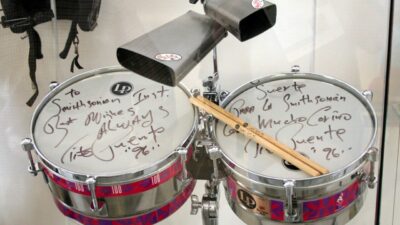
टिम्बालेस उथले, धातु के खोल वाले एकल-मुख (एक ओर से मढ़े) ढोल की एक जोड़ी है जो एक स्टैंड पर लगाई जाती है। छोटा ढोल 'माचो' (ऊँचा स्वर) और बड़ा ढोल 'हेम्ब्रा' (नीचा स्वर) कहलाता है। खोल आमतौर पर स्टील, पीतल या ताँबे का होता है और नीचे से खुला रहता है, जिससे तीखी, धात्विक, गूँजती ध्वनि निकलती है। स्टैंड पर ऊपर एक-दो काउबेल (चा-चा और मैम्बो बेल) और अक्सर एक जोड़ी झांझ (सिम्बल) भी लगी होती है।
Description English
Timbales are a pair of shallow, metal-shell, single-headed drums mounted on a stand. The smaller drum is the 'macho' (higher pitch) and the larger the 'hembra' (lower pitch). The shells are typically steel, brass, or copper and left open at the bottom, giving a bright, metallic, ringing tone. Mounted above are one or two cowbells (cha-cha and mambo bells) and often a small cymbal.
Body
Two shallow cylindrical shells, open at the bottom, of contrasting diameters
दो उथले बेलनाकार खोल, नीचे से खुले, भिन्न-भिन्न व्यास के
Metal shells — steel, brass, or copper; single drumheads (traditionally calfskin, now usually plastic/Mylar)
धातु के खोल — स्टील, पीतल या ताँबा; मुख पर एक झिल्ली (परंपरागत रूप से बछड़े की खाल, अब प्रायः प्लास्टिक/माइलर)
Diameters typically 33 cm (13") macho and 36 cm (14") hembra; shells 15-20 cm deep, mounted at waist height on a stand
Open-bottomed metal shell — short, bright, cutting resonance rather than deep sustain
Strings
Timbales are a percussion instrument and have no strings; sound is produced entirely by striking heads, shells, cowbells, and cymbal
None — timbales have no sympathetic resonating strings
None
Bow
बाक़ेता (लकड़ी की डंडियाँ)
Baquetas (timbale sticks)
Thin, un-tipped hardwood dowels (no drumstick bead), often played bare-handed on one drum while the other is struck with a stick
38-41
Struck, not bowed — the player uses light wooden dowels and a free hand; the shell rim is struck for the sharp 'cáscara' pattern and the head for accents
Tuning Pegs
ट्यूनिंग लग / तनाव-पेंच
Tuning lugs
Metal lugs and a rim (counterhoop) around each head; turning the lugs tightens the single head to raise pitch — no wooden pegs
Bridge
स्टैंड एवं माउंट
Stand and mounts
A single central stand holds both shells and the overhead cowbell/cymbal brackets, keeping the rig at playing height
Chromed steel hardware
Frets
टिम्बालेस में फ्रेट या तार नहीं होते — यह एक शुद्ध लय-वाद्य है; स्वर के बजाय ताल, आक्रमण और लय-पैटर्न इसकी भाषा हैं।
Timbales have no frets or strings — being a pure rhythm instrument; rather than pitch, its language is timing, attack, and rhythmic pattern.
ध्वनि-चरित्र
SoundTonal Character Hindi
टिम्बालेस की ध्वनि तीखी, चमकदार और धात्विक होती है — मुख पर तेज़ थाप, खोल के किनारे (कास्कारा) पर खनकती लकड़ी की खटखट, और काउबेल की कटीली टन-टन। यह वाद्य किसी नरम गूँज के लिए नहीं, बल्कि नाच को उकसाने वाली, आगे धकेलती हुई ऊर्जा के लिए बना है।
Tonal Character English
The timbales' voice is bright, cutting, and metallic — sharp slaps on the head, a ringing wooden clatter on the shell rim (cáscara), and the piercing clank of the cowbell. The instrument is built not for soft resonance but for propulsive, dance-driving energy.
Timbre
Bright, dry, metallic — short sustain with a sharp attack; the open shell rings, the cowbell cuts through a full band
Range
Unpitched (relative high/low between the two drums); functions rhythmically rather than melodically
Dynamic Range
Wide and aggressive — from a soft cáscara whisper on the shell to full-band accents (abanico rolls) that punctuate a mambo
Techniques
सुनने का मार्गदर्शन
The Listening Guideटिम्बालेस पहचानना हो तो किसी मैम्बो या साल्सा में सबसे पहले खोल पर बजती खनकती धातु-लय (कास्कारा) पकड़िए — यही रीढ़ है। जोशीले भाग में सुनिए काउबेल कब आगे आती है, और अनुभाग के आरंभ पर 'अबानिको' की चटकती झलक ढूँढिए। बॉलीवुड में 1960-70 के कैबरे-गीतों की लैटिन पर्कशन-परत पर कान टिकाइए।
अंग्रेज़ी में पढ़ें · Read in English
To spot timbales, in a classic mambo or salsa first catch that ringing, metallic rhythm played on the shell (the cáscara) — that is the backbone. Then, in the song's energetic section, hear when the cowbell cuts to the front. Look for the crackling 'abanico' flourish at the start of a section. In Bollywood, listen to the Latin-percussion layer of 1960s-70s cabaret/party numbers — congas, bongos, and the glinting metal sound between them.
परिचय
Identity- Year Of Origin
- 1900
अन्य विवरण
More DetailsTimbre
Bright, dry, metallic — short sustain with a sharp attack; the open shell rings, the cowbell cuts through a full band
रोचक तथ्य
Margin Notesटिम्पानी से पैला तक — टिम्बालेस यूरोपीय आर्केस्ट्रा की भारी टिम्पानी का क्यूबन, हल्का रूपांतरण है। जब बड़े ताँबे के नगाड़े डांसहॉल के लिए बोझिल लगे, तो उन्हें छोटा, धातु-खोल वाला और स्टैंड पर टिका दिया गया — और इस तरह 'पैला क्रिओया' यानी टिम्बालेस का जन्म हुआ।
Timbales are the Cuban, lightweight reinvention of the heavy European orchestral timpani. When the big copper kettledrums proved cumbersome for dancehalls, they were shrunk, given open metal shells, and mounted on a stand — and thus the 'paila criolla', the timbales, was born.
एक वादक, पूरी लय-पंक्ति — टिम्बालेस वादक एक ही समय में दो ढोल, खोल की कास्कारा, एक-दो काउबेल और एक झांझ सँभालता है। इसीलिए यह अकेला व्यक्ति साल्सा बैंड की पूरी लय-रीढ़ बन जाता है — भारतीय संगीत में तबले की केंद्रीयता जैसा ही स्थान।
A timbales player manages two drums, the shell cáscara, one or two cowbells, and a cymbal all at once. That is why a single person can become the entire rhythmic backbone of a salsa band — a role of centrality comparable to the tabla in Indian music.
बॉलीवुड कैबरे की धड़कन — 1960-70 के दशक में हिंदी सिनेमा ने पश्चिमी नाइट-क्लब और कैबरे दृश्यों के लिए अफ्रो-क्यूबन लय-वाद्यों को अपनाया। टिम्बालेस, कोंगा और बोंगो की जोड़ी ने पर्दे पर विदेशी 'ग्लैमर' का ध्वनि-रंग गढ़ा — जिसे संगीतकार आर. डी. बर्मन ने बड़ी कुशलता से इस्तेमाल किया।
In the 1960s-70s Hindi cinema embraced Afro-Cuban percussion for Western nightclub and cabaret scenes. The pairing of timbales, congas, and bongos crafted the sonic colour of foreign 'glamour' on screen — a palette that composer R.D. Burman used with great skill.
माचो और हेम्ब्रा — टिम्बालेस की जोड़ी में छोटा, ऊँचे स्वर वाला ढोल 'माचो' और बड़ा, नीचे स्वर वाला 'हेम्ब्रा' कहलाता है। दोनों के बीच स्वर-अंतर ही टिम्बालेस की 'बातचीत' — उसकी सवाल-जवाब वाली लय — को संभव बनाता है।
In a pair of timbales, the smaller, higher-pitched drum is the 'macho' and the larger, lower one the 'hembra'. The pitch contrast between them is what makes the timbales' 'conversation' — its call-and-response rhythm — possible.
सवाल-जवाब
Questions & Answersटिम्बालेस क्या है?
टिम्बालेस क्यूबा में जन्मी धातु-खोल वाली एकल-मुख ढोल-जोड़ी है, जो स्टैंड पर काउबेल और झांझ के साथ लगाई जाती है। यह लैटिन/अफ्रो-क्यूबन नृत्य-संगीत — मैम्बो, चा-चा-चा, साल्सा — का प्रमुख ताल-वाद्य है।
टिम्बालेस और टिम्पानी में क्या संबंध है?
टिम्बालेस यूरोपीय आर्केस्ट्रा की भारी टिम्पानी (नगाड़ों) का हल्का, क्यूबन रूपांतरण है। इन्हें छोटा, धातु-खोल वाला और स्टैंड पर टिका बनाया गया ताकि डांसहॉल बैंड इन्हें आसानी से बजा सकें; इन्हें 'पैला' भी कहा जाता है।
बॉलीवुड में टिम्बालेस का उपयोग कब हुआ?
टिम्बालेस और उसका अफ्रो-क्यूबन परिवार (कोंगा, बोंगो, काउबेल) मुख्यतः 1960-70 के दशक के कैबरे और पार्टी-गीतों में प्रयोग हुआ, विशेषकर संगीतकार आर. डी. बर्मन की रिदम-सेक्शन में, जिसने नाइट-क्लब दृश्यों को उनकी तीखी, नाचती ऊर्जा दी।
टिम्बालेस को 'टिम्बाल का राजा' किसे कहा जाता है?
टीटो प्युएंते (1923-2000) को 'एल रे देल तिम्बाल' यानी 'टिम्बाल का राजा' कहा जाता है। उन्होंने टिम्बालेस को संगत-वाद्य से उठाकर मंच के सामने एकल-नायक बना दिया।
टिम्बालेस कैसे बजाया जाता है?
टिम्बालेस को पतली लकड़ी की डंडियों (बाक़ेता) और खुली हथेली से बजाया जाता है। खोल के किनारे पर 'कास्कारा' पैटर्न, मुख पर रिम-शॉट, और ऊपर लगी काउबेल पर लय बजाई जाती है; किसी अनुभाग के आरंभ पर 'अबानिको' झलक लगाई जाती है।
नमूना-पट्टी
The Specimen Table| नाम | टिम्बालेस · Timbales |
|---|---|
| अन्य नाम | टिम्बेल्स · पैला / पाइला (Pailas / Paila criolla) · Timbales (also: Timbal, Timbales criollos) |
| उद्गम | 1900 |
| प्रकार | वाद्य · Instruments |
साझा कीजिए · Share this Plate