शास्त्र विंग · वाद्य-पट्टिका · Instrument Plate
टैम्बोरीन
Tambourine
अन्य नामटैम्बोरीन · जिंगल फ्रेम ड्रम (Jingle frame drum) · Timbrel (पुरातन नाम) · Tambourine (also: Tamborine)
परिचय
Overviewटैम्बोरीन एक हथेली-भर गोल फ्रेम-वाद्य है जिसकी झाँझें हर आघात के बाद चमकीली झिलमिलाहट छोड़ती हैं। प्राचीन 'टिम्ब्रल' से लेकर 1960 के दशक की रॉक धुनों और बॉलीवुड की पश्चिम-प्रेरित रिदम तक, यह लय में 'रंग' भरने वाला सबसे सुलभ वाद्य है — भारतीय डफ, डफली और कंजीरा का पश्चिमी चचेरा भाई।
अंग्रेज़ी में पढ़ें · Read in English
The tambourine is a palm-sized round frame instrument whose jingles leave a bright shimmer after every strike. From the ancient 'timbrel' to 1960s rock and Bollywood's Western-influenced rhythms, it is the most accessible instrument for adding 'colour' to a groove — the Western cousin of the Indian daf, dafli and kanjira.
वर्गीकरण
ClassificationNatya Shastra Category
घन एवं अवनद्ध (Ghana + Avanaddha — hybrid idiophone-membranophone)
टैम्बोरीन भारतीय नाट्यशास्त्र की चतुर्विध वर्गीकरण-प्रणाली का मूल अंग नहीं है क्योंकि यह पश्चिमी वाद्य है; किंतु उसी ढाँचे में रखें तो यह दोहरे स्वभाव का यंत्र है — इसकी झाँझें (जिंगल) 'घन' (ठोस, स्वयं-ध्वनित) वर्ग में आती हैं, और यदि उसमें चमड़े/झिल्ली का मुँह हो तो वह 'अवनद्ध' (मढ़ा हुआ ताल-वाद्य) वर्ग को भी छूता है।
The tambourine is not native to the Natya Shastra's four-fold classification because it is a Western instrument; but placed within that framework it is a dual-natured instrument — its jingles (zils) belong to the 'Ghana' (solid, self-sounding idiophone) class, and where a skin/membrane head is fitted it also touches the 'Avanaddha' (covered percussion / membranophone) class.
Western Category
Percussion — jingle frame drum
Western Family
Frame-drum family with attached jingles (idiophone + optional membranophone); Hornbostel-Sachs 112.121 for the headless jingle ring, hybrid when a head is present
Sub Classification
बनावट
PhysicalDescription Hindi
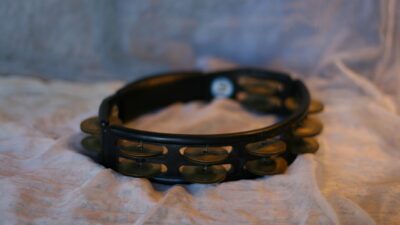
टैम्बोरीन एक हल्का, गोल फ्रेम-वाद्य है जिसकी लकड़ी या प्लास्टिक की पतली गोलाकार बाड़ (फ्रेम) में जोड़ों में लगी छोटी धातु की झाँझें (जिंगल/ज़िल) लगी होती हैं। कुछ टैम्बोरीन में एक ओर पतली झिल्ली (चमड़ा या प्लास्टिक) मढ़ी होती है — इन्हें 'हेडेड' कहते हैं; बिना झिल्ली वाले 'हेडलेस' कहलाते हैं। इसे एक हाथ में पकड़कर दूसरे हाथ, घुटने या कूल्हे पर ठोका या हिलाया जाता है।
Description English
The tambourine is a light, circular frame instrument whose thin wooden or plastic hoop (frame) carries pairs of small metal jingles (zils) set into slots around the rim. Some tambourines have a thin membrane (skin or plastic) stretched over one side — these are 'headed'; those without are 'headless'. It is held in one hand and struck against the other hand, knee or hip, or shaken.
Body
Circular hoop (frame), typically single-row or double-row of jingles; also crescent/half-moon variants
गोल बाड़ (फ्रेम) — एक या दो पंक्तियों में झाँझें; अर्ध-चंद्राकार रूप भी मिलता है
Wooden or ABS-plastic frame; jingles of brass, bronze, nickel-silver or steel
लकड़ी या ABS-प्लास्टिक का फ्रेम; झाँझें पीतल, कांसा, जर्मन-सिल्वर या इस्पात की
Diameter 15-30 cm (typical), frame depth 4-6 cm
Shallow open frame; when a head is fitted, a single low-depth drum chamber; the ringing sustain comes chiefly from the freely-swinging jingles, not a resonating body
Strings
The tambourine has no strings — its primary voice is the jingle pairs (zils) mounted in the frame
None. In place of sympathetic strings, the loosely-pinned jingles act as the sustaining, shimmering voice — they keep ringing after each strike
No drone. Continuous sound is produced by shake-rolls or thumb-rolls, not by a drone string
Bow
कोई गज नहीं (हाथ, अंगूठा, घुटना)
No bow (played by hand, thumb, knee)
Struck or shaken by hand; a moistened thumb produces the sustained 'thumb roll'
N/A
Held vertically or at an angle in one hand; struck with fingertips, palm, fist, knee or hip; shaken for continuous jingle
Tuning Pegs
कोई खूँटी नहीं
No tuning pegs
The tambourine is un-tuned; if a head is present it may be tensioned by tacks or a tension ring, but jingles are not pitch-tuned
Bridge
कोई पुल नहीं
No bridge
Not applicable — there are no strings to transmit through a bridge; the frame itself carries the jingle-pins
N/A
Frets
टैम्बोरीन में फ्रेट या स्वर-स्थान नहीं होते — यह एक अनिश्चित-स्वर (unpitched) ताल-रंग वाद्य है जो लय और चमक जोड़ता है, स्वर नहीं।
The tambourine has no frets or pitched positions — it is an unpitched colour-percussion instrument that adds rhythm and shimmer, not melody.
ध्वनि-चरित्र
SoundTonal Character Hindi
टैम्बोरीन की ध्वनि चमकीली, झनझनाती और तुरंत ध्यान खींचने वाली है। एक तीखा 'चश्' के साथ आघात और फिर झाँझों की झिलमिलाती गूँज — यही इसका हस्ताक्षर है। हेडेड टैम्बोरीन में झिल्ली पर 'थप' की गहराई भी जुड़ जाती है।
Tonal Character English
The tambourine's sound is bright, jingling and instantly attention-grabbing. A sharp 'chsh' on the strike followed by the shimmering ring of the jingles — that is its signature. A headed tambourine adds a deeper 'thap' from the membrane.
Timbre
Bright, metallic, silvery shimmer with a percussive attack; brass jingles sound warmer/darker, steel jingles brighter and cutting
Range
Unpitched (no defined pitch); occupies the high-frequency, transient part of the mix
Dynamic Range
Wide — from a whispered shake to a cutting accent that slices through a full band without amplification
Techniques
सुनने का मार्गदर्शन
The Listening Guideटैम्बोरीन सुनना हो तो किसी पॉप या फ़िल्मी गीत में ताल की दूसरी-चौथी मात्रा पर कान लगाइए — वह हल्की झनझनाहट प्रायः टैम्बोरीन ही होती है। फिर किसी ऑर्केस्ट्रल टुकड़े में अंगूठा-रोल की बढ़ती झिलमिलाहट पकड़िए, और अंत में एक एकल डेमो देखिए जहाँ हाथ, अंगूठा और घुटना मिलकर तेज़ लय बुनते हैं।
अंग्रेज़ी में पढ़ें · Read in English
To hear the tambourine, focus on beats 2 and 4 of any pop or film song — that light 'chsh' shimmer is usually the tambourine. Then listen to an orchestral piece where a thumb roll builds a long, swelling shimmer. Finally, watch a solo performance where the player weaves fast rhythm using hand, thumb and knee — only then do you realise how subtle this 'simple' instrument can be.
परिचय
Identity- Year Of Origin
- -1500
अन्य विवरण
More DetailsTimbre
Bright, metallic, silvery shimmer with a percussive attack; brass jingles sound warmer/darker, steel jingles brighter and cutting
रोचक तथ्य
Margin Notesहेडेड बनाम हेडलेस — टैम्बोरीन दो मुख्य रूपों में आता है: 'हेडेड' — जिसमें एक ओर पतली झिल्ली मढ़ी होती है और झाँझों के साथ 'थप' की गहराई मिलती है; और 'हेडलेस' — केवल फ्रेम और झाँझें, जो हल्का, चमकीला और आधुनिक रिकॉर्डिंग-प्रिय है। पॉप-रॉक बैकबीट में प्रायः हेडलेस मॉडल प्रयुक्त होता है।
The tambourine comes in two main forms: 'headed' — with a thin membrane over one side, giving a 'thap' depth alongside the jingles; and 'headless' — just frame and jingles, which is lighter, brighter and favoured in modern recording. Pop-rock backbeats often use the headless model.
प्राचीन 'टिम्ब्रल' — टैम्बोरीन का पुरातन नाम 'टिम्ब्रल' है, जिसका उल्लेख प्राचीन धर्मग्रंथों और भूमध्यसागरीय कला में मिलता है — प्रायः नृत्य करती स्त्रियों के हाथ में चित्रित। यह इसे विश्व के सबसे पुराने चित्रित वाद्यों में गिना जाता है।
An ancient name for the tambourine is 'timbrel', mentioned in old scriptures and depicted in Mediterranean art — often shown in the hands of dancing women. This places it among the world's oldest depicted instruments.
भारतीय फ्रेम-ड्रम परिवार से भेद — यद्यपि टैम्बोरीन, डफ, डफली और कंजीरा सभी 'फ्रेम-ड्रम' हैं, इनका उपयोग-क्षेत्र अलग है। कंजीरा कर्नाटक शास्त्रीय संगीत का सूक्ष्म-वाद्य है (एक झाँझ, छिपकली की खाल); डफ सूफी कव्वाली की गूँज है; डफली लोक-उत्सवों की; जबकि पश्चिमी टैम्बोरीन बहु-झाँझ वाला, फ़िल्मी-पॉप का रंग-वाद्य है।
Although the tambourine, daf, dafli and kanjira are all 'frame drums', their spheres differ. The kanjira is a subtle instrument of Carnatic classical music (single jingle, lizard-skin head); the daf is the resonance of Sufi qawwali; the dafli belongs to folk festivity; while the Western tambourine, with many jingles, is the colour instrument of filmi-pop.
बजाना आसान, महारत कठिन — टैम्बोरीन को कोई भी उठाकर हिला सकता है, पर एक समान, साफ़ लय बनाए रखना — विशेषकर तेज़ गति पर थम्ब-रोल या फिस्ट-नी रोल के साथ — बड़ी सहनशक्ति और परिशुद्धता माँगता है। यही कारण है कि पेशेवर ताल-वादक इसे सम्मान से देखते हैं।
Anyone can pick up a tambourine and shake it, but keeping a steady, clean rhythm — especially the thumb-roll or fist-knee roll at fast tempo — demands great stamina and precision. That is why professional percussionists treat it with respect.
सवाल-जवाब
Questions & Answersटैम्बोरीन क्या है?
टैम्बोरीन एक गोल फ्रेम-ताल-वाद्य है जिसकी लकड़ी या प्लास्टिक की बाड़ में जोड़ों में छोटी धातु की झाँझें (ज़िल) लगी होती हैं। इसे हिलाकर या हाथ/घुटने पर ठोककर बजाया जाता है, और यह किसी भी गीत की लय में चमकीली झनझनाहट जोड़ता है।
टैम्बोरीन और भारतीय डफ/कंजीरा में क्या अंतर है?
तीनों 'फ्रेम-ड्रम' परिवार से हैं, पर उपयोग अलग है। पश्चिमी टैम्बोरीन में कई झाँझें होती हैं और यह पॉप-रॉक व फ़िल्मी बैकबीट का रंग-वाद्य है। कंजीरा में केवल एक जोड़ी झाँझ और छिपकली-खाल का मुँह होता है, जो कर्नाटक शास्त्रीय संगीत में बजता है। सूफी डफ बड़ा, गहरा और प्रायः झाँझ-रहित होता है।
टैम्बोरीन को कैसे बजाते हैं?
इसे एक हाथ में पकड़कर दूसरे हाथ, घुटने या कूल्हे पर ठोका जाता है, या निरंतर झनझनाहट के लिए हिलाया जाता है। लंबी टिकी हुई ध्वनि (रोल) के लिए गीले अंगूठे को किनारे पर घिसाया जाता है — इसे 'थम्ब रोल' कहते हैं।
बॉलीवुड में टैम्बोरीन का प्रयोग कब हुआ?
यह मुख्यतः 1950 से 1980 के दशक की आर्केस्ट्रा-प्रधान व्यवस्थाओं में लोकप्रिय हुआ, जहाँ पश्चिमी पॉप-रॉक शैली के गीतों में ताल की दूसरी-चौथी मात्रा पर बजाकर चमक और गति जोड़ी जाती थी।
टैम्बोरीन किस वर्ग का वाद्य है?
यह एक ताल-वाद्य (percussion) है। इसकी झाँझें इसे 'घन' (स्वयं-ध्वनित/idiophone) बनाती हैं, और यदि उसमें झिल्ली मढ़ी हो तो वह 'अवनद्ध' (membranophone) भी हो जाता है — अर्थात यह दोहरे स्वभाव का फ्रेम-ड्रम है।
नमूना-पट्टी
The Specimen Table| नाम | टैम्बोरीन · Tambourine |
|---|---|
| अन्य नाम | टैम्बोरीन · जिंगल फ्रेम ड्रम (Jingle frame drum) · Timbrel (पुरातन नाम) · Tambourine (also: Tamborine) |
| उद्गम | -1500 |
| प्रकार | वाद्य · Instruments |
साझा कीजिए · Share this Plate