शास्त्र विंग · वाद्य-पट्टिका · Instrument Plate
तारपा
Tarpa
अन्य नामतारपा · तारपु / तारपो (Tarpu / Tarpo) · तारफा (Tarfa) · Tarpa (also: Tārpā)
परिचय
Overviewतारपा सह्याद्रि के जंगलों का सामूहिक सुषिर वाद्य है — सूखी लौकी के कोष, बाँस की जुड़वाँ 'नर-मादा' नलियों और ताड़-पत्ते के भोंपू से गढ़ा, मोम से जुड़ा, दो से छह फुट लम्बा। गोलाकार श्वास से बजने वाली इसकी अटूट, बैगपाइप-सी द्रोन-धुन वारली, कोकणा और ढोडी आदिवासियों को फ़सल-कटाई से दिवाली तक गोल घेरे में नचाती है। यह राग-शास्त्र का नहीं, ऋतु और अनुष्ठान का वाद्य है; 2026 में इसके गुरु भिकल्या लाडक्या ढिंडा को पद्म श्री मिला।
अंग्रेज़ी में पढ़ें · Read in English
The tarpa is the communal wind instrument of the Sahyadri forests — carved from a gourd wind-chest, twin 'male-female' bamboo pipes and a palm-leaf horn, sealed with beeswax, two to six feet long. Sounded by circular breathing, its unbroken, bagpipe-like drone turns the Warli, Kokna and Dhodi tribes in a circle from harvest to Diwali. It is an instrument not of raga-theory but of season and ritual; in 2026 its master Bhiklya Ladkya Dhinda received the Padma Shri.
वर्गीकरण
ClassificationNatya Shastra Category
सुषिर (Sushira - wind instruments)
नाट्यशास्त्र के चार वाद्य-वर्गों में तारपा 'सुषिर' (फूँक से बजने वाले, खोखले) वर्ग में आता है। इसमें कलाकार की साँस लौकी के कोष से होकर बाँस की नलियों की जीभी (रीड) को कँपाती है, जिससे ध्वनि उत्पन्न होती है — जैसे शहनाई, बीन या पूँगी में होती है।
Among the four instrument classes of the Natya Shastra, the tarpa belongs to the 'Sushira' (hollow, wind-blown) category. The player's breath passes through a gourd chamber and vibrates the reeds inside bamboo pipes to produce sound — in the same family principle as the shehnai, been or pungi.
Western Category
Wind instrument (aerophone)
Western Family
Reedpipe with drone — comparable to the bagpipe / hornpipe family, using idioglot (self-sounding) single reeds and continuous (circular) breath
Sub Classification
बनावट
PhysicalDescription Hindi
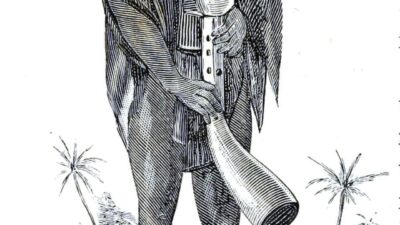
तारपा एक पूर्णतः हस्तनिर्मित आदिवासी सुषिर वाद्य है, जो जंगल की तीन सामग्रियों — सूखी लौकी (तुम्बा), बाँस और ताड़/नारियल के सूखे पत्ते — से बनता है, और मोम से जोड़ा जाता है। इसकी लम्बाई 2 से 6 फुट तक होती है। किसी मशीन या धातु का प्रयोग नहीं होता।
Description English
The tarpa is an entirely hand-made tribal wind instrument built from three forest materials — a dried bottle gourd (tumba), bamboo, and dried palm/coconut leaf — sealed together with beeswax. It ranges from 2 to 6 feet in length. No machine or metal parts are used.
Body
Elongated L / horn shape — a bulbous gourd wind-chest leading into paired pipes that flare into a large curved leaf bell
लम्बी हॉर्न-नुमा आकृति — एक फूला हुआ लौकी का कोष, जिससे जुड़ी जुड़वाँ नलियाँ अन्त में पत्तों के बड़े मुड़े हुए भोंपू में खुलती हैं
Dried bottle gourd (wind chamber), bamboo (pipes and reeds), dried toddy-palm / coconut leaf (horn bell), beeswax (adhesive and sealant)
सूखी लौकी (वायु-कोष), बाँस (नलियाँ व जीभी), सूखे ताड़/नारियल के पत्ते (भोंपू), मधुमक्खी का मोम (जोड़ने व सील करने हेतु)
60-180
Coiled horn-like bell fashioned from dried palm/coconut leaf that amplifies and projects the sound across open fields
Strings
None — the tarpa is a wind instrument and has no strings
Not applicable — no sympathetic strings on a wind instrument
One of the two bamboo pipes sounds a continuous drone while the other carries the melody — producing the tarpa's signature bagpipe-like layered texture
Bow
लागू नहीं (फूँक-वाद्य)
Not applicable (blown, not bowed)
Not applicable
0
The tarpa is blown, not bowed — sound is produced by breath, not friction
Tuning Pegs
लागू नहीं
Not applicable
No pegs — tuning and voicing are fixed by the maker through the bore, reed size and finger-hole placement of each bamboo pipe
Bridge
लागू नहीं
Not applicable
No bridge — this is a wind instrument
Not applicable
Frets
फ्रेट लागू नहीं। स्वर बाँस की जुड़वाँ नलियों पर बने छिद्रों (छेद) को उँगलियों से खोलकर-बन्द करके निकाले जाते हैं। दो नलियाँ 'नर' और 'मादा' कही जाती हैं क्योंकि वे भिन्न सप्तक में बजती हैं।
Frets are not applicable. Pitch is produced by opening and closing finger-holes bored into the twin bamboo pipes. The two pipes are called 'male' and 'female' because they sound in different octaves.
ध्वनि-चरित्र
SoundTonal Character Hindi
तारपा की ध्वनि गहरी, गूँजती और नासिका-सी भनभनाती है — बैगपाइप जैसी, जिसमें एक अटूट आधार-स्वर (द्रोन) पर ऊपर से खुली धुन तैरती है। यह इतनी भेदक होती है कि खुले खेतों और पहाड़ी ढलानों पर दूर तक सुनाई देती है और सुनते ही पैर थिरकने लगते हैं।
Tonal Character English
The tarpa's tone is deep, resonant and nasally buzzing — bagpipe-like, with a free melody floating over an unbroken drone. It is so penetrating that it carries across open fields and hill-slopes, and the moment it sounds it sets feet moving into dance.
Timbre
Reedy, buzzing, hypnotic; a warm droning hum overlaid with a bright, dance-driving melodic line
Range
Roughly two octaves, split between the 'male' (lower) and 'female' (higher) pipes
Dynamic Range
Loud and sustained by nature — designed as an open-air, unamplified instrument to lead outdoor communal dance
Techniques
सुनने का मार्गदर्शन
The Listening Guideतारपा को 'अकेले सुनने' के बजाय 'नाचते हुए' महसूस कीजिए। पहले वह भनभनाता द्रोन पकड़िए जो कभी नहीं रुकता — गोलाकार श्वास का चमत्कार। फिर ऊपर तैरती धुन और नर्तकों के कदमों की लय देखिए। खुले वृत्तचित्रों में देखिए कि पूरा घेरा वादक की उँगलियों पर कैसे घूमता है।
अंग्रेज़ी में पढ़ें · Read in English
To understand the tarpa, experience it 'while dancing' rather than 'listening alone'. First catch the buzzing drone that never stops — that is the miracle of circular breathing. Then follow the melody floating above it and its rhythm against the dancers' steps. In documentaries, watch how the whole circle turns on the player's fingers. It is a communal, festive, earth-rooted experience.
श्रवण-कक्ष · The Listening Room
देखें-सुनें
Tarpa Adivasi musical instrument of Warli/ Varli Tribe Tarpu/ Tarpo · 2:51
The Tarpa Player (8K) · 7:58
Tarpa Dance, Warli Tribe, Maharashtra (English) · 10:03
अन्य विवरण
More DetailsTimbre
Reedy, buzzing, hypnotic; a warm droning hum overlaid with a bright, dance-driving melodic line
रोचक तथ्य
Margin Notesदेवता नारण का उपहार — वारली मान्यता के अनुसार तारपा उनके देवता 'नारण' का दिया वाद्य है। दिवाली/बारस पर इसे अन्न-देव (कणसरी) को प्रसन्न करने के लिए बजाया जाता है — विश्वास है कि तारपा बजाते वादक के खेत पार करने से फ़सल अच्छी होती है।
In Warli belief the tarpa was given by their god 'Naran'. It is played on Diwali/Baras to please the grain deity (Kansari / Ann Dev) — with the belief that crops flourish when the playing tarpa-man crosses the fields.
दो से छह फुट का हस्तनिर्मित वाद्य — तारपा पूरी तरह हाथ से बनता है — बिना किसी मशीन या धातु के। इसकी लम्बाई 2 से 6 फुट तक होती है, और यह जंगल की तीन सामग्रियों (लौकी, बाँस, ताड़-पत्ता) व मोम से जुड़ा होता है।
The tarpa is entirely hand-made — without any machine or metal. It runs from 2 to 6 feet long and is joined from three forest materials (gourd, bamboo, palm-leaf) and beeswax.
वारली चित्रकला की धुरी — तारपा वादक वारली भित्ति-चित्रों का केन्द्रीय रूपांकन है — सफ़ेद रेखाओं में बना वह घेरा, जिसमें नर्तक हाथ पकड़े वादक के चारों ओर सर्पिल में घूमते हैं, तारपा नृत्य का ही चित्रण है।
The tarpa player is the central motif of Warli murals — that white-lined circle in which dancers, hands linked, spiral around the player is a depiction of the Tarpa dance itself.
वादक ही नृत्य का संचालक — तारपा नृत्य में कोई अलग नेता नहीं होता — तारपा वादक ही घेरे का संचालक है। वह जिस लय और दिशा में बजाता है, पूरा नर्तक-मंडल उसी के अनुसार घूमता, रुकता और मुड़ता है।
In the Tarpa dance there is no separate leader — the tarpa player conducts the circle. Whatever rhythm and turn he plays, the whole troupe of dancers turns, pauses and pivots accordingly.
सवाल-जवाब
Questions & Answersतारपा क्या है?
तारपा महाराष्ट्र और गुजरात के वारली, कोकणा व ढोडी आदिवासियों का एक सुषिर (फूँक) वाद्य है, जो सूखी लौकी, बाँस की दो नलियों और ताड़-पत्ते के भोंपू से बनता है। इसकी बैगपाइप-सी द्रोन-धुन पर सामूहिक 'तारपा नृत्य' होता है।
तारपा किस चीज़ से बनता है?
तारपा जंगल की तीन सामग्रियों से बनता है — वायु-कोष के लिए सूखी लौकी, स्वर के लिए बाँस की दो नलियाँ (जिनमें रीड होती है), और ध्वनि बढ़ाने के लिए ताड़/नारियल के सूखे पत्ते का भोंपू — सब मधुमक्खी के मोम से जुड़ा होता है। यह 2 से 6 फुट लम्बा होता है।
तारपा कैसे बजाया जाता है?
वादक लौकी के ऊपरी मुँह से फूँक मारता है, जिससे दोनों बाँस-नलियों की रीड कँपती हैं — एक द्रोन देती है, दूसरी धुन। धुन को घंटों अटूट रखने के लिए 'गोलाकार श्वास' (नाक से साँस लेते हुए फूँक बनाए रखना) की आवश्यकता होती है।
तारपा नृत्य क्या है?
तारपा नृत्य वारली आदिवासियों का सामूहिक गोलाकार नृत्य है, जिसमें स्त्री-पुरुष एक-दूसरे की कमर थामे तारपा वादक के चारों ओर घूमते हैं। यह मानसून के बाद फ़सल-कटाई से दिवाली तक किया जाता है, और वादक ही नृत्य का संचालक होता है।
तारपा वाद्य के प्रसिद्ध कलाकार कौन हैं?
जव्हार (पालघर) के भिकल्या लाडक्या ढिंडा इस वाद्य के सबसे प्रसिद्ध जीवित उस्ताद हैं। सात दशकों की साधना के लिए उन्हें 2026 में 'पद्म श्री' से सम्मानित किया गया; उनका परिवार लगभग 150 वर्षों से तारपा बजाता आया है।
नमूना-पट्टी
The Specimen Table| नाम | तारपा · Tarpa |
|---|---|
| अन्य नाम | तारपा · तारपु / तारपो (Tarpu / Tarpo) · तारफा (Tarfa) · Tarpa (also: Tārpā) |
| प्रकार | वाद्य · Instruments |
साझा कीजिए · Share this Plate