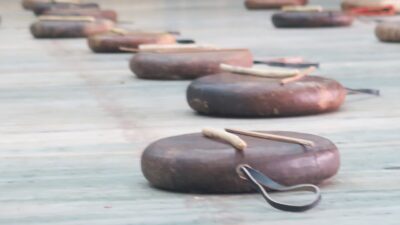
शास्त्र विंग · वाद्य-पट्टिका · Instrument Plate
पराई
Parai
अन्य नामपराई · थप्पू (Thappu) · थप्पट्टै (Thappattai) · தபरை / பறை (Tamil: Paṟai)
परिचय
Overviewपराई तमिलनाडु का प्राचीनतम फ्रेम-ड्रम है — कटहल की लकड़ी के गोल घेरे पर मढ़ी खाल का एक 'बोलने वाला ढोल', जिसे आग पर तपाकर तीखा किया जाता है और दो डंडियों से बजाया जाता है। संगम युग से लेकर आज तक यह उद्घोषणा, उत्सव, अंत्येष्टि और पराई आट्टम नृत्य की धड़कन रही है; जाति-कलंक से दबे रहने के बाद अब यह तमिल गौरव और प्रतिरोध का जीवंत प्रतीक है।
अंग्रेज़ी में पढ़ें · Read in English
The parai is Tamil Nadu's oldest frame drum — a 'speaking drum' of hide stretched over a jackfruit-wood hoop, heat-tempered to a sharp crack and struck with two sticks. From the Sangam age to today it has been the heartbeat of proclamation, festival, funeral and the parai attam dance; long suppressed under caste stigma, it now stands as a living emblem of Tamil pride and resistance.
वर्गीकरण
ClassificationNatya Shastra Category
अवनद्ध (Avanaddha - membranophone / percussion)
नाट्यशास्त्र के अवनद्ध वर्ग में पराई एक झिल्ली-वाद्य (चर्म-वाद्य) है, जो लकड़ी के गोल ढाँचे पर मढ़ी हुई खाल पर डंडियों से आघात करने से ध्वनि उत्पन्न करता है। यह ताल-आधारित वाद्य है, स्वर-आधारित नहीं।
In the Avanaddha (covered / membranophone) category of the Natya Shastra, the parai is a skin-covered percussion instrument that produces sound when sticks strike a hide stretched over a circular wooden frame. It is a rhythm-based instrument, not a melodic one.
Western Category
Frame drum (single-headed membranophone)
Western Family
Frame-drum family (structurally akin to the bodhrán, daf and tambourine frame, but struck with two sticks and worn vertically)
Sub Classification
बनावट
PhysicalDescription Hindi
पराई एक उथला, गोल फ्रेम-ड्रम है जिसमें लकड़ी का एक चौड़ा किन्तु पतला घेरा (फ्रेम) होता है, जिसकी एक ओर पशु-खाल (आमतौर पर गाय की खाल) कसकर मढ़ी जाती है और दूसरी ओर खुली रहती है। इसका व्यास लगभग 16–22 इंच होता है और वज़न 1–5 किग्रा (औसतन ~3 किग्रा)। इसे 'नडै' नामक कपड़े की पट्टी से कंधे पर लटकाकर, लंबवत् मुद्रा में बजाया जाता है, और दो लकड़ी की डंडियों से आघात किया जाता है।
Description English
The parai is a shallow, circular frame drum: a broad but thin wooden hoop with animal hide (usually cow-hide) stretched taut over one face and left open on the other. It measures roughly 16–22 inches in diameter and weighs 1–5 kg (about 3 kg on average). It is slung from the shoulder by a cloth strap called 'Nadai', held vertically, and struck with two wooden sticks.
Body
Shallow circular hoop / frame
उथला गोल घेरा (फ्रेम)
Hardwood frame — traditionally jackfruit wood (palā maram), sometimes neem; hide secured to a wooden or metal ring
कठोर लकड़ी का फ्रेम — परंपरागत रूप से कटहल की लकड़ी (पला मरम), कभी-कभी नीम; खाल को लकड़ी या धातु के छल्ले पर कसा जाता है
16-22
1-5 (avg ~3)
Open-backed shallow frame — the open rear face gives the drum its sharp, projecting, slightly dry crack rather than a deep boom
Membrane
चर्म / तोल (खाल)
Hide membrane
Stretched cow-hide (traditionally), lashed to the frame with leather straps and natural glue
मढ़ी हुई गाय की खाल (परंपरागत), चमड़े की डोरियों और प्राकृतिक गोंद से फ्रेम पर कसी जाती है
बजाने से पहले खाल को आग की गर्मी से तपाया जाता है ताकि वह कसे और स्वर तीखा व स्पष्ट हो — इसी को 'थप्पू तपाना' कहा जाता है।
Before playing, the hide is warmed over fire so it tightens and the tone becomes sharp and crisp — this pre-play heat-tempering is essential to the parai's characteristic crack.
Sticks
2
Strap
नडै
Nadai
कपड़े की पट्टी जिससे पराई को कंधे या गर्दन से लटकाकर लंबवत् बजाया जाता है, ताकि वादक नाचते हुए भी बजा सके।
A cloth strap that hangs the parai vertically from the shoulder/neck, freeing the player to dance while drumming.
Tuning
पराई एक ताल-वाद्य है, अतः इसमें कोई फ्रेट या स्वर-स्थान नहीं होते। 'ट्यूनिंग' केवल खाल के कसाव से होती है — आग की गर्मी से खाल को तपाकर तीखा, गूँजता स्वर पाया जाता है; नमी में यह ढीली पड़ जाती है।
As a rhythm instrument, the parai has no frets or pitched positions. 'Tuning' is purely membrane tension — heat-tempering over fire yields a sharp, ringing crack; humidity slackens the hide and dulls it.
ध्वनि-चरित्र
SoundTonal Character Hindi
पराई की ध्वनि तीखी, भेदक और दूर तक पहुँचने वाली होती है — एक सूखा, कड़कता 'तड़-तड़' जो भीड़ और खुले मैदान के ऊपर से भी सुनाई दे। यही कारण है कि सदियों तक यह सूचना, चेतावनी और उद्घोषणा का वाद्य रहा। मंद बोल से लेकर उन्मादी द्रुत लय तक, यह उत्सव और शोक दोनों का स्वर बन जाता है।
Tonal Character English
The parai's voice is sharp, penetrating and far-carrying — a dry, cracking 'tada-tada' that cuts across crowds and open fields. This is precisely why it served for centuries as the drum of information, warning and proclamation. From a soft undertone to frenzied fast tempo, it becomes equally the sound of celebration and of mourning.
Timbre
Bright, dry, high-attack crack with little sustain (open-backed frame); a hard 'slap' from the short stick against a fine 'rattle' from the long stick
Range
Non-pitched percussion — tonal colour is shaped by strike position (centre vs. rim), stick choice and hide tension rather than by pitch
Dynamic Range
Very wide — from a muffled processional pulse to a piercing, festival-filling roar, all acoustic and unamplified
Techniques
सुनने का मार्गदर्शन
The Listening Guideपराई का असली मज़ा खुले मैदान और भीड़ में है, बंद कमरे में नहीं। पहले छोटी डंडी 'अडि कुच्चि' की ठोस थाप पहचानिए, फिर लंबी 'सुन्दु कुच्चि' की तिरछी झनकार — इन दोनों का संवाद ही पराई की आत्मा है। पराई आट्टम देखिए, जहाँ लय और पैर एक साथ उठते हैं। पोंगल की रिकॉर्डिंग से शुरुआत कीजिए, जहाँ यह शुद्ध उल्लास बन जाती है।
अंग्रेज़ी में पढ़ें · Read in English
Hear the parai in the open, in a group — it is a drum of fields and crowds, not of a quiet room. First pick out the solid 'adi' of the short stick, then the angled rattle of the long stick — the dialogue between them is its soul. In parai attam, watch how rhythm and feet rise together. Begin with a Pongal recording, where it becomes pure exuberance.
परिचय
Identity- Year Of Origin
- -300
अन्य विवरण
More Details- Fretless
- 1
- Description English
- As a rhythm instrument, the parai has no frets or pitched positions. 'Tuning' is purely membrane tension — heat-tempering over fire yields a sharp, ringing crack; humidity slackens the hide and dulls it.
- Description
- पराई एक ताल-वाद्य है, अतः इसमें कोई फ्रेट या स्वर-स्थान नहीं होते। 'ट्यूनिंग' केवल खाल के कसाव से होती है — आग की गर्मी से खाल को तपाकर तीखा, गूँजता स्वर पाया जाता है; नमी में यह ढीली पड़ जाती है।
Tuning
Timbre
Bright, dry, high-attack crack with little sustain (open-backed frame); a hard 'slap' from the short stick against a fine 'rattle' from the long stick
रोचक तथ्य
Margin Notesएक ढोल जो 'बोलता' था — प्राचीन तमिलकम में समाचार, कर-वसूली, युद्ध की घोषणा, और जल-स्रोत टूटने या जंगली जानवर की चेतावनी — सब पराई की विशिष्ट लयों से दी जाती थी। हर संदेश की अपनी अलग 'अडि' थी, ताकि सुनने वाला बिना शब्दों के अर्थ समझ ले।
In ancient Tamilakam, news, tax-summons, declarations of war, and warnings of a breached water-tank or a prowling animal were all conveyed through specific parai rhythms. Each message had its own 'adi', so listeners understood the meaning without a single word.
156 अडि की लय-विज्ञान — परंपरा में पराई की लगभग 156 'अडि' (लय-भेद) गिनाई जाती हैं, जिनमें ओतैयडि, तेन्मंगु, साामियाट्टम, तुल्लल और उयिर्प्पु पाँच मूल लयें हैं। यह किसी लोक-वाद्य के लिए असाधारण रूप से समृद्ध ताल-भंडार है।
Tradition counts about 156 'adi' (rhythmic variations) for the parai, of which Othayadi, Thenmangu, Saamiyaattam, Thullal and Uyirppu are the five basic rhythms — an extraordinarily rich rhythmic vocabulary for a folk instrument.
थप्पू और पराई — जुड़वाँ नाम — मूल रूप से 'थप्पू' आदिवासी समुदायों का थोड़ा छोटा वाद्य था और 'पराई' से भिन्न माना जाता था, पर मध्यकाल तक दोनों नाम एक-दूसरे के पर्याय बन गए। 'थप्पू' शब्द विशेष रूप से नायकर शासनकाल में प्रचलित हुआ।
Originally 'thappu' was a slightly smaller drum of tribal communities, considered distinct from the 'parai', but by the medieval period the two names became interchangeable. The word 'thappu' spread especially during Nayak rule in Tamil Nadu.
कलंक से गौरव तक — जाति-व्यवस्था ने पराई को अछूतपन से जोड़कर हाशिये पर धकेल दिया था। पर बीते दशकों में कलाकारों और आंदोलनों ने इसे उलट दिया — आज पराई तमिल अस्मिता, सामाजिक न्याय और सांस्कृतिक आत्म-सम्मान की सबसे मुखर ध्वनियों में से एक है, जो विश्वविद्यालयों से लेकर लोकप्रिय बैंडों तक गूँजती है।
The caste order had tied the parai to untouchability and pushed it to the margins. But in recent decades artists and movements reversed this — today the parai is among the most vocal sounds of Tamil identity, social justice and cultural self-respect, echoing from universities to popular bands.
सवाल-जवाब
Questions & Answersपराई क्या है?
पराई तमिलनाडु का एक प्राचीन फ्रेम-ड्रम (चर्म-वाद्य) है, जिसमें लकड़ी के गोल घेरे पर एक ओर पशु-खाल मढ़ी होती है और उसे दो डंडियों से बजाया जाता है। इसे 'थप्पू' भी कहते हैं और यह तमिल संस्कृति के प्रतीकों में से एक है।
पराई का नाम कैसे पड़ा?
'पराई' तमिल शब्द 'पर' (बोलना/बताना) से बना है, क्योंकि इसे बजाकर लोगों को संदेश व घोषणाएँ दी जाती थीं। बजाने वालों को 'पराइयर' कहा गया, और अंग्रेज़ी शब्द 'pariah' भी इसी से आया।
पराई आट्टम क्या है?
पराई आट्टम (थप्पट्टम) तमिलनाडु का एक ऊर्जावान समूह-लोकनृत्य है, जिसमें कलाकार पराई को कंधे से लटकाकर बजाते हुए नाचते हैं। यह पोंगल, मंदिर-उत्सव और सांस्कृतिक आयोजनों में प्रमुखता से किया जाता है।
पराई को बजाने से पहले आग पर क्यों तपाया जाता है?
पराई की खाल नमी में ढीली पड़ जाती है जिससे स्वर मंद हो जाता है। आग की गर्मी से खाल कसती है और स्वर तीखा, स्पष्ट व दूरगामी हो जाता है — इसीलिए वादक प्रस्तुति से पहले (और बीच में) खाल को तपाते हैं।
पराई क्या हिंदुस्तानी शास्त्रीय संगीत का वाद्य है?
नहीं। पराई मूलतः दक्षिण भारतीय (तमिल) लोक-वाद्य है, हिंदुस्तानी शास्त्रीय राग-संगीत का अंग नहीं। इसकी शक्ति ताल, समुदाय और अनुष्ठान में है; तमिल सिनेमा व लोक-संगीत में इसका गहरा उपयोग होता है।
नमूना-पट्टी
The Specimen Table| नाम | पराई · Parai |
|---|---|
| अन्य नाम | पराई · थप्पू (Thappu) · थप्पट्टै (Thappattai) · தபरை / பறை (Tamil: Paṟai) · Parai (also: Thappu, Thapu, Dappu) |
| उद्गम | -300 |
| प्रकार | वाद्य · Instruments |
साझा कीजिए · Share this Plate