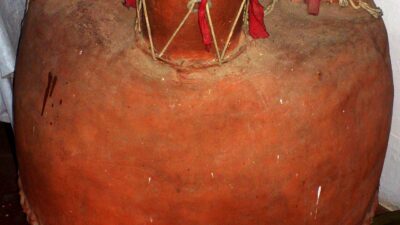
शास्त्र विंग · वाद्य-पट्टिका · Instrument Plate
पंचमुख वाद्यम
Panchamukha Vadyam
अन्य नामपञ्चमुख वाद्यम् · कुडमुष़ा (Kudamuzha) · पञ्चमुख मिष़ाव (Panchamukha mizhavu) · पञ्जमुख वाद्यम (Panjamukha vadyam)
परिचय
Overviewपंचमुख वाद्यम — काँसे का एक विलक्षण मंदिर-मृदंग, जिसके एक ही खोल से पाँच मुख उठते हैं और हर मुख शिव के पञ्च-ब्रह्म में से एक के नाम पर मढ़ा जाता है। सृष्टि से अनुग्रह तक की समूची शैव-सृष्टि इसकी ताल में समा जाती है। सदियों से तिरुवारूर के त्यागराज स्वामी मंदिर में, मुथुस्वामी दीक्षितर के शिष्य-वंश की उँगलियाँ इसे संध्या-पूजा में जगाती आई हैं; 2018 से बी. सुमती मथियष़गन इसे बजाने वाली पहली महिला के रूप में यह परंपरा आगे बढ़ा रही हैं।
अंग्रेज़ी में पढ़ें · Read in English
The Panchamukha Vadyam is a singular bronze temple-drum, from whose single shell rise five mouths, each headed in the name of one of Shiva's five faces. The whole Shaiva cosmos, from creation to grace, is gathered into its rhythm. For centuries at Tiruvarur's Thyagaraja Swamy Temple, the fingers of Muthuswami Dikshitar's disciple-lineage have awakened it at the evening worship; since 2018, B. Sumathi Mathiazhagan carries the tradition forward as the first woman to play it.
वर्गीकरण
ClassificationNatya Shastra Category
अवनद्ध (Avanaddha - percussion / membrane instruments)
नाट्यशास्त्र की चतुर्विध वाद्य-प्रणाली (तत, सुषिर, अवनद्ध, घन) में पंचमुख वाद्यम 'अवनद्ध' वर्ग में आता है — अर्थात् चमड़े से मढ़ा हुआ ताल-वाद्य (मृदंग जाति का)। इसकी विशेषता यह है कि इसमें एक नहीं बल्कि पाँच मुख होते हैं, जिन पर चमड़ा मढ़ा जाता है।
In the Natya Shastra's fourfold instrument system (tata, sushira, avanaddha, ghana), the Panchamukha Vadyam belongs to the 'avanaddha' (skin-covered percussion / membranophone) category, of the mridanga family. Its distinguishing feature is that it has not one but five skin-covered mouths.
Western Category
Membranophone (multi-headed metal-shell drum)
Western Family
Kettle/frame-drum family — a bronze-bodied percussion instrument with five hide-covered heads, played by hand
Sub Classification
बनावट
PhysicalDescription Hindi
पंचमुख वाद्यम एक दुर्लभ धातु-निर्मित मंदिर वाद्य है। इसका शरीर (खोल) काँसे/धातु का बना होता है, जिसके ऊपरी भाग से पाँच खोखले बेलनाकार मुख निकलते हैं। इन पाँचों मुखों पर चमड़ा मढ़ा जाता है और प्रत्येक मुख शिव के पाँच मुखों में से एक के नाम पर होता है। बीच का मुख शेष चार परिधीय मुखों की तुलना में थोड़ा बड़ा होता है, और प्रत्येक मुख का सिरा अलग-अलग ढंग से अलंकृत किया जाता है।
Description English
The Panchamukha Vadyam is a rare metal temple instrument. Its shell (body) is cast of bronze/metal, and from its top emerge five hollow cylindrical mouths. Each of the five mouths is covered with hide and named after one of the five faces of Shiva. The central mouth is slightly larger than the four peripheral ones, and each mouth's rim is ornamented differently.
Body
Rounded metal shell (pot-like) with five raised cylindrical necks rising from the top
गोल धातु-खोल (घड़े जैसा) जिसके ऊपर से पाँच उभरी हुई बेलनाकार गर्दनें उठती हैं
Cast bronze / bell-metal shell (the name 'Kudamuzha' — pot-drum — reflects its rounded metal body)
ढला हुआ काँसा / धातु का खोल (नाम 'कुडमुष़ा' = घट-मृदंग, इसके गोल धातु-शरीर को दर्शाता है)
Large, floor-standing temple instrument (played standing; exact standardised dimensions vary, no single fixed size)
Single hollow bronze body shared by all five necks, giving each face a deep resonant tone
Strings
पंचमुख वाद्यम में कोई तार नहीं होते — यह चमड़े से मढ़ा ताल-वाद्य (मृदंग जाति) है। ध्वनि इसके पाँच चमड़े मढ़े मुखों को हाथ से बजाने पर उत्पन्न होती है।
The Panchamukha Vadyam has no strings — it is a hide-covered percussion instrument (mridanga family). Sound is produced by striking its five skin-covered mouths by hand.
Faces
पाँचों मुख शिव के पञ्च-ब्रह्म (पाँच मुख) के नाम पर हैं और शैव सिद्धांत के पञ्च-कृत्य (सृष्टि, स्थिति, संहार, तिरोभाव, अनुग्रह) का प्रतीक हैं।
The five mouths are named after Shiva's pancha-brahma (five faces) and symbolise the five cosmic acts (pancha-kritya) of Shaiva theology: creation, preservation, dissolution, concealment, and grace.
Playing Surface
मुख (चमड़ा मढ़ा शीर्ष)
Mukha (hide-covered head)
Stretched animal hide over each of the five bronze necks
प्रत्येक बेलनाकार गर्दन के सिरे पर चमड़ा कसकर मढ़ा जाता है। गर्दन एवं रिम के पास चमड़े के कसाव को दबाकर घटाने-बढ़ाने से प्रत्येक मुख की ध्वनि (स्वर) समायोजित की जाती है।
Hide is tightly stretched over the end of each cylindrical neck. The pitch of each mouth is adjusted by tightening or loosening the squeeze of the skin at the region of the neck and just below the rim.
Frets
यह ताल-वाद्य है, अतः इसमें फ्रेट या तार नहीं होते। पाँच अलग-अलग मुखों से पाँच भिन्न स्वर-रंग निकलते हैं जिन्हें कुशल वादक हाथों से नियंत्रित करता है।
As a percussion instrument it has no frets or strings. Its five separate mouths yield five distinct tonal colours, which a skilled player controls with the hands.
ध्वनि-चरित्र
SoundTonal Character Hindi
पंचमुख वाद्यम की ध्वनि गहरी, गूँजती और मंदिर-गर्भगृह को भर देने वाली होती है। पाँच अलग-अलग आकार के मुख पाँच भिन्न स्वर देते हैं, जिससे एक ही वाद्य पर बहुस्तरीय, आध्यात्मिक ताल-रचना संभव होती है। इसका नाद घंटा-नाद जैसा गंभीर और मंगल-सूचक माना जाता है।
Tonal Character English
The Panchamukha Vadyam's sound is deep, resonant and fills the temple sanctum. Its five differently sized mouths yield five distinct pitches, allowing multi-layered, meditative rhythmic patterns on a single instrument. Its tone is regarded as grave and auspicious, akin to a sacred bell-drum.
Timbre
Deep, metallic, cavernous resonance from the bronze body; each of the five heads adds a distinct pitched voice
Range
Percussive, pitched across five heads (from a deeper central mouth to brighter peripheral mouths)
Dynamic Range
From soft ritual rolls to full sanctum-filling strokes during peak worship, without amplification
Techniques
सुनने का मार्गदर्शन
The Listening Guideपंचमुख वाद्यम का रस लेना हो तो इसे किसी संगीत-सभा में नहीं, मंदिर की संध्या-पूजा के वातावरण में सुनिए। ध्यान दीजिए कि एक ही वादक किस तरह पाँच अलग-अलग स्वरों वाले मुखों को एक ही लय-वार्तालाप में बुनता है — बीच का बड़ा मुख गहरा बोलता है, परिधि के मुख उजले। तिरुवारूर मंदिर के वृत्तचित्र खोजिए और उस क्षण को पकड़िए जब पाँचों मुख एक साथ गूँज उठते हैं।
अंग्रेज़ी में पढ़ें · Read in English
When listening to the Panchamukha Vadyam, note how a single player threads the five differently pitched mouths into one rhythmic conversation. Hear it not in a concert hall but in the atmosphere of temple evening worship — where its grave, resonant sound deepens devotion. Seek out documentary footage of the Tiruvarur temple playing, and catch the moment when all five mouths speak together.
अन्य विवरण
More DetailsTimbre
Deep, metallic, cavernous resonance from the bronze body; each of the five heads adds a distinct pitched voice
रोचक तथ्य
Margin Notesएक वाद्य, पाँच स्वर — पंचमुख वाद्यम में एक ही काँसे के खोल से पाँच खोखले बेलनाकार मुख निकलते हैं, जिनमें बीच का मुख शेष चार से थोड़ा बड़ा होता है। इस कारण एक ही वादक पाँच भिन्न स्वरों को एक साथ साध सकता है — मानो पाँच मृदंग एक ही शरीर में समाए हों।
From a single bronze shell of the Panchamukha Vadyam rise five hollow cylindrical mouths, the central one slightly larger than the other four. A single player can therefore command five distinct pitches at once — as if five drums were housed in one body.
शिव के पञ्च-कृत्य का ताल-रूप — आगम-दर्शन में शिव के पाँच मुख पाँच कृत्यों — सृष्टि (सद्योजात), स्थिति (वामदेव), संहार (अघोर), तिरोभाव (तत्पुरुष) और अनुग्रह (ईशान) — के प्रतीक हैं। पंचमुख वाद्यम इन्हीं पाँच ब्रह्मांडीय क्रियाओं को ध्वनि में साकार करता है।
In Agamic philosophy, Shiva's five faces symbolise the five acts — creation (Sadyojata), preservation (Vamadeva), dissolution (Aghora), concealment (Tatpurusha) and grace (Ishana). The Panchamukha Vadyam gives these five cosmic acts audible form.
दीक्षितर की परंपरा का जीवित तार — तिरुवारूर के त्यागराज स्वामी मंदिर में यह वाद्य बजाने वाला वादक कर्नाटक-त्रिमूर्ति के मुथुस्वामी दीक्षितर के शिष्य ताम्बियप्पा की वंश-परंपरा से आता है — अर्थात् आज भी बजता यह वाद्य 18वीं शताब्दी की संगीत-परंपरा से सीधे जुड़ा है।
The player of this instrument at Tiruvarur's Thyagaraja Swamy Temple descends from Tambiyappa, a disciple of the Carnatic Trinity's Muthuswami Dikshitar — meaning the instrument, still played today, links directly to an 18th-century musical lineage.
पहली महिला वादक — 2018 में बी. सुमती मथियष़गन ने अपने पिता के निधन के बाद यह पारिवारिक भूमिका सँभाली और इस अत्यंत दुर्लभ वाद्य में पारंगत होकर बजाने वाली पहली महिला बनीं — एक सदियों पुरानी पुरुष-प्रधान परंपरा में ऐतिहासिक मोड़।
In 2018, B. Sumathi Mathiazhagan took over this family role after her father's passing and became the first woman to master and perform on this extremely rare instrument — a historic turn in a centuries-old, largely male tradition.
सवाल-जवाब
Questions & Answersपंचमुख वाद्यम क्या है?
पंचमुख वाद्यम एक दुर्लभ धातु (काँसे) का मंदिर ताल-वाद्य है जिसके एक ही खोल से पाँच चमड़ा-मढ़े मुख निकलते हैं। पाँचों मुख शिव के पाँच मुखों के नाम पर हैं। इसे 'कुडमुष़ा' भी कहते हैं और यह तिरुवारूर के त्यागराज स्वामी मंदिर में बजाया जाता है।
पंचमुख वाद्यम के पाँच मुखों के क्या नाम हैं?
पाँच मुख शिव के पञ्च-ब्रह्म — सद्योजात, वामदेव, अघोर, तत्पुरुष और ईशान — के नाम पर हैं, जो क्रमशः सृष्टि, स्थिति, संहार, तिरोभाव (आवरण) और अनुग्रह (कृपा) के प्रतीक हैं।
पंचमुख वाद्यम कहाँ बजाया जाता है?
यह आज भी प्रतिदिन तमिलनाडु के तिरुवारूर स्थित त्यागराज स्वामी मंदिर में संध्या-पूजा के दौरान बजाया जाता है। यह अत्यंत दुर्लभ है और केवल एक वंश-परंपरा द्वारा बजाया जाता है।
पंचमुख वाद्यम कैसे बजाया जाता है?
इसे दोनों हाथों से बजाया जाता है। वादक पाँचों चमड़ा-मढ़े मुखों पर प्रहार करता है, और गर्दन तथा रिम के पास चमड़े के कसाव को दबाकर घटाने-बढ़ाने से प्रत्येक मुख का स्वर समायोजित करता है।
पंचमुख वाद्यम को बजाने वाली पहली महिला कौन हैं?
बी. सुमती मथियष़गन इस दुर्लभ वाद्य को बजाने वाली पहली महिला हैं। 2018 में अपने पिता के निधन के बाद उन्होंने तिरुवारूर मंदिर की पारिवारिक परंपरा सँभाली।
नमूना-पट्टी
The Specimen Table| नाम | पंचमुख वाद्यम · Panchamukha Vadyam |
|---|---|
| अन्य नाम | पञ्चमुख वाद्यम् · कुडमुष़ा (Kudamuzha) · पञ्चमुख मिष़ाव (Panchamukha mizhavu) · पञ्जमुख वाद्यम (Panjamukha vadyam) · Panchamukha Vadyam (also: Pañcamukha Vādyam) |
| प्रकार | वाद्य · Instruments |
साझा कीजिए · Share this Plate