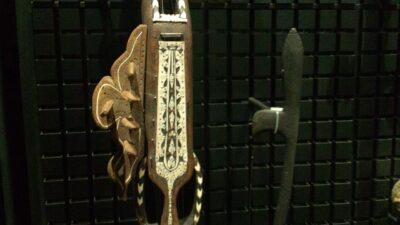
शास्त्र विंग · वाद्य-पट्टिका · Instrument Plate
घिचक
Ghichak
अन्य नामघीचक · सरोज़ / सुरोज़ (saroz / suroz) · सुरांदो (Surando — सिंध / Sindh) · क़ैचक / गैचक (qeychak / ghaychak)
परिचय
Overviewघिचक मरुस्थल की धनुष-आवाज़ है — बलोचिस्तान में सरोज़/सुरोज़, सिंध में सुरांदो। एक ही लकड़ी से तराशी, लंबी गर्दन वाली यह सारंगी की चचेरी बहन तीन-चार मुख्य तारों और नीचे झिलमिलाते तरब-तारों के साथ ज़हीरोक के विरह को स्वर देती है। रेत, हवा और बिछोह — इन्हीं का संगीत घिचक के तारों से रोता है।
अंग्रेज़ी में पढ़ें · Read in English
The ghichak is the desert's bowed voice — saroz/suroz in Balochistan, surando in Sindh. Carved from a single block of wood, this long-necked cousin of the sarangi voices the longing of zahirok with its three-to-four main strings and shimmering sympathetic strings beneath. Sand, wind and parting — this is the music that weeps through the ghichak's strings.
वर्गीकरण
ClassificationNatya Shastra Category
तत (Tata - stringed instruments)
तत वर्ग में घिचक एक धनुष-चालित (gaz-based) तार-वाद्य है — जिसकी ध्वनि धनुष के तारों पर घर्षण से उत्पन्न होती है। यह सारंगी-सारिंदा परिवार का मरुस्थलीय लोक-सदस्य है।
In the Tata (stringed) category of the Natya Shastra, the ghichak is a bow-activated chordophone — its sound arises from the friction of a bow against the strings. It is the desert-folk member of the sarangi–sarinda family.
Western Category
Bowed string instrument (spike fiddle / folk fiddle of the sarinda family)
Western Family
Fiddle family — closely related to the sarangi, sarinda, surando and surinda; a bowed lute rather than a plucked one
Sub Classification
बनावट
PhysicalDescription Hindi
घिचक एक लंबी गर्दन वाला, फ्रेट-रहित धनुष-वाद्य है जिसे लकड़ी के एक ठोस टुकड़े से तराशा जाता है। इसके तीन-चार मुख्य वादन-तार और उनके नीचे पाँच से आठ अनुनाद (तरब) तार होते हैं, जिन्हें उस राग/धुन के अनुसार मिलाया जाता है जो बजायी जा रही हो। बलोची, सिंधी और कच्छी लोक-संगीत में यही वाद्य गायक की आवाज़ का 'दूसरा गला' बन जाता है। यह सारंगी का चचेरा भाई है, किंतु आकार में हल्का और लोक-मंच के लिए अधिक सहज है।
Description English
The ghichak is a long-necked, fretless bowed instrument carved from a single solid block of wood. It carries three to four main playing strings with five to eight sympathetic (tarab) strings running beneath them, tuned to the raga or melody being performed. In Balochi, Sindhi and Kutchi folk music it becomes the 'second throat' of the singer. It is a cousin of the sarangi, but lighter and more suited to the folk stage.
Body
Elongated, waisted fiddle body carved from a single block of wood, tapering into a long neck
एकल लकड़ी से तराशा हुआ लंबोतरा, कमरदार धड़ जो एक लंबी गर्दन में विलीन होता है
Solid wood (locally available hardwoods such as mulberry, walnut or acacia/babul, depending on region)
ठोस लकड़ी (क्षेत्र के अनुसार शहतूत, अखरोट या बबूल जैसी स्थानीय कड़ी लकड़ी)
In southern Balochistan the playing-string span is 33–35 cm; in northern Balochistan and Sindh it reaches about 45 cm with a correspondingly lower tuning
Wooden soundbox; in the Balochi suroz form the belly is a carved wooden face, while the Persian/Central-Asian ghaychak cousin uses a lower chamber closed by a stretched skin membrane against which the bridge rests
Strings
Primary bowed melody strings
Thin steel resonating strings (tarab) tuned to the raag/mode being performed, giving the ghichak its shimmering halo
Some regional builds add one or two thicker open strings that hum a tonal ground beneath the melody
Bow
गज / कमान
Gaz / Kaman
Curved wooden stick strung with horsehair
50-65
Held underhand and drawn across the melody strings; the player leans the bow to catch one or two strings at a time
Tuning Pegs
खूंटी
Khunti
Large wooden lateral pegs for the main strings, with a row of smaller pegs along the neck for the sympathetic strings
Bridge
घोड़ी / पुल
Ghodi / Bridge
Wooden bridge that seats the playing strings higher than the sympathetic strings and transmits vibration to the wooden belly (or skin face, in the ghaychak variant)
Wood (sometimes bone-capped)
Frets
घिचक में फ्रेट नहीं होते। बलोची शैली में वादक तारों को गर्दन पर दबाने के बजाय उँगलियों से हल्का स्पर्श करते हैं — इसी से 'मींड' (ग्लिसांडो) और सूक्ष्म स्वर-रंग संभव होते हैं जो मानव-कंठ की नकल करते हैं।
The ghichak has no frets. In the Balochi style the player touches the strings lightly with the fingers rather than pressing them onto the neck — this yields the sliding 'meend' (glissando) and microtonal shading that mimics the human voice.
ध्वनि-चरित्र
SoundTonal Character Hindi
घिचक की आवाज़ नमकीन, कसैली और गहरी उदासी से भरी होती है — बलोच कहते हैं कि उनके भीतर की पीड़ा को इसी वाद्य के सिवा कोई और इतनी मार्मिकता से नहीं कह सकता। तरब तारों की गूँज हर स्वर के पीछे एक धुंधली रोशनी-सी छोड़ती है।
Tonal Character English
The ghichak's voice is briny, keening and steeped in deep melancholy — the Baloch say no other instrument can voice their inner sorrow with the same poignancy. The sympathetic strings leave a hazy glow of resonance behind every note.
Timbre
Reedy, nasal, weeping — rich in overtones from the sympathetic strings
Range
Roughly two octaves of usable melodic range, concentrated on the two highest strings
Dynamic Range
Moderate to strong for an unamplified folk fiddle — carries over a desert gathering yet can drop to an intimate murmur
Techniques
सुनने का मार्गदर्शन
The Listening Guideघिचक सुनते समय पहले गायक और वाद्य की पुकार-प्रत्युत्तर पकड़िए — घिचक ज़हीरोक की हर तान के पीछे मींड लेकर चलती है। फिर तरब-तारों की धुँधली गूँज सुनिए, जो हर स्वर के बाद कुछ पल और ठहरती है। मकरानी सुरोज़ के एकल से शुरू कीजिए, फिर रबाब–तंबूरग के साथ पूरे बलोची समवेत में इसे सुनिए।
अंग्रेज़ी में पढ़ें · Read in English
When listening to the ghichak, first catch the call-and-response between voice and instrument — see how the ghichak trails each zahirok phrase with a meend. Then attend to the hazy hum of the sympathetic strings, lingering a moment after each note. Begin with a solo Makrani suroz; then hear the full Balochi ensemble with rabab and tanburag.
श्रवण-कक्ष · The Listening Room
देखें-सुनें
Makrani Suroz instrumental · 8:03
Suroz | Sarinda | Ghichak | Balochi Fiddle | سُروز · 2:58
آوای باستانی موسیقی بلوچی با قیچک، رباب، تنبورک و آواز | Balochi Music - Khodadad Shakelzehi · 20:46
अन्य विवरण
More DetailsTimbre
Reedy, nasal, weeping — rich in overtones from the sympathetic strings
रोचक तथ्य
Margin Notesएक ही परिवार, चार नाम — बलोचिस्तान की सरोज़/घिचक, सिंध का सुरांदो, राजस्थान का सुरिंदा और पंजाब/अफ़ग़ानिस्तान का सारिंदा — ये सब लगभग एक-से धनुष-वाद्य हैं। सीमाएँ बदलती हैं, वाद्य वही रहता है।
The saroz/ghichak of Balochistan, the surando of Sindh, the surinda of Rajasthan and the sarinda of Punjab/Afghanistan are nearly identical bowed instruments. The borders change; the instrument stays the same.
उँगलियों का हल्का स्पर्श — सारंगी में वादक तारों को नाखून से गर्दन पर दबाते हैं; घिचक/सुरोज़ में उँगलियाँ तारों को केवल छूती हैं, दबाती नहीं — यही इसकी फिसलती, गाती हुई मींड का रहस्य है।
In the sarangi the player presses the strings onto the neck with the nail; in the ghichak/suroz the fingers only touch the strings without pressing — the secret of its sliding, singing meend.
उत्तर और दक्षिण का अंतर — दक्षिणी बलोचिस्तान में वादन-तारों की लंबाई 33–35 सेमी होती है; उत्तरी क्षेत्रों और सिंध में यह लगभग 45 सेमी तक जाती है और वाद्य नीची सुर में मिलाया जाता है।
In southern Balochistan the playing-string length is 33–35 cm; in the northern regions and Sindh it extends to about 45 cm and the instrument is tuned lower.
सवाल-जवाब
Questions & Answersघिचक क्या है?
घिचक (जिसे सरोज़/सुरोज़ और सिंध में सुरांदो भी कहते हैं) एक लंबी गर्दन वाला, फ्रेट-रहित धनुष लोक-वाद्य है जो बलोचिस्तान, सिंध और कच्छ–थार में बजाया जाता है। यह सारंगी–सारिंदा परिवार का सदस्य है और बलोची ज़हीरोक विरह-गायन का मुख्य वाद्य माना जाता है।
घिचक के कितने तार होते हैं?
बलोची सुरोज़/घिचक में आमतौर पर 3–4 मुख्य वादन-तार (इस्पात और मोटे गट के मिश्रण) और उनके नीचे 5–8 पतले इस्पात के अनुनाद (तरब) तार होते हैं, जिन्हें बजाई जा रही धुन के स्वरों में मिलाया जाता है।
घिचक और सारंगी में क्या अंतर है?
दोनों एक ही धनुष-वंश के हैं, पर सारंगी उत्तर-भारतीय शास्त्रीय दरबार में विकसित हुई जबकि घिचक बलोची–सिंधी मरुस्थलीय लोक-वाद्य है। सारंगी में वादक नाखून से तार गर्दन पर दबाते हैं; घिचक में उँगलियाँ तारों को केवल छूती हैं, दबाती नहीं।
घिचक किस संगीत में प्रयोग होती है?
घिचक बलोची लोक-संगीत का प्रमुख वाद्य है, विशेषकर ज़हीरोक विरह-गायन की संगत में। सिंध और कच्छ–थार में इसका भाई सुरांदो मंगणियार, लंघा और चारण बार्डों द्वारा शादियों, मेलों और वीर-गाथाओं में बजाया जाता है।
नमूना-पट्टी
The Specimen Table| नाम | घिचक · Ghichak |
|---|---|
| अन्य नाम | घीचक · सरोज़ / सुरोज़ (saroz / suroz) · सुरांदो (Surando — सिंध / Sindh) · क़ैचक / गैचक (qeychak / ghaychak) · गिजक (gijak / ghijak — मध्य एशियाई भाई) · Ghichak (also: Ghaychak, Gheychak, Saroz, Suroz) |
| प्रकार | वाद्य · Instruments |
साझा कीजिए · Share this Plate