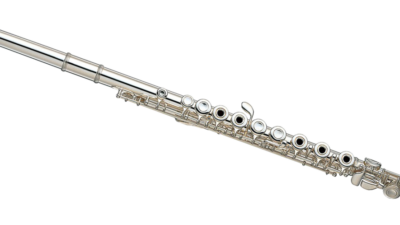
शास्त्र विंग · वाद्य-पट्टिका · Instrument Plate
फ्लूट (पश्चिमी कंसर्ट)
Flute (Western concert)
अन्य नामफ्लूट (पश्चिमी कंसर्ट बाँसुरी) · ट्रांसवर्स फ्लूट · बोम फ्लूट · Boehm flute
परिचय
Overviewपश्चिमी कंसर्ट फ्लूट — चाँदी-सी चमकती, आड़ी पकड़ी जाने वाली रीड-रहित बाँसुरी, जिसे थियोबाल्ड बोम की 1847 की चाबी-प्रणाली ने तीन सप्तक में समान, चपल और सटीक बनाया। इसका शुद्ध, गायकीय स्वर पश्चिमी ऑर्केस्ट्रा की अग्रणी वुडविंड आवाज़ है, और हिन्दी फ़िल्म-संगीत के विशाल ऑर्केस्ट्रा में यह बाँस-बाँसुरी की भारतीय आत्मा के साथ अपनी पश्चिमी क्रोमैटिक चमक मिलाकर पूरब-पश्चिम का अनोखा संकर स्वर रचती रही।
अंग्रेज़ी में पढ़ें · Read in English
The Western concert flute — a silvery, transversely held, reedless flute made even, agile and accurate across three octaves by Theobald Boehm's 1847 key system. Its pure, vocal tone is the leading woodwind voice of the Western orchestra, and in the great orchestras of Hindi film music it blended its Western chromatic brilliance with the Indian soul of the bamboo bansuri to weave a unique East-West hybrid sound.
वर्गीकरण
ClassificationNatya Shastra Category
सुषिर (Sushira — wind / hollow instruments)
नाट्यशास्त्र की चार वाद्य-श्रेणियों में फ्लूट 'सुषिर' वर्ग में आता है — वे वाद्य जिनकी नली में हवा फूँककर ध्वनि उत्पन्न होती है। भारतीय बाँसुरी की तरह यह भी किनारे से फूँका जाने वाला सुषिर वाद्य है, बस लकड़ी/बाँस के बजाय यह धातु का बना Boehm-प्रणाली का यंत्र है।
Among the four instrument classes of the Natya Shastra, the flute belongs to the 'Sushira' (wind / hollow) category — instruments sounded by blowing air through a tube. Like the Indian bansuri it is an edge-blown wind instrument, but instead of bamboo or wood it is a metal, Boehm-system instrument.
Western Category
Woodwind — edge-blown (rimblown) aerophone, transverse flute
Western Family
Flute family (C concert flute; related to the piccolo, alto flute and bass flute; and to the reedless transverse-flute principle shared with the Indian bansuri)
Hornbostel Sachs
421.121.12 — side-blown flute with keys
Sub Classification
बनावट
PhysicalDescription Hindi
पश्चिमी कंसर्ट फ्लूट एक लगभग 66-67 सेमी लंबी बेलनाकार धातु की नली है जिसे आड़ा (transverse) पकड़कर मुँह की एक तरफ़ से फूँका जाता है। इसमें कोई रीड नहीं होती — ध्वनि तब बनती है जब वादक की फूँक एम्बशर छेद के किनारे से टकराकर विभाजित होती है। इसके तीन मुख्य भाग होते हैं: हेडजॉइंट (मुखनली), बॉडी (मध्य नली) और फुटजॉइंट (पाद)। पूरे शरीर पर धातु की चाबियाँ (keys) और गद्देदार पैड लगे होते हैं जो थियोबाल्ड बोम की 1847 की प्रणाली पर आधारित हैं।
Description English
The Western concert flute is a roughly 66-67 cm long cylindrical metal tube, held sideways (transversely) and blown across an opening at one end. It has no reed — sound is created when the player's airstream strikes and splits against the edge of the embouchure hole. It has three main sections: the headjoint, the body, and the footjoint. Along the body run metal keys and padded cups based on Theobald Boehm's 1847 system.
Body
Long cylindrical tube in three detachable joints (head, body, foot)
तीन अलग होने वाले भागों में बँटी लंबी बेलनाकार नली (हेड, बॉडी, फुट)
Metal — student models in nickel-silver (cupronickel) with silver plating; professional models in solid sterling silver, gold, or platinum. The headjoint material strongly affects tone.
धातु — शिक्षार्थी मॉडल निकल-सिल्वर (जर्मन सिल्वर) पर चाँदी की परत के; व्यावसायिक मॉडल ठोस स्टर्लिंग सिल्वर, सोने या प्लैटिनम के। हेडजॉइंट की धातु स्वर पर गहरा प्रभाव डालती है।
66-67 (C concert flute)
Cylindrical body with a parabolic (tapering) headjoint bore — Boehm's key acoustic innovation
Open tube, stopped at the headjoint end by a cork; the tube's air column is the resonator
अंग
Keys And Mechanism
बोम प्रणाली की चाबियाँ
Boehm-system keys
गद्देदार पैडों से ढकी धातु की चाबियों और रिंगों की एक जटिल यांत्रिकी, जिसे थियोबाल्ड बोम ने वैज्ञानिक ध्वनिकी के आधार पर डिज़ाइन किया। यह पूरे तीन सप्तक में समान, सटीक और तेज़ क्रोमैटिक वादन संभव बनाती है।
An intricate mechanism of padded metal keys and rings, engineered by Theobald Boehm on acoustic-scientific principles. It allows even, accurate and rapid chromatic playing across all three octaves.
Frets
फ्लूट में फ्रेट नहीं होते; पिच चाबियों के संयोजन और फूँक की गति व दिशा (embouchure) से नियंत्रित होती है। सूक्ष्म मीड/मुरकी भारतीय बाँसुरी जितनी सहज नहीं, क्योंकि यह समान-स्वर (equal temperament) के लिए बना है।
The flute has no frets; pitch is controlled by key combinations and by the speed and angle of the airstream (embouchure). Fine meend/glissando is less natural than on the bansuri, as the instrument is built for equal temperament.
ध्वनि-चरित्र
SoundTonal Character Hindi
फ्लूट का स्वर उज्ज्वल, स्पष्ट, हवादार और चाँदी-सा चमकीला होता है। निचले सप्तक में यह मखमली और गोल है, मध्य में मधुर और गायकीय, और ऊपरी सप्तक में तीखा व भेदक। रीड न होने के कारण इसका स्वर सबसे 'शुद्ध' और सीटी-सदृश माना जाता है।
Tonal Character English
The flute's tone is bright, clear, airy and silvery. In the low register it is velvety and round, in the middle sweet and vocal, and in the high register piercing and brilliant. Having no reed, its tone is considered among the 'purest', whistle-like of the winds.
Timbre
Bright, pure, airy; rich in fundamental with a breathy sheen; agile and even across the range
Range
C4–C7 (three octaves; B3 with a B-foot, and skilled players reach up to D7)
Dynamic Range
Wide — from a soft, breathy pianissimo to a bright, projecting fortissimo, though it is one of the quieter orchestral voices and is often amplified in film recording
Techniques
सुनने का मार्गदर्शन
The Listening Guideफ्लूट को समझना हो तो पहले किसी पश्चिमी एकल रचना में उसका शुद्ध, हवादार स्वर पकड़िए; फिर पुराने हिन्दी फ़िल्म-गीत के इंटरल्यूड में सुनिए — चटकीली, तेज़ दौड़ें प्रायः धातु-फ्लूट की, और लंबी, मींड-भरी मीठी पंक्तियाँ बाँस-बाँसुरी की होती हैं। इन दोनों का संवाद ही उस दौर की जादुई ध्वनि रचता है।
अंग्रेज़ी में पढ़ें · Read in English
To understand the flute, first hear its pure, airy tone in a Western solo piece; then listen to the interlude of an old Hindi film song — the fast, brilliant runs are often the metal flute, while the long, meend-laden sweet lines are usually the bamboo bansuri. This dialogue between the two is the magic sound of that era.
परिचय
Identity- Year Of Origin
- 1847
वर्गीकरण
Classification- Hornbostel Sachs
- 421.121.12 — side-blown flute with keys
अन्य विवरण
More DetailsConstruction
Timbre
Bright, pure, airy; rich in fundamental with a breathy sheen; agile and even across the range
रोचक तथ्य
Margin Notesएक स्वर्णकार की बनाई बाँसुरी — थियोबाल्ड बोम केवल बाँसुरी-वादक नहीं, कुशल स्वर्णकार और धातु-कर्मी भी थे। इसी दोहरे कौशल ने उन्हें फ्लूट की जटिल चाबी-यांत्रिकी को धातु में सटीकता से गढ़ने योग्य बनाया।
Theobald Boehm was not only a flutist but also a skilled goldsmith and metalworker. This dual craft let him engineer the flute's intricate key mechanism in metal with great precision.
रीड-रहित 'वुडविंड' — फ्लूट को वुडविंड परिवार में गिना जाता है, हालाँकि यह अब लकड़ी की नहीं, धातु की बनी होती है और इसमें रीड भी नहीं होती। वर्गीकरण इसकी ध्वनि-उत्पत्ति के इतिहास पर आधारित है, वर्तमान सामग्री पर नहीं।
The flute is counted among the woodwinds, though it is now made of metal, not wood, and has no reed. The classification rests on the history of its sound-production, not its present material.
फ़िल्म-ऑर्केस्ट्रा का पूरब-पश्चिम — 1950-70 के हिन्दी फ़िल्म-स्टूडियो ऑर्केस्ट्रा में अक्सर एक ही खंड में बाँस-बाँसुरी और चाँदी-फ्लूट दोनों बैठते थे। अरेंजर मींड-भरी भारतीय पंक्ति बाँसुरी को और तेज़, क्रोमैटिक काउंटर-मेलोडी धातु-फ्लूट को सौंपते थे।
In the Hindi film-studio orchestras of the 1950s-70s, the same section often seated both the bamboo bansuri and the silver flute. Arrangers gave the meend-laden Indian line to the bansuri and the fast, chromatic counter-melody to the metal flute.
समान-स्वर बनाम सूक्ष्म-स्वर — पश्चिमी फ्लूट समान-स्वर (12 बराबर स्वरों) के लिए बनी है, इसलिए यह पश्चिमी हार्मनी में तो सहज है पर राग की सूक्ष्म श्रुतियों और लगातार मींड में बाँसुरी जितनी स्वाभाविक नहीं — यही कारण है कि विशुद्ध रागदारी में बाँसुरी को वरीयता मिलती है।
The Western flute is built for equal temperament (12 equal semitones), so it is at ease in Western harmony but not as natural as the bansuri in the fine shrutis and continuous meend of raga — which is why the bansuri is preferred for pure raga performance.
सवाल-जवाब
Questions & Answersपश्चिमी कंसर्ट फ्लूट क्या है?
यह एक धातु की आड़ी (transverse), रीड-रहित बाँसुरी है जिसे किनारे से फूँककर बजाया जाता है। इसकी चाबी-प्रणाली थियोबाल्ड बोम ने 1847 में बनाई थी। यह पश्चिमी ऑर्केस्ट्रा की प्रमुख वुडविंड आवाज़ है।
फ्लूट और भारतीय बाँसुरी में क्या अंतर है?
दोनों आड़ी और बिना-रीड की सुषिर बाँसुरी हैं। बाँसुरी बाँस की, बिना चाबियों की, समान-स्वर से मुक्त और मींड में सिद्धहस्त है; कंसर्ट फ्लूट धातु की, चाबियों वाली, समान-स्वर में सटीक और तेज़ क्रोमैटिक वादन में सक्षम है।
क्या फ्लूट हिन्दी फ़िल्म-संगीत में इस्तेमाल हुई है?
हाँ। 1940-70 के विशाल फ़िल्म-ऑर्केस्ट्रा में पश्चिमी धातु-फ्लूट वुडविंड-अनुभाग का हिस्सा थी। यह बाँस-बाँसुरी के साथ बैठकर तेज़ क्रोमैटिक मार्ग, काउंटर-मेलोडी और पश्चिमी हार्मनी जोड़ती थी।
क्या 'चाँदी की फ्लूट' सचमुच चाँदी की होती है?
ज़रूरी नहीं। शिक्षार्थी फ्लूट प्रायः निकल-सिल्वर (एक मिश्रधातु जिसमें असल चाँदी नहीं होती) की बनी होती हैं जिन पर चाँदी की परत चढ़ी होती है। व्यावसायिक फ्लूट ठोस स्टर्लिंग सिल्वर, सोने या प्लैटिनम की होती हैं।
नमूना-पट्टी
The Specimen Table| नाम | फ्लूट (पश्चिमी कंसर्ट) · Flute (Western concert) |
|---|---|
| अन्य नाम | फ्लूट (पश्चिमी कंसर्ट बाँसुरी) · ट्रांसवर्स फ्लूट · बोम फ्लूट · Boehm flute · Transverse flute (Western concert) · Flûte traversière |
| उद्गम | 1847 |
| प्रकार | वाद्य · Instruments |
साझा कीजिए · Share this Plate