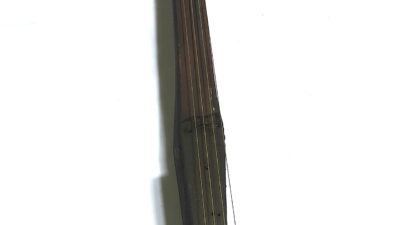
शास्त्र विंग · वाद्य-पट्टिका · Instrument Plate
दुइतारा
Duitara
अन्य नामका दुइतारा · Ka Duitara · Duitara (Khasi lute) · Dotara of Meghalaya
परिचय
Overviewदुइतारा मेघालय की खासी-जैंतिया पहाड़ियों का चार-तारा वाला लोक-वाद्य है — मध्यम-मुलायम लकड़ी से तराशा, पशु-खाल से मढ़े पेट और मूगा रेशम के तारों वाला एक छोटा, गिटार-जैसा वाद्य जिसे उँगली से झंकृत किया जाता है। लिपि से पहले के खासी समाज में यह वंशावली और लोककथा का 'जीवित अभिलेखागार' था; आज पद्मश्री स्केंड्रोवेल स्येमलिएह की विरासत और शिलांग के फ़्यूज़न आंदोलन से यह फिर जीवित हो रहा है।
अंग्रेज़ी में पढ़ें · Read in English
The duitara is the four-stringed folk lute of Meghalaya's Khasi and Jaintia Hills — a small, guitar-like instrument carved from medium-soft wood, its belly covered in animal skin and strung with muga silk, played by plucking with the fingers. In pre-literate Khasi society it was a 'living archive' of genealogy and folktale; today, through the legacy of Padma Shri Skendrowell Syiemlieh and Shillong's fusion movement, it is coming alive again.
वर्गीकरण
ClassificationNatya Shastra Category
तत (Tata - stringed instruments)
तत वर्ग में दुइतारा एक अंगुली/मिज़राब से झंकृत की जाने वाली लम्बी-गर्दन वाली लोक वीणा (plucked lute) है, जो तारों को उँगली से छेड़कर ध्वनि उत्पन्न करती है — सारंगी जैसे धनुष-वाद्यों से भिन्न।
Within the Tata (stringed) category, the duitara is a plucked long-necked folk lute that produces sound by plucking or strumming its strings with the fingers — distinct from bowed Tata instruments like the sarangi.
Western Category
Plucked lute (box-lute chordophone)
Western Family
Long-necked folk lute family — kin to the dotara of Assam/Bengal, and comparable in playing method to a small guitar or banjo, but hand-carved and skin-bellied
Sub Classification
बनावट
PhysicalDescription Hindi
दुइतारा एक हस्तनिर्मित, लम्बी गर्दन वाला चार तार वाला लोक वाद्य है जो एक छोटे गिटार जैसा दिखता है। इसका शरीर मध्यम-मुलायम लकड़ी से तराशा जाता है, पेट का खोखला हिस्सा सूखी पशु-खाल से मढ़ा होता है, और गर्दन के सिरे पर चार छेदों में लकड़ी की खूँटियाँ तारों को कसती हैं। पारंपरिक रूप से तार 'मूगा' रेशम के बनते हैं।
Description English
The duitara is a hand-carved, long-necked, four-stringed folk instrument that resembles a small guitar. Its body is carved from medium-soft wood, the hollow of its belly is covered with dried animal skin, and at the end of the neck four holes hold wooden pegs that keep the strings in tune. Traditionally the strings are made of 'muga' silk.
Body
Elongated rounded resonator with a long fretless neck and a carved head
लम्बी गोलाकार अनुनाद-पेटी, लम्बी बिना-पर्दे वाली गर्दन और तराशा हुआ सिरा
Medium-soft carved wood, often sourced (traditionally) from sacred groves during the monsoon
मध्यम-मुलायम तराशी हुई लकड़ी, परंपरागत रूप से मानसून में पवित्र वनों (law kyntang) से ली गई
80-95
Hollow wooden belly topped with a stretched dried-animal-skin membrane that acts as the soundboard
Strings
Four playing strings — the name itself means 'two-and-two / four strings' in the local sense (cf. dotara = 'two strings')
The duitara has NO sympathetic (tarab) strings — unlike the sarangi or sitar. All four strings are directly played.
Plucking
अंगुली-वादन / झंकार
Finger plucking / strumming
Bare fingers (sometimes a small plectrum); no bow is used
Strings are plucked or strummed with the right hand while the left hand presses them against the neck to change pitch — closer to guitar technique than to bowed sarangi
Tuning Pegs
खूँटी
Pegs
Four wooden pegs seated in holes at the head of the neck; strings are tightened by rotating them
Bridge
घोड़ी / पुल
Bridge
A small wooden bridge resting on the skin membrane that transmits string vibration to the resonating belly
Wood, set on the skin soundboard
Frets
दुइतारा की गर्दन प्रायः बिना पर्दों (frets) की होती है — वादक तारों को सीधे उँगली से दबाकर स्वर बदलता है, जिससे लोक-मींड और सहज खिंचाव संभव होते हैं।
The duitara neck is typically fretless — the player stops the strings directly with the fingers, allowing folk-style meend (slides) and easy pitch bending.
ध्वनि-चरित्र
SoundTonal Character Hindi
दुइतारा की ध्वनि गर्म, मिट्टी-जैसी और मुलायम होती है — गिटार-सी झंकार पर पशु-खाल के पेट की गूँज उसे एक खोखली, गहरी और पुरानी 'कथा-कहती' आवाज़ देती है। यह उत्सव की उमंग और अकेली रात की उदासी, दोनों को थाम सकती है।
Tonal Character English
The duitara's tone is warm, earthy and soft — a guitar-like strum resting on the hollow boom of its skin belly gives it a deep, storytelling voice. It can carry both festive exuberance and the melancholy of a solitary night.
Timbre
Warm, woody, slightly muted twang with a resonant skin-membrane thump
Range
Roughly two folk octaves; a mid-register voice pitched for accompanying and answering the human singing voice
Dynamic Range
Intimate to moderately loud — built for hearth, courtyard and open-air festival rather than the concert hall
Techniques
सुनने का मार्गदर्शन
The Listening Guideदुइतारा का रस लेना हो तो पहले उसकी झंकार की ताल पकड़िए, फिर उसके नीचे बजती खाल-पेट की गहरी थाप को। खासी लोकगीत 'मारवेई ला इ दुइतारा' से शुरू कीजिए, जहाँ वाद्य और गायक आपस में बात करते हैं। फिर 'सुर दुइतारा' सुनिए — दो दुइतारा और ढोल की परतदार बुनावट। यह अलाव के पास बैठकर कथा सुनने-जैसा अंतरंग अनुभव है।
अंग्रेज़ी में पढ़ें · Read in English
When you listen to the duitara, first catch its rhythmic strum, then the deep boom of the skin belly beneath it. Begin with the Khasi folk song 'Marwei La I Duitara' — there the dialogue of instrument and singer is clear. Then hear the modern 'Sur Duitara', where two duitaras and drums weave a layered soundscape.
श्रवण-कक्ष · The Listening Room
देखें-सुनें
Khasi Duitara (Meghalaya) Incredible India · 1:11
KHASI FOLK SONG MARWEI LA I DUITARA (BY Mr. Gloucester Nongbet) · 4:17
Sur Duitara (Official Music Video) || NA RYNSAN KI SUR TYNRAI · 4:21
अन्य विवरण
More DetailsTimbre
Warm, woody, slightly muted twang with a resonant skin-membrane thump
रोचक तथ्य
Margin Notesनाम का अर्थ — जहाँ 'दोतारा' का अर्थ 'दो तार' है, वहीं मेघालय के इस चार-तारा वाद्य को 'दुइतारा' कहा जाता है। नाम की समानता के बावजूद बनावट (खाल का पेट, मूगा रेशम) और खासी सांगीतिक संदर्भ इसे असम-बंगाल के दोतारा से अलग करते हैं।
Where 'dotara' means 'two strings', this four-stringed Meghalaya instrument is called 'duitara'. Despite the similar name, its construction (skin belly, muga silk) and Khasi musical context set it apart from the Assam-Bengal dotara.
पवित्र वन की लकड़ी — परंपरागत रूप से कारीगर मानसून में पवित्र वनों की लकड़ी से दुइतारा तराशते थे और तैयार वाद्य को उस लकड़ी की आत्मा के सम्मान में खुले में बजाया जाता था — निर्माण-प्रक्रिया संगीत जितनी ही पवित्र मानी जाती थी।
Craftspeople traditionally carved the duitara from sacred-grove wood in the monsoon, and the finished instrument was played outdoors to honour the spirit of that wood — the making held to be as sacred as the music.
आठ वर्ष का दुइतारा-वादक — पद्मश्री स्केंड्रोवेल स्येमलिएह ने पश्चिम खासी हिल्स के उम्थिएड बिनथेर गाँव में मात्र आठ वर्ष की उम्र में अपने चार-तारा दुइतारा और सुरीले गायन से गाँव को मोहित करना शुरू कर दिया था; वे 1962 से ऑल इंडिया रेडियो शिलांग से जुड़े रहे।
Padma Shri Skendrowell Syiemlieh began enchanting his village, Umthied Bynther in West Khasi Hills, with his four-stringed duitara and soulful singing at just eight years old; he was associated with All India Radio Shillong from 1962.
ब्लूज़ से जुगलबंदी — शिलांग के फ़्यूज़न कलाकारों — समरसाल्ट, ना रिम्पेई, 4th Element — ने दुइतारा को ब्लूज़, जैज़ और इंडी-रॉक में गूँथकर एक संकटग्रस्त लोक-वाद्य को नए श्रोताओं और स्ट्रीमिंग मंचों तक पहुँचाया।
Shillong's fusion artists — Summersalt, Na Rympei, 4th Element — have woven the duitara into blues, jazz and indie rock, carrying an endangered folk instrument to new audiences and streaming platforms.
सवाल-जवाब
Questions & Answersदुइतारा क्या है?
दुइतारा (का दुइतारा) मेघालय की खासी और जैंतिया पहाड़ियों का एक चार-तारा वाला लोक-वाद्य है जो छोटे गिटार जैसा दिखता है। यह मध्यम-मुलायम लकड़ी से तराशा जाता है, इसका पेट सूखी पशु-खाल से मढ़ा होता है और तार परंपरागत रूप से 'मूगा' रेशम के बनते हैं।
दुइतारा में कितने तार होते हैं और यह कैसे बजाया जाता है?
दुइतारा में चार तार होते हैं और इसमें कोई तरब (अनुनाद) तार नहीं होता। इसे उँगली से झंकृत या छेड़कर बजाया जाता है और गर्दन पर तारों को दबाकर स्वर बदले जाते हैं — विधि गिटार से मिलती-जुलती है।
दुइतारा और दोतारा में क्या अंतर है?
नाम मिलते-जुलते हैं, पर ये भिन्न वाद्य हैं। दुइतारा मेघालय का खासी वाद्य है जिसका पेट पशु-खाल से मढ़ा होता है और तार मूगा रेशम के होते हैं; दोतारा असम-बंगाल का वाद्य है। दोनों लम्बी-गर्दन वाले झंकार-वाद्य हैं पर अलग सांस्कृतिक परम्पराओं के।
दुइतारा का सांस्कृतिक महत्व क्या है?
लिपि से पहले के खासी समाज में दुइतारा एक 'जीवित अभिलेखागार' था — इस पर गाकर वंशावलियाँ और लोककथाएँ सहेजी जाती थीं। यह अलाव के पास और शाद सुक मिनसिएम जैसे उत्सवों में बजता है। पद्मश्री स्केंड्रोवेल स्येमलिएह इसके सबसे प्रसिद्ध वादक थे।
क्या दुइतारा आज भी बजाया जाता है?
हाँ। यह एक संकटग्रस्त लोक-वाद्य है पर पुनर्जीवित हो रहा है — शिलांग के फ़्यूज़न बैंड (समरसाल्ट, ना रिम्पेई, 4th Element), हिंदी फ़िल्म 'Rock On!! 2' (2016) और सांस्कृतिक-विरासत परियोजनाएँ इसे नए श्रोताओं तक पहुँचा रही हैं।
नमूना-पट्टी
The Specimen Table| नाम | दुइतारा · Duitara |
|---|---|
| अन्य नाम | का दुइतारा · Ka Duitara · Duitara (Khasi lute) · Dotara of Meghalaya |
| प्रकार | वाद्य · Instruments |
साझा कीजिए · Share this Plate