शास्त्र विंग · वाद्य-पट्टिका · Instrument Plate
जेम्बे
Djembe
अन्य नामजेम्बे · जम्बे · डिजेम्बे · Djembe (also: Jembe, Jenbe, Yembe, Sanbanyi)
परिचय
Overviewजेम्बे पश्चिम अफ़्रीका का प्याले-नुमा ढोल है, जो एक ही लकड़ी के तने से तराशा जाता है और जिसके ऊपर बकरी की खाल रस्सियों से कसी रहती है। इसकी सबसे बड़ी ख़ासियत यह है कि एक ही ढोल में तीन स्वर — गहरा बास, गोल टोन और चाबुक-सा स्लैप — बसते हैं। सदियों तक मांडे गाँवों की सामूहिक धड़कन रहे इस वाद्य ने 20वीं सदी में विश्व-संगीत की साझा शब्दावली में जगह बनाई; भारत में यह फ़्यूज़न-मंच, विश्व-संगीत उत्सव और शिवमणि जैसे तालवादकों की किट के ज़रिए समकालीन ध्वनि-परिदृश्य का हिस्सा बना।
अंग्रेज़ी में पढ़ें · Read in English
The djembe is West Africa's goblet-shaped drum, carved from a single log with a goatskin head held taut by rope. Its defining feature is that a single drum contains three voices — deep bass, round tone and whip-crack slap. For centuries the communal heartbeat of Mande villages, in the 20th century it earned a place in the shared vocabulary of world music; in India it entered the contemporary soundscape through fusion stages, world-music festivals and the kits of percussionists like Sivamani.
वर्गीकरण
ClassificationNatya Shastra Category
अवनद्ध (Avanaddha - covered/membrane percussion instruments)
यद्यपि जेम्बे भारतीय शास्त्रीय परंपरा का वाद्य नहीं है, नाट्यशास्त्र के वर्गीकरण के अनुसार यह 'अवनद्ध वाद्य' (चमड़े से मढ़े ताल-वाद्य) की श्रेणी में आता है, क्योंकि इसकी ध्वनि एक खिंची हुई खाल (झिल्ली) पर हथेली के आघात से उत्पन्न होती है — ठीक वैसे ही जैसे ढोल, तबला या मृदंग में।
Though not an instrument of the Indian classical tradition, in the Natya Shastra scheme the djembe falls under 'Avanaddha vadya' (membrane percussion), since its sound is produced by striking a stretched skin (membrane) with the bare hands — the same principle as the dhol, tabla or mridangam.
Western Category
Membranophone — hand percussion
Western Family
Goblet drum family (single-headed, open-bottomed goblet-shaped drum, related in shape to the darbuka and Indian ghumot but larger and rope-tuned)
Sub Classification
बनावट
PhysicalDescription Hindi
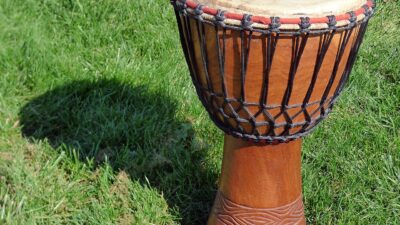
जेम्बे एक प्याले (गोबलेट) के आकार का, एक ही लकड़ी के तने से खोखला करके तराशा गया ताल-वाद्य है, जिसके चौड़े मुँह पर बकरी की खाल रस्सियों से कसकर मढ़ी जाती है और नीचे का सिरा खुला रहता है। ऊपरी कटोरे में आघात होता है और नीचे का पतला तना ध्वनि को फेंकने वाले भोंपू की तरह काम करता है, जिससे एक ही ढोल से गहरे बास से लेकर तीखे 'स्लैप' तक तीन स्पष्ट स्वर निकलते हैं।
Description English
The djembe is a goblet-shaped drum carved and hollowed from a single log of wood, with a goatskin head lashed over its wide mouth by rope and an open lower end. The player strikes the upper bowl while the narrow stem below acts like a projecting horn, so a single drum yields three distinct voices — from a deep bass to a sharp cutting slap.
Body
Goblet / chalice shape — wide bowl on top narrowing to an open flared foot
प्याले या चषक के आकार का — ऊपर चौड़ा कटोरा, नीचे संकरा होकर खुला पैर
Single carved hardwood log (traditionally African hardwoods: lenke, djalla, dugura, gueni or iroko)
एक ही सख़्त लकड़ी के तने से तराशा हुआ (परंपरागत रूप से अफ़्रीकी दृढ़-काष्ठ: लेंके, जल्ला, दुगुरा, ग्वेनी या इरोको)
58-63
Hollow goblet interior, open at the flared base — the narrow waist and open foot project and shape the bass tone
Strings
Single playing head — the drumhead struck by the hands
A metal 'sègè sègè' / kesing-kesing plate of tin sheet with rattling rings is sometimes clipped to the rim to add a buzzing shimmer to the sound
High-tension synthetic (or traditional) rope woven between two steel rings to hold and tune the head
Bow
हथेली (कोई डंडा नहीं)
Bare hands (no beater)
Played entirely with the open bare hands — no stick
N/A
Struck with flat hand and fingers; the three core sounds are Bass (full hand at centre), Tone (fingers together at edge), and Slap (relaxed fingers snapping the rim)
Tuning Pegs
कसाव-गाँठें
Tuning knots (Mali weave)
Pitch is raised by pulling successive rows of the vertical rope into diamond-shaped knots that shorten and tighten the rope, squeezing the two rings together against the head
Bridge
किनारा (रिम)
Rim / bearing edge
The wooden bearing edge over which the skin is stretched; the sharpness of this edge shapes the clarity of the slap tone
Carved wood of the shell, faced by the steel flesh-hoop
Frets
जेम्बे एक ताल-वाद्य है, अतः इसमें फ्रेट या सुर-स्थान नहीं होते — पूरा 'स्वर' इस बात से तय होता है कि हाथ खाल पर कहाँ और कैसे पड़ता है (केंद्र में बास, किनारे पर टोन, रिम पर स्लैप)।
As a drum, the djembe has no frets or pitched stops — its 'notes' are timbral, determined by where and how the hand lands on the skin (bass at the centre, tone at the edge, slap on the rim).
ध्वनि-चरित्र
SoundTonal Character Hindi
जेम्बे की ध्वनि विशाल और नाटकीय है — एक ही ढोल में गड़गड़ाता गहरा बास, गोल भरा-पूरा टोन और चाबुक-सा तीखा स्लैप एक साथ बसते हैं। यह उत्सव, ऊर्जा और सामूहिक थाप का वाद्य है, जिसकी आवाज़ खुले मैदान में भी दूर तक जाती है।
Tonal Character English
The djembe's voice is huge and dramatic — a rumbling deep bass, a round full tone, and a whip-crack slap all live in one drum. It is an instrument of celebration, energy and communal pulse, projecting powerfully even in the open air without amplification.
Timbre
Woody, resonant and dynamic — from a chest-thumping bass to a bright, sharp, almost metallic slap
Range
Non-pitched percussion; three principal timbres (Bass / Tone / Slap) spanning a wide low-to-high frequency spread within a single drum
Dynamic Range
Extremely wide — capable of a whisper-soft finger tap to a piercing slap that carries over a full drum ensemble
Techniques
सुनने का मार्गदर्शन
The Listening Guideजेम्बे को समझने के लिए पहले तीन स्वर अलग-अलग पहचानिए — केंद्र का गहरा बास, किनारे का गोल टोन और रिम का तीखा स्लैप। फिर पारंपरिक समूह-वादन सुनिए जहाँ 'दुनुन' बास-ढोल स्थिर चक्र बुनते हैं और प्रमुख जेम्बे उस पर आह्वान और सोलो रचता है। अंत में इसे भारतीय फ़्यूज़न के रंग में सुनिए, जहाँ यह तबला और विश्व-ताल के बीच सेतु बनता है।
अंग्रेज़ी में पढ़ें · Read in English
To appreciate the djembe, first learn to hear its three voices apart — the deep centre bass, the round edge tone, and the sharp rim slap. Then listen to a traditional ensemble where the 'dunun' bass drums lay a steady cycle and a lead djembe builds calls and solos over it. Hear a Malian master like Bassidi Koné solo to sense how one drum can 'speak'; then hear it in the hands of an Indian percussionist like Sivamani, coloured for world-fusion.
परिचय
Identity- Year Of Origin
- 1200
अन्य विवरण
More DetailsTimbre
Woody, resonant and dynamic — from a chest-thumping bass to a bright, sharp, almost metallic slap
रोचक तथ्य
Margin Notesएक-वाद्य वाद्यवृंद — जेम्बे की सबसे बड़ी विशेषता यह है कि एक ही ढोल में तीन पूर्ण स्वर — गहरा बास, गोल टोन और तीखा स्लैप — बसते हैं। इसी कारण एक अकेला कुशल वादक भी पूरे समूह-सा प्रभाव रच सकता है।
The djembe's defining trait is that a single drum holds three complete voices — deep bass, round tone and sharp slap. For this reason even a lone skilled player can create the effect of a whole ensemble.
दुनुन परिवार का साथ — परंपरागत रूप से जेम्बे अकेला नहीं बजता — इसके साथ तीन बेलनाकार बास-ढोल 'दुनुनबा', 'संगबान' और 'केनकेनी' (सामूहिक रूप से 'दुनुन') एक स्थिर चक्र बुनते हैं, जिन पर प्रमुख जेम्बे नर्तकों को संकेत देता और सोलो रचता है।
Traditionally the djembe does not play alone — three cylindrical bass drums, 'dundunba', 'sangban' and 'kenkeni' (collectively the 'dunun'), weave a steady cycle over which the lead djembe cues the dancers and improvises.
रस्सी से बँधा सुर — जेम्बे में कोई पेंच या चाबी नहीं होती — इसकी खाल को 'माली-बुनाई' नामक हीरे-नुमा रस्सी-गाँठों को खींचकर कसा और सुर में बाँधा जाता है। जितनी कसी खाल, उतना तीखा स्लैप।
The djembe has no bolts or keys — its head is tightened and tuned by pulling diamond-shaped rope knots known as the 'Mali weave'. The tighter the skin, the sharper the slap.
अफ़्रीका से विश्व-मंच तक — 20वीं सदी के मध्य में गिनी के 'लेस बैले अफ़्रीकैंस' जैसे राष्ट्रीय नृत्य-मंडलों ने जेम्बे को विश्व के सामने रखा, और 1980-90 के 'ड्रम-सर्कल' आंदोलन ने इसे धरती के सबसे लोकप्रिय हस्त-ढोलों में से एक बना दिया।
In the mid-20th century national dance troupes like Guinea's 'Les Ballets Africains' presented the djembe to the world, and the 'drum-circle' movement of the 1980s-90s made it one of the most popular hand drums on earth.
सवाल-जवाब
Questions & Answersजेम्बे क्या है?
जेम्बे पश्चिम अफ़्रीका का एक प्याले-नुमा हस्त-ढोल है, जो एक ही लकड़ी के तने से तराशा जाता है और जिसके ऊपर बकरी की खाल रस्सियों से कसी रहती है। इसे हथेलियों से बजाया जाता है और एक ही ढोल से तीन स्वर — गहरा बास, गोल टोन और तीखा स्लैप — निकलते हैं।
जेम्बे कहाँ से आया है?
जेम्बे की उत्पत्ति लगभग 12वीं-13वीं शताब्दी में पश्चिम अफ़्रीका के माली साम्राज्य के मानडिंका (मालिंके) लोगों में मानी जाती है। यह माली, गिनी, बुर्किना फासो और सेनेगल की मांडे संस्कृति का पारंपरिक वाद्य है।
जेम्बे को कैसे बजाया जाता है?
जेम्बे को केवल खुली हथेलियों से बजाया जाता है, बिना किसी डंडे के। इसके तीन मूल स्वर हैं: बास (पूरी हथेली से केंद्र पर), टोन (जुड़ी उँगलियों से किनारे पर) और स्लैप (ढीली उँगलियों से रिम पर तीखा प्रहार)।
क्या जेम्बे भारतीय या बॉलीवुड संगीत में प्रयोग होता है?
हाँ, किन्तु छिटपुट रूप से। जेम्बे भारतीय शास्त्रीय या ग्रामोफोन-युग परंपरा का वाद्य नहीं है; इसका प्रयोग आधुनिक और फ़्यूज़न बॉलीवुड पृष्ठभूमि संगीत, विश्व-ताल आधारित दृश्यों और शिवमणि जैसे तालवादकों की किट में होता है।
जेम्बे को 'एक-वाद्य वाद्यवृंद' क्यों कहा जाता है?
क्योंकि एक ही जेम्बे से तीन स्पष्ट स्वर — गहरा बास, गोल टोन और तीखा स्लैप — निकलते हैं, जिससे एक अकेला कुशल वादक भी पूरे ताल-समूह जैसा प्रभाव रच सकता है।
नमूना-पट्टी
The Specimen Table| नाम | जेम्बे · Djembe |
|---|---|
| अन्य नाम | जेम्बे · जम्बे · डिजेम्बे · Djembe (also: Jembe, Jenbe, Yembe, Sanbanyi) |
| उद्गम | 1200 |
| प्रकार | वाद्य · Instruments |
साझा कीजिए · Share this Plate