शास्त्र विंग · वाद्य-पट्टिका · Instrument Plate
ढौंसा
Dhaunsa
अन्य नामढौंसा · ढोंसा (Dhonsa) · ढौंस (Dhauns) · Dhaunsa (also: Dhonsa)
परिचय
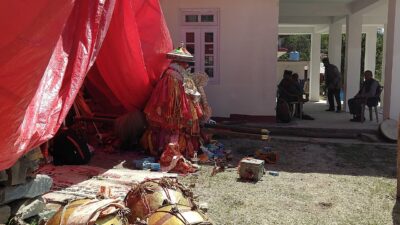
Overviewढौंसा हिमाचल प्रदेश की देव-घाटियों का सबसे बड़ा ढोल है — पीटी हुई धातु की विशाल कड़ाही पर मढ़ी चर्म-पूड़ी, जिसे खड़े होकर लाठियों से बजाया जाता है। कर्णाल, रणसिंघा, नरसिंघा, शहनाई और ढोल के साथ मिलकर यह 'देव-धुन/देव-बाजा' रचता है, जिसके गंभीर नाद पर कुल्लू, मंडी और समूचे हिमाचल में देवता का रथ और पालकी चलती है। बजाने से पहले वाद्य की पूजा होती है, और उसे मंदिर या मढ़ी में पवित्र वस्तु की तरह सहेजा जाता है — यह मंच का नहीं, समुदाय की सामूहिक श्रद्धा का वाद्य है।
अंग्रेज़ी में पढ़ें · Read in English
The dhaunsa is the largest drum of Himachal Pradesh's deity-valleys — a hide head over a vast bowl of beaten metal, struck standing with sticks. Together with the karnal, ranasingha, narsingha, shehnai and dhol it makes the 'dev dhun / devta baja', to whose solemn sound the deity's chariot and palanquin move across Kullu, Mandi and the wider Himachal. The instrument is worshipped before it is played and kept in the temple or madhi like a sacred object — an instrument not of the stage but of a whole community's devotion.
वर्गीकरण
ClassificationNatya Shastra Category
अवनद्ध (Avanaddha - covered / membrane percussion instruments)
अवनद्ध वर्ग में ढौंसा एक विशाल कड़ाहीनुमा (कटोरा-रूप) नगाड़ा-प्रकार का ताल-वाद्य है — एक बड़ा अर्धगोलाकार धातु-खोल जिसके खुले मुँह पर मोटी चर्म-पूड़ी मढ़ी जाती है; ध्वनि लाठी/डंडे के आघात से उत्पन्न होती है। यह हिमाचल के मंदिर-वाद्यों में सबसे बड़ा ढोल है और खड़े होकर बजाया जाता है।
In the Avanaddha (membrane) category of the Natya Shastra system, the dhaunsa is a large cauldron-shaped (bowl-type) kettledrum — a big hemispherical metal shell whose open mouth is covered with a thick hide head; sound is produced by striking it with a stick. It is the largest of Himachal's temple drums and is played standing.
Western Category
Membranophone — single-headed kettledrum (bowl drum)
Western Family
Kettledrum family (structurally akin to the nagara / naqqara and to timpani, but a heavy standing temple-processional bass drum)
Sub Classification
बनावट
PhysicalDescription Hindi
ढौंसा हिमाचल प्रदेश के पहाड़ी वाद्यों में सबसे विशाल ढोल है — एक बड़ा अर्धगोलाकार (कड़ाहीनुमा) नगाड़ा, जिसका खोल पीटी हुई ताँबे/पीतल की चादर या धातु से गढ़ा जाता है। खुले मुँह पर मोटी भैंस/बकरे की खाल की पूड़ी मढ़ी जाती है और उसे चमड़े या रस्सी की तानी से खोल के गिर्द कस कर बाँधा जाता है। देव-परंपरा में इसे प्रायः लाल-पीले पवित्र वस्त्र से लपेटा जाता है। इतना बड़ा और भारी होने के कारण इसे गले में लटकाने के बजाय ज़मीन/तिपाई पर टिकाकर या शोभायात्रा में साथ ढोकर, खड़े होकर लाठियों से बजाया जाता है, और इसकी गूँज गहरी, गंभीर बास होती है जो घाटियों में दूर तक फैलती है।
Description English
The dhaunsa is the largest drum among the Pahari instruments of Himachal Pradesh — a big hemispherical (cauldron-shaped) kettledrum whose shell is forged from beaten copper/brass sheet or metal. A thick buffalo- or goat-hide head is stretched over the open mouth and lashed tight around the shell with leather or rope bracing. In the deity tradition it is often wrapped in sacred red-and-gold cloth. So large and heavy that, rather than being slung from the body, it is rested on the ground or a stand — or hauled along in processions — and struck standing with sticks, giving a deep, solemn bass that carries far across the valleys.
Shell
Deep hemispherical bowl / cauldron (kettle)
गहरा अर्धगोलाकार कटोरा / कड़ाही (कड़ाहीनुमा खोल)
Beaten copper or brass sheet-metal (some village drums use a metal-clad wooden or clay bowl); the largest of the Himachali drum family
पीटी हुई ताँबे या पीतल की चादर-धातु (कुछ ग्रामीण वाद्यों में लकड़ी/मिट्टी के खोल पर धातु की चादर); हिमाचली ढोल-परिवार का सबसे बड़ा सदस्य
roughly 60-90 at the rim (large; among the widest Himachali drums)
45-75 (played standing owing to its size)
The deep closed metal bowl acts as one large resonating chamber, producing a slow, booming, low-frequency roll
Membrane
पूड़ी / चमड़ा (भैंस या बकरे की खाल)
Head (buffalo- or goat-hide membrane)
Single (one struck face; the closed bowl has no second head)
Thick animal hide (buffalo or goat)
मोटी पशु-चर्म (भैंस या बकरे की खाल)
एक ही खुले मुँह पर मोटी खाल मढ़ी जाती है; मोटाई के कारण स्वर ऊँचा नहीं, गहरा और गूँजदार बास होता है।
A single thick hide covers the open mouth; its thickness yields a low, resonant bass rather than a high crack.
Bracing
तानी / चमड़े या रस्सी की डोरी
Leather or rope bracing / lacing
चमड़े या रस्सी की तानी-डोरियाँ पूड़ी को खोल के गिर्द कस कर बाँधती हैं और तनाव देती हैं। धूप/आँच में खाल सेंककर और डोरियों को कस-ढील कर मोटा-मोटा स्वर मिलाया जाता है।
Leather or rope thongs lash the hide tightly around the shell and provide tension. Coarse tuning is done by warming the head near sun or fire and by tightening or loosening the lacing.
Ceremonial Dressing
देव-वस्त्र (पवित्र आवरण)
Sacred cloth wrapping
देवता की सेवा में प्रयुक्त ढौंसा को प्रायः लाल-सुनहरे पवित्र वस्त्र से लपेटा जाता है; बजाने से पूर्व उस पर फूल, हल्दी और चावल चढ़ाकर मंत्रोच्चार किया जाता है। वाद्य को मंदिर, मढ़ी या भंडार में आदरपूर्वक रखा जाता है।
A dhaunsa in the deity's service is often wrapped in red-and-gold sacred cloth; before it is played, flowers, turmeric and rice are offered on it and mantras are chanted. The instrument is kept with reverence in the temple, madhi or store-room.
Playing Sticks
डंडा / लाठी
Beater sticks
Usually a pair of wooden sticks
Wood
Struck standing with sticks — open bass strokes at the centre and sharper strokes toward the rim; the largest size means the player stands over or beside the drum rather than slinging it
Tuning
Fixed low pitch — non-melodic
ढौंसा किसी सुर में नहीं मिलाया जाता; यह एक स्थिर, गंभीर बास पर टिका रहता है। सूक्ष्म समायोजन तानी-डोरी और खाल को धूप/आँच से सेंककर किया जाता है।
The dhaunsa is not tuned to a melodic pitch; it holds a single deep bass register. Fine adjustment comes from lacing tension and from warming the hide by sun or fire.
Portability
अपने बड़े आकार और भारी धातु-खोल के कारण ढौंसा खड़े होकर, ज़मीन/तिपाई पर टिकाकर, या देव-शोभायात्रा में साथ ढोकर बजाया जाता है — छोटे ढोल की तरह गले में नहीं लटकाया जाता।
Because of its large size and heavy metal shell, the dhaunsa is played standing — rested on the ground or a stand, or hauled along in the deity procession — and is not slung from the shoulder like smaller drums.
ध्वनि-चरित्र
SoundTonal Character Hindi
ढौंसा की ध्वनि गहरी, गूँजदार और गंभीर है — एक भारी, राजसी बास जो देव-दरबार और मंदिर-प्रांगण को भर देती है। यह मधुर या सूक्ष्म नहीं, बल्कि भव्य, आवाहनकारी और सामूहिक श्रद्धा की ध्वनि है, जो कर्णाल-रणसिंघा की तीखी फूँक और ढोल-नगाड़े की थाप के साथ मिलकर 'देव-धुन' की भव्यता रचती है।
Tonal Character English
The dhaunsa's voice is deep, resonant and solemn — a heavy, regal bass that fills the deity's court and the temple courtyard. It is not sweet or subtle but grand, invocatory and communal, joining the shrill blast of the karnal-ranasingha and the strokes of dhol and nagara to build the majesty of the 'dev dhun' (deity tune).
Timbre
Dark, booming, metallic low bass with a long rolling decay
Range
Low, fixed bass register (non-pitched percussion; the deep foundation of the temple ensemble)
Dynamic Range
Very loud and outdoor-oriented — built to be heard across mountain courtyards and above the karnal, ranasingha, shehnai and dhol; capable of measured rolls but naturally powerful
Techniques
सुनने का मार्गदर्शन
The Listening Guideढौंसा का रस लेना हो तो किसी 'देव-धुन' या कुल्लू दशहरा/मंडी शिवरात्रि के लोक-प्रदर्शन का वीडियो चुनिए और सबसे नीचे गूँजती गहरी, राजसी बास को पहचानिए — वही ढौंसा है। देखिए कैसे कर्णाल-रणसिंघा की लंबी फूँक और ढोल की तेज़ थाप उसके ऊपर सजती है, और देव-रथ के चलते ही ढौंसा की गंभीर लय अटल बनी रहती है। देव-मिलन या उत्सव के चरम पर इसकी द्रुत लड़ी सुनिए। यह एक खुला, सामूहिक, भक्तिपूर्ण अनुभव है।
अंग्रेज़ी में पढ़ें · Read in English
To hear the dhaunsa, pick a video of a 'dev dhun', 'devta baja' or a Kullu Dussehra / Mandi Shivratri folk performance and first pick out the deep, regal bass that booms at the very bottom — that is the dhaunsa. Notice how the long calls of the karnal-ranasingha and the fast strokes of the dhol are arrayed above it, and how, as the deity's chariot moves, the dhaunsa's pulse stays solemn and steady. At a deity-meeting or festival peak, listen for its rapid roll. It is an open, communal, devotional experience, not an intimate one.
परिचय
IdentityYear Of Origin
प्राचीन — पहाड़ी देव-परंपरा में अनिर्दिष्ट काल से (ancient; undated within the Himachali deity-worship tradition)
अन्य विवरण
More Details- Type
- Fixed low pitch — non-melodic
- Description English
- The dhaunsa is not tuned to a melodic pitch; it holds a single deep bass register. Fine adjustment comes from lacing tension and from warming the hide by sun or fire.
- Description
- ढौंसा किसी सुर में नहीं मिलाया जाता; यह एक स्थिर, गंभीर बास पर टिका रहता है। सूक्ष्म समायोजन तानी-डोरी और खाल को धूप/आँच से सेंककर किया जाता है।
- Timbre
- Dark, booming, metallic low bass with a long rolling decay
Tuning
रोचक तथ्य
Margin Notesहिमाचल का सबसे बड़ा ढोल — पहाड़ी वाद्यों की सूची में ढौंसा को स्पष्ट रूप से 'सबसे बड़ा ढोल' कहा जाता है, जिसे खड़े होकर बजाया जाता है। दमामा, दमंघ्त, गज्जू, दोरु, नगाड़ा, ढोलकू, नगार्थ, तमक, डफाले, ढोल, ढोलकी और हुडक — इन सब में ढौंसा आकार में सबसे विशाल है।
In the inventory of Pahari instruments the dhaunsa is expressly called 'the largest of the drums', played standing. Among the dammama, damanght, gajju, doru, nagara, dholku, nagarth, tamak, dafale, dhol, dholki and hudak, the dhaunsa is the biggest in size.
वाद्य की पूजा — हिमाचल की देव-संस्कृति में वाद्य केवल उपकरण नहीं, पवित्र वस्तुएँ हैं। ढौंसा जैसे ढोल मंदिर, गोम्पा या मढ़ी में आदरपूर्वक रखे जाते हैं, और बजाने से पूर्व उन पर फूल, हल्दी-लेप और चावल अर्पित कर मंत्र पढ़े जाते हैं।
In Himachal's deity culture, instruments are not mere tools but sacred objects. Drums like the dhaunsa are kept with reverence in temples, gompas or madhis, and before they are played, flowers, turmeric paste and rice are offered on them and mantras are recited.
देव-धुन का गहरा आधार — देवता की धुन में ढौंसा अकेला नहीं, बल्कि कर्णाल (सीधी पीतल-तुरही) और रणसिंघा (मुड़ी हुई पीतल-तुरही) की लंबी स्वर-लहरों तथा ढोल-नगाड़े की थाप के नीचे गहरी बास-आधार-लय देता है — यही सम्मिलित नाद देव-रथ की शोभायात्रा को भव्यता देता है।
In the deity's tune the dhaunsa does not stand alone but lays the deep bass foundation beneath the long calls of the karnal (straight brass trumpet) and ranasingha (curved brass trumpet) and the strokes of dhol and nagara — this combined sound lends grandeur to the procession of the deity's chariot.
कुल्लू दशहरा और मंडी शिवरात्रि का नाद — कुल्लू दशहरा और मंडी शिवरात्रि जैसे देव-समागमों में जब सैकड़ों ग्राम-देवता अपने वाद्य-वृंद के साथ एकत्र होते हैं, तो ढौंसा और उसके साथी वाद्यों का सम्मिलित नाद पूरी घाटी को गुँजा देता है — यही हिमाचली देव-संस्कृति की जीवंत ध्वनि है।
At deity-assemblies such as Kullu Dussehra and Mandi Shivratri, when hundreds of village gods gather each with its troupe of musicians, the combined sound of the dhaunsa and its companion instruments fills the entire valley — the living voice of Himachali deity culture.
सवाल-जवाब
Questions & Answersढौंसा क्या है?
ढौंसा हिमाचल प्रदेश की देवी-देवता (देव) परंपरा का एक बड़ा कड़ाहीनुमा धातु-ढोल है — पहाड़ी ढोलों में सबसे विशाल, जिसे खड़े होकर लाठियों से बजाया जाता है। यह मंदिर-उत्सवों और देव-शोभायात्राओं में कर्णाल, रणसिंघा, ढोल और नगाड़े के साथ 'देव-धुन' रचता है।
ढौंसा किस चीज़ से बना होता है?
ढौंसा का खोल पीटी हुई ताँबे/पीतल की चादर या धातु से बना एक बड़ा अर्धगोलाकार कटोरा होता है, जिसके खुले मुँह पर मोटी भैंस या बकरे की खाल की पूड़ी मढ़ी और चमड़े/रस्सी की तानी से बाँधी जाती है। देव-सेवा में इसे प्रायः लाल-सुनहरे पवित्र वस्त्र से लपेटा जाता है।
ढौंसा हिमाचल की देव-परंपरा में कैसे प्रयुक्त होता है?
हर ग्राम-देवता का अपना वाद्य-वृंद (बजंतरी/बाजगी) होता है, और देवता की यात्रा उसी नाद पर चलती है। ढौंसा गहरी बास-आधार-लय देता है जिस पर कर्णाल-रणसिंघा की स्वर-लहरें और ढोल की थाप सजती है। बजाने से पहले वाद्य पर फूल, हल्दी और चावल चढ़ाकर पूजा की जाती है, और उसे मंदिर/मढ़ी में सहेजा जाता है।
ढौंसा को कहाँ सुना जा सकता है?
ढौंसा और उसके साथी वाद्यों का सम्मिलित नाद हिमाचल के देव-समागमों — विशेषकर कुल्लू दशहरा और मंडी शिवरात्रि — तथा ग्राम-जातर (मेलों) व मंदिर-उत्सवों में सुना जा सकता है, जहाँ सैकड़ों देवता अपने वाद्य-वृंद के साथ एकत्र होते हैं।
क्या ढौंसा किसी राग या सुर में बजता है?
नहीं। ढौंसा एक राग-रहित (गैर-सुरीला) ताल-वाद्य है जो एक गहरी, स्थिर बास पर टिका रहता है। इसका मोटा-मोटा समायोजन खाल को धूप/आँच में सेंककर और तानी-डोरियों को कस-ढील कर किया जाता है — यह किसी शास्त्रीय राग का विस्तार नहीं करता।
नमूना-पट्टी
The Specimen Table| नाम | ढौंसा · Dhaunsa |
|---|---|
| अन्य नाम | ढौंसा · ढोंसा (Dhonsa) · ढौंस (Dhauns) · Dhaunsa (also: Dhonsa) |
| प्रकार | वाद्य · Instruments |
साझा कीजिए · Share this Plate