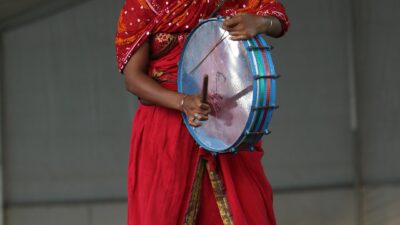
शास्त्र विंग · वाद्य-पट्टिका · Instrument Plate
डप्पू
Dappu
अन्य नामतप्पेटा (Tappeta) · तम्मटा (Tammata) · पलक / पालका (Palaka — coastal Andhra & Guntur) · थप्पु (Thappu)
परिचय
Overviewडप्पू तेलुगु धरती की धड़कन है — नीम की चौखट पर मढ़ा एक उथला चमड़े का घेरा, दो असमान छड़ियों ('सिर्रे' और 'चितिकेन') से बजने वाला अवनद्ध लोक-वाद्य। बोनालु-बतुकम्मा के उत्सव, तप्पेटा गुल्लु और डप्पू नृत्यम, गाँव की 'डंडोरा' घोषणाएँ और तेलंगाना अस्मिता — सबकी थाप इसी ढोल में गूँजती है। परंपरागत रूप से माडिगा समुदाय की पैतृक कला, आज राज्य के प्रयासों से पुनर्जीवित होती हुई।
अंग्रेज़ी में पढ़ें · Read in English
The Dappu is the heartbeat of the Telugu land — a shallow ring of skin over a neem-wood frame, an avanaddha folk drum struck with two unequal sticks (the 'sirre' and the 'chitikena'). The Bonalu and Bathukamma festivals, Tappeta Gullu and Dappu Nrityam, the village 'dandora' proclamations and Telangana's very identity all beat within this drum. Traditionally the hereditary art of the Madiga community, it is being revived today through the efforts of the state.
वर्गीकरण
ClassificationNatya Shastra Category
अवनद्ध (Avanaddha — membranophone / covered percussion drums)
नाट्यशास्त्र के चार वाद्य-वर्गों में डप्पू 'अवनद्ध वाद्य' के अंतर्गत आता है — अर्थात् वह वाद्य जिस पर चमड़ा मढ़ा जाता है और आघात से ध्वनि उत्पन्न होती है। यह एक एकमुखी चक्रीय चौखट-ढोल (फ्रेम-ड्रम) है।
Among the four instrument categories of the Natya Shastra, the Dappu belongs to 'Avanaddha vadya' — instruments covered with a skin membrane and sounded by striking. It is a single-headed circular frame drum.
Western Category
Frame drum (single-headed membranophone)
Western Family
Frame-drum family (kin to the daf, the Tamil parai/thappu, and the tambourine, but struck with two wooden sticks rather than the hand)
Sub Classification
बनावट
PhysicalDescription Hindi
डप्पू एक उथला, गोल लकड़ी का चौखट-ढोल है जिसका व्यास लगभग एक से डेढ़ फुट होता है। पतली लकड़ी की एक गोल पट्टी को मोड़कर चौखट बनाई जाती है और उस पर एक ओर चमड़ा मढ़ा जाता है। इसे बाएँ हाथ में पकड़कर या कंधे/छाती से टाँगकर दो अलग-अलग मोटाई की छड़ियों से बजाया जाता है।
Description English
The Dappu is a shallow, round wooden frame drum roughly one to one-and-a-half feet in diameter. A thin strip of wood is bent into a circular hoop and a single skin membrane is stretched over one face. It is held in the left hand or slung from the shoulder/chest and struck with two sticks of differing thickness.
Body
Shallow circular hoop (frame drum)
उथली गोल चौखट (फ्रेम-ड्रम)
Bent wooden hoop, most often of neem wood and neem bark; the frame is only a few inches deep
मुड़ी हुई लकड़ी की चौखट, प्रायः नीम की लकड़ी और नीम की छाल से बनी; चौखट की गहराई कुछ ही इंच होती है
8-12 (depth of hoop); 30-45 (face diameter)
Open-backed shallow frame — the single membrane radiates a sharp, penetrating, cutting tone that carries far in the open air
Strings
None — the Dappu is a percussion membranophone with no strings; sound comes from the struck skin head
None
None
Membrane
मुखड़ा / चमड़ा
Head (skin membrane)
Stretched hide of he-buffalo (भैंस) or goat (बकरी); occasionally cow-hide
The wet skin is stretched over the hoop and secured with tacks, thongs or a lacing ring around the rim, then sun-dried taut
Held briefly over a small fire or in the sun before playing so the skin tightens and the tone becomes crisp and loud
Beaters
2
दो अलग-अलग मोटाई की छड़ियों का उपयोग ही डप्पू की विशिष्ट युगल-ध्वनि (गहरी थाप + चटख भराव) पैदा करता है।
The use of two sticks of unequal thickness is exactly what gives the Dappu its signature two-voiced texture — a deep boom answered by a crackling fill.
Frets
डप्पू में फ्रेट या तार नहीं होते; यह पूर्णतः आघात-वाद्य है। ध्वनि की विविधता चमड़े के केंद्र और किनारे पर अलग-अलग स्थानों पर, अलग-अलग दबाव और गति से आघात करके पाई जाती है।
The Dappu has no frets or strings; it is purely a struck instrument. Tonal variety comes from hitting the skin at the centre versus the rim, and from varying pressure, angle and speed of the two sticks.
ध्वनि-चरित्र
SoundTonal Character Hindi
डप्पू की ध्वनि तीखी, गूँजदार और दूर तक भेदने वाली है — एक ऐसी थाप जो खुले मैदान, जुलूस और गाँव की चौपाल में बिना किसी बिजली के प्रवर्धन के भी सैकड़ों लोगों तक पहुँच जाती है। इसका स्वर उत्तेजक, युद्ध-घोष जैसा और नाच के लिए उकसाने वाला है।
Tonal Character English
The Dappu's sound is sharp, resonant and far-carrying — a beat that reaches hundreds of people across an open field, a procession or a village square without any electronic amplification. Its voice is rousing, almost martial, and made to drive dancing feet.
Timbre
Bright, dry, cracking attack with a short sustain; the thin stick adds a snapping edge over the thick stick's boom
Range
Un-pitched to loosely-pitched percussion — one dominant fundamental with strong high overtones; not tuned to melodic scale degrees
Dynamic Range
Very loud and cutting by design; capable of soft rolls in solo demonstration but built for high-volume open-air projection
Techniques
सुनने का मार्गदर्शन
The Listening Guideडप्पू को असली रूप में सुनना हो तो एकल स्टूडियो रिकॉर्डिंग नहीं, बल्कि सामूहिक प्रदर्शन खोजिए — कई वादक एक साथ, आधार-थाप और भराव के बीच का संवाद। पहले धीमे 'दरुवु' को पहचानिए, फिर 'टीनमार' की तेज़, उछाल भरी लय पर ध्यान दीजिए जो नृत्य को चरम पर ले जाती है।
अंग्रेज़ी में पढ़ें · Read in English
To hear the Dappu as it truly is, seek out not a solo studio track but a group performance — many players at once, the dialogue between base pulse and fill. First learn to recognise a slow 'daruvu', then attend to the fast, bouncing 'teenmaar' beat that lifts the dance to its peak. Try to hear apart the deep boom of the thick 'sirre' and the crisp fills of the thin 'chitikena'.
अन्य विवरण
More DetailsTimbre
Bright, dry, cracking attack with a short sustain; the thin stick adds a snapping edge over the thick stick's boom
रोचक तथ्य
Margin Notesएक ही वाद्य, अनेक नाम — डप्पू को अलग-अलग क्षेत्रों में अलग नामों से जाना जाता है — तटीय आंध्र और गुंटूर में 'पलक/पालका', तेलुगु में 'तप्पेटा' और 'तम्मटा', तथा तमिल परंपरा के निकट-संबंधी वाद्य 'परई' और 'थप्पु'। नाम बदलते हैं, पर उथली चौखट और दो छड़ियों की पहचान वही रहती है।
The Dappu is known by different names in different regions — 'palaka/palaka' in coastal Andhra and Guntur, 'tappeta' and 'tammata' in Telugu, and the closely related Tamil-tradition drums 'parai' and 'thappu'. The names change, but the shallow frame and the two sticks remain the shared signature.
माडिगा समुदाय की पैतृक कला — परंपरागत रूप से डप्पू बजाने और बनाने की कुशलता माडिगा समुदाय के पास रही है, जो इसे पीढ़ी-दर-पीढ़ी सहेजते आए हैं। यही कारण है कि डप्पू केवल एक वाद्य नहीं, बल्कि सामाजिक अस्मिता और सम्मान का भी प्रश्न है।
Traditionally the skill of playing and making the Dappu has belonged to the Madiga community, who have preserved it across generations. This is why the Dappu is not merely an instrument but also a question of social identity and dignity.
वर्षा को बुलाने वाला ढोल — उत्तर-तटीय आंध्र (श्रीकाकुलम, विजयनगरम, विशाखापत्तनम) के 'तप्पेटा गुल्लु' नृत्य में चरवाहे छाती से डप्पू टाँगकर वर्षा-देवी गंगम्मा को प्रसन्न करने के लिए घंटों नाचते-बजाते हैं — एक जीवंत प्रार्थना जो ढोल की थाप में ढली है।
In the 'Tappeta Gullu' dance of north-coastal Andhra (Srikakulam, Vizianagaram, Visakhapatnam), shepherds sling the Dappu on their chest and dance and drum for hours to please Gangamma the rain-goddess — a living prayer cast in the beat of a drum.
आँच से मिलती है आवाज़ — बजाने से पहले वादक अक्सर डप्पू को थोड़ी देर धूप या हल्की आँच के पास रखते हैं ताकि मढ़ा चमड़ा तन जाए और थाप कड़क व दूर तक सुनाई देने वाली हो जाए — एक साधारण-सी युक्ति जो पूरी ध्वनि बदल देती है।
Before playing, drummers often hold the Dappu near the sun or a small fire for a while so the skin tightens and the beat turns crisp and far-carrying — a simple trick that transforms the whole sound.
सवाल-जवाब
Questions & Answersडप्पू क्या है?
डप्पू आंध्र प्रदेश और तेलंगाना का एक लोक अवनद्ध वाद्य है — एक उथला, गोल लकड़ी का चौखट-ढोल जिस पर एक ओर भैंस या बकरी का चमड़ा मढ़ा होता है और जिसे दो अलग-अलग मोटाई की छड़ियों से बजाया जाता है। इसे तप्पेटा और तम्मटा भी कहते हैं।
डप्पू किस लकड़ी से बनता है और किससे बजाया जाता है?
इसकी गोल चौखट प्रायः नीम की लकड़ी और छाल से बनती है और उस पर चमड़ा मढ़ा जाता है। इसे दो छड़ियों से बजाते हैं — दाहिने हाथ की मोटी छड़ी 'सिर्रे' और बाएँ हाथ की पतली छड़ी 'चितिकेन/सितिकेन'।
डप्पू नृत्यम और तप्पेटा गुल्लु क्या हैं?
डप्पू नृत्यम तेलंगाना का एक लोक-नृत्य है जिसका नाम इसी वाद्य से पड़ा, जिसमें कलाकार बजाते-बजाते नाचते हैं। तप्पेटा गुल्लु उत्तर-तटीय आंध्र का नृत्य है जिसमें चरवाहे वर्षा-देवी गंगम्मा को मनाने के लिए छाती से डप्पू टाँगकर नाचते हैं।
डप्पू का सांस्कृतिक महत्व क्या है?
डप्पू परंपरागत रूप से माडिगा समुदाय की पैतृक कला रही है और गाँव की 'डंडोरा' (सार्वजनिक घोषणा), उत्सव, विवाह और शोक — सबका साथी था। तेलंगाना आंदोलन में यह अस्मिता का प्रतीक बना और आज राज्य के भाषा-संस्कृति विभाग के प्रयासों से पुनर्जीवित हो रहा है।
क्या डप्पू का उपयोग फ़िल्म संगीत में होता है?
हिंदी सिनेमा में यह विरल है, किंतु तेलुगु सिनेमा (टॉलीवुड) में डप्पू की टीनमार और लोक-थाप 'मास' व उत्सव-गीतों की रीढ़ है। हिंदी फ़िल्में दक्षिण-भारतीय उत्सव-दृश्यों में कभी-कभी इसकी गड़गड़ाहट का प्रयोग करती हैं।
नमूना-पट्टी
The Specimen Table| नाम | डप्पू · Dappu |
|---|---|
| अन्य नाम | तप्पेटा (Tappeta) · तम्मटा (Tammata) · पलक / पालका (Palaka — coastal Andhra & Guntur) · थप्पु (Thappu) · Dappu (also: Ḍappu) |
| प्रकार | वाद्य · Instruments |
साझा कीजिए · Share this Plate