शास्त्र विंग · वाद्य-पट्टिका · Instrument Plate
धमसा
Dhamsa
अन्य नामधमसा · धामसा · धुमसा (Dhumsa) · धमसा (Dhamsha)
परिचय
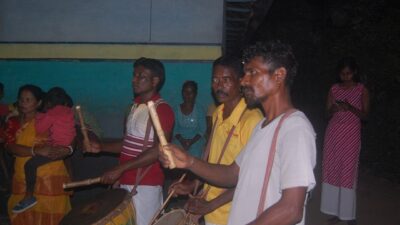
Overviewधमसा पूर्वी भारत का विशालतम लोक ताल-वाद्य है — लोहे की कड़ाही पर मढ़ी भैंस-चर्म की पूड़ी, जिसे डंडे से पीटते ही वज्र-गर्जन-सी गहरी बास उठती है। यह संथाल-आदिवासी उत्सवों और छऊ नृत्य की आधार-लय है, जो मादल के साथ मिलकर 'धमसा-मादल' की अमर जोड़ी बनाता है। दरबारी या ग्रामोफोन-युग का नहीं, यह मिट्टी और समुदाय का वाद्य है।
अंग्रेज़ी में पढ़ें · Read in English
The dhamsa is the largest folk percussion instrument of eastern India — a buffalo-hide head over an iron cauldron that, struck with a stick, releases a thunderclap of deep bass. It is the foundational rhythm of Santhal Adivasi festivals and of Chhau dance, forming with the madol the immortal 'dhamsa-madol' pair. Not a courtly or gramophone-era instrument, it belongs to the soil and to the community.
वर्गीकरण
ClassificationNatya Shastra Category
अवनद्ध (Avanaddha - covered / membrane percussion instruments)
अवनद्ध वर्ग में धमसा एक 'वितत' (कड़ाही-रूप) कर्णभेदी नगाड़ा-प्रकार का ताल-वाद्य है, जिसका खोखला धातु/लौह अर्धगोलाकार खोल एक ओर से मोटे भैंस-चर्म से मढ़ा जाता है; ध्वनि झिल्ली पर डंडे के आघात से उत्पन्न होती है।
In the Avanaddha (membrane) category of the Natya Shastra system, the dhamsa is a large kettle-drum type rhythm instrument — a hollow hemispherical metal/iron bowl covered on the open face with thick buffalo hide, its sound produced by striking the membrane with a stick.
Western Category
Membranophone — single-headed kettledrum (bowl drum)
Western Family
Kettledrum family (structurally akin to the naqqara / timpani, but far larger, deeper and rougher in the bass)
Sub Classification
बनावट
PhysicalDescription Hindi
धमसा पूर्वी भारत का विशालतम लोक ताल-वाद्य है — एक बहुत बड़ा अर्धगोलाकार (कड़ाहीनुमा) नगाड़ा, जिसका खोल लोहे या चादर-धातु से गढ़ा जाता है। खुले मुँह पर मोटी भैंस की खाल मढ़ी जाती है और उसे चमड़े की तानी-डोरियों से कस कर बाँधा जाता है। इसे एक या दो डंडों से पीटा जाता है, और इसकी गूँज वज्रपात जैसी गंभीर बास होती है जो खेतों-मैदानों में दूर तक सुनाई देती है। आकार में यह अक्सर घुटनों तक ऊँचा और इतना भारी होता है कि इसे गले में लटकाने के बजाय ज़मीन पर या गाड़ी/ठेले पर रख कर बजाया जाता है।
Description English
The dhamsa is the largest folk percussion instrument of eastern India — a very large hemispherical (bowl or cauldron shaped) kettledrum whose shell is forged from iron or beaten sheet-metal. A thick buffalo-hide membrane is stretched over the single open mouth and lashed down with leather bracing thongs. Struck with one or two sticks, it produces a thunderous, cavernous bass that carries far across open fields. It is so large and heavy that it is usually rested on the ground, on a stand, or carried on a cart in processions rather than slung from the body.
Shell
Deep hemispherical bowl / cauldron (kettle)
गहरा अर्धगोलाकार कटोरा / कड़ाही (कड़ाहीनुमा खोल)
Iron or beaten sheet-metal (some older/village drums use a hollowed clay or wooden bowl clad with metal sheeting)
लोहा या पीटी हुई चादर-धातु (पुराने ग्रामीण वाद्यों में लकड़ी/मिट्टी के खोल को धातु की चादर से मढ़ा जाता था)
60-90 (rim), among the widest of Indian folk drums
45-70
The deep closed metal bowl acts as a single large resonating chamber, giving a slow, booming, low-frequency decay
Membrane
पूड़ी / चमड़ा (भैंस की खाल)
Head (buffalo-hide membrane)
Single (one struck face only — the closed bowl has no second head)
Thick buffalo hide
मोटी भैंस की खाल
एक ही खुले मुँह पर मोटी भैंस की खाल मढ़ी जाती है; मोटाई के कारण ध्वनि ऊँची न होकर गहरी और गूँजदार बास होती है।
A single thick buffalo-hide membrane covers the open mouth; its thickness yields a low, resonant bass rather than a high crack.
Bracing
तानी / चमड़े की डोरी
Leather bracing / lacing
चमड़े की तानी-डोरियाँ पूड़ी को खोल के गिर्द कस कर बाँधती हैं और तनाव देती हैं। धूप में सेंककर या डोरियों को कस-ढील कर मोटा-मोटा स्वर मिलाया जाता है।
Leather thongs lash the hide tightly around the shell and provide tension. Coarse tuning is done by warming the head near a fire and by tightening or loosening the lacing.
Playing Sticks
डंडा / छड़ी
Beater sticks
One or two wooden sticks (single heavy stick common in Chhau processions; a pair used for faster patterns)
Wood (sometimes bamboo)
The membrane is struck with sticks; open bass strokes at the centre and sharper strokes toward the rim; the non-striking hand may damp the head for accent
Tuning
Fixed low pitch — non-melodic
धमसा किसी सुर में नहीं मिलाया जाता; यह एक स्थिर, गंभीर बास पर टिका रहता है। सूक्ष्म समायोजन तानी-डोरी और खाल को धूप/आँच से सेंककर किया जाता है।
The dhamsa is not tuned to a melodic pitch; it holds a single deep bass register. Fine adjustment comes from the lacing tension and from warming the hide by sun or fire.
Portability
अपने भारी लौह खोल के कारण धमसा को अक्सर ज़मीन पर रखकर, तिपाई/स्टैंड पर, या शोभायात्रा में गाड़ी-ठेले पर लादकर बजाया जाता है — छोटे ढोल की तरह गले में नहीं लटकाया जाता।
Because of its heavy iron shell, the dhamsa is usually played resting on the ground, on a stand, or hauled on a cart in processions — unlike smaller drums it is rarely slung from the shoulder.
ध्वनि-चरित्र
SoundTonal Character Hindi
धमसा की ध्वनि गहरी, गूँजदार और वज्र-गर्जन जैसी है — एक भारी, ऊर्जावान बास जो छाती में धड़कती है। यह मधुर या सूक्ष्म नहीं, बल्कि आदिम, उन्मुक्त और सामूहिक उत्साह की ध्वनि है, जो छऊ के युद्ध-दृश्यों और संथाली नृत्य की मस्ती को गति देती है।
Tonal Character English
The dhamsa's voice is deep, resonant and thunder-like — a heavy, driving bass you feel in the chest. It is not sweet or subtle but primal, exuberant and communal, powering the battle scenes of Chhau and the ecstatic swing of Santhali dance.
Timbre
Dark, booming, slightly metallic low bass with a long rolling decay
Range
Low, fixed bass register (non-pitched percussion; roughly the depth of a large bass/kettle drum)
Dynamic Range
Very loud and outdoor-oriented — built to be heard across open fields and above a full folk ensemble; capable of soft rolls but naturally powerful
Techniques
सुनने का मार्गदर्शन
The Listening Guideधमसा का रस लेना हो तो किसी छऊ या धमसा-मादल के लोक-प्रदर्शन का वीडियो लगाइए और सबसे पहले उस गहरी, छाती में उतरती बास को पहचानिए — वही धमसा है। सुनिए कैसे छोटा मादल फुर्तीली थाप बुनता है और धमसा नीचे भारी, गर्जनकारी आधार रखता है। योद्धा के प्रवेश या नृत्य के शिखर पर धमसा की तेज़ लड़ी पर कान लगाइए — यही इसका नाटकीय चरम है।
अंग्रेज़ी में पढ़ें · Read in English
To hear the dhamsa, pick a video of a Chhau or dhamsa-madol folk performance and first pick out the deep, chest-thumping bass — that is the dhamsa. Notice how the smaller madol weaves the fast pattern while the dhamsa lays a heavy, roaring foundation beneath it. At a warrior's entrance or a dance climax, listen for the dhamsa's rapid roll — that is its dramatic peak. It is an open, communal, body-moving experience, not an intimate one.
परिचय
IdentityYear Of Origin
प्राचीन — जनजातीय परंपरा में अनिर्दिष्ट काल से (ancient; undated tribal antiquity of eastern India)
अन्य विवरण
More Details- Type
- Fixed low pitch — non-melodic
- Description English
- The dhamsa is not tuned to a melodic pitch; it holds a single deep bass register. Fine adjustment comes from the lacing tension and from warming the hide by sun or fire.
- Description
- धमसा किसी सुर में नहीं मिलाया जाता; यह एक स्थिर, गंभीर बास पर टिका रहता है। सूक्ष्म समायोजन तानी-डोरी और खाल को धूप/आँच से सेंककर किया जाता है।
Tuning
Timbre
Dark, booming, slightly metallic low bass with a long rolling decay
रोचक तथ्य
Margin Notesछऊ का गर्जनकारी हृदय — छऊ नृत्य के मुखौटा-योद्धा जब मंच पर प्रवेश करते हैं, तो धमसा की द्रुत लड़ी वातावरण में वीर-रस और भय-रोमांच भर देती है। ढोल और शहनाई के साथ धमसा इस नृत्य-नाट्य की आधार-लय है। छऊ 2010 में यूनेस्को अमूर्त सांस्कृतिक धरोहर घोषित हुआ।
When Chhau's masked warriors stride onto the arena, the dhamsa's rapid roll fills the air with heroic mood and thrill. With the dhol and shehnai, the dhamsa is the foundational rhythm of this dance-theatre. Chhau was declared UNESCO Intangible Cultural Heritage in 2010.
धमसा-मादल: बेजोड़ जोड़ी — पूर्वी भारत की लोक-चेतना में धमसा अकेले नहीं, प्रायः मादल (मंदार) के साथ ही याद किया जाता है। बड़ा धमसा गहरी बास देता है और छोटा दो-मुँहा मादल उसके ऊपर फुर्तीली, गूँथी हुई लय बुनता है — यही संथाली नृत्य-संगीत का ढाँचा है।
In the folk consciousness of eastern India the dhamsa is rarely remembered alone; it is almost always paired with the madol (mandar). The large dhamsa lays the deep bass while the small two-headed madol weaves nimble, interlocking patterns above — this is the very framework of Santhali dance-music.
लोहे से गढ़ा नगाड़ा — अधिकांश भारतीय ढोल लकड़ी या मिट्टी के होते हैं, किन्तु धमसा का अर्धगोलाकार खोल प्रायः लोहे या पीटी हुई चादर-धातु से गढ़ा जाता है। यही धातु-खोल इसकी असामान्य रूप से गहरी, धातु-रंजित बास और लंबी गूँज का रहस्य है।
Most Indian drums are of wood or clay, but the dhamsa's hemispherical shell is usually forged from iron or beaten sheet-metal. This metal bowl is the secret of its unusually deep, metallic-tinged bass and long resonance.
अवनद्ध वाद्य वर्ग — भारतीय वाद्य-वर्गीकरण (नाट्यशास्त्र) में धमसा 'अवनद्ध वाद्य' — चर्म से मढ़े ताल-वाद्यों — की श्रेणी में आता है, ठीक तबला, पखावज, ढोल और नगाड़ा की तरह। पश्चिमी वर्गीकरण में यह एकमुखी कड़ाही-ढोल (केटलड्रम / मेम्ब्रेनोफ़ोन) है।
In the Indian classification of instruments (Natya Shastra), the dhamsa belongs to the 'Avanaddha vadya' — hide-covered rhythm instruments — just like the tabla, pakhawaj, dhol and nagara. In Western terms it is a single-headed bowl drum (kettledrum / membranophone).
सवाल-जवाब
Questions & Answersधमसा क्या है?
धमसा (धुमसा) पूर्वी भारत का एक विशाल लोक ताल-वाद्य है — लोहे या चादर-धातु से गढ़ा अर्धगोलाकार कड़ाहीनुमा नगाड़ा, जिसके खुले मुँह पर मोटी भैंस की खाल मढ़ी होती है और जिसे डंडे से पीटा जाता है। यह अवनद्ध (चर्म-वाद्य) वर्ग का है और गहरी, गर्जनकारी बास पैदा करता है।
धमसा कहाँ बजाया जाता है?
धमसा मुख्यतः पश्चिम बंगाल (पुरुलिया, बांकुड़ा), झारखंड और ओडिशा (मयूरभंज) के संथाल-आदिवासी क्षेत्रों में बजाया जाता है। यह छऊ नृत्य का प्रमुख बास-वाद्य है और संथाली नृत्य-संगीत तथा सोहराय, बाहा, करम जैसे पर्वों में मादल के साथ बजता है।
धमसा और मादल में क्या संबंध है?
'धमसा-मादल' पूर्वी भारत की एक प्रसिद्ध वाद्य-जोड़ी है। बड़ा धमसा गहरी, स्थिर बास देता है जबकि छोटा दो-मुँहा मादल उसके ऊपर तेज़, फुर्तीली, गूँथी हुई लय बुनता है। यही जोड़ी संथाली नृत्य-संगीत का आधार है।
क्या धमसा हिंदुस्तानी शास्त्रीय संगीत का वाद्य है?
नहीं। धमसा एक लोक/जनजातीय बास-वाद्य है, शास्त्रीय दरबारी या ग्रामोफोन-युग की परंपरा का नहीं। यह किसी राग में नहीं मिलाया जाता; इसका संसार लयात्मक व नृत्य-आधारित है — विशेषकर छऊ नृत्य और संथाली उत्सव-संगीत।
धमसा किस चीज़ से बनता है?
धमसा का खोल प्रायः लोहे या पीटी हुई चादर-धातु से गढ़ा जाता है (कुछ पुराने वाद्यों में लकड़ी/मिट्टी के खोल पर धातु मढ़ी जाती थी), और खुले मुँह पर मोटी भैंस की खाल मढ़कर उसे चमड़े की तानी-डोरियों से कस कर बाँधा जाता है। इसे एक या दो लकड़ी के डंडों से बजाया जाता है।
नमूना-पट्टी
The Specimen Table| नाम | धमसा · Dhamsa |
|---|---|
| अन्य नाम | धमसा · धामसा · धुमसा (Dhumsa) · धमसा (Dhamsha) · Dhamsa (also: Dhumsa, Dhamsha, Dhaamsa) |
| प्रकार | वाद्य · Instruments |
साझा कीजिए · Share this Plate