शास्त्र विंग · वाद्य-पट्टिका · Instrument Plate
ढाक
Dhak
अन्य नामঢাক (Bengali) · ढाक · Dhaak · Dhak (also: Ḍhāk)
परिचय
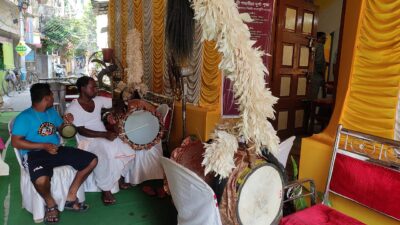
Overviewढाक बंगाल का विशाल पीपेनुमा द्विमुखी ढोल है — आम की लकड़ी का खोखला ढाँचा, एक ओर भैंस और दूसरी ओर बकरी का चमड़ा, दो पतली बाँस की छड़ियाँ, और कंधे से लटकता एक चौड़ा पट्टा। सफ़ेद पंखों से सजा यह वाद्य ढाकी के हाथों में उन्माद की सीमा तक गूँजता है और दुर्गा पूजा, काली पूजा एवं चरक पूजा की पहचान बन जाता है। बोधन से बिसर्जन तक इसकी गड़गड़ाहट भक्ति और उल्लास को एक ही लय में बाँध देती है।
अंग्रेज़ी में पढ़ें · Read in English
The dhak is Bengal's giant barrel-shaped double-headed drum — a hollow mango-wood shell skinned with buffalo hide on one face and goat skin on the other, two thin bamboo sticks, and a broad strap slung from the shoulder. Adorned with white plumes, it roars to the edge of frenzy in the dhaki's hands and becomes the very identity of Durga Puja, Kali Puja and Charak Puja. From bodhon to bisarjan, its thunder binds devotion and euphoria into a single beat.
वर्गीकरण
ClassificationNatya Shastra Category
अवनद्ध (Avanaddha - covered/membranophone percussion instruments)
नाट्यशास्त्र की चार वाद्य-कोटियों में ढाक 'अवनद्ध वाद्य' वर्ग में आता है — वे वाद्य जिनके मुख पर चमड़ा मढ़ा जाता है और आघात से ध्वनि उत्पन्न होती है। ढाक एक विशाल द्विमुखी (दोनों ओर चमड़ा मढ़ा) झिल्ली-वाद्य है।
Among the four instrument categories of the Natya Shastra, the dhak belongs to the 'Avanaddha' (covered/membranophone) class — instruments whose mouths are covered with hide and which sound when struck. The dhak is a large double-headed (both faces skinned) membrane drum.
Western Category
Membranophone (double-headed barrel drum)
Western Family
Barrel/cylindrical drum family (related to the two-headed dhol, but much larger and stick-struck on both heads, worn slung from the shoulder)
Sub Classification
बनावट
PhysicalDescription Hindi
ढाक एक विशाल, पीपे या बैरल के आकार का द्विमुखी ढोल है जिसे कंधे या गले से लटकाकर बजाया जाता है। इसका ढाँचा लकड़ी (प्रायः आम की लकड़ी) से खोखला तराशा जाता है, दोनों मुखों पर चमड़ा मढ़ा जाता है, और वादक दो पतली बाँस या बेंत की छड़ियों से इसे बजाता है। यह अपने रिश्तेदार ढोल से काफ़ी बड़ा और गहरी, गड़गड़ाती ध्वनि वाला है।
Description English
The dhak is a huge barrel-shaped double-headed drum played while slung from the shoulder or neck. Its body is hollowed from wood (usually mango wood), both mouths are covered with hide, and the player strikes it with two thin bamboo or cane sticks. It is considerably larger than its cousin the dhol and produces a deep, thunderous roar.
Body
Barrel-shaped to nearly cylindrical, elongated hollow shell
पीपे/बैरल जैसा, थोड़ा बेलनाकार लंबा खोखला ढाँचा
Hollowed hardwood — traditionally mango wood (aam), also jackfruit or other local timber
खोखली की हुई कठोर लकड़ी — परंपरागत रूप से आम की लकड़ी, कहीं-कहीं कटहल या अन्य स्थानीय लकड़ी
60-90 (large, often reaching the player's waist)
Long single hollow wooden shell that projects a loud, booming bass over open-air crowds without amplification
Heads
2 (double-headed)
Two skin membranes cover the opposite mouths of the barrel; the two heads differ in size and tone
बैरल के दोनों मुखों पर दो चमड़े की झिल्लियाँ मढ़ी होती हैं; दोनों मुखों का आकार और स्वर भिन्न होता है
Both heads are laced and tensioned to the shell with rope or leather straps running the length of the barrel
Sticks
काठी / छड़ी
Kathi (drum sticks)
2
Thin, light bamboo or cane sticks
पतली, हल्की बाँस या बेंत की छड़ें
Both heads are struck with the two sticks in rapid, driving patterns; unlike the dholak or tabla, the dhak is stick-struck rather than hand-played
दोनों मुखों को दो छड़ियों से तेज़, प्रवाहमान लय में पीटा जाता है; ढोलक या तबले की तरह हाथ से नहीं, बल्कि छड़ियों से बजाया जाता है
Sling
गले/कंधे का पट्टा
Shoulder strap
ढाक को एक चौड़े पट्टे से गले या कंधे में लटकाया जाता है ताकि वादक खड़े-खड़े, चलते-चलते और नाचते हुए भी बजा सके। यही इसे मंडप और शोभायात्रा का चलता-फिरता वाद्य बनाता है।
The dhak hangs from a broad strap around the neck or shoulder so the player can perform standing, walking and even dancing. This makes it a mobile processional drum for pandals and parades.
Decoration
साज-सज्जा (पंख/झालर)
Plumes and ornamentation
दुर्गा पूजा के समय ढाक को बड़े-बड़े सफ़ेद पंखों की झालर, रंगीन गुच्छों और झूलों से सजाया जाता है — यह सजावट ढाक की पहचान का दृश्य-प्रतीक है।
During Durga Puja the dhak is adorned with large white feather plumes, colourful tufts and hanging ornaments — this decoration is a signature visual emblem of the instrument.
Tuning
कसावट
Tensioning
ढाक में कोई सुर-आधारित ट्यूनिंग नहीं होती; चमड़े की कसावट लेस/पट्टों को खींचकर तथा ताप देकर समायोजित की जाती है ताकि बास गहरा और स्पष्ट रहे।
The dhak has no melodic tuning; the skin tension is adjusted by tightening the lacing/straps and by warming the heads so the bass stays deep and clear.
ध्वनि-चरित्र
SoundTonal Character Hindi
ढाक की ध्वनि गड़गड़ाती, विस्फोटक और उन्मादी है — गहरे बास की गूँज पर तेज़ काठी-प्रहारों की झड़ी। खुले मैदान और मंडप में बिना किसी विद्युत ध्वनि-विस्तारक के यह सैकड़ों लोगों तक पहुँचती है। यही 'ढाक की उन्मत्त थाप' दुर्गा पूजा के उत्सव-भाव का प्राण है।
Tonal Character English
The dhak's sound is thunderous, explosive and frenzied — a deep booming bass under a shower of rapid stick-strokes. In open grounds and pandals it carries to hundreds of people without any electronic amplification. This 'maddening beat of the dhak' is the very pulse of the Durga Puja festival spirit.
Timbre
Loud, resonant, punchy — a booming low left-head boom against a sharp cracking right-head snap
Range
Non-melodic percussion; a single powerful bass fundamental with bright treble accents (no defined pitch range)
Dynamic Range
Loud to very loud — built for outdoor festivals and processions; capable of soft rolls but famed for its overwhelming volume
Techniques
सुनने का मार्गदर्शन
The Listening Guideढाक का रस लेना हो तो दुर्गा पूजा की संध्या-आरती से शुरुआत कीजिए — एक अकेली गहरी थाप कैसे धीरे-धीरे उन्मादी चढ़ाव बनती है, इसे पकड़िए। फिर धुनुची नाच सुनिए, जहाँ ढाकी और नर्तक एक-दूसरे को गति में उकसाते हैं, और अंत में बिसर्जन की शोभायात्रा, जहाँ दर्जनों ढाक एक साथ गरजते हैं। इसे धीमे नहीं, तेज़ सुनिए।
अंग्रेज़ी में पढ़ें · Read in English
To appreciate the dhak, begin with the evening aarti of Durga Puja — hear how a single deep beat slowly builds into a frenzied crescendo. Then listen to a dhunuchi dance recording, where dhaki and dancer spur each other on. Finally, the immersion procession — dozens of dhaks roaring together in a wave of grief-tinged joy. Play it loud; the dhak was not made for whispering.
परिचय
Identity- Year Of Origin
- 1400
अन्य विवरण
More Details- Name English
- Tensioning
- Description English
- The dhak has no melodic tuning; the skin tension is adjusted by tightening the lacing/straps and by warming the heads so the bass stays deep and clear.
- Name
- कसावट
- Description
- ढाक में कोई सुर-आधारित ट्यूनिंग नहीं होती; चमड़े की कसावट लेस/पट्टों को खींचकर तथा ताप देकर समायोजित की जाती है ताकि बास गहरा और स्पष्ट रहे।
Tuning
Timbre
Loud, resonant, punchy — a booming low left-head boom against a sharp cracking right-head snap
रोचक तथ्य
Margin Notesढाक बनाम ढोल — बड़े भाई-छोटे भाई — ढाक अपने रिश्तेदार ढोल से काफ़ी बड़ा है और दोनों मुखों पर छड़ियों से बजाया जाता है, जबकि ढोल प्रायः एक ओर हाथ और दूसरी ओर छड़ी से बजता है। ढाक की गहरी गड़गड़ाहट इसे उत्सव-शोभायात्रा का 'बास-इंजन' बनाती है।
The dhak is considerably larger than its cousin the dhol and is struck with sticks on both heads, whereas the dhol is often played by hand on one side and a stick on the other. The dhak's deep boom makes it the 'bass engine' of festive processions.
आम की लकड़ी और दो प्रकार का चमड़ा — पारंपरिक ढाक आम की लकड़ी के खोखले ढाँचे से बनता है; बायाँ (गहरा) मुख भैंस के मोटे चमड़े से और दायाँ (ऊँचा) मुख बकरी के पतले चमड़े से मढ़ा जाता है — यही दो स्वरों का संतुलन इसकी विशिष्ट ध्वनि रचता है।
A traditional dhak is built from a hollow mango-wood shell; the left (bass) head is covered with thick buffalo hide and the right (treble) head with thin goat skin — this balance of two voices creates its characteristic sound.
सफ़ेद पंखों की झालर — दुर्गा पूजा के समय ढाक को बड़े सफ़ेद पंखों की झालर और रंगीन गुच्छों से सजाया जाता है। जब ढाकी नाचते हुए बजाता है तो ये पंख लहराते हैं — यह ढाक का सबसे पहचाना दृश्य-रूप है।
During Durga Puja the dhak is decorated with large white feather plumes and colourful tufts. As the dhaki plays while dancing, these plumes sway — this is the dhak's most recognisable visual form.
स्त्री-ढाकियों का उदय — सदियों से ढाक पुरुषों का वाद्य माना जाता रहा, क्योंकि यह भारी और श्रमसाध्य है। उस्ताद गोकुल चंद्र दास द्वारा हल्के ढाक की रचना और 150+ महिलाओं को प्रशिक्षण ने ग्रामीण बंगाल में स्त्रियों के लिए आत्मनिर्भरता का नया मार्ग खोला।
For centuries the dhak was considered a men's instrument because it is heavy and demanding. Master Gokul Chandra Das's lighter dhak and the training of 150+ women opened a new path to self-reliance for women in rural Bengal.
सवाल-जवाब
Questions & Answersढाक क्या है?
ढाक पूर्वी भारत (पश्चिम बंगाल एवं असम) का एक विशाल, पीपेनुमा द्विमुखी ढोल है, जिसे कंधे से लटकाकर दो पतली छड़ियों से बजाया जाता है। यह दुर्गा पूजा, काली पूजा और चरक पूजा का ध्वनि-प्रतीक है और इसे 'ढाकी' कहलाने वाले कलाकार बजाते हैं।
ढाक कैसे बजाया जाता है?
ढाकी ढाक को गले या कंधे से एक चौड़े पट्टे से लटकाता है और दो पतली बाँस/बेंत की छड़ियों से दोनों मुखों को बजाता है। यह खड़े-खड़े, चलते-फिरते और नाचते हुए बजाया जाता है — ढोलक या तबले की तरह हाथ से नहीं, बल्कि छड़ियों से।
ढाक और ढोल में क्या अंतर है?
ढाक अपने रिश्तेदार ढोल से काफ़ी बड़ा है और इसकी ध्वनि अधिक गहरी एवं गड़गड़ाती है। ढाक दोनों मुखों पर छड़ियों से बजता है और मुख्यतः बंगाल-असम की पूजा-परंपरा से जुड़ा है, जबकि ढोल पूरे उत्तर भारत में विवाह एवं उत्सवों में बजता है।
ढाक किस चीज़ से बनता है?
पारंपरिक ढाक का ढाँचा आम की लकड़ी को खोखला करके बनाया जाता है; एक (गहरा) मुख भैंस के मोटे चमड़े से और दूसरा (ऊँचा) मुख बकरी के पतले चमड़े से मढ़ा जाता है। इसे दो पतली बाँस की छड़ियों से बजाया जाता है।
ढाक का दुर्गा पूजा में क्या महत्व है?
ढाक की गड़गड़ाती थाप के बिना दुर्गा पूजा उत्सव का रूप ही नहीं लेती। बोधन से बिसर्जन तक, आरती और धुनुची नाच से लेकर शोभायात्रा तक, ढाक भक्ति और उल्लास को एक ही लय में बाँध देता है और पूजा-पंडाल की पहचान बन जाता है।
नमूना-पट्टी
The Specimen Table| नाम | ढाक · Dhak |
|---|---|
| अन्य नाम | ঢাক (Bengali) · ढाक · Dhaak · Dhak (also: Ḍhāk) |
| उद्गम | 1400 |
| प्रकार | वाद्य · Instruments |
साझा कीजिए · Share this Plate