शास्त्र विंग · वाद्य-पट्टिका · Instrument Plate
ढड्ड
Dhad
अन्य नामढड · ढड्डी · ਢੱਡ (Gurmukhi) · Dhadd
परिचय
Overviewढड्ड पंजाब का छोटा रेत-घड़ी आकार का हाथ-ढोल है — डमरू का सगा भाई, पर उँगलियों की थाप से बजने वाला। इसके दोनों मुख बकरे की खाल से मढ़े और रस्सियों से कसे होते हैं, और कमर पर लिपटी पट्टी दबाते ही स्वर 'बोल' उठता है। सारंगी के साथ मिलकर यह सिख 'ढाडी वार' परंपरा की धड़कन है, जिसे गुरु हरगोबिंद ने वीरता जगाने के लिए संरक्षण दिया — भाई अब्दुल्ला और भाई नत्था से लेकर आज के जत्थों तक।
अंग्रेज़ी में पढ़ें · Read in English
The dhad is Punjab's small hourglass hand drum — a close cousin of the damaru, but played with finger-taps. Both its mouths are covered with goatskin and laced with cords, and squeezing the band at its waist makes the pitch 'speak'. Paired with the sarangi it is the pulse of the Sikh 'dhadi var' tradition, which Guru Hargobind patronised to rouse valour — from Bhai Abdulla and Bhai Natha down to today's jathas.
वर्गीकरण
ClassificationNatya Shastra Category
अवनद्ध (Avanaddha - membrane/skin-covered percussion instruments)
अवनद्ध वर्ग में ढड्ड एक चमड़ा-मढ़ा ताल-वाद्य है जो दोनों सिरों पर खाल (झिल्ली) चढ़ाकर बनाया जाता है और उँगलियों के आघात से ध्वनि उत्पन्न करता है। इसकी कमर को दबाकर स्वर ऊँचा-नीचा किया जा सकता है, जो इसे 'बोलने वाले ढोल' (variable-tension drum) श्रेणी में रखता है।
In the Avanaddha (membranophone) category of Natya Shastra classification, the dhad is a skin-covered percussion instrument with membranes on both ends, sounded by tapping the fingers. Squeezing its waist raises or lowers the pitch, placing it in the 'talking drum' (variable-tension) family.
Western Category
Variable-tension hourglass drum (membranophone)
Western Family
Hourglass / waisted pressure-drum family (kin to the damaru, udukai and idakka, and to the West African talking drum in principle)
Sub Classification
बनावट
PhysicalDescription Hindi
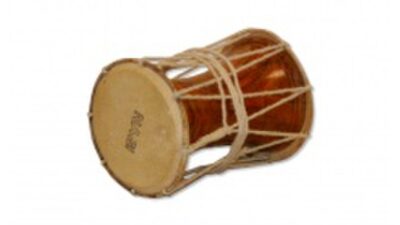
ढड्ड पंजाब का एक छोटा, कमर से पतला (डमरू जैसा रेत-घड़ी आकार का) हाथ-ढोल है। इसका खोल लकड़ी का होता है जिसके दोनों खुले सिरों पर बकरे की खाल की झिल्ली चढ़ी होती है, और ये झिल्लियाँ पूरे खोल के साथ-साथ बँधी रस्सियों/तांतों से कसी जाती हैं। बीच की पतली कमर पर एक कपड़े की पट्टी लिपटी रहती है जिसे दबाकर वादक स्वर को ऊँचा कर लेता है। यह एक हाथ में समा जाने योग्य छोटा वाद्य है।
Description English
The dhad is a small, waisted (hourglass / damaru-shaped) hand drum from Punjab. Its shell is made of wood with a thin waist, and both open ends are covered with goatskin membranes laced together with ropes/cords running the length of the body. A small cloth band wrapped around the narrow waist can be squeezed by the player to raise the pitch. It is compact enough to be held and played in one hand.
Body
Hourglass / waisted (damaru-like)
रेत-घड़ी / कमर से पतला (डमरू जैसा)
Turned wood (light hardwood), hollowed at both ends
खरादी हुई लकड़ी (हल्की कठोर लकड़ी), दोनों सिरों से खोखली
15-20 (approx., palm-sized)
Twin open-ended wooden bells joined at a narrow waist, each closed by a stretched skin head
Strings
Not a stringed instrument — the dhad is a two-headed membranophone; 'heads' below describe its sounding surfaces
None — this is a percussion instrument with no sympathetic strings
None
Membranes
2
दोनों खुले सिरों पर बकरे की खाल की झिल्ली मढ़ी जाती है। सामान्यतः केवल एक ही मुख पर उँगलियों से आघात किया जाता है, जबकि दूसरा मुख अनुनाद (resonance) बढ़ाता है।
Both open ends are covered with goatskin membranes. Usually only one head is struck with the fingers, while the opposite head adds resonance.
Goatskin (animal hide)
V-आकार में बुनी हुई रस्सियाँ / तांतें जो पूरे खोल पर कसाव बनाती हैं
V-laced ropes/cords running the full length of the shell to hold and tension the heads
Bow
लागू नहीं
N/A
None — the dhad is struck by the fingers, not bowed
0
Played by tapping/striking the fingers directly on the head; no stick or bow is used
Tuning Pegs
गट्ठा / कपड़े की पट्टी
Waist band (tension cloth)
A small cloth band around the narrow waist; squeezing it tightens the heads and raises the pitch, loosening lowers it
Bridge
लागू नहीं
N/A
No bridge — sound is produced directly by the vibrating skin heads
N/A
Frets
ढड्ड में फ्रेट या तार नहीं होते; स्वर-परिवर्तन कमर की पट्टी दबाकर झिल्ली के तनाव से किया जाता है — यही इसे 'बोलने वाला ढोल' बनाता है।
The dhad has no frets or strings; pitch is bent by squeezing the waist to change membrane tension — this is what makes it a 'talking drum'.
ध्वनि-चरित्र
SoundTonal Character Hindi
ढड्ड की ध्वनि सूखी, तीखी और चटकीली होती है — एक छोटा, कुरकुरा 'टक्-टक्' जो कमर दबाने पर 'ग्वाँय'-सा मुड़ जाता है। यह लय का ढाँचा (ठेका) रचता है और गाई जा रही वार की वीरता को धार देता है।
Tonal Character English
The dhad's tone is dry, sharp and crisp — a small, crackling 'tuk-tuk' that bends into a vocal-like glide when the waist is squeezed. It builds the rhythmic frame (theka) and lends martial edge to the ballad being sung.
Timbre
Bright, dry, high-pitched; capable of a swooping pitch-bend (talking-drum effect)
Range
Narrow, percussive pitch band; the squeezed-waist technique bends the fundamental up and down by a few semitones
Dynamic Range
Moderate — cuts through an open-air gathering yet responds to soft finger-work for filigree passages
Techniques
सुनने का मार्गदर्शन
The Listening Guideढड्ड का रस लेना हो तो किसी सजीव ढाडी वार को शुरू से सुनिए। पहले कथावाचक का जोशीला प्रसंग, फिर सारंगी की करुण तान, और उस पर दो ढड्डों का घना ठेका। देखिए कैसे वादक कमर की पट्टी दबाकर एक थाप को 'बुलवा' देता है और छंद के अंत पर तिहाई से नाटकीय विराम आता है। यह लय और कथा का अनूठा संगम है।
अंग्रेज़ी में पढ़ें · Read in English
To appreciate the dhad, hear a dhadi var from the start — first the narrator's rousing introduction, then the sarangi's glide, and over it the steady theka of two dhads. Notice how the player bends a single stroke upward by squeezing the waist, and how a tihai lands a dramatic pause at a verse's end. It is a meeting of rhythm and narrative.
परिचय
Identity- Year Of Origin
- 1600
अन्य विवरण
More DetailsTimbre
Bright, dry, high-pitched; capable of a swooping pitch-bend (talking-drum effect)
रोचक तथ्य
Margin Notesभाई अब्दुल्ला और भाई नत्था — गुरु हरगोबिंद के दरबार के दो प्रसिद्ध ढाडी आज भी याद किए जाते हैं — भाई अब्दुल्ला, जो सारंगी के उस्ताद और कवि थे, और भाई नत्था, जो ढड्ड बजाते थे। इन्हीं से ढड्ड-सारंगी की अभिन्न जोड़ी की परंपरा दृढ़ हुई।
Two celebrated dhadis of Guru Hargobind's court are still remembered — Bhai Abdulla, a master of the sarangi and a poet, and Bhai Natha, who played the dhad. From them the tradition of the inseparable dhad-and-sarangi pair took firm root.
एक जत्था, चार आवाज़ें — एक पारंपरिक ढाडी जत्थे में प्रायः चार लोग होते हैं: दो ढड्ड वादक, एक सारंगी वादक, और एक कथावाचक जो छंदों के बीच गद्य में कथा का प्रसंग सुनाता है। ढड्ड जत्थे की धड़कन और ऊर्जा का स्रोत होती है।
A traditional dhadi jatha usually has four members: two dhad players, one sarangi player, and a narrator who tells the story in prose between the sung verses. The dhad is the jatha's pulse and source of energy.
अनुकरणात्मक नाम — 'ढड्ड' नाम स्वयं वाद्य की ध्वनि से बना है — जैसे इसकी थाप 'ढड्-ढड्' गूँजती है, वैसे ही इसका नाम पड़ा। ऐसे अनुकरणात्मक नाम भारत के कई लोक-वाद्यों (जैसे डमरू, ढोल) में मिलते हैं।
The name 'dhad' comes from the instrument's own sound — as its beat resounds 'dhad-dhad', so it was named. Such onomatopoeic names are found across many Indian folk instruments (like the damaru and dhol).
डमरू, उडुक्कै और इडक्का का परिवार — ढड्ड उन विरल भारतीय वाद्यों में है जो 'तनाव' से स्वर बदलते हैं। इसके सगोत्र हैं उत्तर का डमरू और दक्षिण के उडुक्कै व इडक्का — सभी रेत-घड़ी आकार के, सभी कमर/डोरी दबाकर स्वर मोड़ने वाले 'बोलने वाले ढोल'।
The dhad is among the rare Indian instruments that change pitch by tension. Its kin are the northern damaru and the southern udukai and idakka — all hourglass-shaped, all 'talking drums' that bend pitch by squeezing the waist or lacing.
सवाल-जवाब
Questions & Answersढड्ड क्या है?
ढड्ड पंजाब का एक छोटा, रेत-घड़ी आकार का (डमरू जैसा) हाथ-ढोल है जिसके दोनों मुख खाल से मढ़े होते हैं। इसे उँगलियों की थाप से बजाया जाता है और कमर पर लिपटी पट्टी दबाकर स्वर बदला जाता है। यह पंजाबी ढाडी वीर-गाथा परंपरा का प्रमुख ताल-वाद्य है।
ढड्ड कैसे बजाई जाती है?
ढड्ड को एक हाथ में पकड़कर दूसरे हाथ की उँगलियों से एक मुख पर थाप दी जाती है। इसका विशेष प्रभाव तब आता है जब वादक कमर की कपड़े की पट्टी दबाकर झिल्ली का तनाव बढ़ाता है, जिससे थाप का स्वर ऊपर की ओर 'बोल' उठता है।
ढड्ड का सिख परंपरा से क्या संबंध है?
छठे सिख गुरु, गुरु हरगोबिंद ने ढाडी गायकों को संरक्षण देकर वीरता की 'वारें' गवाईं ताकि समुदाय में साहस भरे। उनके दरबार के भाई नत्था (ढड्ड) और भाई अब्दुल्ला (सारंगी) प्रसिद्ध हैं। तभी से ढड्ड-सारंगी की जोड़ी सिख वीर-गाथा परंपरा का प्रतीक है।
ढड्ड और डमरू में क्या अंतर है?
दोनों रेत-घड़ी आकार के तनाव-ढोल हैं और स्वर मोड़ सकते हैं। मुख्य अंतर वादन का है: डमरू गाँठदार डोरियों के मुखों से टकराने से बजता है, जबकि ढड्ड सीधे उँगलियों की थाप से बजाई जाती है और बड़े आकार में लयबद्ध कथा-संगत के लिए प्रयुक्त होती है।
नमूना-पट्टी
The Specimen Table| नाम | ढड्ड · Dhad |
|---|---|
| अन्य नाम | ढड · ढड्डी · ਢੱਡ (Gurmukhi) · Dhadd · Dhad (also: Ḍhaḍḍ) |
| उद्गम | 1600 |
| प्रकार | वाद्य · Instruments |
साझा कीजिए · Share this Plate