शास्त्र विंग · वाद्य-पट्टिका · Instrument Plate
डम्फु
Damphu
अन्य नामडम्फू · डाम्फु · डफु / डम्फु (Damphu / Damphoo / Damfu) · Damphu (also: Danphu, after the Danphe / Himalayan monal)
परिचय
Overviewडम्फु हिमालय के तमांग समुदाय का एकमुखी लोक-ढोल है — गोल लकड़ी के घेरे पर लगभग 32 बाँस की खूँटियों से मढ़ी हिरण या बकरी की खाल, जिसे हथेली या छोटी छड़ी से बजाया जाता है। यह तमांग सेलो लोकगीत की धड़कन है, मादल और तुङना के साथ, और विवाह से लेकर अंत्येष्टि तक हर अवसर पर बजता है। इसकी उजली थाप में डाँफे पक्षी और एक शिकारी की करुण कथा गूँजती है।
अंग्रेज़ी में पढ़ें · Read in English
The damphu is the single-headed folk drum of the Himalayan Tamang people — deer or goat skin stretched over a round wooden hoop by some 32 bamboo pegs, struck with the palm or a short stick. It is the heartbeat of Tamang Selo folk song, alongside the madal and tungna, sounding at every occasion from weddings to funerals. In its bright beat echo the monal bird and the poignant tale of a hunter.
वर्गीकरण
ClassificationNatya Shastra Category
अवनद्ध (Avanaddha - membranophones / skin-covered drums)
नाट्यशास्त्र के चार वाद्य-वर्गों में डम्फु 'अवनद्ध' (चमड़े से मढ़ा हुआ) वर्ग में आता है, जिसमें ध्वनि खिंची हुई खाल पर आघात से उत्पन्न होती है। यह एकमुखी चौखट-ढोल (फ्रेम ड्रम) है — तबले या ढोल की तरह दो-मुखी नहीं, बल्कि बड़े डफ या खंजरी की भाँति एक ही ओर खाल मढ़ा गोल लकड़ी का घेरा।
Among the four instrument classes of the Natya Shastra, the damphu falls in the 'Avanaddha' (membrane-covered) category, in which sound is produced by striking a stretched skin. It is a single-headed frame drum — not double-headed like the tabla or dhol, but a circular wooden hoop skinned on one side only, in the manner of a large daf or khanjari.
Western Category
Single-headed frame drum (membranophone)
Western Family
Frame-drum family (kin to the daf, tambourine and bodhrán in form, but pegged and skin-tensioned in the Himalayan manner)
Sub Classification
बनावट
PhysicalDescription Hindi
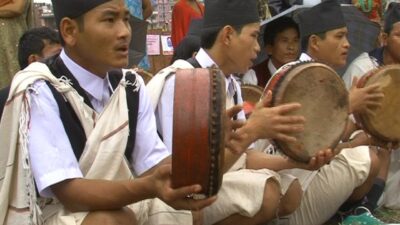
डम्फु एक गोल, एकमुखी लकड़ी का चौखट-ढोल है जो देखने में एक बड़े डफ या खंजरी जैसा लगता है। लकड़ी की एक पतली पट्टी को मोड़कर वृत्ताकार घेरा बनाया जाता है और उसकी एक ओर सूखी खाल (परंपरागत रूप से हिरण की खाल, आधुनिक रूप में बकरी की खाल) कसकर मढ़ी जाती है। खाल को कीलों या रस्सी से नहीं, बल्कि घेरे के चारों ओर ठोकी गई लगभग 32 बाँस की खूँटियों ('फुर्बा') से कसा जाता है — यही डम्फु की सबसे विशिष्ट पहचान है।
Description English
The damphu is a round, single-headed wooden frame drum that looks much like a large daf or khanjari. A thin strip of wood is bent into a circular hoop, and a dried skin (traditionally deerskin, in modern instruments goatskin) is stretched tight across one face. The skin is held not by tacks or lacing but by roughly 32 bamboo pegs ('phurba') driven around the rim — this pegging is the damphu's single most distinctive feature.
Body
Circular hoop (frame drum), skinned on one side only
वृत्ताकार लकड़ी का घेरा (चौखट-ढोल), एक ही ओर खाल मढ़ा
A bent strip of wood forming the hoop/frame
मोड़कर बनाई गई लकड़ी की पट्टी से बना गोल घेरा
30-45 (approximate; varies by maker)
Open-backed shallow frame — the single stretched head radiates directly, giving a bright, ringing, open tone rather than a deep boom
Membrane
खाल / झिल्ली
Skin / membrane
1
एक ही ओर मढ़ी हुई पतली, कसी हुई खाल। परंपरा में हिरण की खाल का प्रयोग होता है, जिससे जुड़ी एक लोककथा भी है; आजकल प्रायः बकरी की खाल ली जाती है।
A single thin, taut skin on one face. Tradition prefers deerskin — tied to the instrument's origin legend — while modern makers commonly use goatskin.
Dried deerskin (traditional) or goatskin (modern)
सूखी हिरण-खाल (परंपरागत) अथवा बकरी की खाल (आधुनिक)
Pegs
फुर्बा (बाँस की खूँटियाँ)
Phurba (bamboo pegs)
~32
घेरे के चारों ओर ठोकी गई लगभग 32 बाँस की खूँटियाँ खाल को खींचकर तनाव देती हैं। बौद्ध परंपरा में इन 32 खूँटियों को बुद्ध के 32 महापुरुष-लक्षणों तथा बोधिसत्वों का प्रतीक माना जाता है। खूँटियों को अंदर-बाहर सरकाकर खाल का तनाव और स्वर समायोजित किया जाता है।
About 32 bamboo pegs driven around the rim pull the skin taut. In Buddhist tradition these 32 pegs are read as the Buddha's 32 major marks (mahapurusha lakshana) and the Bodhisattvas. Tuning is done by tapping the pegs in or out to adjust skin tension and pitch.
Bamboo
बाँस
Beater
छड़ी (कोइराला काठ)
Stick (koirala wood)
डम्फु को प्रायः खुली हथेली और उँगलियों से बजाया जाता है, किंतु कभी-कभी कोइराला (koirala) की लकड़ी से बनी 4-6 इंच लंबी छोटी छड़ी का भी प्रयोग होता है। यह सीखने और बजाने में सरल वाद्य माना जाता है।
The damphu is most often played with the open palm and fingers, but sometimes with a short beater 4-6 inches long made of koirala wood. It is regarded as an easy instrument to learn and to play.
Ornament
डाँफे पक्षी की आकृति
Monal-bird ornament
कई डम्फुओं पर एक छोटी, हिलती-डुलती धातु या लकड़ी की पक्षी-आकृति लगी होती है, जो उस पौराणिक डाँफे (हिमालयी मोनाल) की प्रतीक है जिसके नाम पर वाद्य का नाम पड़ा।
Many damphus carry a small, mobile metal or wooden bird figure representing the mythical Danphe (Himalayan monal) after which the instrument is named.
Frets
डम्फु एक ताल-वाद्य है, अतः इसमें फ्रेट या तार नहीं होते। स्वर-भेद खाल के तनाव और आघात-स्थान (केंद्र बनाम किनारा) से आता है।
The damphu is a rhythm instrument, so it has no frets or strings. Tonal variation comes from skin tension and where the head is struck (centre versus rim).
ध्वनि-चरित्र
SoundTonal Character Hindi
डम्फु की ध्वनि उजली, खनकती और गूँजदार होती है — गहरे 'बूम' के बजाय एक चटकदार, हवा में तैरती-सी थाप, जिसमें एकमुखी खाल की खुली गूँज घुली रहती है। तेज़ बजने पर यह नाचने-गाने की चंचल लय देती है, धीमे बजने पर करुण और मधुर।
Tonal Character English
The damphu's voice is bright, ringing and resonant — not a deep boom but a crisp, airy slap coloured by the open ring of its single head. Played fast it drives a lively dance pulse; played slow it turns tender and melodious.
Timbre
Bright, open, ringing frame-drum tone with a light shimmer from the taut single head
Range
Untuned percussion — pitch band adjustable via peg tension; centre stroke lower and fuller, rim stroke higher and sharper
Dynamic Range
From a soft, brushed pulse for slow Selo melodies to a loud, festive drive for dance
Techniques
सुनने का मार्गदर्शन
The Listening Guideडम्फु सुनना हो तो कोई तमांग सेलो लगाइए और सबसे पहले उसकी झूमती लय को पकड़िए — वही डम्फु है। खुली और दबी थापों का गुँथाव पहचानिए, और देखिए कैसे धुन उसी झोंके पर सवार होकर आती है। मादल की गहराई और तुङना की तान के बीच डम्फु की खनक को अलग सुनिए। धीमे सेलो में यह करुण है, तेज़ में थिरकन।
अंग्रेज़ी में पढ़ें · Read in English
To hear the damphu, pick any Tamang Selo and first catch its swinging, lilting groove — that is the damphu. Notice how open and damped strokes interlock into a playful swing on which the tune rides. Between the deeper thud of the madal and the sweet line of the tungna, learn to pick out the damphu's ring. In a slow Selo it turns plaintive; in a fast one your feet begin to move on their own.
अन्य विवरण
More DetailsTimbre
Bright, open, ringing frame-drum tone with a light shimmer from the taut single head
रोचक तथ्य
Margin Notesहिरण, शिकारी और पहला डम्फु — तमांग लोककथा कहती है कि शिकारी पेङ दोर्जे ने एक सुंदर हिरण मारा; पत्नी के शोक को हरने के लिए उसने उसी की खाल से पहला डम्फु बनाया। इस कथा के कारण परंपरागत डम्फु में हिरण की खाल को श्रेष्ठ माना जाता है।
Tamang folklore holds that the hunter Peng Dorje killed a beautiful deer; to ease his wife's grief he made the first damphu from its skin. Because of this tale, deerskin is prized for a traditional damphu.
बत्तीस का बौद्ध अर्थ — डम्फु की लगभग 32 बाँस-खूँटियों को यूँ ही नहीं गिना जाता — बौद्ध परंपरा में ये बुद्ध के 32 महापुरुष-लक्षणों तथा बोधिसत्वों का प्रतीक मानी जाती हैं, जिससे यह लोक-वाद्य एक आध्यात्मिक आयाम भी पा जाता है।
The damphu's roughly 32 bamboo pegs are not an arbitrary count — in Buddhist tradition they symbolise the Buddha's 32 major marks and the Bodhisattvas, giving this folk drum a spiritual dimension.
मादल, तुङना और डम्फु — तमांग तिकड़ी — तमांग सेलो में डम्फु अकेला नहीं बजता — उसके साथ प्रायः मादल (दो-मुखी लोक-ढोल) और तुङना (तमांग तंतु-वाद्य) होते हैं। डम्फु लय देता है, मादल गहराई, और तुङना मधुर तान — तीनों मिलकर सेलो का ताना-बाना बुनते हैं।
In Tamang Selo the damphu rarely plays alone — it is usually joined by the madal (a two-headed folk drum) and the tungna (a Tamang lute). The damphu gives the groove, the madal the depth, the tungna the melody — together they weave the fabric of Selo.
पहाड़ से रिकॉर्ड तक — दार्जिलिंग-कर्सियांग की हीरा देवी वाइबा (1940-2011) ने लगभग 40 वर्षों में करीब 300 गीत गाए, एच.एम.वी. के साथ एल्बम निकाले और आकाशवाणी की एकमात्र 'ग्रेड ए' नेपाली लोक-गायिका बनीं — इसी यात्रा में डम्फु-चालित तमांग सेलो घर-आँगन से निकलकर राष्ट्रीय रिकॉर्डिंग तक पहुँचा।
Hira Devi Waiba (1940-2011) of Darjeeling-Kurseong sang some 300 songs across roughly 40 years, cut albums with HMV and became All India Radio's only 'Grade A' Nepali folk singer — and in that journey the damphu-driven Tamang Selo travelled from the courtyard to national recordings.
सवाल-जवाब
Questions & Answersडम्फु क्या है?
डम्फु हिमालय के तमांग समुदाय का एकमुखी गोल लकड़ी का लोक-ढोल (फ्रेम ड्रम) है, जिसकी खाल घेरे के चारों ओर ठोकी गई लगभग 32 बाँस की खूँटियों से कसी जाती है। इसे हथेली या छोटी छड़ी से बजाया जाता है और यह तमांग सेलो लोकगीत का प्रमुख वाद्य है।
डम्फु में कितनी खूँटियाँ होती हैं और उनका क्या अर्थ है?
डम्फु में लगभग 32 बाँस की खूँटियाँ ('फुर्बा') होती हैं जो खाल को कसती हैं। बौद्ध परंपरा में इन 32 खूँटियों को बुद्ध के 32 महापुरुष-लक्षणों तथा बोधिसत्वों का प्रतीक माना जाता है।
डम्फु का नाम कैसे पड़ा?
'डम्फु' नाम डाँफे (हिमालयी मोनाल पक्षी) से आया है। तमांग लोककथा के अनुसार शिकारी पेङ दोर्जे ने पत्नी के शोक को हरने के लिए मारे गए हिरण की खाल से पहला डम्फु बनाया, और उसकी धुन पर एक मोनाल नाच उठा।
डम्फु कहाँ बजाया जाता है?
डम्फु नेपाल तथा भारतीय हिमालय — दार्जिलिंग, कलिम्पोंग, सिक्किम, डुआर्स — और व्यापक गोरखा/तमांग समुदाय में बजाया जाता है। यह तमांग सेलो का केंद्रीय वाद्य है और विवाह, अंत्येष्टि, अनुष्ठान व पर्वों में सुना जाता है।
क्या डम्फु शास्त्रीय संगीत का वाद्य है?
नहीं। डम्फु राग-आधारित नहीं है — यह पूर्णतः लोक ताल-वाद्य है। इसका संगीत तमांग सेलो है, जो मादल और तुङना के साथ चक्रीय लोक-लय पर चलता है, न कि हिंदुस्तानी राग-विस्तार पर।
नमूना-पट्टी
The Specimen Table| नाम | डम्फु · Damphu |
|---|---|
| अन्य नाम | डम्फू · डाम्फु · डफु / डम्फु (Damphu / Damphoo / Damfu) · Damphu (also: Danphu, after the Danphe / Himalayan monal) |
| प्रकार | वाद्य · Instruments |
साझा कीजिए · Share this Plate