शास्त्र विंग · वाद्य-पट्टिका · Instrument Plate
दमाऊँ
Damau
अन्य नामदमाऊँ · दमौ · दमुवा / ध्मुवा · Damaun
परिचय
Overviewदमाऊँ ताँबे-पीतल के छोटे कटोरे पर चमड़ा मढ़कर बना वह तीखा हिमालयी ताल-वाद्य है, जो दो पतली छड़ों से बजता है और अपने बड़े साथी 'ढोल' के साथ ही पूर्ण होता है। गढ़वाल-कुमाऊँ के हर विवाह, मेले, जागर और देव-डोली में यही 'ढोल-दमाऊँ' मांगलिक धड़कन बनकर गूँजता है; 'ढोल सागर' की मौखिक परम्परा इसकी हर ताल को किसी न किसी जीवन-अवसर से जोड़ती है।
अंग्रेज़ी में पढ़ें · Read in English
The damau is a sharp little Himalayan rhythm instrument — a small copper-brass bowl skinned with hide, struck with two thin sticks, complete only alongside its larger partner, the dhol. In every wedding, fair, jagar and deity-palanquin of Garhwal and Kumaon this 'dhol-damau' resounds as the auspicious heartbeat; the oral 'Dhol Sagar' tradition ties each of its rhythms to some occasion of life.
वर्गीकरण
ClassificationNatya Shastra Category
अवनद्ध (Avanaddha — covered / membrane percussion)
नाट्यशास्त्र के चार वाद्य-वर्गों (तत, सुषिर, अवनद्ध, घन) में दमाऊँ 'अवनद्ध' वर्ग का वाद्य है — अर्थात् चमड़े से मढ़ा हुआ ताल-वाद्य, जिसकी ध्वनि खिंचे हुए चर्म-पटल पर आघात से उत्पन्न होती है।
Among the four instrument-classes of the Natya Shastra (Tata, Sushira, Avanaddha, Ghana), the damau belongs to the 'Avanaddha' class — a skin-covered rhythm instrument whose sound is produced by striking a stretched membrane.
Western Category
Single-headed kettledrum (metal-bowl membranophone)
Western Family
Kettledrum family (a small folk cousin of the timpani and the naqqara/nagara, but hemispherical and struck with two light sticks)
Sub Classification
बनावट
PhysicalDescription Hindi
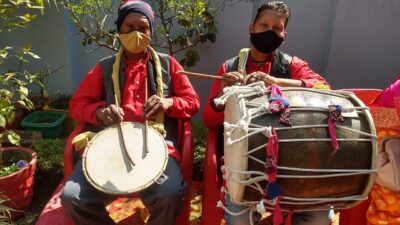
दमाऊँ एक छोटा, अर्धगोलाकार (कटोरे जैसा) एकमुखी ताल-वाद्य है, जिसका खोल ताँबे या पीतल (कहीं-कहीं लोहे) का बना होता है और जिसके खुले मुख पर बकरे या भैंस का चमड़ा मढ़ा जाता है। यह ढोल का अनिवार्य जोड़ीदार है — ढोल गहरी बास देता है तो दमाऊँ ऊँची, तीखी ताल; दोनों मिलकर 'ढोल-दमाऊँ' कहलाते हैं, जो उत्तराखण्ड का प्रमुख मांगलिक वाद्य-युग्म है।
Description English
The damau is a small, hemispherical (bowl-shaped) single-headed rhythm instrument whose shell is made of copper or brass (sometimes iron), with a goat- or buffalo-hide membrane stretched over its open mouth. It is the indispensable partner of the dhol — the dhol supplies deep bass while the damau delivers high, sharp rhythm; together they are called 'dhol-damau', the foremost auspicious percussion pair of Uttarakhand.
Body
Hemispherical bowl / kettle shape with a flattened base
अर्धगोलाकार कटोरा / कड़ाही जैसा, चपटी पेंदी के साथ
Beaten copper or brass shell (occasionally iron)
ताँबे या पीतल का पीटकर बनाया गया खोल (कभी-कभी लोहा)
18-30 (diameter of the open mouth roughly 25-35 cm; smaller and shallower than the nagara)
Single closed metal bowl acting as the resonating kettle beneath the struck skin
Strings
दमाऊँ एक ताल-वाद्य है, इसमें कोई तार नहीं होता। ध्वनि खिंचे हुए चर्म-पटल पर लकड़ी की दो पतली छड़ों के आघात से बनती है।
The damau is a percussion instrument and has no strings. Sound arises from striking the stretched hide membrane with two thin wooden sticks.
Membrane
पूड़ / चर्म-पटल
Pood / drum-head (membrane)
Goat hide (most common) or buffalo hide
बकरे का चमड़ा (सर्वाधिक प्रचलित) या भैंस का चमड़ा
धातु के मुख पर मढ़ा गया एकल चर्म-पटल, जिसे चमड़े की डोरियों/तस्मों से खोल के चारों ओर कसा जाता है। कसाव बदलकर स्वर की तीक्ष्णता समायोजित की जाती है।
A single hide head stretched over the metal mouth, laced tight with leather thongs/straps running around the shell. Adjusting the lacing tension tunes the sharpness of the tone.
Lacing
तस्मे / डोरी
Leather thongs / lacing
Leather straps that hook the skin rim to the base of the metal bowl and are tightened to raise pitch and tension
चमड़े के तस्मे जो चर्म-पटल के किनारे को खोल की पेंदी से जोड़ते हैं और कसने पर स्वर ऊँचा एवं कसा हुआ करते हैं।
Sticks
गजे / छड़ें (डंडी)
Gaje / beater sticks
A pair of thin, light wooden sticks (sometimes slightly curved)
20-30
Held one in each hand and struck rapidly on the single head to produce crisp, high-pitched strokes and rolls
दोनों हाथों में एक-एक छड़ पकड़कर चर्म-पटल पर तेज़ आघात — इसी से कड़क, ऊँची ताल और लड़ियाँ बनती हैं।
Carrying
गले का पट्टा
Neck/shoulder strap
वादक दमाऊँ को गले या कमर से बँधे पट्टे से लटकाकर खड़े-खड़े या चलते हुए बजाता है — जुलूस, बारात और देव-डोली के साथ चलने के लिए उपयुक्त।
The player slings the damau from a neck or waist strap and plays it standing or walking — suited to processions, wedding parties and deity-palanquin marches.
Frets
ताल-वाद्य होने के कारण दमाऊँ में स्वर-पर्दे (फ्रेट) नहीं होते; इसका काम राग नहीं, बल्कि लय एवं ताल के 'शब्द' (बोल) बोलना है।
Being a rhythm instrument, the damau has no frets or pitched positions; its role is not melody but to 'speak' the words (bols) of rhythm and time-cycle.
ध्वनि-चरित्र
SoundTonal Character Hindi
दमाऊँ की ध्वनि ऊँची, तीखी और धात्विक-गूँज वाली होती है — कड़क और स्पष्ट, जो ढोल की गहरी बास के ऊपर तैरती हुई ताल की परतें बुनती है। यही तीक्ष्णता इसे समूह में सबसे ऊपर सुनाई देने वाला 'लय-चालक' बनाती है।
Tonal Character English
The damau's tone is high, sharp and metallically resonant — crisp and clear, weaving crackling layers of rhythm above the dhol's deep bass. This piercing quality makes it the 'rhythm-driver' heard above the whole ensemble.
Timbre
Bright, tight, ringing treble with a short metallic decay from the copper/brass bowl
Range
Non-melodic; a single tuned pitch-band whose sharpness is set by lacing tension (higher and tighter than the dhol)
Dynamic Range
Wide for a small drum — from soft ritual patter accompanying jagar chant to loud, driving strokes for open-air processions, all without amplification
Techniques
सुनने का मार्गदर्शन
The Listening Guideदमाऊँ को कभी अकेले नहीं, ढोल के संग सुनिए — कान लगाकर उनका 'सवाल-जवाब' पकड़िए: गहरी बास (ढोल) और उसके ऊपर तैरती तीखी कड़क (दमाऊँ)। किसी जागर से शुरू कीजिए, जहाँ ताल धीरे-धीरे चढ़कर झड़ी बन जाती है, फिर बारात या मेले की चाल सुनिए।
अंग्रेज़ी में पढ़ें · Read in English
Never hear the damau alone — hear it with the dhol, and listen for their 'call-and-response': the deep bass (dhol) and the sharp crackle riding above it (damau). Begin with a jagar recording, where the rhythm climbs and breaks into a roll at the moment of deity-descent; then hear a baraat or fair 'chaal', where the same damau paces the steps.
अन्य विवरण
More DetailsTimbre
Bright, tight, ringing treble with a short metallic decay from the copper/brass bowl
रोचक तथ्य
Margin Notesएक जोड़ी, एक नाम — उत्तराखण्ड में दमाऊँ और ढोल इतने अभिन्न हैं कि उन्हें अलग-अलग नहीं, एक ही युग्म 'ढोल-दमाऊँ' के रूप में जाना जाता है — जैसे तबले की जोड़ी में दायाँ-बायाँ।
In Uttarakhand the damau and dhol are so inseparable that they are known not singly but as one pair, 'dhol-damau' — much as the tabla is a paired right-and-left set.
धातु बनाम लकड़ी — भारत के अधिकांश लोक-ढोल (ढोलक, ढोल) लकड़ी के खोल के होते हैं; दमाऊँ इसका अपवाद है — इसका ताँबे/पीतल का धात्विक कटोरा ही इसे तीखी, ऊँची ध्वनि देता है, जो नगाड़े की परिवार-परम्परा से जुड़ता है।
Most Indian folk drums (dholak, dhol) have wooden shells; the damau is an exception — its copper/brass metal bowl gives it a sharp, high tone, aligning it with the naqqara/nagara kettledrum family.
ताल जो 'बोलती' है — 'ढोल सागर' परम्परा में दमाऊँ केवल ताल नहीं देता, बल्कि 'शब्द' बोलता है — अवसर-विशेष की ताल-भाषा जिससे सुनने वाले समझ जाते थे कि अवसर मंगल का है, युद्ध का है या विदाई का।
In the Dhol Sagar tradition the damau does not merely keep time — it 'speaks shabd', an occasion-specific rhythm-language by which listeners once knew whether the moment was one of auspice, war or farewell.
संग्रहालय की धरोहर — ढोल-दमाऊँ को भारत के राष्ट्रीय मानव संग्रहालय (IGRMS) जैसे संस्थानों में उत्तराखण्ड की जीवित सांस्कृतिक धरोहर के रूप में प्रदर्शित किया गया है।
Dhol-damau has been exhibited at institutions such as the Indira Gandhi Rashtriya Manav Sangrahalaya (IGRMS) as a living cultural heritage of Uttarakhand.
सवाल-जवाब
Questions & Answersदमाऊँ क्या है?
दमाऊँ उत्तराखण्ड (गढ़वाल एवं कुमाऊँ) का एक छोटा, अर्धगोलाकार एकमुखी ताल-वाद्य है जिसका खोल ताँबे या पीतल का होता है और मुख पर बकरे/भैंस का चमड़ा मढ़ा होता है। इसे दो पतली लकड़ी की छड़ों से बजाया जाता है और यह प्रायः बड़े ढोल के साथ 'ढोल-दमाऊँ' के रूप में बजता है।
दमाऊँ किस चीज़ का बना होता है और कैसे बजता है?
इसका कटोरा-आकार का खोल ताँबे या पीतल का होता है, जिस पर चमड़ा तस्मों से कसकर मढ़ा जाता है। वादक इसे गले/कमर के पट्टे से लटकाकर दोनों हाथों की छड़ों से चर्म-पटल पर आघात करता है, जिससे तीखी, ऊँची ताल बनती है।
'ढोल सागर' क्या है?
'ढोल सागर' उत्तराखण्ड की एक प्राचीन मौखिक परम्परा (ग्रंथ) है, जो शिव-पार्वती संवाद के रूप में है और जन्म, विवाह, उत्सव, लोक-नाट्य तथा मृत्यु-संस्कार सहित जीवन के हर अवसर की ताल का विधान बताती है — जिसे ढोल-दमाऊँ पर बजाया जाता है।
दमाऊँ किन अवसरों पर बजाया जाता है?
दमाऊँ (ढोल के साथ) विवाह, मेलों (कौथिग), जागर (देव-आवाहन), मंदिर-पूजा, देवता की डोली-यात्रा तथा पाण्डव नृत्य एवं छोलिया जैसे लोक-नाट्यों में बजाया जाता है। इसे मांगलिक वाद्य माना जाता है, जिसके बिना पर्वतीय संस्कार अधूरा माना जाता है।
दमाऊँ पारम्परिक रूप से कौन बजाता है?
दमाऊँ और ढोल पारम्परिक रूप से औजी, बाजगी, दास और ढोली जैसे वादक समुदायों द्वारा बजाए जाते हैं, जिनके पास ताल के 'शब्दों' का पीढ़ीगत ज्ञान होता है। पद्मश्री प्रीतम भरतवाण जैसे कलाकारों ने इस परम्परा को विश्व-मंच तक पहुँचाया है।
नमूना-पट्टी
The Specimen Table| नाम | दमाऊँ · Damau |
|---|---|
| अन्य नाम | दमाऊँ · दमौ · दमुवा / ध्मुवा · Damaun · Dhamu (also: Dhmuva) |
| प्रकार | वाद्य · Instruments |
साझा कीजिए · Share this Plate