शास्त्र विंग · वाद्य-पट्टिका · Instrument Plate
धोद्रो बानम
Dhodro Banam
अन्य नामधोड़ो बानम · बानम (Banam) · संताली बानम (Santali Banam) · Dhodro Banam (also: Dhôdrô Bānām)
परिचय
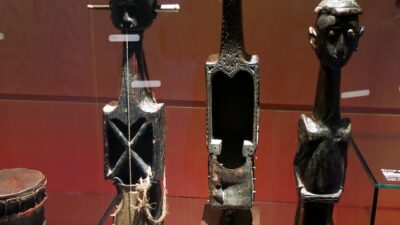
Overviewधोद्रो बानम संताल जनजाति का एक-तारी गज़-वाद्य है, जिसे एक ही लकड़ी से मनुष्य-आकृति में तराशा जाता है और जिसका पेट जानवर की खाल से मढ़ा होता है। सारिंदा-परिवार का यह पूर्वी सदस्य दासाए, सोहराय, बाहा और करम जैसे उत्सवों में संताल गीत-नृत्य की करुण संगत करता है; संताल इसे जीवित प्राणी मानते हैं।
अंग्रेज़ी में पढ़ें · Read in English
The dhodro banam is a single-string bowed fiddle of the Santal people, carved from one block of wood into a human figure with a hide-covered belly. This eastern member of the sarinda family accompanies Santal song and dance at festivals like Dasae, Sohrae, Baha and Karam with its plaintive voice; the Santal regard it as a living being.
वर्गीकरण
ClassificationNatya Shastra Category
तत (Tata - stringed instruments)
नाट्यशास्त्र की परंपरागत वर्गीकरण-दृष्टि में धोद्रो बानम एक 'तत' (तार-आधारित) वाद्य है, जिसे गज़ (कमानी) से बजाया जाता है। यह शास्त्रीय राग-प्रणाली से बाहर की आदिवासी लोक-परंपरा का वाद्य है, फिर भी वर्गीकरण की दृष्टि से यह घर्षण-चालित तार-वाद्य (सारिंदा-परिवार) है।
In the traditional Tata (stringed) grouping of Indian organology, the dhodro banam is a bowed chordophone sounded with a horsehair bow. Though it belongs to the Adivasi (tribal) folk world rather than the classical raga system, in classificatory terms it is a friction-activated string instrument of the sarinda family.
Western Category
Bowed string instrument (spike/necked fiddle with skin-covered belly)
Western Family
Sarinda / bowed-lute family (kin to the sarinda, ravanhatha and the pena–bena–bana group of tribal fiddles)
Sub Classification
बनावट
PhysicalDescription Hindi
धोद्रो बानम एक-तार वाला लोक-सारंगी जैसा गज़-वाद्य है जिसे संताल कारीगर एक ही लकड़ी के ठोस टुकड़े से तराशते हैं। इसकी सबसे बड़ी विशेषता इसका मानव-रूपी (anthropomorphic) आकार है — एक सिर, गला, खुली पसलियों वाला वक्ष और पेट, मानो कोई खड़ा हुआ मनुष्य हो। पेट (अनुनाद-कक्ष) का निचला भाग जानवर की खाल से मढ़ा होता है, जिस पर पुल (सादम) टिका रहता है और उसके ऊपर से एकमात्र तार गुज़रता है। बजाते समय बानम को ऊर्ध्वाधर पकड़ा जाता है और उसकी नक्काशी हमेशा श्रोता की ओर रहती है।
Description English
The dhodro banam is a one-string, sarangi-like bowed folk fiddle that Santal artisans carve from a single solid block of wood. Its defining feature is its anthropomorphic form — a head, a neck, an open ribcage-like chest and a belly, like a standing human figure. The lower part of the belly (the resonating chamber) is covered with animal hide, on which a bridge (sadam) rests and over which the single string passes. It is held vertically in performance, its carving always facing the listener.
Body
Standing human figure — head, neck, open ribcage, and a rounded belly resonator
खड़ी मानव-आकृति — सिर, गला, खुली पसलियाँ और गोल पेट रूपी अनुनाद-कक्ष
Single block of dark, hard wood (often gulainच/guloic and other local hardwoods); the belly is closed by a stretched animal-skin membrane
गहरे रंग की कड़ी लकड़ी का एक ही ठोस टुकड़ा (प्रायः गुलैंच जैसी स्थानीय दृढ़ काष्ठ); पेट पर तनी हुई जानवर की खाल की झिल्ली
50-75 (varies with the maker; each piece is unique)
Hollowed lower belly, its open face sealed with parchment-like animal hide that vibrates like a drum skin and projects the bowed string's tone
Strings
A single melody string bowed to follow the human voice; the classic dhodro banam is one-stringed, while multi-string cousins exist (see phet banam)
The classic dhodro banam has no sympathetic strings; its resonance comes from the skin-covered belly rather than tarab strings
Being essentially single-stringed, the dhodro banam carries no separate drone bank; the one string serves both melody and pitch reference
Bow
छार / गज़
Chhar (bow)
A curved wooden or bamboo stick strung with horsehair; small jingle bells (ghungroo) are sometimes tied to the bow
40-60
Drawn across the single string while the instrument is held upright against the chest or knee; the free hand stops the string along the neck
Tuning Pegs
खूँटी
Khunti (peg)
A single wooden peg in the carved head tightens the string; on many rustic banams there is no peg at all, and pitch is set by sliding the bridge or re-tying the string on the neck
Bridge
सादम / घोड़ा
Sadam (bridge)
A small wooden or bamboo bridge that stands on the stretched hide of the belly, transmitting the string's vibration to the skin membrane; sliding it up or down is itself a means of tuning
Wood or bamboo, standing on the skin membrane
Frets
बानम पूरी तरह फ्रेटलेस है — वादक उँगली से सीधे तार दबाकर स्वर निकालता है, जिससे गायकी की भाँति सहज मींड और सूक्ष्म स्वर-लगाव संभव होते हैं।
The banam is entirely fretless — the player stops the string directly with the fingers, allowing voice-like glides (meend) and fine pitch inflection that shadow the singer.
ध्वनि-चरित्र
SoundTonal Character Hindi
धोद्रो बानम की आवाज़ मिट्टी से जुड़ी, नाक-सी गूँजती और करुण होती है — मानो कोई मनुष्य धीमे स्वर में गा रहा हो। खाल-मढ़ा पेट इसे ढोल-सी हल्की भारीपन और गर्माहट देता है, जबकि एक ही तार की मींड इसे संताल गायकी के सबसे निकट ले आती है।
Tonal Character English
The dhodro banam's tone is earthy, softly nasal and plaintive — like a person humming under their breath. The skin-covered belly lends it a gentle drum-like warmth, while the glide of its single string keeps it closest of all to the Santal singing voice.
Timbre
Reedy, nasal, human-like; warm and grainy from the vibrating hide belly
Range
Roughly a single vocal octave, matched to the singer it accompanies
Dynamic Range
Modest and intimate — a courtyard and open-air folk instrument rather than a projecting concert one
Techniques
सुनने का मार्गदर्शन
The Listening Guideबानम को उसके संताल संदर्भ में सुनिए — दासाए की करुण तान या सोहराय के सामूहिक नृत्य के साथ। ध्यान दीजिए कि एक ही तार कैसे गायक की आवाज़ के पीछे मींड करता चलता है और खाल-मढ़ा पेट हर गज़-कर्षण को ढोल-सी गूँज देता है। यह भव्यता नहीं, आत्मीयता का संगीत है।
अंग्रेज़ी में पढ़ें · Read in English
To understand the banam, hear it in its Santal setting — the plaintive line of a Dasae song or the group dance of Sohrae. Notice how the single string glides behind the singer's voice, and how the hide belly gives every bow-stroke a drum-like resonance. This is not music of grandeur but of intimacy — of the village courtyard, close to the earth.
अन्य विवरण
More DetailsTimbre
Reedy, nasal, human-like; warm and grainy from the vibrating hide belly
रोचक तथ्य
Margin Notesवाद्य जो मनुष्य है — संताल धोद्रो बानम को जीवित मनुष्य मानते हैं। एक ही लकड़ी से तराशे इसके अंगों — सिर, गला, वक्ष और पेट — को वे मानव-शरीर के नामों से पुकारते हैं और बजाते समय इसकी नक्काशी हमेशा श्रोता की ओर रखते हैं, मानो वह श्रोता से आमने-सामने बात कर रहा हो।
The Santal consider the dhodro banam a living human. Carved from one block, its parts — head, neck, chest and belly — are called by the names of the human body, and in performance its carving always faces the listener, as if it were speaking to them face to face.
सारिंदा-परिवार का पूर्वी सिरा — धोद्रो बानम सारिंदा-परिवार का अंग है — चमड़ा-मढ़े उन गज़-वाद्यों की श्रृंखला जो ईरान, अफ़ग़ानिस्तान, पाकिस्तान, नेपाल और मध्य एशिया से होते हुए पूर्वी भारत तक फैली है। इसी परिवार में सारिंदा, रावणहत्था और पेना–बेना–बाना जैसे लोक-सारंगी आते हैं।
The dhodro banam belongs to the sarinda family — a chain of skin-covered bowed instruments running from Iran, Afghanistan, Pakistan, Nepal and Central Asia into eastern India. The same family includes the sarinda, the ravanhatha and the pena–bena–bana folk fiddles.
हर बानम अनोखा — बानम में इतनी विविधता है कि दो वाद्य कभी बिलकुल एक-से नहीं होते — प्रत्येक अपने कारीगर की कल्पना का प्रतिबिंब है। संतालों के बीच बानम का वर्गीकरण उसकी बनावट से नहीं, बल्कि नक्काशी और अलंकरण से किया जाता है।
There is so much variety in banams that no two are exactly alike — each mirrors its maker's imagination. Among Santals, banams are classified not by structure but by their carving and ornamentation.
बानम का कुनबा — धोद्रो बानम अकेला नहीं — इसके साथ फेत/फेंतोर बानम (बहु-तारी), हुका बानम (हुक्के-जैसे अनुनाद-कक्ष वाला), रेता बानम और ओलो बानम जैसे संस्करण भी संताल परंपरा में मिलते हैं, हर एक की अपनी ध्वनि और भूमिका।
The dhodro banam is not alone — the Santal tradition also has the Phet/Phentor Banam (multi-stringed), the Huka Banam (with a hookah-like resonator), the Reta Banam and the Olo Banam, each with its own sound and role.
सवाल-जवाब
Questions & Answersधोद्रो बानम क्या है?
धोद्रो बानम पूर्वी भारत की संताल (मुंडा) जनजाति का एक-तारी गज़-वाद्य है, जिसे एक ही लकड़ी के टुकड़े से मनुष्य-आकृति में तराशा जाता है और जिसका निचला पेट जानवर की खाल से मढ़ा होता है। यह सारिंदा-परिवार का सदस्य है।
धोद्रो बानम में कितने तार होते हैं?
परंपरागत धोद्रो बानम में सामान्यतः एक ही तार होता है, हालाँकि दो, तीन या चार तार वाले संस्करण (जैसे फेत बानम) भी मिलते हैं। कई बार खूँटी नहीं होती और पुल को खिसकाकर स्वर मिलाया जाता है।
संताल धोद्रो बानम को इतना पवित्र क्यों मानते हैं?
संताल बानम को केवल वाद्य नहीं, एक जीवित मनुष्य मानते हैं और उसके अंगों को मानव-शरीर के नामों से पुकारते हैं। उनकी मान्यता है कि वे स्वयं बानम से शारीरिक रूप से सम्बद्ध हैं, इसीलिए बजाते समय इसकी नक्काशी सदा श्रोता की ओर रखी जाती है।
धोद्रो बानम किन अवसरों पर बजाया जाता है?
बानम संताल गीतों तथा दासाए, सोहराय, बाहा, करम, डोन और लागड़े जैसे मौसमी-अनुष्ठानिक नृत्यों की संगत करता है। दासाए पर्व की करुण तान इससे विशेष रूप से जुड़ी है।
क्या धोद्रो बानम बॉलीवुड या शास्त्रीय संगीत का वाद्य है?
नहीं। धोद्रो बानम शास्त्रीय राग-प्रणाली या बॉलीवुड फ़िल्म-संगीत का वाद्य नहीं है; यह संताल आदिवासी लोक-परंपरा का वाद्य है। सारिंदा-परिवार का सदस्य होने के कारण इसकी गज़-ध्वनि शास्त्रीय सारंगी से सांस्कृतिक निकटता ज़रूर रखती है।
नमूना-पट्टी
The Specimen Table| नाम | धोद्रो बानम · Dhodro Banam |
|---|---|
| अन्य नाम | धोड़ो बानम · बानम (Banam) · संताली बानम (Santali Banam) · Dhodro Banam (also: Dhôdrô Bānām) |
| प्रकार | वाद्य · Instruments |
साझा कीजिए · Share this Plate