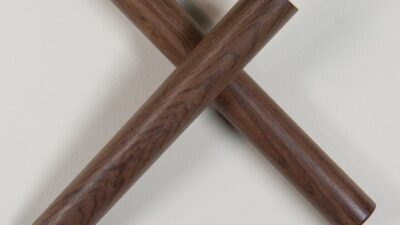
शास्त्र विंग · वाद्य-पट्टिका · Instrument Plate
क्लावेस
Claves
अन्य नामक्लाभेस · क्लावे (एकवचन) · Clave (singular) · Palitos
परिचय
Overviewक्लावेस दो सादी लकड़ी की डंडियाँ हैं जिन्हें आपस में टकराकर बजाया जाता है — विश्व का सबसे सरल आघात-वाद्य, और साथ ही एफ्रो-क्यूबाई संगीत की 'लयात्मक कुंजी'। हवाना के जहाज़-गोदियों की खूँटियों से जन्मी इसकी तीखी 'खट-खट' सोन, रुम्बा और साल्सा की रीढ़ बनी; और जब बॉलीवुड ने लातिन नृत्य-लय को अपनाया, तो यही ध्वनि हमारे कैबरे और क्लब-नंबरों में विदेशी रंग भरने आ पहुँची।
अंग्रेज़ी में पढ़ें · Read in English
Claves are two plain wooden sticks struck against each other — the world's simplest percussion instrument, and at the same time the 'rhythmic key' of Afro-Cuban music. Born from the pegs of Havana's shipyards, their sharp 'click-clack' became the backbone of son, rumba and salsa; and when Bollywood took up Latin dance rhythms, this very sound arrived to lend an exotic colour to our cabaret and club numbers.
वर्गीकरण
ClassificationNatya Shastra Category
घन (Ghana - solid/struck idiophones)
क्लावेस एक विदेशी (पश्चिमी/लातिन) वाद्य है, अतः यह प्राचीन भारतीय नाट्यशास्त्र वर्गीकरण का अंग नहीं है। किंतु इसकी ध्वनि-उत्पत्ति के अनुसार यह 'घन' वर्ग में आता है — जहाँ ठोस पदार्थ को परस्पर टकराकर या आघात से ध्वनि उत्पन्न होती है, ठीक मंजीरा या खड़ताल की भाँति।
Claves are a foreign (Western/Latin) instrument and thus not part of the ancient Indian Natya Shastra taxonomy. But by their sound-production they map to the 'Ghana' (solid idiophone) category — where sound arises from striking solid material against solid material, exactly like manjira or khartal.
Western Category
Percussion idiophone (concussion idiophone / clapper sticks)
Western Family
Concussion idiophones — Hornbostel-Sachs 111.11 (a pair of sticks struck against each other), the same broad family as claptsticks and rhythm sticks
Sub Classification
बनावट
PhysicalDescription Hindi
क्लावेस एक जोड़ी छोटी, बेलनाकार लकड़ी की डंडियाँ हैं जिन्हें आपस में टकराकर बजाया जाता है। इनमें कोई तार, फ्रेट, चमड़ा या धातु नहीं होती — केवल दो ठोस लकड़ी के टुकड़े, यही इसका सम्पूर्ण शरीर है। सरलता में यह विश्व के सबसे सादे वाद्यों में से एक है, फिर भी इसकी लयात्मक शक्ति असीम है।
Description English
The claves are a pair of short, cylindrical wooden dowels struck against one another. They have no strings, frets, skin or metal — just two solid pieces of wood, and that is the entire instrument. In simplicity they are among the plainest instruments in the world, yet their rhythmic power is immense.
Body
Two solid cylindrical rods (dowels), rounded ends
दो ठोस बेलनाकार डंडियाँ, गोल सिरों वाली
Dense hardwood (traditionally granadillo, rosewood, ebony; also hornbeam, walnut, cherry; modern synthetic/fiberglass versions exist)
घनी कठोर लकड़ी (परंपरागत रूप से ग्रानाडिलो, रोज़वुड, आबनूस; अखरोट, चेरी भी; आधुनिक फ़ाइबरग्लास संस्करण भी उपलब्ध)
18-25 (length of each stick)
The player's loosely cupped hand acts as the resonating chamber — the lower stick (hembra) rests on the fingertips and thumb over a hollow palm, which amplifies and colours the tone
Strings
None — claves are a struck idiophone with no strings
None
None
Bow
लागू नहीं
N/A (no bow — the two sticks strike each other)
N/A
N/A
One stick strikes the other; there is no separate beater or bow
Tuning Pegs
लागू नहीं
N/A
No tuning mechanism — pitch is fixed by the wood, size and density of each stick
Bridge
लागू नहीं
N/A
No bridge
N/A
Frets
क्लावेस में कोई फ्रेट या तार नहीं होते। बजाने की कुंजी 'हेम्ब्रा' (मादा) डंडी को हथेली पर ढीला रखकर एक खोखला कक्ष बनाना और 'माचो' (नर) डंडी से उसके मध्य पर आघात करना है — इसी से तीखी, गूँजती 'खट' ध्वनि निकलती है।
Claves have no frets or strings. The key to playing is resting the 'hembra' (female) stick loosely across a cupped palm to form a hollow chamber, then striking its centre with the 'macho' (male) stick — this yields the sharp, ringing 'click'.
ध्वनि-चरित्र
SoundTonal Character Hindi
क्लावेस की ध्वनि तीखी, ऊँची, सूखी और अत्यंत भेदक होती है — एक साफ़ 'खट-खट' जो पूरे वाद्यवृंद के ऊपर से भी स्पष्ट सुनाई देती है। कम आयतन के बावजूद यह किसी भी लय के केंद्र को थाम लेती है।
Tonal Character English
The clave's tone is sharp, high, dry and remarkably penetrating — a clean 'click-clack' that cuts clearly over an entire ensemble. Despite its small volume it anchors the very centre of a rhythm.
Timbre
Bright, woody, hard 'click' with a short ringing resonance; higher and drier than woodblock
Range
Indefinite pitch (percussive); typically perceived in the high-mid register, brighter than a woodblock
Dynamic Range
Naturally loud and cutting for its size; limited soft-to-loud gradation but extremely present acoustically
Techniques
सुनने का मार्गदर्शन
The Listening Guideक्लावे को पहचानना हो तो किसी लातिन गीत या पुराने बॉलीवुड कैबरे-नंबर में उस ऊँची, सूखी 'खट-खट' को खोजिए जो बाक़ी वाद्यों के ऊपर तैरती सुनाई देती है। पहले उसकी नियमित पाँच-आघात आकृति पकड़िए, फिर देखिए कैसे बाक़ी ताल उसी के सापेक्ष चलती है।
अंग्रेज़ी में पढ़ें · Read in English
Learn to spot the clave: in a Latin song or an old Bollywood cabaret number, hunt for that high, dry 'click-clack' that floats distinct above the other instruments. First catch its steady five-stroke figure, then notice how the singer and the rest of the rhythm move relative to it. Once the 'clave' sits in your ear, all of Latin music begins to open up anew.
परिचय
Identity- Year Of Origin
- 1800
अन्य विवरण
More DetailsTimbre
Bright, woody, hard 'click' with a short ringing resonance; higher and drier than woodblock
रोचक तथ्य
Margin Notes'सही ओर' बनाम 'ग़लत ओर' — क्लावे-आकृति दो असमान भागों में बँटी होती है — तीन-आघात वाला भाग और दो-आघात वाला भाग (3-2 या 2-3)। पूरे गीत को इसी 'ओर' के साथ मिलकर चलना होता है; यदि धुन और क्लावे विपरीत दिशा में आ जाएँ तो संगीत 'क्रूज़्ड क्लावे' (उलटी क्लावे) में चला जाता है, जिसे भूल माना जाता है।
The clave figure is split into two unequal halves — a three-stroke side and a two-stroke side (3-2 or 2-3). The whole song must align with this 'side'; if the melody and clave fall in opposite directions the music goes into 'crossed clave', considered an error.
नाम में ही अर्थ — 'क्लावे' शब्द स्पेनिश से आया है जिसका अर्थ 'कुंजी' है — वही शब्द जो संगीत में 'की' (स्केल) और तालीक़-चाबी दोनों के लिए प्रयुक्त होता है। वाद्य का नाम ही उसकी भूमिका बता देता है।
The word 'clave' comes from Spanish, meaning 'key' — the same word used in music for 'key' (as in scale) and for a keystone. The instrument's very name announces its role.
सादगी की शक्ति — क्लावेस विश्व के सबसे सस्ते और सरल वाद्यों में से एक हैं — कोई तार, कोई चमड़ा, कोई धातु नहीं — फिर भी यह किसी भी लातिन आर्केस्ट्रा में सबसे अनिवार्य वाद्यों में गिनी जाती है। इसी सादगी ने इसे स्कूली संगीत-शिक्षा का प्रिय उपकरण भी बनाया।
Claves are among the cheapest and simplest instruments in the world — no strings, no skin, no metal — yet they count among the most indispensable in any Latin orchestra. That same simplicity has made them a favourite tool of school music education too.
सवाल-जवाब
Questions & Answersक्लावेस क्या है?
क्लावेs एक जोड़ी छोटी लकड़ी की डंडियाँ हैं जिन्हें आपस में टकराकर बजाया जाता है। यह एफ्रो-क्यूबाई मूल का एक आघात-वाद्य (घन) है और सोन, रुम्बा तथा साल्सा जैसी लातिन संगीत शैलियों की लयात्मक 'कुंजी' मानी जाती है।
'क्लावे' शब्द का अर्थ क्या है?
'क्लावे' स्पेनिश शब्द है जिसका अर्थ 'कुंजी' या 'चाबी' है। एफ्रो-क्यूबाई संगीत में क्लावे-आकृति वही 'कुंजी' है जिसके सापेक्ष हर दूसरा वाद्य अपनी लय बाँधता है।
क्या क्लावेस भारतीय शास्त्रीय संगीत में प्रयोग होती है?
नहीं। क्लावेस हिंदुस्तानी या कर्नाटक शास्त्रीय परंपरा का अंग नहीं है। इसका भारतीय संगीत में प्रवेश मुख्यतः बॉलीवुड के लातिन-प्रेरित कैबरे और क्लब-नंबरों के माध्यम से हुआ, जहाँ संगीतकारों ने चा-चा और मम्बो जैसी लय अपनाई।
क्लावेस कैसे बजाई जाती है?
एक डंडी (हेम्ब्रा) को हथेली पर ढीला रखा जाता है ताकि नीचे एक खोखला वायु-कक्ष बने, और दूसरी डंडी (माचो) से उसके मध्य पर आघात किया जाता है। इससे एक तीखी, गूँजती 'खट' ध्वनि निकलती है जो पूरे वाद्यवृंद के ऊपर सुनाई देती है।
नमूना-पट्टी
The Specimen Table| नाम | क्लावेस · Claves |
|---|---|
| अन्य नाम | क्लाभेस · क्लावे (एकवचन) · Clave (singular) · Palitos · Claves (Sp. pl.) |
| उद्गम | 1800 |
| प्रकार | वाद्य · Instruments |
इस वाद्य के गीत
Songs of this Instruments
साझा कीजिए · Share this Plate