शास्त्र विंग · वाद्य-पट्टिका · Instrument Plate
चिपळी
Chiplya
अन्य नामचिपळी (एकवचन / singular) · चिपळ्या (बहुवचन / plural, Marathi) · चिपली · करताल / खड़ताल (regional name)
परिचय
Overviewचिपळी महाराष्ट्र का वह घन-वाद्य है जिसमें लकड़ी की दो तराशी पट्टियों पर पीतल की नन्ही झनझनाती तश्तरियाँ जड़ी होती हैं; एक-एक पट्टी दोनों हाथों में लेकर तालीनुमा टकराने पर 'तड़-छन' का उजला नाद उठता है। यह उस्तादों का एकल-वाद्य नहीं, वारकरी वारी और भजनी-मंडल का सामूहिक ताल-यंत्र है — प्लेन राजस्थानी खड़ताल से अलग, क्योंकि इसकी पहचान ही उसकी पीतल-तश्तरियों की झिलमिलाहट है।
अंग्रेज़ी में पढ़ें · Read in English
The chiplya is Maharashtra's idiophone in which two carved wooden staves are set with tiny jingling brass discs; taking one stave in each hand and clapping them together raises a bright 'clack-and-jingle'. It is not a maestro's solo instrument but the collective time-keeper of the Warkari wari and the bhajan mandal — distinct from the plain Rajasthani khartal precisely because its identity is the shimmer of its brass discs.
वर्गीकरण
ClassificationNatya Shastra Category
घन (Ghana - solid/idiophonic instruments)
नाट्यशास्त्र के चार वाद्य-वर्गों में चिपळी 'घन वाद्य' है — अर्थात् ठोस पदार्थ (लकड़ी और धातु) की परस्पर टक्कर से स्वयं ध्वनि उत्पन्न करने वाला वाद्य। इसमें कोई तार या झिल्ली नहीं होती; दो लकड़ी की पट्टियाँ आपस में टकराकर और उन पर लगी पीतल की तश्तरियाँ झनझनाकर ताल देती हैं।
In the Ghana (idiophone) category of the Natya Shastra's fourfold classification, the chiplya is a self-sounding instrument that produces tone from the collision of solid materials (wood and metal). It has no strings or membrane; two wooden staves clap together while brass jingle-discs mounted on them shimmer, marking the rhythmic cycle.
Western Category
Concussion idiophone with attached jingles (wooden clapper)
Western Family
Clapper / castanet family with sizzle jingles (kin to jingling-clapper idiophones worldwide)
Sub Classification
बनावट
PhysicalDescription Hindi
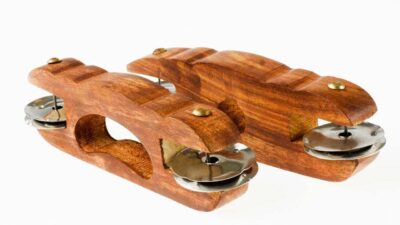
चिपळी दो लकड़ी की तराशी हुई पट्टियों की एक जोड़ी है, जिनमें से प्रत्येक पर पीतल की गोल तश्तरियाँ (झांझ के लघु रूप) एक कील पर ढीली-ढाली पिरोई रहती हैं। एक हाथ में एक पट्टी पकड़ी जाती है और दोनों को आपस में ताली की तरह टकराया जाता है; टकराव पर लकड़ी की 'तड़-तड़' और तश्तरियों की 'छन-छन' एक साथ गूँजती है। V&A संग्रह में सुरक्षित 1870 के बंबई-निर्मित नमूने में प्रत्येक पट्टी पर चार पीतल की तश्तरियाँ लटकी हैं और लंबाई लगभग 28 सेमी (11 इंच) है।
Description English
The chiplya is a pair of carved wooden staves, each fitted with small round brass discs (miniature cymbals) threaded loosely on a pin. One stave is held in each hand and the two are clapped together like a handclap; the strike produces the wood's dry 'clack' together with the jingle-discs' bright 'chhan-chhan'. A Bombay-made 1870 example preserved in the V&A holds four brass discs on each stave and measures about 28 cm (11 inches).
Body
A pair of long, slim carved staves; folk examples are often shaped as two joined fishes with open mouths
एक जोड़ी लंबी, पतली तराशी हुई पट्टियाँ; लोक-नमूने प्रायः खुले मुँह वाली दो जुड़ी मछलियों के आकार में गढ़े जाते हैं
Hardwood — teak, sheesham (Indian rosewood) or ebonized wood; brass for the jingle-discs and pin
कठोर लकड़ी — सागवान, शीशम या काली की गई (ebonized) लकड़ी; तश्तरियों और कील के लिए पीतल
25-30 (V&A 1870 example: ~28 / 11 inches long)
None — a solid idiophone; loudness comes directly from wood-on-wood impact and metal-on-metal jingle, not an enclosed chamber
Strings
The chiplya has NO strings — it is an idiophone. Sound is produced by the staves and jingle-discs themselves.
None. In place of sympathetic strings, the chiplya's shimmer comes from loose brass jingle-discs (typically 2-4 per stave) that rattle against the pin on every strike.
No drone. The instrument keeps time only; a tanpura or ektara provides drone in the ensemble.
Bow
लागू नहीं (हाथ ही 'वादक' है)
Not applicable (played by the hands)
None — struck by clapping the two staves together
0
No bow; the two staves are the striking surfaces, brought together by wrist and finger action
Tuning Pegs
लागू नहीं
Not applicable
An idiophone has no tuning pegs; timbre is fixed by the wood and the number/size of brass discs
Bridge
कील / रिवेट
Pin / rivet
A brass pin or rivet through each stave holds the loose jingle-discs and forms the metal-on-metal contact point
Brass or iron
Frets
चिपळी में फ्रेट या सुर-स्थान नहीं होते — यह लय-वाद्य है, सुर-वाद्य नहीं। वादक अँगूठा मोटे सिरे में और शेष चार उँगलियाँ दूसरे सिरे पर रखकर पट्टियों को आपस में टकराता है।
The chiplya has no frets or pitch positions — it is a rhythm instrument, not a melodic one. The player rests the thumb in the thicker end and the remaining four fingers on the other, clapping the staves together.
ध्वनि-चरित्र
SoundTonal Character Hindi
चिपळी की ध्वनि तीखी, चमकीली और उत्सवी है — लकड़ी की सूखी 'तड़' और पीतल की 'छन-छन' का सम्मिलित नाद। यह भजन-कीर्तन की सामूहिक गायकी में बिना किसी विद्युत-प्रवर्धन के साफ़ सुनाई देती है और पूरे मंडल को एक ताल पर बाँध देती है।
Tonal Character English
The chiplya's sound is sharp, bright and festive — the dry 'clack' of wood fused with the 'chhan-chhan' of brass. It cuts cleanly through communal bhajan-kirtan singing without any amplification and binds an entire group to a single beat.
Timbre
Percussive wooden click layered with a metallic jingle sizzle; short attack, brief shimmering decay
Range
Unpitched / fixed — no melodic range; contributes rhythm and high-frequency sparkle
Dynamic Range
Moderate to loud — from a soft accompanying tick to a ringing, cutting accent on the sam (first beat)
Techniques
सुनने का मार्गदर्शन
The Listening Guideचिपळी सुननी हो तो किसी वारकरी अभंग या भजनी-मंडल की रिकॉर्डिंग से शुरू कीजिए। लकड़ी की 'तड़' सम को पकड़ती है और पीतल की 'छन' उसके ठीक बाद टिकती है — इसी जोड़ी को पहचानिए। फिर ताल (मंजीरा) और चिपळी का प्रश्न-उत्तर सुनिए, और कीर्तन के अंत में लय दुगुनी-चौगुनी होते ही समूचे मंडल की एक-साथ झनझनाहट को महसूस कीजिए।
अंग्रेज़ी में पढ़ें · Read in English
To hear the chiplya, start with a Warkari abhang or a bhajan-mandal recording. Notice how the wooden 'clack' catches the sam and the brass 'jingle' lingers a touch after it. Listen to the call-and-response between the taal (manjira) and the chiplya, and as the kirtan doubles and quadruples its tempo toward the end, feel the whole group jingling as one — that is its climax.
परिचय
Identity- Year Of Origin
- 1870
अन्य विवरण
More DetailsTimbre
Percussive wooden click layered with a metallic jingle sizzle; short attack, brief shimmering decay
रोचक तथ्य
Margin Notesकरताल परिवार का महाराष्ट्री रूप — उत्तर भारत में जिसे 'करताल' और राजस्थान में 'खड़ताल' कहते हैं, उसी घन-वाद्य परिवार का महाराष्ट्री, पीतल-तश्तरी वाला रूप 'चिपळी' है। नाम बदलता है, पर हाथ से ताल देने की आदिम भावना वही रहती है।
What is called 'kartal' in North India and 'khartal' in Rajasthan has its Maharashtrian, jingle-disc form in the 'chiplya'. The name changes, but the primal impulse of keeping time with the hands stays the same.
वारी की श्रव्य-पहचान — पंढरपुर की वारी में लाखों वारकरी एक साथ चिपळी बजाते चलते हैं। यह संभवतः विश्व का सबसे बड़ा सामूहिक करताल-वादन है — किसी मंच पर नहीं, बल्कि सैकड़ों किलोमीटर लंबी पदयात्रा की सड़क पर।
On the Pandharpur wari, lakhs of warkaris walk playing the chiplya together. It is perhaps the world's largest collective kartal performance — not on any stage, but along a foot-pilgrimage road hundreds of kilometres long.
मछली के आकार की चिपळी — कारीगर अक्सर चिपळी को दो जुड़ी मछलियों के रूप में तराशते हैं; मछली का खुला मुँह पीतल की तश्तरियों को थामता है। भारतीय लोक-कला में मछली शुभ और समृद्धि की प्रतीक मानी जाती है।
Craftsmen often carve the chiplya as two joined fishes; the fish's open mouth holds the brass discs. In Indian folk art the fish is a symbol of auspiciousness and abundance.
बिना प्रशिक्षण का वाद्य — चिपळी की सबसे बड़ी शक्ति उसकी सरलता है — कोई भी भक्त इसे पहली बार में थामकर मंडल के साथ ताल दे सकता है। यही समतावाद वारकरी भक्ति के 'सब एक समान' दर्शन के अनुरूप है।
The chiplya's greatest strength is its simplicity — any devotee can pick it up for the first time and keep the beat with the group. This egalitarianism mirrors the Warkari devotional philosophy that 'all are equal'.
सवाल-जवाब
Questions & Answersचिपळी क्या है?
चिपळी (चिपली) महाराष्ट्र का एक घन-वाद्य (idiophone) है — लकड़ी की दो तराशी पट्टियाँ जिन पर पीतल की झनझनाती तश्तरियाँ जड़ी होती हैं। एक-एक पट्टी दोनों हाथों में लेकर तालीनुमा टकराने पर लकड़ी की 'तड़' और पीतल की 'छन' एक साथ बजती है। यह भजन, कीर्तन और वारकरी वारी का प्रमुख ताल-वाद्य है।
चिपळी और खड़ताल में क्या अंतर है?
प्लेन राजस्थानी खड़ताल सपाट लकड़ी के गुटके होते हैं जिनमें कोई धातु नहीं होती। चिपळी उसी करताल-परिवार का महाराष्ट्री रूप है, पर इसकी पहचान उस पर जड़ी पीतल की झनझनाती तश्तरियाँ हैं — इसी से इसकी 'छन-छन' ध्वनि आती है।
चिपळी कैसे बजाई जाती है?
वादक एक पट्टी प्रत्येक हाथ में पकड़ता है — अँगूठा मोटे सिरे में, शेष चार उँगलियाँ दूसरे सिरे पर। दोनों पट्टियों को तालीनुमा टकराने पर लकड़ी की टक्कर और तश्तरियों की झनझनाहट ताल देती है; कलाई हिलाकर छनछनाहट को बढ़ाया जाता है।
चिपळी किस संगीत में प्रयोग होती है?
यह मुख्यतः भक्ति और लोक-संगीत का वाद्य है: महाराष्ट्र की वारकरी वारी, अभंग-कीर्तन, भजनी मंडल, नामसंकीर्तन, तथा गोंधळ-भारूड जैसे मराठी लोक-मंचन। फ़िल्म-संगीत में भक्ति और लोक-दृश्यों को प्रामाणिक रंग देने के लिए भी सुनाई देती है।
चिपळी नाट्यशास्त्र की किस श्रेणी में आती है?
चिपळी 'घन वाद्य' है — नाट्यशास्त्र के चार वर्गों (तत, सुषिर, अवनद्ध, घन) में से घन, अर्थात् ठोस पदार्थ की परस्पर टक्कर से स्वयं ध्वनि उत्पन्न करने वाला वाद्य। इसमें न तार होते हैं, न झिल्ली।
नमूना-पट्टी
The Specimen Table| नाम | चिपळी · Chiplya |
|---|---|
| अन्य नाम | चिपळी (एकवचन / singular) · चिपळ्या (बहुवचन / plural, Marathi) · चिपली · करताल / खड़ताल (regional name) · चपला कट्टई / Chapala Kattai (Tamil) · Chipli (also: Chiplya, Chipalya) |
| उद्गम | 1870 |
| प्रकार | वाद्य · Instruments |
साझा कीजिए · Share this Plate