शास्त्र विंग · वाद्य-पट्टिका · Instrument Plate
चंग
Chang
अन्य नामचंगु (Changu) · डफ़ / ढप (Duff / Dhap — regional names for the same frame drum) · चंग धमाल का ढप · Chang (also: Chung)
परिचय
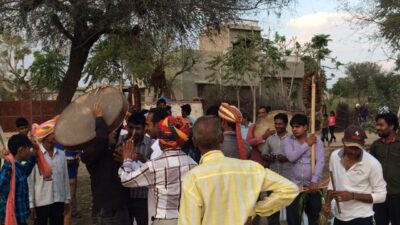
Overviewचंग राजस्थान की होली का धड़कता हृदय है — भेड़ के चमड़े से मढ़ा एक चौड़ा गोल ढप, दो-तीन फुट व्यास का, जिसकी एक थाप पर फागुन का सारा उल्लास जाग उठता है। यह किसी दरबार या शास्त्रीय मंच का वाद्य नहीं, बल्कि शेखावाटी-मारवाड़ के गाँवों का सामूहिक वाद्य है, जिसे बजाने से पहले होलिका की आँच पर तपाया जाता है और जिसकी धमक पर पुरुषों की टोलियाँ घेरा बाँधकर धमाल गाती-नाचती हैं।
अंग्रेज़ी में पढ़ें · Read in English
The chang is the beating heart of Rajasthan's Holi — a broad circular drum some two to three feet across, headed with sheepskin, whose single boom awakens all the joy of Phalgun. It is not an instrument of the court or the classical stage but the communal drum of the villages of Shekhawati-Marwar, warmed over the Holika fire before playing, to whose thunder troupes of men form circles to sing and dance the dhamal.
वर्गीकरण
ClassificationNatya Shastra Category
अवनद्ध (Avanaddha — membranophone / skin-covered percussion)
नाट्यशास्त्र के चार वाद्य-वर्गों में चंग 'अवनद्ध वाद्य' के अंतर्गत आता है — वे वाद्य जिन पर चमड़ा मढ़ा जाता है और आघात (थाप) से ध्वनि उत्पन्न होती है। यह एकमुखी (एक ओर मढ़ा) घेरा-ढोल है।
Among the four instrument classes of the Natya Shastra, the chang belongs to 'Avanaddha vadya' — instruments covered with stretched hide that sound when struck. It is a single-headed (one-sided) frame drum.
Western Category
Frame drum (single-headed membranophone)
Western Family
Frame-drum family — broad, shallow-rimmed hand drums akin to the daf, bodhrán and large tambourine, but played open-handed without jingles
Sub Classification
बनावट
PhysicalDescription Hindi
चंग एक चौड़ा, उथला, गोल घेरा-ढोल है। लकड़ी के एक पतले वृत्ताकार घेरे (कठघरे) के एक मुख पर बकरे या भेड़ के चमड़े की झिल्ली कसकर मढ़ी जाती है; दूसरा मुख खुला रहता है। इसका व्यास प्रायः दो से तीन फुट (लगभग 60–90 सेमी) होता है, जिससे यह हाथ से बजाए जाने वाले सबसे बड़े लोक-ढपों में गिना जाता है।
Description English
The chang is a broad, shallow, circular frame drum. A single membrane of goat or sheep hide is stretched taut over one face of a thin wooden hoop; the other face is left open. Its diameter is typically two to three feet (roughly 60–90 cm), making it one of the largest hand-played folk frame drums.
Body
Shallow circular wooden hoop / frame (open-backed)
उथला गोल लकड़ी का घेरा (पीछे से खुला)
Light bent wood or a laminated wooden ring (frame); traditionally mango, neem or similar workable timber
हल्की मोड़ी हुई लकड़ी या परत-चढ़ा लकड़ी का घेरा (परंपरागत रूप से आम, नीम आदि सुलभ काष्ठ)
60-90 (about 2-3 feet across)
8-12 (shallow rim)
Open-backed shallow frame — the single skin and broad diameter give a deep, booming, carrying tone in the open air
Membrane
1 (single-headed)
One large circular head of stretched animal hide covering one face of the hoop
घेरे के एक मुख पर मढ़ी हुई एक बड़ी गोल चर्म-झिल्ली
Male sheep skin or goat skin (bakri/bhed ka chamda)
नर भेड़ या बकरे का चमड़ा
Stretched over the rim and fixed with adhesive/tacks or lacing around the hoop
घेरे के चारों ओर खींचकर लेई/कीलों या रस्सी-बंधन से कसा जाता है
बजाने से पूर्व झिल्ली को होलिका या अलाव की आँच के पास तपाकर कसा जाता है ताकि स्वर गहरा और खनकदार हो; कहीं-कहीं हल्दी और सुगंध का लेप भी लगाया जाता है।
Before playing, the head is warmed near the Holika bonfire or a fire to tighten it for a deep, ringing tone; it is sometimes anointed with turmeric and fragrance.
Beater
हथेली (कभी-कभी पतली छड़/डंडी)
Open palm (occasionally a thin stick)
The chang is played primarily with the bare open hand and fingers striking the head; the free hand supports the rim. A light stick is sometimes used for the sustained processional beat.
चंग मुख्यतः खुली हथेली और अँगुलियों से बजाया जाता है; दूसरा हाथ घेरे को सँभालता है। जुलूस-ताल के लिए कभी पतली डंडी का भी प्रयोग होता है।
Tuning Method
आँच से कसाव
Heat-tuning
स्थायी खूँटियों के बजाय झिल्ली का कसाव आँच/धूप से नियंत्रित होता है — आँच पर तपाने से चमड़ा कसता है और स्वर ऊँचा-गहरा होता है; नमी से ढीला पड़ता है।
Instead of fixed tuning pegs, the head's tension is regulated by heat/sun — warming over a fire tightens the hide for a deeper, resonant pitch; humidity slackens it.
Portability
Held vertically against the chest/shoulder, or by a hand-hold on the rim, and carried while walking in Holi processions and circle dances
छाती/कंधे से सटाकर या घेरे की पकड़ से थामकर होली के जुलूस और घेरा-नृत्य में चलते हुए बजाया जाता है
ध्वनि-चरित्र
SoundTonal Character Hindi
चंग की ध्वनि गहरी, गूँजदार और दूर तक जाने वाली होती है — एक भरा-पूरा 'धम्म' जो खुले मैदान में सैकड़ों कंठों की धमाल-गायकी को थाम लेता है। इसका स्वर उत्सवी, आदिम और उन्मादी है, ठीक होली की मस्ती जैसा।
Tonal Character English
The chang's voice is deep, booming and far-carrying — a full-bodied 'dhamm' that anchors the massed dhamal singing of Holi crowds in the open air. Its tone is festive, primal and exuberant, mirroring the abandon of the Holi festival.
Timbre
Low, resonant, boomy with an open ringing decay; broad and warm rather than sharp
Range
Low-pitched membranophone — a single deep fundamental with rim overtones; pitch is approximate, not melodic
Dynamic Range
Powerful and loud — built to cut through open-air crowds and group singing without amplification
Techniques
सुनने का मार्गदर्शन
The Listening Guideचंग को अकेले नहीं, भीड़ में सुनिए — यही इसका स्वभाव है। पहले एक अकेली गहरी थाप पकड़िए, फिर सुनिए कैसे दर्जनों चंग एक ही ताल में मिलकर एक विशाल स्पंदन बन जाते हैं। ऊपर बांसुरी की तान और फाग के बोल तैरते हैं, बीच-बीच में मंजीरे की खनक। शेखावाटी होली धमाल की किसी रिकॉर्डिंग से शुरुआत कीजिए।
अंग्रेज़ी में पढ़ें · Read in English
Listen to the chang not alone but in a crowd — that is its nature. First catch a single deep boom, then hear how dozens of changs lock into one rhythm to become a vast pulse. Above it float the flute's melody and the phag lyrics, punctuated by the ring of manjira. Begin with a recording of Shekhawati Holi dhamal and let yourself dissolve into that collective ecstasy.
श्रवण-कक्ष · The Listening Room
देखें-सुनें
CHAND CHADYO GIGNAR Rajasthani folk song letest song with chang Dhamal · 5:11
Chung Dhamaal, Rajasthan (शेखावाटी होली चंग धमाल) · 2:24
चंग बांसुरी होली धमाल | Mahadev Dhup Mandli Fatehpur | Shekhawati Holi Dhamal | Chang Bansuri Dhamal · 28:01
अन्य विवरण
More DetailsTimbre
Low, resonant, boomy with an open ringing decay; broad and warm rather than sharp
रोचक तथ्य
Margin Notesएक वाद्य, एक नृत्य, एक पर्व — चंग इतना केंद्रीय है कि इसी के नाम पर पूरा नृत्य-रूप 'चंग नृत्य' कहलाता है और होली की सामूहिक गायकी 'धमाल'। यहाँ वाद्य, नृत्य और उत्सव एक-दूसरे में घुले हुए हैं।
The chang is so central that an entire dance form is named after it — the 'chang dance' — and the communal Holi singing is called 'dhamal'. Here instrument, dance and festival are inseparable.
शेखावाटी की धड़कन — यद्यपि चंग-धमाल पूरे राजस्थान में मिलती है, इसका सबसे अनुशासित और सुसंगठित रूप शेखावाटी अंचल — सीकर, चूरू, झुंझुनूँ और बीकानेर — में देखा जाता है, जहाँ मंडलियाँ बाकायदा अभ्यास करती हैं।
Though chang-dhamal is found across Rajasthan, its most disciplined and organised form is seen in the Shekhawati belt — Sikar, Churu, Jhunjhunu and Bikaner — where troupes rehearse in earnest.
समतावादी वाद्य — चंग की महफ़िल में कोई एकल 'उस्ताद' नहीं होता। हर हाथ एक-सी थाप देता है और सामूहिक लय ही नायक होती है — यह इसे शास्त्रीय एकल-वादन परंपरा से मौलिक रूप से अलग करता है।
A chang gathering has no solo 'ustad'. Every hand delivers the same beat and the collective rhythm is the protagonist — this sets it fundamentally apart from the classical solo tradition.
आँच से सुर — चंग में स्थायी खूँटियाँ नहीं होतीं; इसका सुर आँच और मौसम पर निर्भर है। नम मौसम में ढीला पड़ा चंग बजने से पहले फिर आँच पर तपाया जाता है — एक जीवंत, मौसम-संवेदी वाद्य।
The chang has no fixed pegs; its pitch depends on fire and weather. A chang gone slack in damp air is re-warmed over flame before playing — a living, weather-sensitive instrument.
सवाल-जवाब
Questions & Answersचंग क्या है?
चंग राजस्थान का एक बड़ा, चौड़ा, गोल घेरा-ढोल है जिसके एक मुख पर भेड़/बकरे का चमड़ा मढ़ा होता है और जिसे हथेली से बजाया जाता है। यह शेखावाटी-मारवाड़ की होली धमाल का प्रमुख ताल-वाद्य है।
चंग कैसे बजाया जाता है?
चंग को छाती या कंधे से सटाकर थामा जाता है और खुली हथेली से बजाया जाता है — मध्य पर 'थाप' गहरी धम्म देती है और किनारे पर आघात ऊँची 'तक' ध्वनि। बजाने से पहले चमड़े को आँच पर तपाकर कसा जाता है।
चंग का होली से क्या संबंध है?
चंग होली/फागुन के उत्सव का केंद्रीय वाद्य है। बसंत पंचमी या महाशिवरात्रि से धुलंडी तक शेखावाटी में पुरुषों की मंडलियाँ चंग बजाते, फाग गाते और घेरा बाँधकर नाचते हैं — इसी सामूहिक गायकी को 'धमाल' और नृत्य को 'चंग नृत्य' कहते हैं।
क्या चंग और मोरचंग एक ही हैं?
नहीं। चंग एक बड़ा चर्म-मढ़ा घेरा-ढोल है, जबकि मोरचंग मुँह से बजने वाला छोटा धातु-वाद्य (ज्यूज़-हार्प) है। नाम मिलते-जुलते हैं पर वाद्य पूर्णतः भिन्न हैं।
चंग किस ताल पर बजता है?
चंग-धमाल प्रायः आठ मात्रा के कहरवा ताल पर चलती है, साथ ही छह मात्रा के दादरा और लोक 'धमाल' ठेके पर भी। यह चलने-नाचने के अनुकूल सम गति देती है।
नमूना-पट्टी
The Specimen Table| नाम | चंग · Chang |
|---|---|
| अन्य नाम | चंगु (Changu) · डफ़ / ढप (Duff / Dhap — regional names for the same frame drum) · चंग धमाल का ढप · Chang (also: Chung) |
| प्रकार | वाद्य · Instruments |
इस वाद्य के गीत
Songs of this Instruments
साझा कीजिए · Share this Plate