शास्त्र विंग · वाद्य-पट्टिका · Instrument Plate
बिगुल
Bugle
अन्य नामबिगुल · बिगुल (सैन्य तुरही) · Bugle (also: Bigul) · Military bugle
परिचय
Overviewबिगुल पाँच ही स्वरों वाला सरल पीतल-हॉर्न है, जिसमें न वाल्व है न छेद — सारा स्वर होंठों की फूँक व कसावट से निकलता है। सदियों से यह सेनाओं की घड़ी रहा: रिवेली से जगाया, चार्ज में बुलाया, और 'लास्ट पोस्ट' से शहीदों को विदा कहा। भारत में ब्रिटिश सेना के साथ आया बिगुल आज गणतंत्र दिवस के 'बीटिंग रिट्रीट', अमर जवान ज्योति की श्रद्धांजलि, एनसीसी परेड और बारात के पीतल-बैंड — सबका स्वर है, और 'बिगुल बजना' मुहावरे के रूप में भाषा तक में उतर चुका है।
अंग्रेज़ी में पढ़ें · Read in English
The bugle is a simple five-note brass horn with no valves and no holes — every note comes from the breath and tension of the lips. For centuries it was the clock of armies: it woke them with Reveille, summoned them with the Charge, and bade the fallen farewell with the Last Post. Brought to India with the British Army, the bugle today is the sound of the Republic Day 'Beating Retreat', the tribute at the Amar Jawan Jyoti, NCC parades and the brass band of a wedding baraat — and, as the idiom 'bigul bajna', it has even entered the language.
वर्गीकरण
ClassificationNatya Shastra Category
सुषिर (Sushira - wind instruments)
नाट्यशास्त्र की चार वाद्य-श्रेणियों में बिगुल 'सुषिर' (वायु/फूँक से बजने वाले) वर्ग में आता है — यद्यपि यह एक आधुनिक पश्चिमी पीतल-वाद्य है, वर्गीकरण की दृष्टि से यह होंठों की फूँक से नाद उत्पन्न करता है, अतः सुषिर वर्ग के अंतर्गत गिना जाता है।
Among the four instrument categories of the Natya Shastra, the bugle belongs to the 'Sushira' (blown / wind) class. Though a modern Western brass instrument, by principle it produces sound from the player's breath and lips, and so is classed under Sushira aerophones.
Western Category
Brass instrument (lip-vibrated aerophone / labrosone)
Western Family
Natural (valveless) brass — the horn/trumpet family; a simple signal horn with no valves, keys or finger holes
Sub Classification
बनावट
PhysicalDescription Hindi
बिगुल पीतल (या ताँबे) से बना एक सरलतम पीतल-वाद्य है, जिसमें न कोई वाल्व होता है, न चाबी, न छेद। एक शंक्वाकार नली एक-दो बार कुंडली-सी मुड़कर चौड़े 'घंटे' (bell) में खुलती है और एक प्याले-नुमा मुखनली (mouthpiece) पर समाप्त होती है। सारा स्वर-नियंत्रण केवल होंठों की कसावट और फूँक की गति से होता है।
Description English
The bugle is the simplest of brass instruments, made of brass (or copper), with no valves, keys or finger holes. A conical tube coils once or twice and opens into a wide flared bell, ending in a cup-shaped mouthpiece. All pitch control is achieved purely by the tension of the lips (embouchure) and the speed of the breath.
Body
Once- or twice-coiled conical tube ending in a flared bell
एक-दो बार कुंडलित शंक्वाकार नली, जो चौड़े घंटे में खुलती है
Brass (traditionally copper or brass, sometimes silver-plated for ceremonial instruments)
पीतल (परंपरागत रूप से ताँबा या पीतल, समारोही बिगुलों में कभी-कभी चाँदी-मुलम्मा)
approx 28-32 (regulation G bugle); tube length when uncoiled approx 130-140
The conical bore itself acts as the resonating air-column; the flared bell projects and amplifies the tone
Tube And Bore
Predominantly conical (widening gradually toward the bell), which gives the bugle its mellow yet carrying tone
मुख्यतः शंक्वाकार (bell की ओर धीरे-धीरे चौड़ी होती) नली, जिससे बिगुल का कोमल किंतु दूर तक पहुँचने वाला स्वर बनता है
One or two loops to keep the long air-column compact and portable
Commonly pitched in G or B-flat; the Indian/British regulation service bugle is traditionally in G
Mouthpiece
मुखनली
Mouthpiece
Cup-shaped, like a trumpet mouthpiece
प्याले के आकार की धातु-मुखनली, जिस पर वादक होंठ टिकाकर 'बज़' (कंपन) उत्पन्न करता है; होंठों का कंपन ही मूल नाद-स्रोत है।
A cup-shaped metal mouthpiece against which the player buzzes the lips; the vibrating lips are the actual sound source.
Bell
घंटा (bell)
Bell
approx 11-14
चौड़ा भोंपू-नुमा मुख, जो ध्वनि को दूर तक फेंकता है — युद्धभूमि व परेड-मैदान के शोर में भी सुनाई देने के लिए।
The wide flared mouth that throws the sound over long distances — designed to be heard over the noise of a battlefield or parade ground.
Valves
बिगुल में कोई वाल्व, पिस्टन या चाबी नहीं होती — यही इसे तुरही (trumpet) से अलग करता है। इसी 'वाल्व-हीनता' के कारण यह केवल एक ही हार्मोनिक श्रृंखला के स्वर बजा सकता है।
The bugle has no valves, pistons or keys — this is what distinguishes it from the trumpet. Because it is valveless, it can sound only the notes of a single harmonic (overtone) series.
Accessories
Ceremonial bugles are often fitted with a coloured cord and tassels, and a hanging banner/flag bearing regimental or unit insignia
समारोही बिगुलों में प्रायः रंगीन डोरी व फुँदने लगे होते हैं, और नीचे रेजिमेंट/यूनिट का ध्वज-पट्ट लटकता है।
ध्वनि-चरित्र
SoundTonal Character Hindi
बिगुल की ध्वनि उज्ज्वल, तीक्ष्ण और आदेशात्मक है — 'क्लैरियन' (clarion) पुकार। यह भावुक नहीं, बल्कि जाग्रत करने वाली, संकेत देने वाली आवाज़ है, जो दूर तक स्पष्ट सुनाई देती है और वीर-रस व गंभीरता जगाती है।
Tonal Character English
The bugle's tone is bright, piercing and commanding — a clarion call. It is not a delicate voice but an awakening, signalling one that carries clearly over great distances and stirs martial spirit (veer rasa) and solemnity.
Timbre
Bright, brassy, penetrating; fewer overtones than the trumpet, giving a clean 'open' fanfare quality
Range
Restricted to the notes of one harmonic series of its fundamental (typically the 2nd-6th harmonics). A single instrument therefore sounds only about five distinct pitches
Dynamic Range
Moderate to very loud — built for outdoor projection rather than soft nuance; poorly suited to quiet indoor playing
Note On Scale Hindi
क्योंकि बिगुल में वाल्व नहीं होते, यह पूर्ण सप्तक या राग नहीं बजा सकता। केवल एक हार्मोनिक श्रृंखला के कुछ स्वर (लगभग पाँच) उपलब्ध रहते हैं — इन्हीं पाँच स्वरों से सारे सैन्य बिगुल-संकेत (bugle calls) रचे जाते हैं।
Note On Scale English
Because it has no valves, the bugle cannot play a full scale or a raga. Only a handful of notes (about five) from one harmonic series are available — and every military bugle call is built from just these five notes.
Techniques
सुनने का मार्गदर्शन
The Listening Guideबिगुल को समझना हो तो पहले 'रिवेली' सुनिए — भोर में जगाने वाली चढ़ती, चंचल फैनफ़ेयर। फिर 'लास्ट पोस्ट' सुनिए — वही पाँच स्वर, पर धीमे और गंभीर, जो शहादत की गूँज बन जाते हैं। ध्यान दीजिए कि वादक बिना किसी वाल्व के, केवल होंठों की कसावट से स्वर बदल रहा है — यही सादगी बिगुल की असली शक्ति है।
अंग्रेज़ी में पढ़ें · Read in English
To understand the bugle, first hear 'Reveille' — the lively, rising fanfare that wakes the camp at dawn. Then hear 'The Last Post' — the same five notes, but slow and solemn, enough to fill the eyes. Notice that the player, with no valves at all, is changing notes purely with the tension of the lips. That very simplicity is the bugle's power.
परिचय
Identity- Year Of Origin
- 1750
अन्य विवरण
More DetailsTimbre
Bright, brassy, penetrating; fewer overtones than the trumpet, giving a clean 'open' fanfare quality
रोचक तथ्य
Margin Notesपाँच स्वरों का वाद्य — बिगुल की सारी अभिव्यक्ति केवल एक हार्मोनिक श्रृंखला के लगभग पाँच स्वरों में सिमटी है। न वाल्व, न छेद — फिर भी इन्हीं पाँच स्वरों से रिवेली, रिट्रीट, चार्ज और लास्ट पोस्ट जैसी दर्जनों अलग-अलग पहचानी जाने वाली धुनें रची गई हैं।
The bugle's entire expression is confined to about five notes of a single harmonic series. No valves, no holes — yet from these same five notes dozens of instantly recognisable calls like Reveille, Retreat, the Charge and the Last Post have been composed.
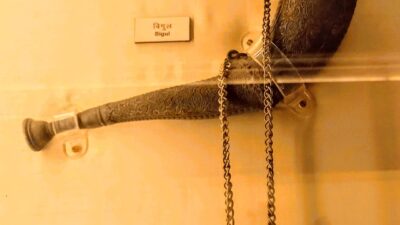
बैल के सींग से पीतल तक — आरंभिक बिगुल सचमुच बैल या भैंस के सींग से बनते थे — जयपुर के अल्बर्ट हॉल संग्रहालय में रखा 19वीं सदी का सजा-धजा धातु 'बिगुल' आज भी भैंस के मुड़े सींग जैसा दिखता है, जो इस वाद्य के सींग-मूल की याद दिलाता है।
Early bugles were literally made from the horn of an ox or buffalo — the ornate 19th-century metal 'bigul' kept in Jaipur's Albert Hall Museum still resembles a curved buffalo horn, recalling the instrument's horn origins.
बिगुल बनाम तुरही — देखने में मिलते-जुलते होने पर भी बिगुल और तुरही (trumpet) अलग हैं: तुरही में तीन पिस्टन-वाल्व होते हैं जिससे वह पूरा वर्णक्रम (chromatic scale) व राग-सुलभ धुनें बजा सकती है; बिगुल वाल्व-हीन है, अतः केवल संकेत-धुनों तक सीमित। HindiGeet पर तुरही का अलग पृष्ठ है।
Though similar in look, the bugle and the trumpet differ: the trumpet has three piston valves letting it play the full chromatic scale and melodic tunes; the bugle is valveless and so limited to signal calls. HindiGeet has a separate page for the trumpet.
भाषा में उतरा वाद्य — बहुत कम वाद्य ऐसे हैं जिनका नाम मुहावरा बन जाए। 'बिगुल बजना' या 'बिगुल फूँकना' आज किसी युद्ध, आंदोलन या चुनावी अभियान के आरंभ का सर्वमान्य रूपक है — वाद्य की आदेशात्मक पुकार सीधे हिंदी भाषा में बस गई।
Very few instruments give their name to an idiom. 'Bigul bajna' or 'bigul phoonkna' (to sound / blow the bugle) is today a widely understood metaphor for the launch of a war, a movement or an election campaign — the instrument's commanding call settled straight into the Hindi language.
सवाल-जवाब
Questions & Answersबिगुल क्या है?
बिगुल एक सरल पीतल-वाद्य (सैन्य सिग्नल हॉर्न) है जिसमें कोई वाल्व, चाबी या छेद नहीं होता। सारा स्वर-नियंत्रण होंठों की कसावट व फूँक से होता है, इसलिए यह केवल एक हार्मोनिक श्रृंखला के लगभग पाँच स्वर बजा सकता है।
बिगुल और तुरही (ट्रम्पेट) में क्या अंतर है?
तुरही में तीन वाल्व होते हैं, जिससे वह पूरा वर्णक्रम (chromatic scale) और धुनें बजा सकती है। बिगुल वाल्व-हीन है, इसलिए यह केवल संकेत-कॉल (जैसे रिवेली, लास्ट पोस्ट) तक सीमित है।
भारत में बिगुल का उपयोग कहाँ होता है?
भारत में बिगुल सेना, अर्धसैनिक बलों, पुलिस, एनसीसी और स्कूल-बैंडों में प्रयोग होता है — दैनिक संकेतों, गणतंत्र दिवस के 'बीटिंग रिट्रीट', तथा शहीद-स्मारकों की 'लास्ट पोस्ट' (अंतिम सलामी) में। बारात के पीतल-बैंड में भी यह बजता है।
क्या बिगुल पर राग बजाया जा सकता है?
नहीं। वाल्व न होने के कारण बिगुल केवल एक हार्मोनिक श्रृंखला के गिने-चुने स्वर उत्पन्न करता है और राग की सूक्ष्म मींड व श्रुतियाँ नहीं बजा सकता। इसका स्थान शास्त्रीय संगीत में नहीं, बल्कि सैन्य व समारोही ध्वनि में है।
'बिगुल बजना' मुहावरे का क्या अर्थ है?
'बिगुल बजना' या 'बिगुल फूँकना' का अर्थ है किसी युद्ध, आंदोलन या चुनावी अभियान का औपचारिक आरंभ — बिगुल की आह्वान-ध्वनि से यह रूपक हिंदी भाषा में स्थापित हो गया है।
नमूना-पट्टी
The Specimen Table| नाम | बिगुल · Bugle |
|---|---|
| अन्य नाम | बिगुल · बिगुल (सैन्य तुरही) · Bugle (also: Bigul) · Military bugle · Signal horn |
| उद्गम | 1750 |
| प्रकार | वाद्य · Instruments |
साझा कीजिए · Share this Plate