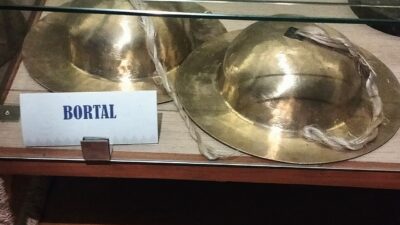
शास्त्र विंग · वाद्य-पट्टिका · Instrument Plate
भोरताल
Bortal
अन्य नामभोरताल · भोर ताल (Bhortal / Bhor Tal) · बोरताल (Bortāl) · बड़ ताल (Bor Tal — 'the great cymbal')
परिचय
Overviewभोरताल असम की सांकरी (नव-वैष्णव) संस्कृति की गूँजती धड़कन है — कांसे की दो बड़ी थालियाँ जो शंकरदेव के बरगीत, नामघर के सामूहिक नाम और बरपेटा के भोरताल नृत्य में बजती हैं। मंजीरा से कहीं बड़ी और भारी, इसकी हर टक्कर एक मंदिर-घंटे-सी पवित्र गूँज छोड़ती है।
अंग्रेज़ी में पढ़ें · Read in English
The bortal is the resonant heartbeat of Assam's Sankari (Neo-Vaishnavite) culture — two large bell-metal discs sounded in Sankardeva's Borgeets, in the communal naam of the namghar and in Barpeta's Bhortal Nritya. Far larger and heavier than the manjira, every clash leaves a temple-bell sanctity in the air.
वर्गीकरण
ClassificationNatya Shastra Category
घन (Ghana - solid/idiophone instruments)
नाट्यशास्त्र के चार वाद्य-वर्गों में भोरताल 'घन वाद्य' के अंतर्गत आता है — वे ठोस वाद्य जो अपने ही पदार्थ के कंपन से बजते हैं, बिना तार या झिल्ली के। दो कांसे की थालियों को आपस में टकराकर ध्वनि उत्पन्न की जाती है, अतः यह 'ताल-वाद्य' (concussion idiophone) है।
Among the four instrument classes of the Natya Shastra, the bortal belongs to the 'Ghana Vadya' (solid/idiophone) category — instruments that sound through the vibration of their own body, without strings or membranes. Sound is produced by clashing two bell-metal discs against each other, making it a concussion idiophone.
Western Category
Concussion idiophone (large hand cymbals / clash cymbals)
Western Family
Cymbal family — a heavy, deep-toned relative of the manjira and karatal, comparable in the Western tradition to a pair of clash cymbals but hand-held and richly overtoned
Sub Classification
बनावट
PhysicalDescription Hindi
भोरताल असम की एक जोड़ी बड़ी, भारी कांसे की झांझ है। प्रत्येक थाली एक उथले तश्तरीनुमा वृत्त की तरह होती है जिसके केंद्र में उभरी हुई नाभि (बॉस) होती है, और नाभि में एक छेद से डोरी पिरोई जाती है ताकि कलाकार उसे पकड़ सके। नाम ही इसका आकार बताता है — असमिया में 'बर/भोर' का अर्थ 'बड़ा' और 'ताल' का अर्थ 'झांझ' है, अर्थात् 'बड़ी झांझ'। यह मंजीरा या साधारण करताल से कहीं बड़ी और वज़नदार होती है।
Description English
The bortal is a pair of large, heavy bell-metal cymbals from Assam. Each disc is a shallow saucer-like circle with a raised central boss, pierced at the boss so a cord can be threaded through for the player to grip. The very name declares its size — in Assamese 'bor/bhor' means 'large' and 'tal' means 'cymbal', hence 'the great cymbal'. It is far bigger and heavier than the manjira or an ordinary karatal.
Body
Two matched round discs, slightly domed with a central raised boss
दो एक-समान गोल थालियाँ, हल्की उभरी हुई, बीच में उठी नाभि के साथ
Bell metal (kansa / kanh — an alloy of roughly 78% copper and 22% tin), traditionally hand-beaten by artisans
कांसा (कांह — लगभग 78% ताँबा और 22% राँगा/टिन का मिश्रधातु), परंपरागत रूप से कारीगरों द्वारा हाथ से पीटकर बनाई जाती है
diameter approx 25-40 cm per disc (much larger than the ~7 cm manjira)
None enclosed — the whole metal disc itself is the resonator; the raised boss and thin rim govern the sustain and shimmer
Strings
None — the bortal is an idiophone with no strings
None
None
Bow
डोरी / फीता (पकड़ने के लिए)
Cord / strap (for grip, not a bow)
Cotton or leather cord threaded through the central hole of each disc
20-30
There is no bow. The player loops the cord over the fingers or grips it, holds one disc in each hand, and strikes the two discs together — glancing strokes for shimmer, flat clashes for a booming accent.
Tuning Pegs
लागू नहीं
Not applicable
The bortal has no tuning mechanism; pitch and timbre are fixed by the alloy, thickness and diameter set at the forge
Bridge
नाभि (मध्य उभार)
Boss (central dome)
The raised central boss both provides the grip-hole and shapes the tone, focusing the fundamental while the thin outer rim adds the ringing overtones
Bell metal (integral to the disc)
Frets
फ्रेट या सुरखानों का कोई प्रश्न ही नहीं — भोरताल एक ताल-वाद्य है, स्वर-वाद्य नहीं। इसका काम लय और आघात है, राग नहीं।
The question of frets does not arise — the bortal is a rhythm instrument, not a melodic one. Its role is pulse and accent, not raga.
ध्वनि-चरित्र
SoundTonal Character Hindi
भोरताल की ध्वनि गहरी, धातविक और गूँजती हुई है — दो कांसे की थालियाँ जब टकराती हैं तो एक भरी-पूरी 'झन्न्' उठती है जो देर तक हवा में तैरती रहती है। मंजीरा की तीखी, ऊँची 'टिन्न' के मुक़ाबले भोरताल की आवाज़ भारी, वज़नदार और मंदिर-घंटे-सी पवित्र लगती है।
Tonal Character English
The bortal's sound is deep, metallic and resonant — when the two bell-metal discs meet, a full-bodied 'zhann' rises and hangs in the air for a long sustain. Against the sharp, high 'tinn' of the manjira, the bortal is heavier, weightier and carries a temple-bell sanctity.
Timbre
Warm, booming, richly overtoned bell-metal clash with a long shimmering decay
Range
Untuned percussion; a broad band of metallic overtones rather than a defined pitch. Larger discs give a deeper, longer-sustaining boom.
Dynamic Range
Very wide — from a soft grazing shimmer that colours a slow Borgeet to a thunderous full clash that punctuates a fast Naam or the climax of Bhortal Nritya, easily filling a naamghar (prayer hall) without amplification
Techniques
सुनने का मार्गदर्शन
The Listening Guideभोरताल का रस लेना हो तो पहले एक धीमी बरगीत सुनिए, जहाँ खोल के साथ इसकी मंद, गूँजती चमक भक्ति रचती है; फिर बरपेटा का भोरताल नृत्य देखिए, जहाँ तीव्र 'ठिया नाम' पर कलाकार झांझें घुमाते हुए आकृतियाँ बनाते हैं। मंजीरा की तीखी 'टिन्न' और भोरताल की भारी 'झन्न्' का अंतर पकड़िए।
अंग्रेज़ी में पढ़ें · Read in English
To understand the bortal, first hear a slow Borgeet, where its soft resonant shimmer over the khol builds a devotional atmosphere. Then watch Barpeta's Bhortal Nritya — how, on the fast 'thiya naam' beat, six to ten performers form patterns while spinning the cymbals. Note the contrast between the manjira's sharp 'tinn' and the bortal's heavy, temple-bell 'zhann'. This is an art to be watched as much as heard.
परिचय
Identity- Year Of Origin
- 1500
अन्य विवरण
More DetailsTimbre
Warm, booming, richly overtoned bell-metal clash with a long shimmering decay
रोचक तथ्य
Margin Notes'बड़ी झांझ' का शाब्दिक अर्थ — असमिया शब्द 'बर/भोर' (बड़ा) और 'ताल' (झांझ) से बना भोरताल, नाम से ही मंजीरा और साधारण करताल से अपने बड़े आकार को घोषित करता है। यही इसकी गहरी, गूँजती ध्वनि का रहस्य है।
Formed from the Assamese words 'bor/bhor' (large) and 'tal' (cymbal), the bortal announces in its very name that it is larger than the manjira and ordinary karatal. This size is the secret of its deep, resonant tone.
सर्थेबाड़ी का कांसा-शिल्प — बरपेटा ज़िले का सर्थेबाड़ी असम का प्रसिद्ध कांसा-उद्योग केंद्र है। यहाँ के कारीगर ताँबे और राँगे के मिश्रधातु को हाथ से पीट-पीटकर भोरताल, थाली और अन्य बर्तन बनाते हैं — एक जीवित शिल्प-विरासत।
Sarthebari in Barpeta district is Assam's renowned bell-metal industry centre. Its artisans hand-beat a copper-tin alloy into bortals, plates and utensils — a living craft heritage.
एक वाद्य, कई झांझें — सत्रीया और सांकरी संगीत में झांझों का एक पूरा परिवार है — मंजीरा, भोरताल, बिहुताल, पटिताल और खुटिताल। हर एक का आकार और स्वर अलग है; भोरताल इनमें सबसे बड़ी, भारी और गहरी गूँज वाली है।
Sattriya and Sankari music use a whole family of cymbals — manjira, bhortal, bihutal, patital and khutital. Each differs in size and pitch; the bortal is the largest, heaviest and deepest-ringing of them all.
वादन और नृत्य एक साथ — भोरताल नृत्य की विशेषता यही है कि कलाकार वाद्य को बजाते भी हैं और उससे नाचते भी हैं — भारी झांझों को शरीर के इर्द-गिर्द घुमाते, चमकाते और लय पर टकराते हुए वे मंच पर आकृतियाँ रचते हैं।
The hallmark of Bhortal Nritya is that the performers both play the instrument and dance with it — spinning the heavy cymbals around the body, flashing them and striking on the beat to form patterns on stage.
सवाल-जवाब
Questions & Answersभोरताल क्या है?
भोरताल असम की एक जोड़ी बड़ी, भारी कांसे की झांझ है। यह सांकरी (नव-वैष्णव) परंपरा का ताल-वाद्य है, जो बरगीत, नाम-कीर्तन और भोरताल नृत्य में बजाया जाता है। नाम में 'बर/भोर' का अर्थ 'बड़ा' है, इसलिए यह मंजीरा से कहीं बड़ी होती है।
भोरताल किस चीज़ से बनी होती है?
भोरताल कांसे (ताँबे और राँगे के मिश्रधातु) से बनी होती है, जिसे परंपरागत रूप से बरपेटा ज़िले के सर्थेबाड़ी के कारीगर हाथ से पीटकर गढ़ते हैं। एक जोड़ी का वज़न एक-दो किलो तक हो सकता है।
भोरताल नृत्य क्या है और इसे किसने विकसित किया?
भोरताल नृत्य असम का एक जोशीला झांझ-नृत्य है जिसे 20वीं सदी में बरपेटा के सत्रीया कलाकार नरहरि बुरहा भकत ने सांकरी परंपरा से विकसित किया। इसमें छह से दस कलाकार बहुत तेज़ 'ठिया नाम' लय पर बड़ी झांझें बजाते हुए आकर्षक आकृतियाँ बनाते हैं।
भोरताल और मंजीरा में क्या अंतर है?
भोरताल मंजीरा से बड़ी, भारी और गहरी गूँज वाली होती है। मंजीरा की आवाज़ छोटी, तीखी और ऊँची 'टिन्न' होती है, जबकि भोरताल की टक्कर भारी, मंदिर-घंटे-सी 'झन्न्' पैदा करती है जो देर तक गूँजती है।
नमूना-पट्टी
The Specimen Table| नाम | भोरताल · Bortal |
|---|---|
| अन्य नाम | भोरताल · भोर ताल (Bhortal / Bhor Tal) · बोरताल (Bortāl) · बड़ ताल (Bor Tal — 'the great cymbal') |
| उद्गम | 1500 |
| प्रकार | वाद्य · Instruments |
साझा कीजिए · Share this Plate