शास्त्र विंग · वाद्य-पट्टिका · Instrument Plate
बोंगो
Bongos
अन्य नामबोंगो · बोंगो ड्रम · Bongó (Spanish) · Bongo drums
परिचय
Overviewबोंगो — दो नन्हे जुड़वाँ ढोल, जिनकी सूखी, चटकीली थाप में कैरिबियन की धूप बसी है। अफ्रीकी-क्यूबाई मूल का यह हाथ-ढोल सोन, मांबो और साल्सा की धड़कन रहा, और फिर बॉलीवुड के स्टूडियो तक पहुँचकर आर. डी. बर्मन के दौर की आधुनिक, यौवन-भरी आवाज़ बन गया। छोटा 'माचो' और बड़ा 'हेम्ब्रा' — दो सुरों की यह जोड़ी हर धुन में फुर्ती और गर्मजोशी भर देती है।
अंग्रेज़ी में पढ़ें · Read in English
The bongos — two small twin drums whose dry, crackling strike holds the sunshine of the Caribbean. This Afro-Cuban hand drum was the heartbeat of son, mambo and salsa, and then, reaching Bollywood's studios, became the modern, youthful voice of the R.D. Burman era. The small 'macho' and larger 'hembra' — a pair of two pitches that fills every melody with nimbleness and warmth.
वर्गीकरण
ClassificationNatya Shastra Category
अवनद्ध (Avanaddha - membranophones / drums)
यद्यपि बोंगो भारतीय वाद्य नहीं है, नाट्यशास्त्र के चतुर्विध वर्गीकरण के अनुसार यह 'अवनद्ध वाद्य' श्रेणी में आता है — अर्थात् चमड़े से मढ़े हुए ताल-वाद्य, जिनसे थाप और उंगलियों के आघात से ध्वनि निकलती है।
Although the bongos are not an Indian instrument, within the Natya Shastra's fourfold classification they fall under 'Avanaddha Vadya' — skin-covered percussion instruments that produce sound by striking the membrane with hands and fingers, the same family that holds the tabla, dholak and mridangam.
Western Category
Membranophone — hand percussion
Western Family
Latin percussion (Afro-Cuban hand drums), related to congas and timbales
Sub Classification
बनावट
PhysicalDescription Hindi
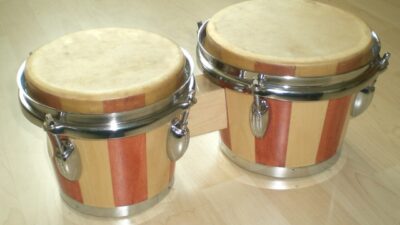
बोंगो दो छोटे, जुड़े हुए हाथ-ढोल की एक जोड़ी है — एक छोटा 'माचो' (नर) और एक बड़ा 'हेम्ब्रा' (मादा) — जो एक लकड़ी के पुल से आपस में जुड़े रहते हैं। हर ढोल का निचला मुँह खुला होता है और ऊपरी मुँह पर चमड़ा मढ़ा होता है। वादक इन्हें घुटनों के बीच पकड़कर या स्टैंड पर रखकर उंगलियों और हथेली से बजाता है।
Description English
The bongos are a pair of small, joined hand drums — a smaller 'macho' (male) and a larger 'hembra' (female) — connected by a wooden bridge block. Each drum is open at the bottom and headed with a skin at the top. The player holds them between the knees or mounts them on a stand and strikes them with fingers and palm.
Body
Two conical/cylindrical open-bottomed shells joined side by side
दो शंक्वाकार/बेलनाकार खुले-तले वाले ढोल जो अगल-बगल जुड़े होते हैं
Traditionally hardwood (oak, ash); modern shells also fibreglass or metal
परंपरागत रूप से कठोर लकड़ी (ओक, राख की लकड़ी); आधुनिक ढोल फाइबरग्लास या धातु के भी
18-20 (each drum)
Open-bottomed shell of each drum acts as the resonating chamber; the two drums are tuned roughly a fourth apart
Strings
Bongos are a membranophone, not a stringed instrument — sound comes from struck skin heads, not strings
No sympathetic strings — resonance comes from the open-bottomed shells
No drone strings — this is a purely rhythmic percussion instrument
Bow
कोई गज नहीं (हाथ से बजाया जाता है)
No bow (played with bare hands)
Not applicable — struck with fingertips, palm and heel of the hand
0
Played with bare hands; no bow or stick used in traditional technique
Tuning Pegs
ट्यूनिंग बोल्ट / लग
Tuning lugs (bolts)
Modern bongos use metal tension rods and lugs around the rim to tighten or loosen the head and set pitch; traditional bongos were tacked and heat-tuned
Bridge
पुल-गुटका (जोड़ने वाली लकड़ी)
Bridge block
The wooden block that joins the macho and hembra shells together into a single unit
Wood
Frets
बोंगो में फ्रेट या तार नहीं होते — यह एक ताल-वाद्य है। पिच खाल के तनाव, आघात की स्थिति (किनारा बनाम केंद्र) और हथेली से खाल को दबाकर बदली जाती है।
Bongos have no frets or strings — they are a percussion instrument. Pitch is shaped by head tension, where the head is struck (edge versus centre), and by pressing the palm into the head to bend the tone.
ध्वनि-चरित्र
SoundTonal Character Hindi
बोंगो की ध्वनि तीखी, सूखी और चटकीली होती है। छोटा माचो एक ऊँची, कट-कट करती 'टिक' देता है और बड़ा हेम्ब्रा एक गहरी, गोल थाप। दोनों मिलकर एक फुर्तीली, नाचती हुई लय बुनते हैं जो किसी भी धुन को गति और गर्मजोशी देती है।
Tonal Character English
The bongos' sound is sharp, dry and crackling. The small macho gives a high, clicking 'tick' while the larger hembra gives a deeper, rounded slap. Together they weave a nimble, dancing pulse that lends any melody momentum and warmth.
Timbre
Bright, staccato, high-cutting — sits above the mix, unlike the deep congas
Range
High to mid — the two heads tuned roughly a perfect fourth apart; pitch further bent by palm pressure
Dynamic Range
Wide for a small hand drum — from soft finger-taps to sharp open slaps that cut through a full band
Techniques
सुनने का मार्गदर्शन
The Listening Guideबोंगो का रस लेना हो तो पहले 'मार्तिय्यो' पर कान टिकाइए — वह लगातार टिक-टिक करती चाल जो गीत को धकेलती रहती है। फिर 1970 के दशक के हिंदी फिल्मी कैबरे और डिस्को गीतों में सुनिए, जहाँ बोंगो और कोंगा साथ-साथ बजते हैं और अरेंजमेंट को पश्चिमी चमक देते हैं। आख़िर में एक बोंगो एकल सुनिए, जहाँ वादक स्वच्छंद झड़ियों में वाद्य की शरारत खोलता है।
अंग्रेज़ी में पढ़ें · Read in English
To understand the bongos, first tune your ear to the 'martillo' — the steady ticking groove that pushes the song forward. Then listen to 1970s Bollywood cabaret and disco songs, where bongos and congas play together. Finally hear a bongo solo, where the player shows the instrument's mischief with free, cascading bursts.
परिचय
Identity- Year Of Origin
- 1900
अन्य विवरण
More DetailsTimbre
Bright, staccato, high-cutting — sits above the mix, unlike the deep congas
रोचक तथ्य
Margin Notesनर और मादा ढोल — बोंगो के दोनों ढोलों के अलग नाम हैं — छोटा 'माचो' (नर) और बड़ा 'हेम्ब्रा' (मादा)। परंपरागत रूप से माचो वादक के दाहिनी ओर और हेम्ब्रा बाईं ओर होता है, और दोनों लगभग एक 'चौथाई स्वर' के अंतराल पर मिलाए जाते हैं।
The two bongo drums have distinct names — the smaller 'macho' (male) and larger 'hembra' (female). Traditionally the macho sits to the player's right and the hembra to the left, and the two are tuned about a perfect fourth apart.
गोद में बजने वाला ढोल — पारंपरिक बोंगो-वादक बैठकर, जोड़ी को अपने घुटनों/पिंडलियों के बीच पकड़कर बजाता है। निचला खुला मुँह पैरों से थोड़ा दबाकर या खोलकर स्वर की गूँज बदली जा सकती है। आधुनिक मंच पर इन्हें स्टैंड पर भी लगाया जाता है।
A traditional bongo player sits and grips the pair between the knees or calves. Opening or partly closing the lower mouth against the legs changes the resonance. On the modern stage they are also mounted on a stand.
क्यूबा से बॉलीवुड तक — पूर्वी क्यूबा में जन्मा बोंगो मांबो और साल्सा के साथ दुनिया भर फैला। भारत में यह 1950-70 के दशक में हिंदी फिल्म-संगीत के पश्चिमी-प्रभावित अरेंजमेंट के ज़रिए आया, जहाँ इसे लॉर्ड परिवार जैसे पारसी-गोवाई सत्र-संगीतकारों ने लोकप्रिय बनाया।
Born in eastern Cuba, the bongos spread worldwide with mambo and salsa. In India they arrived through the Western-influenced arrangements of 1950s-70s Hindi film music, popularised by Parsi-Goan session musicians such as the Lord family.
बोंगो बनाम कोंगा — बोंगो और कोंगा अक्सर एक साथ बजते हैं पर अलग हैं: बोंगो छोटे, जुड़े हुए और ऊँची, चटकीली आवाज़ वाले होते हैं, जबकि कोंगा लंबे, अलग-अलग और गहरी, गूँजती आवाज़ वाले। दोनों मिलकर बॉलीवुड के लातिन-रंगे गीतों की समृद्ध ताल-परत बनाते हैं।
Bongos and congas often play together but differ: bongos are small, joined and high, crackling in tone, while congas are tall, separate and deep, resonant in tone. Together they build the rich rhythmic layer of Bollywood's Latin-tinged songs.
सवाल-जवाब
Questions & Answersबोंगो क्या है?
बोंगो दो छोटे, जुड़े हुए हाथ-ढोल की एक जोड़ी है — एक छोटा 'माचो' और एक बड़ा 'हेम्ब्रा' — जिनकी उत्पत्ति पूर्वी क्यूबा में हुई। इन्हें हाथों से बजाया जाता है और ये सोन, साल्सा तथा फिल्म-संगीत में प्रयुक्त होते हैं।
बोंगो की मूल लय क्या है?
बोंगो की मूल लय 'मार्तिय्यो' (स्पेनी में 'छोटा हथौड़ा') है — एक निरंतर टिक-टिक करती चाल जो क्यूबाई सोन और कई फिल्मी गीतों की धड़कन बनती है।
बोंगो हिंदी फिल्म-संगीत में कैसे आया?
बोंगो हिंदी फिल्म-संगीत में 1950-70 के दशक के पश्चिमी-प्रभावित अरेंजमेंट के ज़रिए आया, जिसे लॉर्ड परिवार (कावस, केरसी और बर्जोर लॉर्ड) जैसे सत्र-संगीतकारों ने लोकप्रिय किया और आर. डी. बर्मन ने अपने 1970 के दशक के गीतों में व्यापक रूप से इस्तेमाल किया।
बोंगो और कोंगा में क्या अंतर है?
बोंगो छोटे, आपस में जुड़े और ऊँची, चटकीली आवाज़ वाले होते हैं, जबकि कोंगा लंबे, अलग-अलग और गहरी, गूँजती आवाज़ वाले होते हैं। बॉलीवुड अरेंजमेंट में दोनों प्रायः एक साथ बजते हैं।
नमूना-पट्टी
The Specimen Table| नाम | बोंगो · Bongos |
|---|---|
| अन्य नाम | बोंगो · बोंगो ड्रम · Bongó (Spanish) · Bongo drums |
| उद्गम | 1900 |
| प्रकार | वाद्य · Instruments |
साझा कीजिए · Share this Plate