शास्त्र विंग · वाद्य-पट्टिका · Instrument Plate
भोरताल
Bhortal
अन्य नामभोर ताल · भोरताल (असमिया: ভোৰতাল) · Bhortal (also: Bhor Taal) · बोरताल / Bortal (smaller companion variant)
परिचय
Overviewभोरताल असम के काँसे से ढला वह विशाल झाँझ है, जो असमिया ताल-वाद्यों में सबसे बड़ा और सबसे गहरी ध्वनि वाला है। नामघरों के नाम-प्रसंग, शंकरदेव-माधवदेव के बरगीत, अंकीया भाओना और बिहू — हर सामूहिक भक्ति और उत्सव में इसकी जोड़ीदार झन्न ताल का आधार बनती है। बरपेटा के नरहरि बुढ़ा भकत द्वारा विकसित भोरताल नृत्य में यही झाँझ घूमते-चमकते हुए एक शानदार दृश्य-श्रव्य कला बन जाता है; और इसका काँसा जन्म लेता है सरथेबारी की सदियों पुरानी बेल-मेटल शिल्प-परंपरा में।
अंग्रेज़ी में पढ़ें · Read in English
The bhortal is the great bell-metal cymbal of Assam, the largest and deepest-sounding of the Assamese taal vadya. In the naam-prasanga of the namghars, the Borgeet of Sankardeva and Madhavdeva, in Ankiya Bhaona and in Bihu — in every act of congregational devotion and celebration — its paired clash forms the anchor of the rhythm. In the Bhortal Nritya developed by Narahari Burha Bhakat of Barpeta, this same cymbal, spinning and gleaming, becomes a magnificent audio-visual art; and its bell-metal is born of the centuries-old kanh craft of Sarthebari.
वर्गीकरण
ClassificationNatya Shastra Category
घन (Ghana - solid/struck idiophones)
घन वर्ग में भोरताल एक ठोस धातु का वाद्य यंत्र है — जोड़ी में बजने वाला विशाल काँसे का झाँझ, जिसकी ध्वनि स्वयं धातु के कंपन से उत्पन्न होती है, न कि किसी झिल्ली या तार से।
In the Ghana (solid/struck idiophone) category of Natya Shastra, the bhortal is a self-sounding metal instrument — a large pair of bell-metal cymbals whose tone arises from the vibration of the metal body itself, not from a membrane or string.
Western Category
Struck idiophone (clash cymbals)
Western Family
Cymbal family (paired concussion cymbals, comparable in playing action to orchestral crash cymbals but heavier and deeper in the Assamese devotional context)
Sub Classification
बनावट
PhysicalDescription Hindi
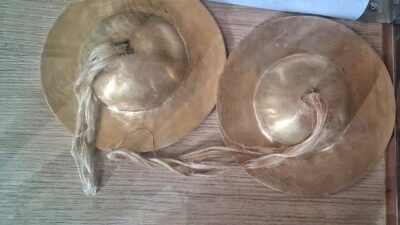
भोरताल असम के काँसे (बेल-मेटल) से ढले हुए दो समान, चौड़े और भारी झाँझों की जोड़ी है। यह असम में पाए जाने वाले ताल-वाद्यों में सबसे बड़ा है — इसकी चौड़ाई और मोटाई इसे गहरी, दूर तक गूँजने वाली ध्वनि प्रदान करती है। प्रत्येक झाँझ के केंद्र में एक उभार (कटोरी) होता है जिसमें छेद कर रस्सी बाँधी जाती है, जिससे कलाकार दोनों हाथों में एक-एक झाँझ थामते हैं।
Description English
The bhortal is a pair of identical, broad and heavy cymbals cast from Assamese bell-metal (kanh). It is the largest of the taal vadya (cymbal) instruments found in Assam — its wide diameter and thickness give it a deep, far-carrying resonance. Each cymbal has a raised central boss (cup) pierced to take a cord, so the performer holds one cymbal in each hand.
Body
Broad circular disc with a raised central dome/boss
चौड़ी गोल थाली, बीच में उभरा हुआ गुंबद/कटोरी
Bell-metal (kanh) — a high-tin bronze alloy of copper and tin; sometimes brass
काँसा (कँह) — ताँबे और राँगे की उच्च-टिन मिश्रधातु; कभी-कभी पीतल
30-38 (approx. 12-15 inches; the largest of Assam's cymbals)
None — the metal disc itself is the resonator; the broad, thick body sustains a long ringing decay after each clash
Pair
2 (a matched pair struck together)
Two identical cymbals of the same weight and pitch, clashed face-to-face or edge-to-edge
समान वज़न और स्वर के दो एक-जैसे झाँझ, जो आमने-सामने या किनारे-से-किनारे टकराए जाते हैं
Heavy — a full pair commonly weighs on the order of 1-2 kg, making it far weightier than the smaller mandira or khutitaal
Central Boss
कटोरी / मध्य उभार
Central boss (cup)
A domed cup at the centre of each disc; its underside is pierced so a holding cord can be knotted through it
Anchors the holding cord and concentrates the fundamental tone
Cord
डोरी / रस्सी
Holding cord
Thick cotton or woven cord passed through the central boss and knotted
The player slips fingers through or grips the cord so the cymbal hangs freely, letting the metal ring without being damped by the palm
Edge
किनारा / धार
Rim
भोरताल का चौड़ा, कुछ मोटा किनारा ही अधिकांश ध्वनि विकिरण करता है; किनारों को थोड़ा तिरछा टकराकर लंबी, खुली गूँज उत्पन्न की जाती है।
The broad, slightly thickened rim radiates most of the sound; striking the rims at a slight offset produces the long, open ring characteristic of the bhortal.
Manufacture
सरथेबारी, बरपेटा
Sarthebari, Barpeta
भोरताल पारंपरिक रूप से असम के सरथेबारी के काँसा-शिल्पियों द्वारा हाथ से ढाला और पीटकर आकार दिया जाता है — यह क्षेत्र सदियों से बेल-मेटल शिल्प के लिए प्रसिद्ध है। मिश्रधातु का सही अनुपात ही झाँझ के स्वर और गूँज को तय करता है।
Bhortals are traditionally hand-cast and hammer-finished by the bell-metal artisans of Sarthebari in Assam — a region renowned for centuries for its kanh (bell-metal) craft. The exact alloy ratio determines the cymbal's pitch and sustain.
ध्वनि-चरित्र
SoundTonal Character Hindi
भोरताल की ध्वनि गहरी, चौड़ी और भरपूर है — एक भारी, धात्विक 'झन्न' जो टकराने के बाद देर तक गूँजती रहती है। छोटे झाँझों की तीखी 'टिन्न' के विपरीत, भोरताल की आवाज़ में एक गंभीर, मंदिर-सी गरिमा है जो नामघर और खुले प्रांगण को भर देती है।
Tonal Character English
The bhortal's sound is deep, broad and full — a heavy metallic clash that rings on long after the strike. Unlike the sharp 'ting' of the small cymbals, the bhortal carries a grave, temple-like gravity that fills a namghar or open courtyard.
Timbre
Rich, resonant, shimmering bell-metal tone with a long sustain and a wide 'wash' of overtones
Range
Fixed, untuned percussion — no melodic pitch; a single deep fundamental with a broad overtone spread
Dynamic Range
Very wide — from a soft, half-open shimmer to a full, ringing crash audible across a large gathering without amplification
Techniques
सुनने का मार्गदर्शन
The Listening Guideभोरताल का रस लेना हो तो पहले किसी नामघर के नाम-प्रसंग या बरगीत में इसे सुनिए — खोल की थाप के साथ हर आवर्त के सम पर गहरी झन्न, और उस गूँज का पूरे प्रांगण में फैलना। फिर भोरताल नृत्य देखिए, जहाँ ध्वनि और दृश्य एक हो जाते हैं। छोटे मंजीरे की तीखी टिन्न और भोरताल की गंभीर, फैलती गूँज का अंतर पकड़िए — यही इस वाद्य की आत्मा है।
अंग्रेज़ी में पढ़ें · Read in English
To appreciate the bhortal, first listen to a namghar naam-prasanga or a Borgeet — notice how, over the beat of the khol, the bhortal lands a deep clash on the 'sam' of every cycle and how that ring spreads across the courtyard. Then watch a Bhortal Nritya, where sound and sight fuse and the cymbals spin and gleam. Hear the contrast between the sharp 'ting' of the small manjira and the grave, spreading resonance of the bhortal.
परिचय
Identity- Year Of Origin
- 1500
अन्य विवरण
More DetailsTimbre
Rich, resonant, shimmering bell-metal tone with a long sustain and a wide 'wash' of overtones
रोचक तथ्य
Margin Notesपाँच ताल-वाद्यों में सबसे बड़ा — असम में ताल-वाद्य (झाँझ) की कई किस्में हैं — भोरताल, बोरताल, खुटिताल/पातिताल, मंजीरा और बिहूताल। इनमें भोरताल सबसे बड़ा और सबसे गहरी ध्वनि वाला है, जबकि बोरताल इसका थोड़ा छोटा संस्करण है।
Assam has several kinds of taal vadya (cymbals) — bhortal, bortal, khutitaal/patital, manjira and bihutaal. Of these the bhortal is the largest and deepest-sounding, while the bortal is a slightly smaller version of it.
नाम में छिपी लोक-कथा — एक प्रचलित (किंतु अप्रमाणित) मान्यता के अनुसार इस विशाल झाँझ का प्रारूप बौद्ध मठों — भूटान/भोटिया क्षेत्र — से असम आया, जिससे 'भोर' नाम पड़ा। यह कथा भोरताल के अंतर-सांस्कृतिक अतीत की ओर इशारा करती है।
A popular (though unverified) belief holds that the form of this large cymbal came to Assam from Buddhist monasteries — the Bhutan/Bhutia region — giving rise to the name 'bhor'. The tale hints at the bhortal's cross-cultural past.
एकल नहीं, समूह का वाद्य — सारंगी या सितार के विपरीत, भोरताल की शक्ति एकल वादन में नहीं बल्कि संख्या में है। नाम-प्रसंग और भोरताल नृत्य में अनेक जोड़ियाँ एक साथ, एक ही लय में टकराती हैं — यही सामूहिक झन्न इसकी असली पहचान है।
Unlike the sarangi or sitar, the bhortal's power lies not in solo playing but in numbers. In naam-prasanga and Bhortal Nritya, many pairs clash together in a single rhythm — this collective ring is its true identity.
सरथेबारी का काँसा-गाँव — भोरताल का जन्म संगीत-मंच पर नहीं, बल्कि सरथेबारी के भट्ठों में होता है, जहाँ काँसा-शिल्पी ताँबे और राँगे को पिघलाकर, पीटकर और तराशकर हर झाँझ को उसका विशेष स्वर देते हैं। यह शिल्प असम की सबसे पुरानी धातु-परंपराओं में से एक है।
The bhortal is born not on the music stage but in the furnaces of Sarthebari, where bell-metal artisans melt, hammer and finish copper and tin to give each cymbal its distinct tone. This craft is among Assam's oldest metal traditions.
सवाल-जवाब
Questions & Answersभोरताल क्या है?
भोरताल असम का एक पारंपरिक ताल-वाद्य है — काँसे (बेल-मेटल) से ढले हुए दो विशाल, भारी झाँझों की जोड़ी। यह असम में पाए जाने वाले झाँझों में सबसे बड़ा है और नाम-प्रसंग, बरगीत, बिहू तथा भोरताल नृत्य में बजाया जाता है।
भोरताल किस श्रेणी का वाद्य यंत्र है?
भोरताल एक घन वाद्य (idiophone) है — यानी ऐसा वाद्य जिसकी ध्वनि स्वयं धातु के कंपन से उत्पन्न होती है, किसी झिल्ली या तार से नहीं। दो झाँझों को आपस में टकराकर बजाया जाता है।
भोरताल नृत्य क्या है और इसे किसने विकसित किया?
भोरताल नृत्य असम का एक प्रसिद्ध झाँझ-नृत्य है जिसमें कलाकार तेज़ लय पर घेरे में घूमते हुए विशाल भोरताल बजाते और भक्ति गीत गाते हैं। इसे बरपेटा के सत्रिया कलाकार नरहरि बुढ़ा भकत द्वारा विकसित माना जाता है।
भोरताल कहाँ और किस धातु से बनता है?
भोरताल काँसे (बेल-मेटल) — ताँबे और राँगे की मिश्रधातु — से बनता है, और पारंपरिक रूप से असम के सरथेबारी (बरपेटा जिला) के काँसा-शिल्पियों द्वारा हाथ से ढाला जाता है। सरथेबारी सदियों से बेल-मेटल शिल्प के लिए प्रसिद्ध है।
भोरताल और मंजीरा में क्या अंतर है?
मंजीरा छोटे झाँझ होते हैं जिनकी ध्वनि तीखी और ऊँची होती है, जबकि भोरताल बहुत बड़ा और भारी है और इसकी ध्वनि गहरी, चौड़ी और दूर तक गूँजने वाली होती है। भोरताल असम के ताल-वाद्यों में सबसे बड़ा है।
नमूना-पट्टी
The Specimen Table| नाम | भोरताल · Bhortal |
|---|---|
| अन्य नाम | भोर ताल · भोरताल (असमिया: ভোৰতাল) · Bhortal (also: Bhor Taal) · बोरताल / Bortal (smaller companion variant) |
| उद्गम | 1500 |
| प्रकार | वाद्य · Instruments |
साझा कीजिए · Share this Plate