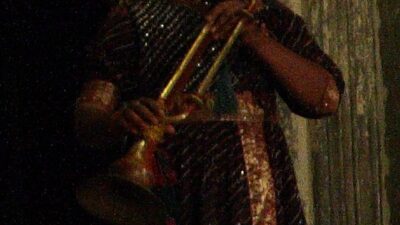
शास्त्र विंग · वाद्य-पट्टिका · Instrument Plate
बांकिया
Bankia
अन्य नामबांकिया · बांक्या · बंकिया · Bankya
परिचय
Overviewबांकिया राजस्थान की शोभायात्रा-तुरही है — पीतल-कांसे की एक घुमावदार नली जिसमें न छेद हैं, न वाल्व; कलाकार केवल फूँक और ओठों की शक्ति से इसकी ओजस्वी मंगलध्वनि उपजाता है। यह भोपा, ढाढ़ी, बावरिया, कुम्हार और सरगरा समुदायों का वाद्य है, जो विवाह की बारात, मेले, चरी नृत्य और कच्छी घोड़ी नृत्य में ढोल-थाली के साथ बजती है और ऐतिहासिक रूप से राजपरिवार के आगमन की घोषणा करती थी।
अंग्रेज़ी में पढ़ें · Read in English
The Bankia is Rajasthan's processional horn — a curved brass-and-bronze tube with no holes and no valves, whose bright, auspicious blast the player raises from breath and lip power alone. It is the instrument of the Bhopa, Dhadhi, Bavaria, Kumhar and Sargara communities, sounded with dhol and thali at wedding baraats, fairs, the Chari dance and the Kachchi Ghodi dance, and historically used to announce the arrival of royalty.
वर्गीकरण
ClassificationNatya Shastra Category
सुषिर (Sushira - wind instruments)
बांकिया नाट्यशास्त्र के सुषिर वर्ग का वाद्य है — यह पीतल/कांसे की नली में ओठों के कंपन से हवा फूँककर बजाया जाता है। इसमें न छेद होते हैं और न ही रीड (सरकंडा); ध्वनि केवल फूँक की शक्ति और ओठों के दबाव से बनती है, इसलिए यह एक प्राकृतिक (नैसर्गिक स्वर वाला) धातु-वाद्य है।
The Bankia belongs to the Sushira (wind) category of the Natya Shastra. It is a lip-blown brass/bronze horn: air is forced through an integrated cup mouthpiece and the pitch is produced by lip vibration alone. It has no finger holes and no reed, making it a 'natural' (harmonic-series) brass aerophone rather than a melodic instrument.
Western Category
Lip-vibrated brass aerophone (natural horn / natural trumpet family)
Western Family
Brass / labrosone family (akin to a valveless bugle or ceremonial horn, but bent into a curved loop and cast in bronze)
Sub Classification
बनावट
PhysicalDescription Hindi
बांकिया एक घुमावदार (लगभग 'S' या लम्बवृत्ताकार लूप जैसी) पीतल/कांसे की नरसिंहा-सदृश तुरही है। इसका शरीर एक बिगुल जैसी नली और एक तश्तरीनुमा (कटोरीनुमा) घंटी से मिलकर बनता है, जिसमें फूँकने का मुखपत्र (मुखनली) नली के साथ ही एकीकृत रहता है। परंपरागत रूप से यह दो हिस्सों में ढाला व जोड़ा जाता है।
Description English
The Bankia is a curved (roughly S-shaped or oblong-loop) brass/bronze horn of the natural-trumpet type. Its body is formed from a bugle-like tube joined to a saucer-shaped flared bell, with the blowing mouthpiece integrated directly into the tube. Traditionally it is cast and assembled in two parts.
Body
Curved / oblong looped tube ending in a wide saucer-shaped bell
घुमावदार लूपनुमा नली, अंत में चौड़ी तश्तरीनुमा घंटी
Brass or bronze (cast metal); some examples in copper alloy
पीतल या कांसा (ढली हुई धातु); कहीं-कहीं ताम्र मिश्र
varies (typically a hand-held loop roughly 40-70 cm along the tube)
Conical metal bore terminating in a flared bell that projects the sound outdoors
Strings
Bankia is a wind instrument and has no strings; its sound comes from lip vibration into a metal tube.
None (wind instrument).
None; however a single sustained blown tone can itself act as a powerful drone-like fanfare over the dhol.
Bow
लागू नहीं
Not applicable
Not applicable (no bow — instrument is blown)
0
Sound produced by forceful blowing and lip tension, not bowing
Tuning Pegs
लागू नहीं
Not applicable
No tuning pegs; pitch is fixed by tube length and controlled only by lip embouchure and blowing force
Bridge
लागू नहीं
Not applicable
No bridge (wind instrument)
Not applicable
Frets
बांकिया में न छेद होते हैं, न फ्रेट और न वाल्व — कलाकार केवल फूँक की शक्ति और ओठों के दबाव (एम्बशर) से स्वर व शक्ति को नियंत्रित करता है। इसीलिए यह मुख्यतः एक ओजपूर्ण, उद्घोषक (फ़ैनफेयर) वाद्य है, न कि राग-गायन वाला मधुर वाद्य।
The Bankia has no finger holes, frets, or valves — the player controls tone and power purely through breath force and lip pressure (embouchure). This makes it primarily a bold, announcing (fanfare) instrument rather than a raga-melody instrument.
Construction Notes Hindi
पारंपरिक रूप से गाँव-कस्बे के ठठेरे/कसेरे (धातु-शिल्पी) इसे दो टुकड़ों में — बिगुलनुमा नली और तश्तरीनुमा घंटी — ढालकर जोड़ते हैं। मुखपत्र नली में ही गढ़ा रहता है। सतह पर अक्सर उभरी नक्काशी या पीतल की चमक होती है जो इसे शोभायात्रा में दृश्य-सौंदर्य देती है।
Construction Notes English
Village and small-town metalsmiths (thathera/kasera) traditionally cast it in two pieces — the bugle-like tube and the saucer-shaped bell — then join them, with the mouthpiece formed integrally into the tube. Surfaces are often burnished or lightly embossed so the horn also reads as a visual ornament of the procession.
ध्वनि-चरित्र
SoundTonal Character Hindi
बांकिया की ध्वनि तीव्र, गूँजदार और दूर तक पहुँचने वाली है — एक ओजस्वी, मंगलध्वनि जो शोभायात्रा और उत्सव के वातावरण को उभार देती है। कुशल वादक के हाथों में यह ढोल की गति को नया उत्साह देती है, गायकों को उकसाती है और नर्तकों को स्फूर्ति देती है।
Tonal Character English
The Bankia's tone is powerful, resonant and far-carrying — a bright, auspicious blast that lifts the atmosphere of a procession or celebration. In skilled hands it energises the pace of the dhol, spurs the singers, and invigorates the dancers.
Timbre
Bold, brassy, edgy and loud; a ceremonial fanfare colour rather than a soft melodic one
Range
Narrow — limited to a few notes of the natural harmonic series of the tube
Dynamic Range
Predominantly loud and projecting, designed for open-air processions without amplification
Techniques
सुनने का मार्गदर्शन
The Listening Guideबांकिया को खुले में, ढोल और थाली के साथ सुनिए — तभी इसकी असली शक्ति खुलती है। चरी या कच्छी घोड़ी नृत्य की प्रस्तुति से शुरू कीजिए और ध्यान दीजिए कि कैसे एक लंबी, तीखी बांकिया-ध्वनि ढोल की थाप के ऊपर उठकर पूरे दृश्य को उत्सव में बदल देती है।
अंग्रेज़ी में पढ़ें · Read in English
Listen to the Bankia in the open, with dhol and thali — only then does its real power emerge. Begin with a Chari or Kachchi Ghodi dance clip and hear how one long, piercing Bankia tone rises above the drum strokes and turns a whole scene into celebration. Note that it does not sing a sweet raga — it 'announces'.
अन्य विवरण
More DetailsTimbre
Bold, brassy, edgy and loud; a ceremonial fanfare colour rather than a soft melodic one
रोचक तथ्य
Margin Notesदो टुकड़ों में ढली तुरही — बांकिया परंपरागत रूप से दो हिस्सों में बनती है — एक बिगुलनुमा नली और एक तश्तरीनुमा घंटी — जिनमें फूँकने का मुखपत्र नली के साथ ही ढला रहता है। यही सरल दो-टुकड़ा रचना इसे गाँव-कस्बे के धातु-शिल्पियों के लिए बनाना संभव बनाती है।
The Bankia is traditionally made in two parts — a bugle-like tube and a saucer-shaped bell — with the blowing mouthpiece cast integrally into the tube. This simple two-piece construction is what makes it feasible for village and small-town metalsmiths to craft.
समुदायों का वाद्य — बांकिया किसी एक 'उस्ताद परंपरा' का नहीं, बल्कि समुदायों का वाद्य है — भोपा और ढाढ़ी इसे बजाते हैं, तो कच्छी घोड़ी नृत्य में बावरिया, कुम्हार और सरगरा समुदाय के पुरुष विवाह अवसरों पर इसे ढोल के साथ बजाते हैं।
The Bankia belongs not to a single maestro-lineage but to communities — the Bhopa and Dhadhi play it, while in the Kachchi Ghodi dance the menfolk of the Bavaria, Kumhar and Sargara communities sound it with the dhol at weddings.
चरी की आग और बांकिया की गूँज — चरी नृत्य में स्त्रियाँ सिर पर जलती हुई चरी (घड़े) रखकर संतुलन साधती हैं; इस नाटकीय अग्नि-दृश्य के पीछे बांकिया-ढोल की ध्वनि लय और उत्सव का ताप भरती है।
In the Chari dance women balance lit pots on their heads; behind that dramatic fire-scene, the Bankia-and-dhol sound supplies the rhythm and the heat of celebration.
सवाल-जवाब
Questions & Answersबांकिया क्या है?
बांकिया राजस्थान का एक घुमावदार पीतल/कांसा तुरही वाद्य है। यह सुषिर (फूँक) वर्ग का वाद्य है जिसमें न छेद होते हैं न वाल्व — कलाकार केवल फूँक और ओठों की शक्ति से इसकी ओजस्वी मंगलध्वनि उपजाता है। यह विवाह-शोभायात्रा, मेले और लोक-उत्सवों में बजता है।
बांकिया कौन बजाता है?
बांकिया मुख्यतः भोपा (लोक-देवताओं के पुजारी-गायक) और ढाढ़ी समुदाय बजाते हैं। कच्छी घोड़ी नृत्य में बावरिया, कुम्हार और सरगरा समुदाय के पुरुष विवाह अवसरों पर इसे ढोल के साथ बजाते हैं।
बांकिया किस अवसर पर बजाई जाती है?
बांकिया विवाह की बारात, मेले, धार्मिक जुलूस, देवी-देवताओं के उत्सव तथा चरी और कच्छी घोड़ी नृत्य में बजती है। ऐतिहासिक रूप से इसे राजपरिवार के आगमन की घोषणा के लिए भी बजाया जाता था।
क्या बांकिया पर राग बजाया जा सकता है?
नहीं। बांकिया में छेद या वाल्व नहीं होते, इसलिए इसकी ध्वनि प्राकृतिक हार्मोनिक श्रेणी के कुछ स्वरों तक सीमित रहती है। यह राग-गायन का नहीं, बल्कि मंगल-घोषणा और शोभायात्रा की ओजस्वी ध्वनि का वाद्य है।
नमूना-पट्टी
The Specimen Table| नाम | बांकिया · Bankia |
|---|---|
| अन्य नाम | बांकिया · बांक्या · बंकिया · Bankya · Bankiya · Bankia (also: Bāṅkiyā) |
| प्रकार | वाद्य · Instruments |
साझा कीजिए · Share this Plate