शास्त्र विंग · वाद्य-पट्टिका · Instrument Plate
बैगपाइप
Bagpipes (Great Highland)
अन्य नामबैगपाइप · मशक बाजा (सैन्य) · Great Highland Bagpipe · Highland Pipes
परिचय
Overviewबैगपाइप स्कॉटलैंड के उच्च प्रदेश का हवा-चालित वाद्य है — एक चमड़े या सिंथेटिक थैली, एक फूँकनी, धुन बजाने वाला चैंटर और तीन गूँजते ड्रोन। ब्रिटिश सेना के साथ भारत आकर यह सिख, गोरखा और राजपूताना रेजिमेंटों का गौरव बना, और स्वतंत्र भारत ने इसे बीटिंग रिट्रीट, पुलिस बैंड प्रतियोगिताओं और बारात परंपरा में अपना लिया। नौ स्थिर स्वरों और अटूट ड्रोन से बनी इसकी भेदक आवाज़ आज 'सारे जहाँ से अच्छा' का पर्याय है।
अंग्रेज़ी में पढ़ें · Read in English
The bagpipe is the air-driven instrument of the Scottish Highlands — a skin or synthetic bag, a blowpipe, a melody chanter and three humming drones. Arriving in India with the British Army, it became the pride of the Sikh, Gorkha and Rajputana regiments, and independent India adopted it into the Beating Retreat, police band competitions and the wedding-procession tradition. Built from nine fixed notes and an unbroken drone, its piercing voice is today a byword for 'Saare Jahan Se Achha'.
वर्गीकरण
ClassificationNatya Shastra Category
सुषिर (Sushira - wind/hollow instruments)
बैगपाइप भारतीय शास्त्रीय परंपरा का मूल वाद्य नहीं है, किंतु नाट्यशास्त्र के चतुर्विध वर्गीकरण में इसे सुषिर (हवा से बजने वाले खोखले वाद्य) वर्ग में रखा जा सकता है — जैसे बाँसुरी और शहनाई। इसमें एक चमड़े की थैली में भरी हवा को दबाकर रीड (सरकंडा जीभ) से सतत ध्वनि उत्पन्न की जाती है।
The bagpipe is not a native Indian classical instrument, but within the Natya Shastra's four-fold scheme it maps to the Sushira (wind/hollow, air-blown) category — the same family as bansuri and shehnai. Sound is produced by squeezing air stored in a skin bag through reeds, giving a continuous, uninterrupted tone.
Western Category
Aerophone — reed-driven bagpipe
Western Family
Double-reed woodwind family (the melody chanter uses a double reed like the oboe; the drones use single reeds like the clarinet), fed by a bag reservoir
Sub Classification
बनावट
PhysicalDescription Hindi
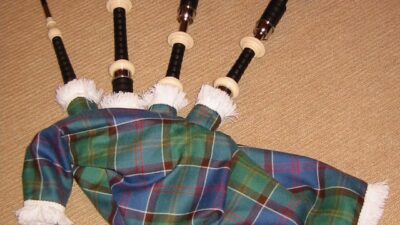
बैगपाइप एक हवा-चालित वाद्य है जिसमें चार मुख्य अंग होते हैं — एक थैली (bag) जो हवा का भंडार है, एक फूँकनी (blowpipe) जिससे वादक हवा भरता है, एक चैंटर (chanter) जो धुन बजाने वाली स्वर-नली है, और तीन ड्रोन (drones) जो लगातार आधार-स्वर देते हैं। सभी लकड़ी के भाग परंपरागत रूप से अफ्रीकी ब्लैकवुड या शीशम जैसी कठोर लकड़ी से बनते हैं और चाँदी या हाथीदाँत-जैसी सामग्री से सजाए जाते हैं।
Description English
The bagpipe is an air-driven instrument with four principal parts — a bag that stores air, a blowpipe through which the player fills the bag, a chanter (the melody pipe), and three drones that sound a continuous foundation note. The wooden components are traditionally turned from dense hardwood (African blackwood, cocuswood) and mounted with silver or imitation-ivory ferrules.
Body
Skin/synthetic bag with four protruding pipes (blowpipe, chanter, three drones)
चमड़े या सिंथेटिक थैली जिसमें से चार नलियाँ निकलती हैं — फूँकनी, चैंटर और तीन ड्रोन
Bag: traditionally sheepskin/cowhide (now Gore-Tex or synthetic); pipes: African blackwood, cocuswood or rosewood
थैली: परंपरागत रूप से भेड़ या गाय की खाल (अब गोर-टेक्स या सिंथेटिक); नलियाँ: अफ्रीकी ब्लैकवुड, कोकसवुड या शीशम
Drones stand approx 75-85 when shouldered; chanter approx 33-35
The airtight bag acts as a constant-pressure reservoir so the reeds sound without a break for breathing
Strings
The chanter is the melody pipe: a conical bore double-reed tube with eight tone holes plus a thumb hole, giving a fixed nine-note scale
No sympathetic strings — resonance comes from three drone pipes, not resonating strings
Two tenor drones tuned to A one octave below the chanter's Low A, and one long bass drone tuned to A two octaves below — each with its own single reed, sounding a perpetual A pedal
Bow
फूँकनी
Blowpipe
Wooden mouthpipe fitted with a non-return (one-way) valve
20-25
There is no bow — the player blows steadily into the bag through the blowpipe while squeezing the bag with the arm to keep air pressure constant
Tuning Pegs
ड्रोन स्लाइड (सुर मिलाने की सरकनी)
Drone tuning slides
Each drone is built in sliding sections; the player lengthens or shortens the pipe to tune each drone precisely to the chanter's A
Bridge
रीड (जीभ)
Reeds
The chanter's double reed and the three drone single reeds are the true sound generators; reed strength decides pitch, volume and stamina required
Spanish cane (Arundo donax) traditionally; synthetic composite in modern bands
Frets
बैगपाइप में फ्रेट नहीं होते किंतु स्वर तय (fixed) होते हैं — चैंटर के आठ छिद्र और अंगूठा-छिद्र केवल नौ नियत स्वर देते हैं। भारतीय वाद्यों जैसी 'मीड' (सतत स्लाइड) यहाँ संभव नहीं; सजावट केवल तीव्र ग्रेस-नोट्स से होती है।
The bagpipe has no frets but its pitches are fixed — the eight finger holes and thumb hole yield only nine set notes. True 'meend' (continuous glissando) as on Indian instruments is not possible; all ornamentation is done through rapid grace notes.
ध्वनि-चरित्र
SoundTonal Character Hindi
बैगपाइप की ध्वनि तीव्र, भेदक और गूँजदार है — तीन ड्रोन का अटूट आधार-स्वर उस पर चैंटर की चमकीली धुन को टिकाए रखता है। खुले मैदान में यह मीलों तक सुनाई देती है, इसीलिए यह सैन्य परेड, बीटिंग रिट्रीट और शोक-सम्मान समारोहों की पहचान बन गई है। इसका स्वर भावनात्मक ऊर्जा और वीर-रस से भरा होता है।
Tonal Character English
The bagpipe's tone is piercing, bright and resonant — the unbroken pedal of the three drones anchors the chanter's shining melody above it. It carries for miles across open ground, which is why it became the signature sound of military parades, the Beating Retreat, and ceremonies of honour and mourning. Its voice is charged with martial energy and stirring pathos.
Timbre
Loud, reedy, buzzing; a fixed drone A underneath a nasal, penetrating melody
Range
Just nine notes — a ninth from Low G to High A — but every note sustains indefinitely
Dynamic Range
Almost none — the bagpipe plays at a single fortissimo; expression comes from tempo, phrasing and grace-note density, not from getting louder or softer
Techniques
सुनने का मार्गदर्शन
The Listening Guideबैगपाइप का रस लेना हो तो पहले उसके अटूट ड्रोन को पकड़िए — वह एक-सा गूँजता आधार-स्वर जो कभी नहीं रुकता। फिर उसके ऊपर चैंटर की चमकीली धुन सुनिए और देखिए कि बिना साँस के विराम के, केवल बिजली-सी ग्रेस-नोट्स से स्वर कैसे अलग होते हैं। 'सारे जहाँ से अच्छा' जैसी परिचित धुन से शुरुआत कीजिए और बीटिंग रिट्रीट की रिकॉर्डिंग सुनिए — दर्जनों पाइपर एक साथ बजें तो ध्वनि की दीवार खड़ी हो जाती है।
अंग्रेज़ी में पढ़ें · Read in English
To understand the bagpipe, first listen to the drones — the unbroken foundation note that hums identically through the whole performance. Then focus on the chanter melody above it and notice how, without any break, notes are separated only by rapid grace notes. Begin with a familiar tune like 'Saare Jahan Se Achha' — when dozens of pipers play together in a band, the sound becomes a wall of tone. A Beating Retreat recording is its finest introduction.
परिचय
Identity- Year Of Origin
- 1400
अन्य विवरण
More DetailsTimbre
Loud, reedy, buzzing; a fixed drone A underneath a nasal, penetrating melody
रोचक तथ्य
Margin Notesऔपनिवेशिक वाद्य जो भारतीय हो गया — बैगपाइप ब्रिटिश सेना की स्कॉटिश रेजिमेंटों के साथ भारत आया, किंतु सिख, गोरखा, राजपूताना और मद्रास रेजिमेंटों ने अपने पाइप बैंड बनाकर इसे भारतीय बना लिया। आज यह भारतीय सैन्य संगीत की सबसे पहचानी आवाज़ों में से एक है।
The bagpipe came to India with the Scottish regiments of the British Army, but the Sikh, Gorkha, Rajputana and Madras regiments made it their own by raising their own pipe bands. Today it is one of the most recognisable voices of Indian military music.
नौ स्वरों की सीमा, अनंत गूँज — चैंटर केवल नौ नियत स्वर देता है और वादक कभी साँस लेने के लिए नहीं रुकता — थैली में जमा हवा को बाँह से दबाकर वह ध्वनि को सतत बनाए रखता है। यही 'अटूट स्वर' बैगपाइप की सबसे बड़ी विशेषता है।
The chanter gives only nine fixed notes and the player never stops to breathe — by squeezing the air stored in the bag with the arm, the sound is kept continuous. This 'unbroken tone' is the bagpipe's defining feature.
बारात में बैगपाइप — उत्तर भारत की विवाह-परंपरा में रेजिमेंटल शैली के 'बैंड बाजा' के आगे बैगपाइप बजाने वाले चलते हैं। इसकी रौबदार, दूर तक सुनाई देने वाली आवाज़ बारात को शानदार बना देती है — यही कारण है कि कई हिंदी फिल्मी शादी-दृश्यों में यह दिखाई देता है।
In North Indian wedding tradition, bagpipers march at the head of the regimental-style 'band baaja'. Its grand, far-carrying voice makes the baraat spectacular — which is why it appears in many Hindi film wedding scenes.
बीटिंग रिट्रीट का समापन स्वर — हर वर्ष 29 जनवरी को गणतंत्र दिवस समारोह का समापन 'बीटिंग रिट्रीट' से होता है, जहाँ सेना, नौसेना और वायुसेना के पाइप बैंड 'सारे जहाँ से अच्छा' और अन्य धुनें बजाते हैं। बैगपाइप की गूँज इस राष्ट्रीय क्षण की भावनात्मक चरम बन जाती है।
Every year the Republic Day celebrations close with 'Beating Retreat' on 29 January, where the pipe bands of the Army, Navy and Air Force play 'Saare Jahan Se Achha' and other tunes. The sound of the bagpipe becomes the emotional climax of this national moment.
सवाल-जवाब
Questions & Answersबैगपाइप क्या है?
बैगपाइप एक हवा-चालित वाद्य है जिसमें एक थैली में भरी हवा को दबाकर रीड से सतत ध्वनि उत्पन्न की जाती है। इसमें धुन बजाने वाला चैंटर और लगातार आधार-स्वर देने वाले तीन ड्रोन होते हैं। स्कॉटलैंड का यह वाद्य भारत में सैन्य और पुलिस पाइप बैंड में प्रमुखता से बजाया जाता है।
बैगपाइप में कितने स्वर होते हैं?
बैगपाइप के चैंटर में केवल नौ नियत स्वर होते हैं — लो-G से हाई-A तक (लगभग A मिक्सोलिडियन स्वरमाला)। स्वर को धीमा या ऊँचा नहीं किया जा सकता, इसलिए सारी अभिव्यक्ति उँगलियों की तेज़ ग्रेस-नोट्स से होती है।
बैगपाइप भारत में कैसे आया?
बैगपाइप ब्रिटिश सेना की स्कॉटिश रेजिमेंटों के साथ 19वीं शताब्दी में भारत आया। बाद में सिख, गोरखा, राजपूताना और मद्रास जैसी भारतीय रेजिमेंटों ने अपने पाइप बैंड बनाए और स्वतंत्र भारत ने इसे सैन्य-पुलिस परंपरा का गौरवपूर्ण अंग बना लिया।
हिंदी फिल्मों और शादियों में बैगपाइप कहाँ सुनाई देता है?
हिंदी सिनेमा में बैगपाइप देशभक्ति और सैन्य दृश्यों — परेड, शहीद-सम्मान और सीमा दृश्यों — में सुनाई देता है। उत्तर भारत की 'बैंड बाजा' विवाह परंपरा में यह बारात के आगे बजने वाला रौबदार वाद्य बन गया है, इसलिए कई फिल्मी शादी-दृश्यों में इसकी झलक मिलती है।
क्या बैगपाइप पर राग बजाया जा सकता है?
नहीं। बैगपाइप की स्थिर नौ-स्वर स्वरमाला और मीड (स्लाइड) की असंभवता इसे राग-संगीत के लिए अनुपयुक्त बनाती है। भारत में इसका भंडार मार्च, देशभक्ति धुनें (जैसे 'सारे जहाँ से अच्छा') और समारोही रचनाएँ हैं, शास्त्रीय राग-विस्तार नहीं।
नमूना-पट्टी
The Specimen Table| नाम | बैगपाइप · Bagpipes (Great Highland) |
|---|---|
| अन्य नाम | बैगपाइप · मशक बाजा (सैन्य) · Great Highland Bagpipe · Highland Pipes · Pìob Mhòr (Scottish Gaelic) |
| उद्गम | 1400 |
| प्रकार | वाद्य · Instruments |
साझा कीजिए · Share this Plate