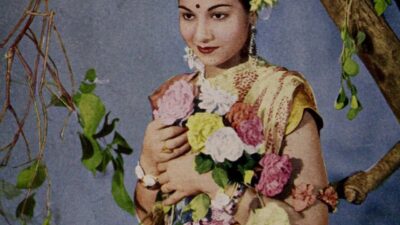
गीत विंग · गीत-पट्टिका · Song Plate
वो गए नहीं हमें मिल के
Woh Gaye Nahin Hamen Milke
राजकुमारी का बिछोह का करुण गीत — 'छोटी माँ' की वह रचना जिसे समकालीन समीक्षकों ने ज्ञान दत्त के संगीत में अलग से रेखांकित किया।
भावउदास · पुरानी यादें
भाषाhindi गतिधीमी स्वरूपएकल महिला
श्रेय
The Creditsसूत्र-वाक्य · The Hook
सूत्र-वाक्य
राजकुमारी का बिछोह का करुण गीत — 'छोटी माँ' की वह रचना जिसे समकालीन समीक्षकों ने ज्ञान दत्त के संगीत में अलग से रेखांकित किया।
In EnglishRajkumari's mournful song of parting — the Chhoti Maa number period critics singled out from Gyan Dutt's score.
पट्टिका-लेख
The Monographपरिचय Overview
'वो गए नहीं हमें मिल के' 1943 की रणजीत मूवीटोन फ़िल्म 'छोटी माँ' (जो 'नर्स' नाम से भी रिलीज़ हुई) का राजकुमारी का एकल गीत है, जिसे ज्ञान दत्त ने डी. एन. माधोक के बोलों पर रचा। यह बिछोह का गीत है — प्रिय बिना मिले चले गए — और फ़िल्म का सर्वाधिक उद्धृत गीत है, जो 'सॉन्ग्स ऑफ़ योर' के 1943 के सर्वेक्षण में राजकुमारी के लिए ज्ञान दत्त की एक उल्लेखनीय रचना के रूप में दर्ज है।
अंग्रेज़ी में पढ़ें · Read in English
'Woh Gaye Nahin Hamen Milke' is the Rajkumari solo from the 1943 Ranjit Movietone film Chhoti Maa (also released as Nurse), set by Gyan Dutt to D.N. Madhok's lyrics. A song of separation — the beloved has gone without a meeting — it is the most frequently cited number from the film, appearing in Songs of Yore's survey of 1943 as a notable Gyan Dutt composition for Rajkumari.
संगीत The Music
ज्ञान दत्त गीत को धीमा और अंतर्मुखी रखते हैं, कोमल तबले के सामने सारंगी की करुण खिंचाई पर टिकते हुए — एक ऐसा संयोजन जो राजकुमारी के पतले, भावप्रवण स्वर और बोल के अधूरे मिलन के भाव के अनुकूल है।
अंग्रेज़ी में पढ़ें · Read in English
Gyan Dutt pitches the song slow and inward, leaning on the plaintive draw of the sarangi against a soft tabla, a setting that suits Rajkumari's reedy, expressive voice and the lyric's mood of unfulfilled meeting.
काव्य The Poetry
शीर्षक 'वो गए नहीं हमें मिल के' गीत को भारतीय शास्त्रीय काव्य के विरह-रस में स्थापित करता है — वह दर्द जो तब और गहरा होता है जब विदाई अपूर्ण हो। डी.एन. माधोक 1930-40 के दशक के हिंदी सिनेमा के सर्वाधिक बहुमुखी गीतकारों में से थे — वे लोक-शैली, शास्त्रीय ब्रज-भाषा और बोलचाल की उर्दू में समान दक्षता से काम करते थे। यहाँ उन्होंने सरल भाषा का चुनाव किया: कोई अलंकृत सज्जा नहीं, बस एक अभाव का सीधा बयान जो इसलिए चुभता है क्योंकि यह टाला जा सकता था। 'नहीं मिल के' — बिना मिले, बिना आलिंगन के — पूरे भावनात्मक सार को एक नकारात्मक निर्माण में समेट देता है: अभाव ही गीत का विषय है, और व्याकरण उस अभाव को अभिनीत करता है। ज्ञान दत्त का संगीत इसे और गहरा करता है: सारंगी की करुण गमकें गीत की अनसुलझी तड़प को प्रतिध्वनित करती हैं।
अंग्रेज़ी में पढ़ें · Read in English
The title 'Woh Gaye Nahin Hamen Milke' (They left without meeting us) places the song within the classical Indian poetic register of viraha — the ache of separation, and specifically the ache of a leave-taking that was incomplete. D.N. Madhok was one of the most versatile lyricists of 1930s–40s Hindi cinema, moving between folk-inflected poetry, classical Braj vocabulary, and conversational Urdu registers depending on the song's dramatic context. Here he works in the plain-spoken mode: no florid ornamentation, just the direct statement of an absence that hurts because it was avoidable. The phrase 'nahin milke' (without meeting, without an embrace) condenses the entire emotional content into a negative construction — the absence is what the song is about, and the grammar performs the absence. Gyan Dutt's setting amplifies this: the sarangi's plaintive ornamentations echo the lyric's unresolved yearning, while the sparse tabla keeps the grief from becoming overwrought.
कहानी The Story
'छोटी माँ' (1943), जिसे 'नर्स' के नाम से भी जाना जाता है, का निर्देशन चतुर्भुज दोशी ने रणजीत मूवीटोन के लिए किया — 1930-40 के दशक के बम्बई के अग्रणी स्टूडियो में से एक। रणजीत अपने गायकों के मज़बूत दल और स्थापित गायक-संगीतकार साझेदारियों पर आधारित घरेलू साउंडट्रैक के लिए जाना जाता था। राजकुमारी — इस गीत की गायिका — इस काल में रणजीत प्रोडक्शंस की एक प्रमुख पार्श्वगान आवाज़ थीं, जो अपनी उष्म, सीधी भावनात्मक शैली के लिए जानी जाती थीं। ज्ञान दत्त ने संगीत बनाया और डी.एन. माधोक के साथ गीत-दायित्व साझा किया। 'वो गए नहीं हमें मिल के' एक एकल विलाप है जो कथात्मक कार्य करता है: एक अधूरी विदाई पर नायिका का दुख। रणजीत की स्टूडियो-सौंदर्यशास्त्र में, इस तरह के धीमे, अंतर्मुखी गीत उसकी विश्वसनीय महिला आवाज़ों के लिए माध्यम थे।
अंग्रेज़ी में पढ़ें · Read in English
Chhoti Maa (1943), also known by its alternate title Nurse, was directed by Chaturbhuj Doshi for Ranjit Movietone — one of the leading studios of Bombay in the 1930s and 1940s. Ranjit was known for its strong roster of singers and for domestically produced soundtracks that relied on established voice-and-composer partnerships. Rajkumari — the singer credited here — was a prominent playback voice for Ranjit productions in this period, known for her warm, emotionally direct delivery. Gyan Dutt composed the score and shared lyric duties with D.N. Madhok, who had by 1943 established himself as one of the most prolific lyricists in the industry. 'Woh Gaye Nahin Hamen Milke' is a solo lament that serves a narrative function: the protagonist's grief at an incomplete parting. Within Ranjit's studio aesthetic, slow, internally-focused songs like this were a vehicle for its reliable female voices.
वर्गीकरण
Classification- Tempo
- Slow
Genre
अन्य विवरण
More Details- https://en.wikipedia.org/wiki/Chhoti_Maa
- https://www.imdb.com/title/tt0213553/
- https://www.cinestaan.com/movies/chhoti-maa-14009
- https://indiancine.ma/DTF
References
रोचक तथ्य
Margin Notesछोटी माँ (1943) का निर्देशन चतुर्भुज दोशी ने रणजीत मूवीटोन के लिए किया था और यह वैकल्पिक शीर्षक नर्स के तहत भी रिलीज़ हुई थी।
अंग्रेज़ी में पढ़ें · Read in English
Chhoti Maa (1943) was directed by Chaturbhuj Doshi for Ranjit Movietone and was also released under the alternate title Nurse.
डी.एन. मधोक ने 1920 के दशक के अंत से लेकर 1950 के दशक के मध्य तक 100 से अधिक हिंदी फ़िल्मों के लिए गीत लिखे, जिससे वे प्रारंभिक सवाक युग के सबसे विपुल गीतकारों में से एक बन गए।
अंग्रेज़ी में पढ़ें · Read in English
D.N. Madhok wrote lyrics for over 100 Hindi films between the late 1920s and mid-1950s, making him one of the most prolific lyricists of the early sound era.
इस गीत की पार्श्वगायिका राजकुमारी को उनकी तेज़-तर्रार हास्य गायन शैली के लिए बोलचाल में 'बुलेट' के नाम से जाना जाता था, लेकिन वे यहां सुनाई देने वाले सुदीर्घ भावनात्मक विलाप में भी उतनी ही सक्षम थीं।
अंग्रेज़ी में पढ़ें · Read in English
Rajkumari, the playback singer for this song, was known colloquially as 'Bullet' for her rapid-fire comedic singing style, but she was equally capable of sustained emotional laments as heard here.
ज्ञान दत्त ने 1930 के दशक के अंत से 1940 के दशक की शुरुआत तक रणजीत मूवीटोन के लिए संगीत रचा, जिसमें एक अंतरंग चैंबर-संगीत गुणवत्ता उत्पन्न हुई जो तमाशे के बजाय आंतरिक नाटक के प्रति स्टूडियो की प्राथमिकता के अनुकूल थी।
अंग्रेज़ी में पढ़ें · Read in English
Gyan Dutt composed for Ranjit Movietone across the late 1930s and early 1940s, producing an intimate chamber-music quality that suited the studio's preference for internalized drama over spectacle.
नमूना-पट्टी
The Specimen Table| शीर्षक | वो गए नहीं हमें मिल के · Woh Gaye Nahin Hamen Milke |
|---|---|
| फ़िल्म | छोटी माँ · 1943 |
| वर्ष · युग | 1943 |
| गायक | Rajkumari |
| गीतकार | D. N. Madhok |
| संगीतकार | Gyan Dutt |
| स्वरूप | एकल महिला |
| गति | धीमी |
| भाषा | hindi |
| भाव | उदास · पुरानी यादें |
| लोकप्रियता | Popular |
| बोल-स्थिति | केवल झलक |
जुड़े हुए पन्ने
Connected Plates · The Graph Made Visibleअटलस में कोई पन्ना अकेला नहीं — इस गीत से जुड़े गीत, कलाकार, फ़िल्म, राग-ताल-विधा, सब यहाँ से खुलते हैं।
मिलते-जुलते गीत · Related Songs
कलाकार · The Artists
फ़िल्म · The Film
साझा कीजिए · Share this Plate