गीत विंग · गीत-पट्टिका · Song Plate
कोई समझाए ये गीत सखी क्या है
Koi Samjhaye Ye Geet Sakhi Kya Hai
कोई समझाए सखी, ये गीत क्या है — कानन देवी संगीत पर ही मनन करती हैं।
भावReflective · रोमांटिक
भाषाhindi गतिमध्यम स्वरूपएकल महिला
श्रेय
The Creditsसूत्र-वाक्य · The Hook
सूत्र-वाक्य
कोई समझाए सखी, ये गीत क्या है — कानन देवी संगीत पर ही मनन करती हैं।
In EnglishWho can explain, friend, what this song is — Kanan Devi muses on music itself.
पट्टिका-लेख
The Monographपरिचय Overview
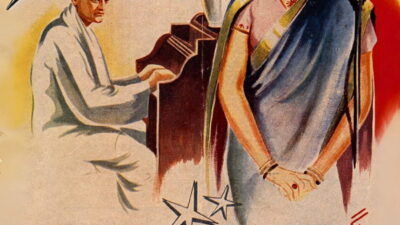
'कोई समझाए ये गीत सखी क्या है' लगन (1941) का एक कानन देवी एकल है, जिसमें आर.सी. बोराल का संगीत और डी.एन. माधोक के बोल हैं। सखी को संबोधित यह गीत फ़िल्म की प्रेम-कथा के भीतर गीत और भाव की प्रकृति पर मनन करता है।
अंग्रेज़ी में पढ़ें · Read in English
'Koi Samjhaye Ye Geet Sakhi Kya Hai' is a Kanan Devi solo from Lagan (1941), with music by R.C. Boral and lyrics by D.N. Madhok. Addressed as confidence to a friend (sakhi), the song reflects on the nature of song and feeling within the film's romantic arc.
काव्य The Poetry
डी.एन. माधोक की रचना 1940 के दशक की शुरुआत के हिंदी फ़िल्म गीत के लिए असामान्य मोड़ लेती है: यह गीत को ही जिज्ञासा का विषय बनाती है। 'कोई समझाए ये गीत सखी क्या है' — 'कोई समझाए, सखी, ये गीत क्या है' — का प्रश्न वक्ता को एक पूर्ण रोमांटिक कथन के भीतर नहीं, बल्कि संगीत-अभिव्यक्ति की प्रकृति के बारे में विस्मय की क्रिया में रखता है। 'समझाए' शब्द (समझाओ, समझने में मदद करो) यह संकेत देता है कि गीत का भाव तार्किक उच्चारण से परे है: इसे केवल अनुभव किया जा सकता है, समझाया नहीं। 'सखी' — मीराबाई से चली आ रही शास्त्रीय हिंदी कविता में स्त्री-मित्र और विश्वासपात्र — यहाँ मध्यस्थ के रूप में नहीं, बल्कि किसी अवर्णनीय बात की साक्षी के रूप में आमंत्रित है। यह आत्म-संदर्भी परिसर — एक गीत जो पूछे कि गीत क्या होता है — भक्ति कविता में शास्त्रीय पूर्वदृष्टांत थे, जहाँ संगीत को स्वयं भक्ति का रूप माना जाता था। माधोक उस विरासत की गंभीरता को धर्मनिरपेक्ष रोमांटिक संदर्भ में बिना फ़िल्मी नंबर की हल्की-फुल्की प्रकृति खोए लाते हैं।
अंग्रेज़ी में पढ़ें · Read in English
D.N. Madhok's lyric takes an unusual turn for a Hindi film song of the early 1940s: it makes the song itself the object of inquiry. The question 'koi samjhaye ye geet sakhi kya hai' — 'who can explain, friend, what this song is?' — places the narrator not inside a completed romantic statement but in the act of wondering about the nature of musical expression. The word 'samjhaye' (explain, help understand) implies that the song's emotion exceeds rational articulation: it cannot be explained, only felt. The sakhi (female friend and confidante), a fixture of classical Hindi poetry from Mirabai onward, is invoked here not as a go-between but as a witness to something ineffable. This is the philosophical strand in D.N. Madhok's lyric writing at its most refined: romantic feeling abstracted into a meditation on feeling itself. The self-referential premise — a song asking what a song is — had classical precedents in bhakti poetry where the sangeet (music) was itself treated as a form of devotion, and Madhok brings that inherited gravity into a secular romantic context without losing the lightness of a film number.
कहानी The Story
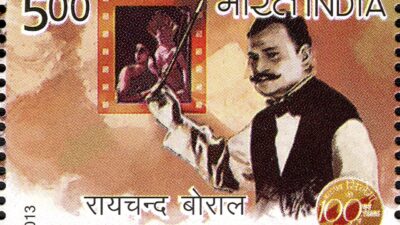
लगन (1941) एक न्यू थिएटर्स निर्माण था जिसने स्टूडियो के तीन सबसे निरंतर सहयोगियों को एक साथ लाया: कानन देवी मुख्य अभिनेत्री के रूप में, आर.सी. बोराल संगीत-निर्देशक के रूप में, और डी.एन. माधोक गीतकार के रूप में। आर.सी. बोराल (राय चंद बोराल, 1903–1981) 1931 में अपनी पहली ध्वनि-फ़िल्मों के बाद से न्यू थिएटर्स की संगीत-पहचान के प्राथमिक वास्तुकार रहे थे, जिन्होंने शास्त्रीय संगीत में प्रशिक्षण और उस अनुशासन को एक फ़िल्म-गीत भाषा में एकीकृत किया था। 1941 तक लगन तनाव में निर्मित थी: द्वितीय विश्व युद्ध ने कच्चे माल की आपूर्ति (रिकॉर्ड के लिए शेलैक, फ़िल्म स्टॉक) बाधित की थी, और कलकत्ता फ़िल्म उद्योग आर्थिक दबाव का सामना कर रहा था। न्यू थिएटर्स का विशिष्ट दृष्टिकोण — साहित्यिक बोल, राग-विकसित रचनाएँ, अनुशासित स्वर-प्रदर्शन — अपने परिपक्व किंतु हल्के रक्षात्मक चरण में था। 'कोई समझाए ये गीत सखी क्या है' इस परिपक्वता का उदाहरण है।
अंग्रेज़ी में पढ़ें · Read in English
Lagan (1941) was a New Theatres production that brought together three of the studio's most consistent collaborators: Kanan Devi as the lead actress, R.C. Boral as music director, and D.N. Madhok as lyricist. R.C. Boral (Rai Chand Boral, 1903–1981) had been the primary architect of New Theatres' musical identity since its first sound films in 1931, having trained in classical music and integrated that discipline into a film-song language. By 1941 Lagan was produced under strain: World War II had disrupted raw material supply (shellac for records, film stock), and the Calcutta film industry faced economic pressure. New Theatres' characteristic approach — literary lyrics, melodically developed compositions, disciplined vocal performance — was in its mature but slightly defensive phase. 'Koi Samjhaye Ye Geet Sakhi Kya Hai' exemplifies this maturity: it is a song that trusts its audience to engage with an unusual premise, confident that New Theatres' viewers had been educated by a decade of the studio's output to appreciate a lyric that asks philosophical rather than purely emotional questions.
विरासत The Legacy
न्यू थिएटर्स के सांस्कृतिक प्रभुत्व के अंतिम चरण से कानन देवी–आर.सी. बोराल की एक रचना के रूप में, यह गीत 1941 के कलकत्ता के उन कुछ निर्माणों से संबंधित है जो विभाजन और आर्थिक उथल-पुथल से पहले स्टूडियो प्रणाली के अंतिम आत्मविश्वासी उच्चारण का प्रतिनिधित्व करते हैं। कानन देवी स्वयं न्यू थिएटर्स छोड़ने के बाद स्वतंत्र भारत की पहली महिला फ़िल्म निर्मात्री में से एक बनीं, और उनका बाद का कार्य सीधे उस अनुशासित परंपरा पर निर्मित समझा जाता है जिसमें बोराल के संगीत ने उन्हें प्रशिक्षित किया था।
अंग्रेज़ी में पढ़ें · Read in English
As a Kanan Devi–R.C. Boral collaboration from the final phase of New Theatres' cultural dominance, this song belongs to a small group of 1941 Calcutta productions that represent the studio system's last confident expression before partition and economic upheaval restructured Indian cinema. Kanan Devi herself became one of independent India's first woman film producers after leaving New Theatres, and her later work is understood as building directly on the disciplined tradition Boral's music had trained her in. Scholars of New Theatres have noted the studio's capacity to integrate philosophical content into popular song form as its most distinctive contribution to Indian film music — and this song stands as an unusually clear instance of that contribution.
वर्गीकरण
Classification- Tempo
- Medium
Genre
अन्य विवरण
More Details- Wikipedia: R. C. Boral
- Wikipedia: Kanan Devi
- Wikipedia: D. N. Madhok
- Wikipedia: New Theatres Ltd
- Barnouw, Erik & Krishnaswamy, S. Indian Film (1963, rev. 1980)
- Ranade, Ashok. Hindi Film Song (2006)
References
रोचक तथ्य
Margin Notesआर.सी. बोराल (राय चंद बोराल, 1903-1981) को उस व्यक्ति के रूप में दर्ज किया गया है जिन्होंने 1935 में न्यू थिएटर्स में भारतीय सिनेमा में पार्श्वगायन तकनीक की शुरुआत की — 'धूप छाँव' को होंठ-सिंक के लिए पूर्व-रिकॉर्डेड संगीत का प्रयोग करने वाली पहली फ़िल्म बताया जाता है — 1941 की लगन तक आते-आते यह तकनीक संपूर्ण उद्योग का सार्वभौमिक मानक बन चुकी थी।
अंग्रेज़ी में पढ़ें · Read in English
R.C. Boral (Rai Chand Boral, 1903–1981) is documented as the person who introduced the playback singing technique to Indian cinema at New Theatres in 1935, with 'Dhoop Chhaon' being cited as the first film to use pre-recorded music for lip-sync — a technique that by 1941's Lagan was the universal industry standard.
डी.एन. मधोक (दीवान नरिंद्र नाथ मधोक, 1900-1975) ने कलकत्ता और बॉम्बे — दोनों की प्रस्तुतियों के लिए गीत लिखे, और वे अपनी पीढ़ी के उन गिने-चुने गीतकारों में से थे जिन्होंने दोनों स्टूडियो-प्रणालियों के बीच सेतु का काम किया; उसी दौर की बॉम्बे टॉकीज़ की कई फ़िल्मों के गीतों का श्रेय भी उन्हें दिया जाता है।
अंग्रेज़ी में पढ़ें · Read in English
D.N. Madhok (Dewan Narindra Nath Madhok, 1900–1975) wrote lyrics across both Calcutta and Bombay productions, one of the few lyricists of his generation to bridge the two studio systems; he is also credited with lyrics for several Bombay Talkies films of the same period.
टॉलीगंज में स्थित न्यू थिएटर्स का कलकत्ता स्टूडियो, अपने निर्माण के समय भारत के सबसे तकनीकी रूप से उन्नत स्टूडियो में से एक था, और इसने 1931 में भारत में साउंड-ऑन-फ़िल्म तकनीक की शुरुआत की; 1941 तक आते-आते यह बॉम्बे की नई सुविधाओं की तुलना में पुराना पड़ने लगा था, हालाँकि इसके संगीत और साहित्यिक मानक तब भी ऊँचे बने रहे।
अंग्रेज़ी में पढ़ें · Read in English
New Theatres' Calcutta studio at Tollygunge was one of the most technically advanced in India when it was built and introduced sound-on-film technology to India in 1931; by 1941 it was showing its age against newer Bombay facilities, though its musical and literary standards remained high.
कानन देवी (1916-1992) बाद में अपनी स्वयं की हिंदी फ़िल्म (नतुन जीबन, 1950 के दशक) का निर्माण करने वाली पहली महिलाओं में से एक बनीं, और उन्हें मरणोपरांत दादासाहेब फाल्के पुरस्कार सम्मान से नवाज़ा गया; उन्हें भारतीय सिनेमा में एक स्वतंत्र कर्ता के रूप में महिला सितारे की एक आधारभूत शख़्सियत माना जाता है।
अंग्रेज़ी में पढ़ें · Read in English
Kanan Devi (1916–1992) later became one of the first women to produce her own Hindi film (Natun Jiban, 1950s) and is honoured with a posthumous Dadasaheb Phalke Award recognition; she is considered a foundational figure of the female star as independent agent in Indian cinema.
1941-43 के दौरान भारतीय फ़िल्म उद्योग पर द्वितीय विश्व युद्ध का प्रभाव गंभीर शेलैक (लाख) की कमी के रूप में सामने आया (78-आरपीएम रिकॉर्ड्स के लिए मुख्य कच्चा माल शेलैक, ब्रिटिश बर्मा के लाख-कीटों से प्राप्त होता था, जिस पर उस समय क़ब्ज़ा हो चुका था) — इस कमी ने एचएमवी और कोलंबिया को रिकॉर्ड-उत्पादन राशन करने पर मजबूर किया, जिसका असर लगन के साउंडट्रैक की रिलीज़-मात्रा पर भी पड़ा।
अंग्रेज़ी में पढ़ें · Read in English
World War II's impact on the Indian film industry in 1941–43 included severe shellac shortages (shellac being the primary material for 78rpm discs, sourced from lac insects in British Burma which was occupied), forcing HMV and Columbia to ration disc production — affecting the release volume of Lagan's soundtrack.
नमूना-पट्टी
The Specimen Table| शीर्षक | कोई समझाए ये गीत सखी क्या है · Koi Samjhaye Ye Geet Sakhi Kya Hai |
|---|---|
| फ़िल्म | लगन · 1941 |
| वर्ष · युग | 1941 |
| गायक | Kanan Devi |
| गीतकार | D. N. Madhok |
| संगीतकार | Rai Chand Boral |
| स्वरूप | एकल महिला |
| गति | मध्यम |
| भाषा | hindi |
| भाव | Reflective · रोमांटिक |
| लोकप्रियता | Popular |
| बोल-स्थिति | केवल झलक |
जुड़े हुए पन्ने
Connected Plates · The Graph Made Visibleअटलस में कोई पन्ना अकेला नहीं — इस गीत से जुड़े गीत, कलाकार, फ़िल्म, राग-ताल-विधा, सब यहाँ से खुलते हैं।
मिलते-जुलते गीत · Related Songs
कलाकार · The Artists
फ़िल्म · The Film
साझा कीजिए · Share this Plate