गीत विंग · गीत-पट्टिका · Song Plate
रूठा है आसमान गुम हो गया महताब
Rootha Hai Aasmaan Gum Ho Gaya Mehtab
आसमान ख़ुद रूठ गया और महताब गुम हो गया — ज़िल्लो ने यह विलाप भारत के पहले बोलते परदे पर सजीव गाया, और फ़िल्म के साथ यह भी खो गया।
भावअविस्मरणीय · उदास · रहस्यमय
भाषाUrdu · Hindi
श्रेय
The Creditsबोल · The Lyrics
पूरे बोल · Full Lyrics
शब्दकोश
Word Meaningsसूत्र-वाक्य · The Hook
सूत्र-वाक्य
आसमान ख़ुद रूठ गया और महताब गुम हो गया — ज़िल्लो ने यह विलाप भारत के पहले बोलते परदे पर सजीव गाया, और फ़िल्म के साथ यह भी खो गया।
In EnglishThe sky itself has sulked and the moon has vanished — the lament Zillo sang live on India's first talking screen, now lost with the film.
पट्टिका-लेख
The Monographपरिचय Overview
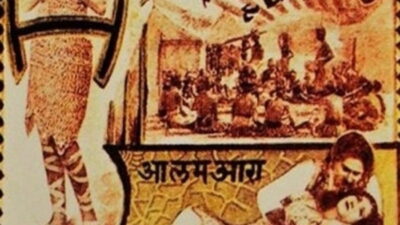
'रूठा है आसमान गुम हो गया महताब' भारत की पहली सवाक् फ़िल्म आलम आरा (1931) के सात गीतों में से एक है। इसका श्रेय ज़िल्लो (जिल्लो भी) को दिया जाता है, जो फ़िल्म में एक छोटी भूमिका में थीं। यह गीत शास्त्रीय उर्दू विलाप-परम्परा का — जिसमें चाँद और आसमान मानवीय दुख के साक्षी बनते हैं — भारतीय चलचित्र-मंच पर पहली बार प्रत्यारोपण है।
अंग्रेज़ी में पढ़ें · Read in English
'Rootha Hai Aasmaan Gum Ho Gaya Mehtab' is one of the seven songs of Alam Ara (1931), India's first sound film. Attributed to Zillo (also known as Jillo), a secondary performer in the film, it belongs to the classical Urdu lament tradition — the moon and sky as witnesses to human grief — transplanted onto a motion-picture stage for the first time in Indian history.
संगीत The Music
फ़िरोज़शाह मिस्त्री और बी. ईरानी ने आलम आरा का संगीत-निर्देशन ऐसी परिस्थितियों में किया जो बाद की पीढ़ियों के लिए अकल्पनीय हैं। कोई पार्श्वगान नहीं था; कोई अलग रिकॉर्डिंग सत्र नहीं; कोई स्टूडियो मिश्रण नहीं। हारमोनियम और तबला कैमरे के ठीक बाहर रखे गए, कलाकार पूरी आवाज़ में गाते, और टैनार कैमरा सब कुछ एक साथ फ़िल्म की एक ही पट्टी पर उतारता। इस शीर्षक की छवियाँ — आसमान, महताब, रात — रात या शाम की शास्त्रीय विलाप-शैली की ओर इशारा करती हैं, हालाँकि आलम आरा के किसी गीत की स्वरलिपि या प्रतिलिपि कभी प्रकाशित नहीं हुई।
अंग्रेज़ी में पढ़ें · Read in English
Ferozshah Mistri and B. Irani shared the music direction for Alam Ara, working under conditions that would be unrecognisable to later generations of Hindi film musicians. There was no playback system; no separate recording session; no studio mixing. The harmonium and tabla were placed just out of camera-frame, the performers sang with full voice, and the Tanar single-system camera captured everything simultaneously onto a single strip of film. The imagery of this title — sky, moon, night — suggests a song of the raat or shaam variety, the classical evening-lament mode, though no musical notation or transcription of any Alam Ara song was ever published.
काव्य The Poetry
पहली पंक्ति शास्त्रीय उर्दू काव्य की दो सबसे शक्तिशाली लाक्षणिकताओं को एक ही साँस में समेट लेती है: रूठना (किसी प्रिय या देव का कृपा रोकना) और महताब (चाँद, प्रिय के मुख का प्रतीक)। नाटककार-गीतकार जोसेफ़ डेविड, जिन्होंने आलम आरा के सातों गीत लिखे, पारसी रंगमंच की परम्परा से आते थे जहाँ ऐसी छवियाँ सबसे नाटकीय दृश्यों का सामान्य हिस्सा थीं। आसमान को — स्वयं आकाश को — रूठने वाले की जगह बिठाकर पंक्ति व्यक्तिगत दुख को ब्रह्मांडीय स्तर पर ले जाती है: सृष्टि ने ख़ुद गायिका से मुँह फेर लिया है।
अंग्रेज़ी में पढ़ें · Read in English
The opening line folds two of classical Urdu poetry's most powerful tropes into a single breath: rootha (to sulk, said of a beloved or a god withholding grace) and mehtab (the moon, emblem of the beloved's face). Joseph David, the playwright-lyricist who wrote Alam Ara's seven songs, came from the Parsi theatre tradition, where such imagery was stock-in-trade for the most melodramatic scenes. In using aasmaan — the sky itself — as the sulking party, the line elevates the personal grief to the cosmological: the universe itself has turned its face away from the singer.
कहानी The Story
आलम आरा की कथा अन्यायपूर्वक क़ैद किए गए सेनापति आदिल और उसकी बेटी आलम आरा के इर्द-गिर्द घूमती थी, जो बंजारे नट-नटनियों के बीच छिपकर पली-बढ़ी। जिस दृश्य में आसमान और महताब ग़ायब हो जाते हैं, वह गहरे अलगाव का क्षण हो सकता है — शायद आलम आरा का निर्वासन, या किसी गौण पात्र का अन्याय के भाव को आवाज़ देना। यह कि यह गीत नायिका ज़ुबैदा को नहीं बल्कि ज़िल्लो को दिया गया, यह सुझाता है कि यह किसी सहायक दृश्य या अंतराल से था — हालाँकि कोई समकालीन विवरण इसकी नाटकीय स्थिति दर्ज नहीं करता।
अंग्रेज़ी में पढ़ें · Read in English
Alam Ara's plot revolved around Adil, a general unjustly imprisoned by the scheming queen Dilbahar, and his daughter Alam Ara, raised in secret among nomadic performers. A lament in which sky and moon vanish would suit a moment of deepest isolation — possibly Alam Ara herself in exile, or a secondary character voicing the mood of injustice that pervades the film. That Zillo, rather than the lead Zubeida, was assigned this song suggests it belonged to a supporting scene or interlude, though no contemporary account records the exact dramatic placement.
विरासत The Legacy
आलम आरा के सात गीतों में यह सबसे स्पष्ट रूप से रागसंगीत-काव्य की विधा में है, न कि लोकप्रिय गली-गीत शैली में। कि फ़िरोज़शाह मिस्त्री ने एक ही साउंडट्रैक पर दोनों रजिस्टरों में रचा, यह उस बात का पूर्वाभास है जो दशकों तक हिंदी फ़िल्म-संगीत को परिभाषित करने वाली थी: वह शैलीगत बहुलता जो एक ही स्कोर में क़व्वाली से लेकर शास्त्रीय विलाप और लोक-भक्ति तक आज़ादी से आती-जाती थी। फ़िल्मोग्राफ़ियों में ज़िल्लो का नाम इस गीत के साथ भारतीय सिनेमा इतिहास के आरंभिक दर्ज गायक-श्रेयों में से एक है — भले ही वह आवाज़ अब नहीं रही।
अंग्रेज़ी में पढ़ें · Read in English
Among the seven Alam Ara songs, this is the one most firmly in the raga-poetry idiom rather than the popular street-song mode. That Ferozshah Mistri composed in both registers on the same soundtrack anticipates what would define Hindi film music for decades: the stylistic plurality that moved freely from qawwali to classical lament to folk-devotional within a single score. Zillo's name, appearing in filmographies for this song, represents one of the earliest documented singer credits in Indian cinema history — even if the voice itself is gone.
वर्गीकरण
ClassificationGenre
अन्य विवरण
More Details- Alam Ara — Wikipedia (soundtrack listing)
References
रोचक तथ्य
Margin Notesज़िल्लो (जिल्लो या ज़िल्लूबाई भी) आलम आरा की उन कई महिला सहायक कलाकारों में से थीं जो पारसी-रंगमंच की दुनिया से आई थीं; 1931 का फ़िल्म उद्योग अभी तक अभिनय और गायन के बीच वह सख़्त अलगाव नहीं अपना सका था जो पार्श्वगान तकनीक बाद में लाने वाली थी।
अंग्रेज़ी में पढ़ें · Read in English
Zillo (also spelled Jillo or Zillubai) was one of several female supporting performers in Alam Ara drawn from the Parsi-theatre world; the film industry of 1931 had not yet developed the strict separation between acting and singing that playback technology would later impose.
न ऑडियो बचा है, न आलम आरा का कोई प्रिंट — यह इसे विश्व सिनेमा इतिहास की सबसे महत्त्वपूर्ण खोई हुई फ़िल्मों में से एक बनाता है। इसके गीतों में से जो कुछ बचा है वह उस युग की फ़िल्मोग्राफ़ियों और व्यापारिक पत्रिकाओं में दर्ज शीर्षक-पंक्तियाँ हैं।
अंग्रेज़ी में पढ़ें · Read in English
Neither audio nor film print of Alam Ara has survived — making it one of the most significant lost films in world cinema history. All that remains of its songs are the title lines recorded in filmographies and trade press of the era.
नमूना-पट्टी
The Specimen Table| शीर्षक | रूठा है आसमान गुम हो गया महताब · Rootha Hai Aasmaan Gum Ho Gaya Mehtab |
|---|---|
| फ़िल्म | आलम आरा · 1931 |
| वर्ष · युग | 1931 — Early Talkie Era |
| गायक | ज़िल्लो |
| गीतकार | Joseph David |
| संगीतकार | Ferozshah M. Mistri |
| भाषा | Urdu · Hindi |
| वाद्य | harmonium · tabla |
| भाव | अविस्मरणीय · उदास · रहस्यमय |
| बोल-स्थिति | सार्वजनिक |
जुड़े हुए पन्ने
Connected Plates · The Graph Made Visibleअटलस में कोई पन्ना अकेला नहीं — इस गीत से जुड़े गीत, कलाकार, फ़िल्म, राग-ताल-विधा, सब यहाँ से खुलते हैं।
कलाकार · The Artists
फ़िल्म · The Film
साझा कीजिए · Share this Plate