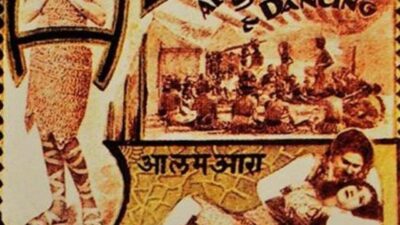
गीत विंग · गीत-पट्टिका · Song Plate
आनंददायिनी रूपमती हृदय हारिणी तू
Anandadaayini Roopmati Hriday Harini Tu
आनंद और सौंदर्य की वाहिका को एक पुकार — 1931 की एक खोई हुई पौराणिक फ़िल्म के लिए गाई, अब केवल शीर्षक में जीवित।
भावभक्ति · रोमांटिक
भाषाHindi · Sanskrit-influenced
श्रेय
The Creditsबोल · The Lyrics
पूरे बोल · Full Lyrics
शब्दकोश
Word Meaningsसूत्र-वाक्य · The Hook
सूत्र-वाक्य
आनंद और सौंदर्य की वाहिका को एक पुकार — 1931 की एक खोई हुई पौराणिक फ़िल्म के लिए गाई, अब केवल शीर्षक में जीवित।
In EnglishAn address to the beautiful one who brings joy and steals the heart — sung in 1931 for a lost mythological film, now surviving only as a title.
पट्टिका-लेख
The Monographपरिचय Overview
'आनंददायिनी रूपमती हृदय हारिणी तू' सगर मूवीटोन की पौराणिक फ़िल्म 'वीर अभिमन्यु' (1931) के ग्यारह में से पाँच दर्ज गीत-शीर्षकों में से एक है, जिनका संगीत एस. पी. राणे ने रचा था। फ़िल्म खो चुकी है; कोई ऑडियो नहीं बचा। गायकों का विवरण अभिलेखित नहीं है।
अंग्रेज़ी में पढ़ें · Read in English
'Anandadaayini Roopmati Hriday Harini Tu' is one of five documented song titles from Veer Abhimanyu (1931), a Sagar Movietone mythological with eleven songs composed by S.P. Rane. The film is lost; no audio survives. Singers are undocumented.
संगीत The Music
गीत-शीर्षक का संस्कृत-प्रभावित हिंदी — आनंददायिनी, हृदय हारिणी — शास्त्रीय और भक्ति संगीत की जड़ों की ओर संकेत करता है। एस. पी. राणे का 'वीर अभिमन्यु' के लिए संगीत मराठी और हिंदी भक्ति परंपराओं से प्रेरित रहा होगा, और 1931 की हर टॉकी की तरह हारमोनियम-तबला की सजीव रिकॉर्डिंग शैली में ढला होगा। सभी संगीत-विवरण फ़िल्म के साथ खो गए।
अंग्रेज़ी में पढ़ें · Read in English
The song title's Sanskrit-inflected Hindi — anandadaayini, hriday harini — points toward a melodic idiom rooted in classical and devotional song. S.P. Rane's score for Veer Abhimanyu would have drawn on the traditions of Marathi and Hindi devotional music that Sagar Movietone's Bombay context supplied, probably using harmonium and tabla in the live-recording style universal to 1931 talkie productions. All musical details are lost with the film.
काव्य The Poetry
शीर्षक संस्कृत प्रशस्ति-काव्य की संबोधन-शैली का अनुसरण करता है — आनंददायिनी, रूपमती, हृदय हारिणी — किसी स्त्री या दिव्य पात्र को संबोधित तीन संस्कृत समास-विशेषण। स्तंभित संस्कृत समासों की यह शीर्षक-शैली आरंभिक पौराणिक टॉकीज़ की पहचान थी, जिन्हें पारसी रंगमंच के अभ्यस्त दर्शकों तक अपना भक्ति-स्वर तुरंत पहुँचाना होता था।
अंग्रेज़ी में पढ़ें · Read in English
The title follows the vocative structure of Sanskrit praise poetry — anandadaayini (joy-bestowing), roopmati (beautiful-formed), hriday harini (heart-stealing) — three compound epithets addressed to a woman or divine figure. This pattern of stacked Sanskrit compounds as song titles was a trademark of early mythological talkies, which needed to signal their devotional register quickly to audiences used to the Parsi theatre tradition.
कहानी The Story
'वीर अभिमन्यु' के महाभारत-संदर्भ में स्त्री-सौंदर्य और माधुर्य की प्रशस्ति में गाया गीत उत्तरा — अभिमन्यु की पत्नी — या सुभद्रा, उनकी माता, को संबोधित हो सकता है। फ़िल्म के ग्यारह गीतों में इस गीत की नाटकीय स्थिति अभिलेखित नहीं है, किंतु इसका संबोधन-स्वर किसी प्रेम या भक्ति दृश्य की ओर इंगित करता है, युद्ध-प्रसंग की ओर नहीं।
अंग्रेज़ी में पढ़ें · Read in English
In the Mahabharata context of Veer Abhimanyu, a song praising feminine beauty and grace could address either Uttara — Abhimanyu's wife and Arjuna's pupil in disguise — or Subhadra, his mother and Krishna's sister. The dramatic placement of this song within the film's eleven-song programme is undocumented, but its praise-address register suggests a romantic or devotional scene rather than a battle context.
विरासत The Legacy
यह गीत 'वीर अभिमन्यु' की फ़िल्मोग्राफ़ियों में केवल शीर्षक के रूप में दर्ज है। फ़िल्म के ग्यारह गीतों में से बचे पाँच शीर्षकों के साथ यह उस पतले साक्ष्य का हिस्सा है जो यह सिद्ध करता है कि सगर मूवीटोन की यह पौराणिक फ़िल्म अस्तित्व में थी और भरपूर संगीत से सजी थी। इसका संस्कृत-आधारित स्वर याद दिलाता है कि 1931 की हिंदी पौराणिक सिनेमा में एक साहित्यिक औपचारिकता थी जो दशक बढ़ने के साथ धीरे-धीरे सरल होती गई।
अंग्रेज़ी में पढ़ें · Read in English
The song is documented only by title in filmographies of Veer Abhimanyu. Along with the four other surviving song titles from the film's eleven, it forms part of the slim evidence that this Sagar Movietone mythological existed and was richly scored. Its Sanskrit register is a reminder that 1931 Hindi mythological cinema carried a literary formality that would gradually simplify as the decade advanced.
वर्गीकरण
ClassificationGenre
अन्य विवरण
More Details- Veer Abhimanyu (1931) — HFGK Vol.I song listing
References
रोचक तथ्य
Margin Notesशीर्षक के तीन संस्कृत विशेषण — आनंददायिनी, रूपमती, हृदय हारिणी — संस्कृत काव्य परंपरा से प्रभावित आरंभिक पौराणिक टॉकी शीर्षकों में प्रचलित एक पद्धति का अनुसरण करते हैं।
अंग्रेज़ी में पढ़ें · Read in English
The title's three Sanskrit epithets — anandadaayini, roopmati, hriday harini — follow a pattern common in early mythological talkie titles influenced by Sanskrit poetic convention.
नमूना-पट्टी
The Specimen Table| शीर्षक | आनंददायिनी रूपमती हृदय हारिणी तू · Anandadaayini Roopmati Hriday Harini Tu |
|---|---|
| फ़िल्म | वीर अभिमन्यु · 1931 |
| वर्ष · युग | 1931 — Early Talkie Era |
| संगीतकार | एस. पी. राणे |
| भाषा | Hindi · Sanskrit-influenced |
| वाद्य | harmonium · tabla |
| भाव | भक्ति · रोमांटिक |
| बोल-स्थिति | सार्वजनिक |
जुड़े हुए पन्ने
Connected Plates · The Graph Made Visibleअटलस में कोई पन्ना अकेला नहीं — इस गीत से जुड़े गीत, कलाकार, फ़िल्म, राग-ताल-विधा, सब यहाँ से खुलते हैं।
फ़िल्म · The Film
साझा कीजिए · Share this Plate