गीत विंग · गीत-पट्टिका · Song Plate
पांडुरंगा ध्यानी, पांडुरंगा मनी
Panduranga Dhyani, Panduranga Mani
“पांडुरंगा ध्यानी, पांडुरंगा मनी” — 1936 की फ़िल्म संत तुकाराम का एक गीत। संगीत: केशवराव भोले। बोल: तुकाराम (17वीं सदी के अभंग); एक गीत शांताराम आठवले द्वारा। गायन: विष्णुपंत पागनीस।
भावभक्ति · शांत · आध्यात्मिक
भाषाhindi-marathi
श्रेय
The Creditsसूत्र-वाक्य · The Hook
सूत्र-वाक्य
“पांडुरंगा ध्यानी, पांडुरंगा मनी” — 1936 की फ़िल्म संत तुकाराम का एक गीत। संगीत: केशवराव भोले। बोल: तुकाराम (17वीं सदी के अभंग); एक गीत शांताराम आठवले द्वारा। गायन: विष्णुपंत पागनीस।
In English“Panduranga Dhyani, Panduranga Mani” — a song from the 1936 film Sant Tukaram. Music: Keshavrao Bhole. Lyrics: Tukaram (17th c. abhangas); one song by Shantaram Athavale. Sung by Vishnupant Pagnis.
पट्टिका-लेख
The Monographपरिचय Overview
“पांडुरंगा ध्यानी, पांडुरंगा मनी” 1936 की फ़िल्म संत तुकाराम के गीतों में से एक है। इसका संगीत केशवराव भोले ने दिया। बोल तुकाराम (17वीं सदी के अभंग); एक गीत शांताराम आठवले द्वारा के हैं। इसे विष्णुपंत पागनीस ने गाया।
अंग्रेज़ी में पढ़ें · Read in English
“Panduranga Dhyani, Panduranga Mani” is one of the songs from Sant Tukaram (1936). The music is by Keshavrao Bhole. The lyrics are by Tukaram (17th c. abhangas); one song by Shantaram Athavale. It was performed by Vishnupant Pagnis.
संगीत The Music
“पांडुरंगा ध्यानी, पांडुरंगा मनी” का संगीत संत तुकाराम (1936) के लिए केशवराव भोले ने रचा। स्वर: विष्णुपंत पागनीस।
अंग्रेज़ी में पढ़ें · Read in English
“Panduranga Dhyani, Panduranga Mani” was set to music by Keshavrao Bhole for the 1936 film Sant Tukaram. It is rendered by Vishnupant Pagnis.
काव्य The Poetry
“पांडुरंगा ध्यानी, पांडुरंगा मनी” के बोल तुकाराम (17वीं सदी के अभंग); एक गीत शांताराम आठवले द्वारा ने लिखे।
अंग्रेज़ी में पढ़ें · Read in English
The words of “Panduranga Dhyani, Panduranga Mani” were written by Tukaram (17th c. abhangas); one song by Shantaram Athavale.
कहानी The Story
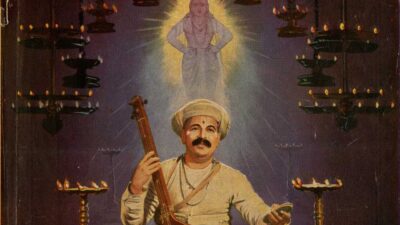
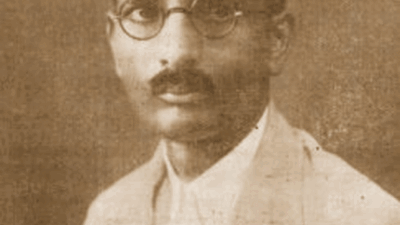
संत तुकाराम (1936) का निर्माण पुणे की प्रभात फ़िल्म कंपनी ने किया और इसे वी. दामले और एस. फतेहलाल ने सह-निर्देशित किया। मराठी रंगमंच के अभिनेता विष्णुपंत पागनीस (1892–1943) को तुकाराम के रूप में चुना गया जब निर्माताओं ने निष्कर्ष निकाला कि कोई भी फ़िल्म अभिनेता भूमिका की माँग की भक्तिमय गहराई से मेल नहीं खा सकता; पागनीस ने शूट का अधिकांश समय अर्ध-तपस्वी परिस्थितियों में, उपवास करते हुए और भक्ति-अनुशासन बनाए रखते हुए बिताया। केशवराव भोले (1896–1967), संगीत निर्देशक, स्वयं एक शास्त्रीय प्रशिक्षित गायक थे — विष्णु दिगंबर पलुस्कर के शिष्य — और उन्होंने अभंगों को फ़िल्मी गीतों के रूप में नहीं बल्कि भक्ति-रूपों के रूप में देखा जिनकी अपनी परंपरा में सम्मान किया जाना था। 'पांडुरंगा ध्यानी, पांडुरंगा मनी' का अर्थ है 'पांडुरंग मेरे ध्यान में हों, पांडुरंग मेरे मन में भरें' — वारकरी का पंढरपुर के विठ्ठल पर ध्यान केंद्रित करने का केंद्रीय संकल्प। अभंग वारकरी कीर्तन शैली में प्रस्तुत है: प्रश्नोत्तर ढाँचा, खंजीरी और ताल का छोटा समूह, आवाज़ बिना ऑर्केस्ट्रल विस्तार के।
अंग्रेज़ी में पढ़ें · Read in English
Sant Tukaram (1936) was produced by Prabhat Film Company, Pune, and co-directed by V. Damle and S. Fatehlal. Vishnupant Pagnis (1892–1943), a Marathi stage actor, was cast as Tukaram after the producers concluded that no film actor could match the devotional depth the role demanded; Pagnis lived much of the shoot in semi-ascetic conditions, fasting and maintaining a devotional discipline intended to bring him genuinely close to the poet-saint's interior life. Keshavrao Bhole (1896–1967), the music director, was himself a classically trained vocalist — a disciple of Vishnu Digambar Paluskar — and approached the abhangas not as film songs but as devotional forms to be honoured within their own tradition. 'Panduranga Dhyani, Panduranga Mani' translates as 'May Panduranga be in my meditation, may Panduranga fill my mind' — the Warkari's central affirmation of focus on Vitthal (Panduranga) of Pandharpur. The abhanga is rendered in the Warkari kirtan style: call-response structure, a small ensemble of khanjira (tambourine) and tala (cymbals), the voice leading without orchestral elaboration.
विरासत The Legacy
संत तुकाराम ने 1937 में वेनिस अंतरराष्ट्रीय फ़िल्म महोत्सव में गोल्डन पाम (सर्वश्रेष्ठ फ़िल्म) जीती — किसी भारतीय फ़िल्म को प्रमुख अंतरराष्ट्रीय मान्यता मिलने का पहला उदाहरण। इस सम्मान ने वारकरी संगीत-परंपरा और केशवराव भोले की व्यवस्थाओं की ओर वैश्विक ध्यान आकर्षित किया। भारत में, फ़िल्म ने अभंग को मुख्यतः ग्रामीण और मंदिर-आधारित रूप से एक सिनेमाई विधा में बदल दिया। इसके गीत बाद की मराठी और हिंदी भक्ति-फ़िल्मों के लिए मानक संदर्भ बने — एक परंपरा जो संत ज्ञानेश्वर (1940), संत एकनाथ (1946) और बाद की मराठी प्रस्तुतियों से होकर गुज़रती है।
अंग्रेज़ी में पढ़ें · Read in English
Sant Tukaram won the Golden Palm (best film) at the Venice International Film Festival in 1937 — the first Indian film to receive major international recognition. This honour brought global attention to the Warkari musical tradition and to Keshavrao Bhole's arrangements, demonstrating that Indian classical-devotional film music could command serious international critical respect. Within India, the film transformed the abhanga from a primarily rural and temple-based form into a cinematic genre. Its songs became the standard reference for subsequent Marathi and Hindi devotional films dealing with the Varkari saints — a tradition that runs through Sant Dnyaneshwar (1940), Sant Eknath (1946) and later Marathi productions. Vishnupant Pagnis's identification with the role of Tukaram was complete enough that he is documented to have experienced serious psychological distress after the film's completion, unable to return to ordinary theatrical roles.
वर्गीकरण
ClassificationGenre
अन्य विवरण
More Details- Sant Tukaram (1936) — Prabhat Film Company; Venice Film Festival 1937 award; Wikipedia EN
- Vishnupant Pagnis — Wikipedia EN
- Keshavrao Bhole — Wikipedia EN; Prabhat Film Company history
- Warkari tradition — Wikipedia EN; Pandharpur pilgrimage
- Tukaram (poet, 1609–1650) — Wikipedia EN
References
रोचक तथ्य
Margin Notesसंत तुकाराम (1936) कोई बड़ा अंतरराष्ट्रीय पुरस्कार जीतने वाली पहली भारतीय फ़िल्म थी — 1937 में वेनिस फ़िल्म समारोह का पुरस्कार — जिसने वारकरी भक्ति-संगीत परंपरा की ओर वैश्विक ध्यान आकर्षित किया।
अंग्रेज़ी में पढ़ें · Read in English
Sant Tukaram (1936) was the first Indian film to win an international major prize — the Venice Film Festival's award in 1937 — bringing global attention to the Warkari devotional music tradition.
विष्णुपंत पागनिस के बारे में कहा जाता है कि उन्होंने फ़िल्मांकन के दौरान उपवास रखा और अनुष्ठानिक शुद्धता बनाए रखी — वे लगभग तपस्वी जीवन जीते हुए तुकाराम की भक्ति-अवस्था में उतरे — 1930 के दशक के भारतीय सिनेमा में यह मेथड-एक्टिंग का एक दुर्लभ उदाहरण था।
अंग्रेज़ी में पढ़ें · Read in English
Vishnupant Pagnis reportedly fasted and maintained ritual purity during shooting, living in near-ascetic conditions to inhabit Tukaram's devotional state — a method-acting approach rare in 1930s Indian cinema.
संगीत निर्देशक केशवराव भोले, विष्णु दिगंबर पलुस्कर के शिष्य थे — जो शास्त्रीय संगीत को राष्ट्रीय सांस्कृतिक संपदा के रूप में प्रतिष्ठित करने के सबसे प्रमुख प्रचारक थे — यही बात उन्हें भक्ति-संगीत केंद्रित फ़िल्म के लिए एक आदर्श विकल्प बनाती थी।
अंग्रेज़ी में पढ़ें · Read in English
Keshavrao Bhole, the music director, was a disciple of Vishnu Digambar Paluskar — India's foremost campaigner for classical music as a national cultural resource — which made him an ideal choice for a film centered on devotional music.
तुकाराम के अभंग (1609 – लगभग 1650) मराठी में रचे गए थे; फ़िल्म में मूल मराठी पदों का ही प्रयोग किया गया, जिसका अर्थ यह था कि हिंदी-भाषी क्षेत्रों के दर्शकों को इस फ़िल्म के माध्यम से पहली बार वारकरी परंपरा से एक क्षेत्रीय भाषा में परिचय हुआ।
अंग्रेज़ी में पढ़ें · Read in English
Tukaram's abhangas (1609–c.1650) were composed in Marathi; the film used the original Marathi texts, which meant audiences in Hindi-speaking regions encountered the Warkari tradition in a regional language for the first time through this film.
'पांडुरंग' (श्वेत अथवा गौरवर्ण) शब्द पंढरपुर के विट्ठल के अनेक नामों में से एक है — जो वारकरी संप्रदाय के आराध्य देव हैं — जिनकी वार्षिक तीर्थयात्रा (वारी) आज भी लाखों भक्तों को आकर्षित करती है।
अंग्रेज़ी में पढ़ें · Read in English
The word 'Panduranga' (white or fair one) is one of the many names of Vitthal of Pandharpur — the presiding deity of the Warkari sect — whose annual pilgrimage (Wari) draws hundreds of thousands of devotees even today.
नमूना-पट्टी
The Specimen Table| शीर्षक | पांडुरंगा ध्यानी, पांडुरंगा मनी · Panduranga Dhyani, Panduranga Mani |
|---|---|
| फ़िल्म | संत तुकाराम · 1936 |
| वर्ष · युग | 1936 |
| गायक | Vishnupant Pagnis |
| गीतकार | तुकाराम (17वीं सदी के अभंग); एक गीत शांताराम आठवले द्वारा |
| संगीतकार | Keshavrao Bhole |
| भाषा | hindi-marathi |
| भाव | भक्ति · शांत · आध्यात्मिक |
| लोकप्रियता | Very_popular |
| बोल-स्थिति | सार्वजनिक |
जुड़े हुए पन्ने
Connected Plates · The Graph Made Visibleअटलस में कोई पन्ना अकेला नहीं — इस गीत से जुड़े गीत, कलाकार, फ़िल्म, राग-ताल-विधा, सब यहाँ से खुलते हैं।
मिलते-जुलते गीत · Related Songs
कलाकार · The Artists
फ़िल्म · The Film
साझा कीजिए · Share this Plate