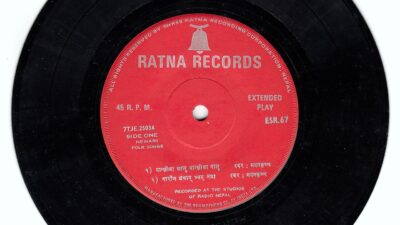
गीत विंग · गीत-पट्टिका · Song Plate
बागेश्री ख़याल — पिया बिन नहीं आवत चैन (केसरबाई केरकर)
Bageshri Khayal — Piya Bin Nahin Aavat Chain (Kesarbai Kerkar)
पिया बिन नहीं आवत चैन — केसरबाई की बागेश्री चाहत की ज्यामिति को नैदानिक सटीकता के साथ उजागर करती है।
भावविरह · उदास · दार्शनिक
भाषाbraj
श्रेय
The Creditsबोल · The Lyrics
पूरे बोल · Full Lyrics
हो बालम मोरे मन की पीर कहूँ किसे
Ho balam more man ki peer kahun kise
सूत्र-वाक्य · The Hook
सूत्र-वाक्य
पिया बिन नहीं आवत चैन — केसरबाई की बागेश्री चाहत की ज्यामिति को नैदानिक सटीकता के साथ उजागर करती है।
In EnglishWithout my love there is no peace — Kesarbai's Bageshri unfolds the geometry of longing with clinical precision.
पट्टिका-लेख
The Monographपरिचय Overview
बागेश्री विरह-रात का राग है — उसके कोमल गंधार और धैवत एक विशेष अँधेरा रचते हैं जो जयपुर-अतरौली घराने का स्वाभाविक क्षेत्र है। लगभग 1938 की यह एचएमवी रिकॉर्डिंग केसरबाई को अपनी शक्ति के शिखर पर दिखाती है: विलंबित भाग राग की संरचना पर एक निरंतर ध्यान है, प्रत्येक वाक्यांश उस व्यवस्थित बुद्धिमत्ता के साथ विकसित जो घराना माँगता है, फिर द्रुत भाग अपने चुनौतीपूर्ण तान अंशों के साथ आता है। बंदिश पाठ — 'पिया बिन नहीं आवत चैन' — विरह परंपरा में सबसे अधिक गाए जाने वालों में से है।
अंग्रेज़ी में पढ़ें · Read in English
Bageshri is the raag of the separation night — its komal gandhar and dhaivat create a particular darkness that is the Jaipur-Atrauli gharana's natural territory. This HMV recording from around 1938 shows Kesarbai at the height of her powers: the vilambit portion is a sustained meditation on the rag's architecture, each phrase developed with the methodical intelligence that the gharana demands, before the drut section arrives with its challenging taan passages. The bandish text — 'without my beloved there is no peace' — is among the most sung in the virah (separation) tradition.
संगीत The Music
बागेश्री के प्रति जयपुर-अतरौली दृष्टिकोण गर्म आरोह के बजाय कोमल स्वरों पर ज़ोर देता है: जहाँ दूसरे घराने बागेश्री में सांत्वना पाते हैं, जयपुर अपनी बौद्धिक धार पाता है। द्रुत भाग में केसरबाई की तानें रिकॉर्ड किए गए शास्त्रीय भंडार के तकनीकी रूप से माँग करने वाले अंशों में से हैं।
अंग्रेज़ी में पढ़ें · Read in English
The Jaipur-Atrauli approach to Bageshri emphasises the komal swaras rather than the warm ascent: where other gharanas find comfort in Bageshri, Jaipur finds its intellectual edge. Kesarbai's taans in the drut portion are among the technically demanding passages of the recorded classical corpus.
काव्य The Poetry
बंदिश पाठ 'पिया बिन नहीं आवत चैन, हो बालम मोरे मन की पीर कहूँ किसे' ब्रज भाषा भक्ति काव्य की विरह विधा से है — एक ऐसी विधा जिसमें 'पिया' (प्रियतम) एक साथ मानव प्रेमी और दैवीय दोनों है। शब्द 'चैन' (शांति, विश्राम) अपने संस्कृत-व्युत्पन्न अर्थ (सुकून) और अपने फ़ारसी-अरबी अर्थ (ख़ामोशी) दोनों में आता है — पाठ को देर-मध्यकालीन दरबारी भंडार की वह मिश्रित भाषाई विशेषता देता है जिससे ख़याल की बंदिशें खींचती हैं। दूसरी पंक्ति — 'मन की पीर किसे बताऊँ' — शास्त्रीय विरहिणी मुद्रा स्थापित करती है: वह विरह-विछिन्न नारी जिसके आंतरिक दुख का कोई श्रोता नहीं। ख़याल में, बंदिश एक स्प्रिंगबोर्ड है, उपसेव्य पाठ नहीं; केसरबाई की विस्तृत तानें, मुर्की अलंकरण, और मींड कार्य एक विषयगत बीज पर विकास हैं, शब्दों के चित्रण नहीं। फिर भी शब्द उस भावनात्मक परिदृश्य को स्थापित करते हैं जिसमें सुधार संचालित होता है: एक अँधेरा बिना विश्राम, एक तड़प बिना वस्तु।
अंग्रेज़ी में पढ़ें · Read in English
The bandish text 'Piya Bin Nahin Aavat Chain, Ho Balam More Man Ki Peer Kahun Kise' belongs to the virah (separation) genre of Braj Bhasha devotional verse — a genre in which the 'piya' (beloved) is simultaneously the human lover and the divine. The word 'chain' (peace, restfulness) appears in both its Sanskrit-derived sense (comfort) and its Perso-Arabic sense (quiet), giving the text a composite linguistic character typical of late-medieval court repertoire that Khayal bandishes draw from. The second line — 'to whom shall I tell the pain of my heart, O beloved' — establishes the classic virahini posture: the separated woman whose interior suffering has no audience. In Khayal, the bandish is a springboard, not a text to be served; Kesarbai's elaborate taan passages, murki ornaments, and meend work are developments on a thematic seed, not illustrations of the words. Yet the words ground the emotional landscape in which the improvisation operates: a darkness without rest, a longing without object.
कहानी The Story
केसरबाई केरकर (1892–1977) उस्ताद अल्लादिया ख़ाँ (1855–1946) की शिष्या थीं — जयपुर-अतरौली घराने के आधुनिक रूप के संस्थापक। वह इस कठोर परंपरा में कठोर प्रशिक्षण पाने वाली मुट्ठी भर महिलाओं में से एक थीं, और अल्लादिया ख़ाँ ने कथित रूप से उन्हें अपना सर्वश्रेष्ठ शिष्य माना। 1930 के दशक के उत्तरार्ध में उनके एचएमवी रिकॉर्डिंग सत्र बंबई में कंपनी के धोबी तालाव स्टूडियो में आयोजित हुए — एक तंग लेकिन ध्वनिकी रूप से पर्याप्त स्थान जहाँ रिकॉर्डिंग तकनीशियनों ने उनकी आवाज़ के ऊपरी आंशिकों को पकड़ने के लिए एकल माइक्रोफ़ोन लगाना सीखा था, जो राग के प्रभाव के लिए आवश्यक थे। लगभग 1938 की अवधि उनकी चरम रिकॉर्डिंग उत्पादकता के साथ मेल खाती थी: वह अपने चालीस के मध्य में, शारीरिक और कलात्मक शक्तियों के उत्कर्ष पर थीं।
अंग्रेज़ी में पढ़ें · Read in English
Kesarbai Kerkar (1892–1977) was a disciple of Ustad Alladiya Khan (1855–1946), the founder of the Jaipur-Atrauli gharana's modern form. She was one of only a handful of women to receive rigorous training in this rigorous tradition, and Alladiya Khan reportedly considered her his finest student. Her HMV recording sessions in the late 1930s were conducted in Bombay at the company's studio on Dhobi Talao — a cramped but acoustically adequate space where the recording technicians had learned to place the single microphone to capture her voice's upper partials, which were essential to the raga's effect. The c.1938 period coincided with her peak recording productivity: she was in her mid-forties, at the height of physical and artistic powers, and her relationship with the Jaipur-Atrauli style had moved from discipleship into full creative authority. The Bageshri recording was part of a larger HMV session that produced multiple raag recordings; the exact sequence within that session is not documented.
विरासत The Legacy
इस रिकॉर्डिंग को नियमित रूप से 'जात कहाँ हो' के साथ केसरबाई की विस्तृत क्षमता के प्रमाण के रूप में उद्धृत किया जाता है: जहाँ भैरवी संयम में कृपा की उनकी क्षमता दिखाती है, वहाँ बागेश्री बौद्धिक जटिलता पर उनकी महारत दिखाती है।
अंग्रेज़ी में पढ़ें · Read in English
This recording is regularly cited alongside 'Jaat Kahan Ho' as evidence of Kesarbai's range: where the Bhairavi demonstrates her capacity for grace under restraint, the Bageshri demonstrates her command of intellectual complexity.
वर्गीकरण
ClassificationGenre
अन्य विवरण
More Details- Kesarbai Kerkar — Wikipedia EN; Sangeet Natak Akademi records
- Alladiya Khan — Wikipedia EN (Jaipur-Atrauli gharana founder)
- Voyager Golden Record — Wikipedia EN; NASA documentation of Kesarbai recording
- Raag Bageshri — classical music reference sources
- HMV India recording history, 1930s — Gramophone Company of India archives
References
रोचक तथ्य
Margin Notesकेसरबाई केरकर की भैरवी रचना ('जात कहाँ हो अकेले घाट में') की रिकॉर्डिंग को नासा ने वॉयेजर गोल्डन रिकॉर्ड (1977) में शामिल करने के लिए चुना — इस तरह वे उन दो भारतीय शास्त्रीय संगीतकारों में से एक बन गईं जिनकी आवाज़ मानव संगीत के प्रतिनिधि रूप में अंतरतारकीय अंतरिक्ष में भेजी गई।
अंग्रेज़ी में पढ़ें · Read in English
Kesarbai Kerkar's recording of a Bhairavi piece ('Jaat Kahan Ho Akele Ghat Mein') was selected by NASA for inclusion on the Voyager Golden Record (1977) — making her one of two Indian classical musicians whose voice was launched into interstellar space as a representative of human music.
राग बागेश्री पारंपरिक रूप से रात्रि के दूसरे प्रहर (लगभग रात 9 बजे से मध्यरात्रि तक) में गाया जाता है और यह विरह के भाव से जुड़ा है — भारतीय शास्त्रीय परंपरा में वर्षा ऋतु का इसके भावनात्मक मिज़ाज से गहरा संबंध माना जाता है।
अंग्रेज़ी में पढ़ें · Read in English
Raag Bageshri is traditionally performed in the second quarter of the night (approximately 9 pm to midnight) and is associated with the virah (separation) emotion — the season of monsoon in Indian classical tradition correlates with its emotional mood.
केसरबाई के गुरु अल्लादिया ख़ान अपने शिष्यों से यह अपेक्षा रखने के लिए जाने जाते थे कि वे रचनाओं को स्वरलिपि से नहीं बल्कि उनके सही मौखिक परंपरा के रूप में सीखें; इसी कारण जयपुर-अतरौली घराने के गायकों के पास असाधारण रूप से बड़ा कंठस्थ बंदिश-भंडार रहा।
अंग्रेज़ी में पढ़ें · Read in English
Alladiya Khan, Kesarbai's guru, was known for demanding that his students learn compositions in their correct oral transmission form rather than from notation; this gave Jaipur-Atrauli vocalists an unusually large memorised bandish repertoire.
बागेश्री के प्रति जयपुर-अतरौली घराने का दृष्टिकोण कोमल गांधार पर विशेष बल देता है — यह वह सूक्ष्म भेद है जो उनकी प्रस्तुति को अन्य घरानों से अलग करता है, जो इस राग को अधिक उष्ण और रोमानी भाव से प्रस्तुत करते हैं।
अंग्रेज़ी में पढ़ें · Read in English
The Jaipur-Atrauli gharana's approach to Bageshri emphasises the komal (flat) Gandhar — a nuance that distinguishes their rendering from other gharanas that approach the raag through a warmer, more romantic framing.
केसरबाई केरकर को 1953 में संगीत नाटक अकादमी पुरस्कार और 1969 में पद्म भूषण प्रदान किया गया — वे दोनों राष्ट्रीय सम्मान पाने वाली आरंभिक शास्त्रीय संगीतकारों में शामिल हैं।
अंग्रेज़ी में पढ़ें · Read in English
Kesarbai Kerkar received the Sangeet Natak Akademi Award in 1953 and the Padma Bhushan in 1969 — among the earliest classical musicians to receive both national honours.
नमूना-पट्टी
The Specimen Table| शीर्षक | बागेश्री ख़याल — पिया बिन नहीं आवत चैन (केसरबाई केरकर) · Bageshri Khayal — Piya Bin Nahin Aavat Chain (Kesarbai Kerkar) |
|---|---|
| वर्ष · युग | 1938 |
| गायक | Kesarbai Kerkar |
| गीतकार | पारंपरिक बंदिश (जयपुर-अतरौली भंडार) |
| भाषा | braj |
| भाव | विरह · उदास · दार्शनिक |
| लोकप्रियता | Very_popular |
| बोल-स्थिति | सार्वजनिक |
जुड़े हुए पन्ने
Connected Plates · The Graph Made Visibleअटलस में कोई पन्ना अकेला नहीं — इस गीत से जुड़े गीत, कलाकार, फ़िल्म, राग-ताल-विधा, सब यहाँ से खुलते हैं।
मिलते-जुलते गीत · Related Songs
साझा कीजिए · Share this Plate