कहानियाँ विंग · कहानी · Music Theory
कल्याण थाट: संध्या पर राज करने वाला उज्ज्वल स्वर समूह
Kalyan Thaat: The Luminous Scale That Rules the Evening
एक तीव्र स्वर सब कुछ बदल देता है — और संगीत के सबसे रोमांटिक राग परिवार को जन्म देता है।
प्रकाशित31 March 2026 पाठ७ मिनट का पाठ
आमुख
बिलावल अगर सफेद कैनवास है, तो कल्याण वह कैनवास है जिसमें सोने की एक धागा दौड़ी हुई है। अंतर?
एक तीव्र स्वर जिसने सब कुछ बदल दिया
The One Sharp Note That Changed Everythingबिलावल अगर सफेद कैनवास है, तो कल्याण वह कैनवास है जिसमें सोने की एक धागा दौड़ी हुई है। अंतर? एक एकल स्वर। बिलावल में, चौथा (म) कोमल है—प्राकृतिक, सजावट के बिना। लेकिन कल्याण में, वह म तीव्र म बन जाता है—तीक्ष्ण, उत्थान, परिवर्तित। एक सेमिटोन शिफ्ट, और संगीत के संपूर्ण चरित्र का विकास होता है। कल्याण 'सुंदरता का पैमाना' के रूप में जाना जाता है और सब कुछ शुभ और चमकदार को प्रतिनिधित्व करता है। संस्कृत शब्द 'कल्याण' का अर्थ 'कल्याण' या 'समृद्धि' है, और वास्तव में, इस थाट से पैदा राग अनुग्रह और उत्सव की एक निहित भावना रखते हैं। कल्याण के राग संध्या राग हैं, परंपरागत रूप से सूर्यास्त के बाद प्रदर्शित किए जाते हैं।
अंग्रेज़ी में पढ़ें · Read in English
If Bilawal is the white canvas, Kalyan is that canvas with one thread of gold running through it. The difference? A single note. In Bilawal, the fourth (Ma) is komal — natural, unadorned. But in Kalyan, that Ma becomes Tivra Ma — sharp, raised, transformed. One semitone shift, and the entire character of music evolves. This is the genius of the Thaat system: understanding how one altered note creates a completely new world of raags. Kalyan, also known as 'the scale of beauty' in Indian classical music, represents everything auspicious and luminous. The Sanskrit word 'Kalyan' itself means 'welfare' or 'prosperity,' and indeed, raags born from this thaat carry an inherent sense of grace and celebration. Musicians have called this thaat 'the queen of scales' — it rules the evening hours with an unmistakable romantic character. The Tivra Ma is not merely a technical alteration; it's a portal. It creates tension, yearning, and elevation all at once. When you hear a raag from the Kalyan family, you immediately sense this: there is both earthiness and transcendence, both grounding and flight. The raags of Kalyan are evening raags, traditionally performed after sunset when the light fades and human emotion deepens. This is when lovers meet, when the soul becomes introspective, when music must carry the weight of longing.
शाही राग: यमन और संध्या की महिमा
The Royal Raag: Yaman and the Evening Gloryकल्याण परिवार के सभी राग में से, यमन पितृसत्तात्मक, शास्त्रीय, परिपूर्ण, सबसे अधिक प्रदर्शित के रूप में खड़ा है। यमन की संरचना धोखाधड़ी से सरल है—सभी स्वर शुद्ध हैं तीव्र म को छोड़कर। फिर भी इस सरलता से अनंत जटिलता निकलती है। एक मास्टर यमन प्रदर्शन एक मास्टर पेंटर को सीमित रंगों के साथ काम करते देखने जैसा है। यमन राग की एक विशिष्ट मेलोडिक गति है: यह मध्य रजिस्टर के माध्यम से आरोहण पर जोर देता है, नी और स के आसपास शीर्ष (उच्च ऑक्टेव), और फिर जानबूझकर सुस्ती के साथ अवरोहण करता है। 'लग जा गले' 1964 की फिल्म 'वो कौन थी' से यमन का सार पकड़ता है।
अंग्रेज़ी में पढ़ें · Read in English
Among all raags born from Kalyan, Yaman stands as the patriarch — the classical, the perfected, the most performed. For centuries, classical musicians have begun their evening concerts with Yaman. It is said that in the ancient texts, Yaman was the raag chosen to worship the setting sun, to mark the transition from day to night, from action to reflection. The structure of Yaman is deceptively simple: Sa, Re, Ga, Tivra Ma, Pa, Dha, Ni, Sa — all notes are shuddha (natural) except for Tivra Ma. Yet from this simplicity emerges infinite complexity. A master Yaman performance is like watching a master painter work with limited colors — the genius lies in the expression, the timing, the ornamentation. Yaman raag has a distinctive melodic movement: it emphasizes the ascent through the middle register, peaks around Ni and Sa (the high octave), and then descends with deliberate slowness. The Tivra Ma is always treated with care — never rushed, never diminished. It's the sun setting on the western horizon, and the raag must capture that moment of supreme beauty mixed with the inevitability of darkness. Listen to Ustad Vilayat Khan's legendary 'Raga Yaman' or Pandit Bhimsen Joshi's meditative renditions — they show how Yaman can be both majestic and profoundly intimate. In the context of film music, 'Lag Ja Gale' from the 1964 film 'Woh Kaun Thi' (composed by Madan Mohan) is a masterpiece that captures Yaman's essence: melancholic, romantic, and eternally beautiful. The raag becomes a vehicle for expressing the deepest human longings — the desire for connection, for permanence in a fleeting world.
राग का परिवार: भूपली, केदार, हमीर
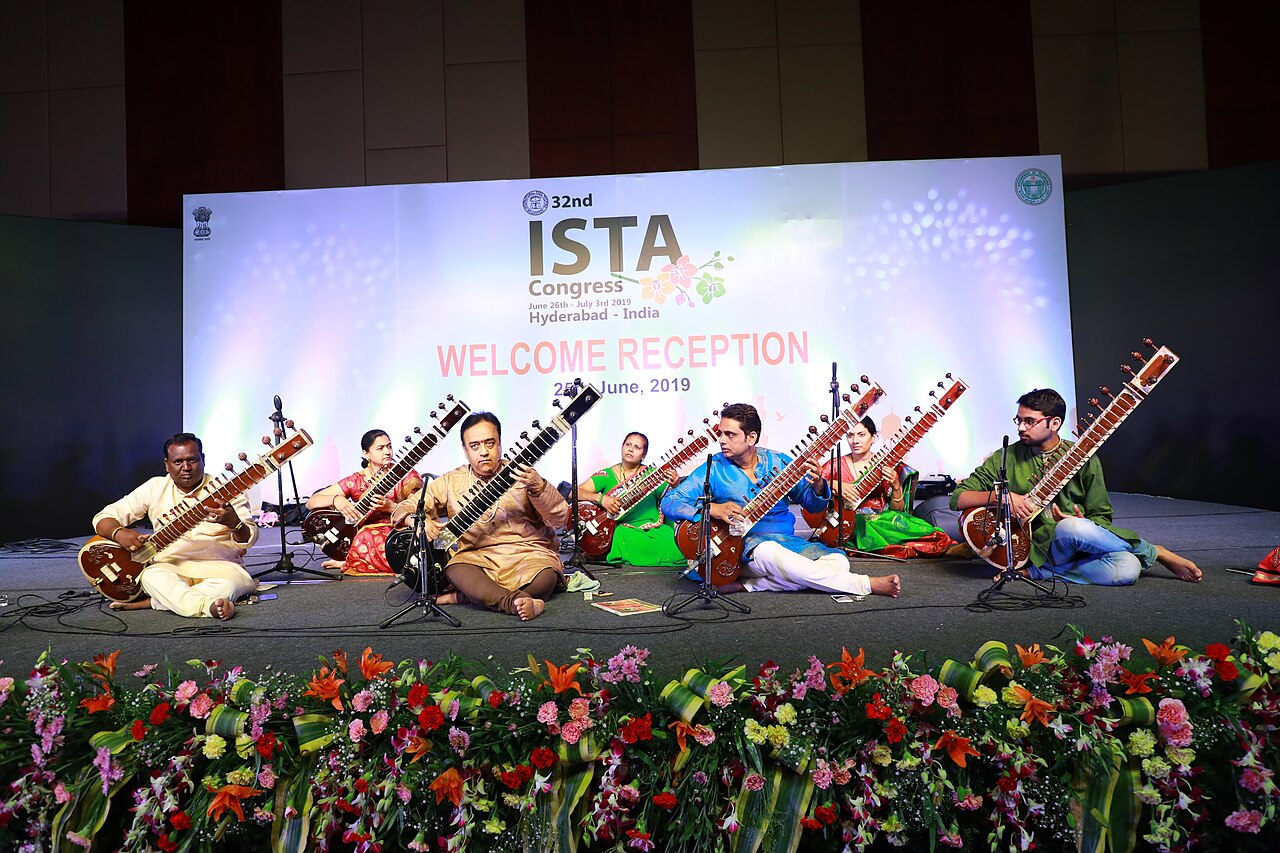
A Family of Raags: Bhupali, Kedar, Hameer, and Beyondकल्याण थाट अपने सात शुद्ध स्वरों के साथ राग का एक उल्लेखनीय परिवार देता है। भूपली शायद सबसे व्यापक रूप से ज्ञात है। केदार संध्या राग है, परंपरागत रूप से देर दोपहर में प्रदर्शित किया जाता है। हमीर, योद्धा-राजा, कल्याण परिवार को मार्शल शक्ति और भव्यता लाता है। इन राग में से प्रत्येक तीव्र म को साझा करते हुए अपना विशिष्ट चरित्र विकसित करता है।
अंग्रेज़ी में पढ़ें · Read in English
The beauty of the Kalyan thaat is that it isn't just Yaman — it's an entire family of raags, each with its own personality and performance traditions. Bhupali (also called Rag Bhup) is perhaps the most widely known after Yaman. If Yaman is the evening's grand entry, Bhupali is the intimate conversation that follows. Bhupali uses only five notes (Sa, Re, Ga, Tivra Ma, Pa, Sa) — it's an Audava raag, pentatonic, closer in spirit to the simplicity of folk music, yet unmistakably classical. The absence of Dha and Ni creates a floating, almost celestial quality. Kedar is another jewel from the Kalyan family, traditionally performed in the late afternoon as the evening approaches. Its characteristic movement emphasizes Tivra Ma and Dha, creating a sense of longing that is both majestic and introspective. Hameer, the warrior-king of the Kalyan family, brings martial strength and grandeur to the Tivra Ma scale. With its emphasis on the lower register and strong rhythmic frameworks, Hameer is often performed in the early morning hours or special occasions. Each of these raags shares the Tivra Ma signature but expresses it differently — some slowly and meditatively, others with vigor and declaration. This demonstrates the profound principle of Indian classical music: it's not about the raw material (the notes), but about how you craft your journey through them. In film music, these raags have been used with great subtlety. 'Raat Bhor' from 'Hera Pheri' carries echoes of Kedar, while various Hameer-inspired compositions appear in devotional and patriotic songs. The Kalyan family has been the canvas for some of Hindi cinema's most enduring romantic melodies.
कल्याण महत्वपूर्ण क्यों है: पैमानों के बीच पुल
Why Kalyan Matters: The Bridge Between Scalesकल्याण की भूमिका पूरी तरह से प्राकृतिक बिलावल और अधिक जटिल पैमानों के बीच एक पुल के रूप में है। यह समझता है कि एक परिवर्तन पूरी भावनात्मक दुनिया कैसे बदल सकता है। रोमांटिक प्रेम को व्यक्त करने के लिए कल्याण मनुष्यों को सबसे शक्तिशाली वाहन है।
अंग्रेज़ी में पढ़ें · Read in English
In the hierarchy of the ten Thaats, Kalyan occupies a unique position. It's the bridge between the entirely natural Bilawal and the more complex scales with multiple altered notes. Understanding Kalyan is essential to understanding how Indian classical music thinks about modulation and variation. The Tivra Ma is the hinge upon which entire philosophical and emotional worlds turn. In Western music theory, this would be equivalent to the Lydian mode (major scale with raised fourth degree). Yet the Lydian mode, while it exists as a theoretical concept, doesn't carry the centuries of emotional and spiritual development that Kalyan does. When you study Kalyan, you're not just learning notes — you're learning how one alteration can express the full spectrum of human experience: the romantic longing, the sunset's magnificence, the worshipful reverence, the noble strength. This is why traditional gurus insist that students spend years mastering raags from the Kalyan family before moving to more complex territories. It teaches discipline, it develops the ear, and it builds an intimate understanding of how emotion is encoded in melodic movement. The raags of Kalyan are also remarkably adaptable. You can find them in devotional music, in classical concerts, in folk variations, and extensively in Hindi film music. This versatility speaks to the fundamental balance Kalyan offers — it is neither too simple nor too complex, neither too rigid nor too free. It is, in many ways, the 'perfect' thaat for human emotion. The evening raags of Kalyan have inspired some of the deepest spiritual music in Indian tradition. They are often chosen for raag devotion (raag aradhana) — the practice of offering music itself as worship. When great singers perform Yaman, Bhupali, or Kedar in these sacred contexts, the notes transcend mere sound and become vehicles for spiritual experience.
परिचय
IdentityEpithet
एक तीव्र स्वर सब कुछ बदल देता है — और संगीत के सबसे रोमांटिक राग परिवार को जन्म देता है।
One sharp note transforms everything — and creates music's most romantic family of raags.
कहानी-नमूना
The Story Specimen| शीर्षक | कल्याण थाट: संध्या पर राज करने वाला उज्ज्वल स्वर समूह · Kalyan Thaat: The Luminous Scale That Rules the Evening |
|---|---|
| श्रेणी | Music Theory |
| प्रकार | विशेष लेख |
| पाठ-समय | ७ मिनट का पाठ |
| प्रकाशित | 31 March 2026 — admin |
| टैग | thaat · kalyan · yaman · evening_raag · hindustani_classical · music_theory |
इस कहानी में
In This Story · The Cast & Its Platesकहानी में आए नामों के अटलस में अपने पन्ने हैं — यहीं से यात्रा जारी रखिए।
राग-सूत्र · Raags
और कहानियाँ
More Stories from the Atlas
साझा कीजिए · Share this Plate