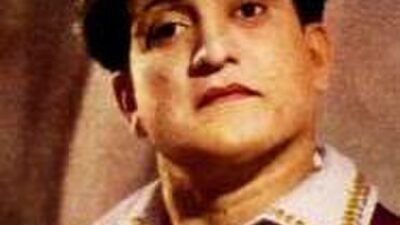
गीत विंग · गीत-पट्टिका · Song Plate
सजन जाये आगरा मैं जाऊँ गुजरात
Sajan Jaye Agra Main Jaoon Gujarat
वह आगरा जा रहा है और वह गुजरात — 'जी हाँ' का इकलौता गीत जिसकी किसी समीक्षक ने सचमुच तारीफ़ की, और जिसे Songs of Yore ने एस. एन. त्रिपाठी की लोक-मुहावरे पर पकड़ के लिए अलग से चुना।
भावमीठा-कड़वा · चुलबुला
भाषाhindi गतिमध्यम स्वरूपयुगल
श्रेय
The Creditsसूत्र-वाक्य · The Hook
सूत्र-वाक्य
वह आगरा जा रहा है और वह गुजरात — 'जी हाँ' का इकलौता गीत जिसकी किसी समीक्षक ने सचमुच तारीफ़ की, और जिसे Songs of Yore ने एस. एन. त्रिपाठी की लोक-मुहावरे पर पकड़ के लिए अलग से चुना।
In EnglishHe is going to Agra and she is going to Gujarat — the one Ji Haan song a critic has actually praised, singled out by Songs of Yore for S. N. Tripathi's command of folk idiom.
पट्टिका-लेख
The Monographपरिचय Overview
'जी हाँ' में शांता पटेल के पाँच गीतों में आख़िरी, और फ़िल्म का इकलौता गीत जिस पर कोई समीक्षकीय राय दर्ज हुई। एस. एन. त्रिपाठी के आरंभिक वर्षों के अपने सर्वेक्षण में Songs of Yore फ़िल्म के आठ गीतों में से इसी को चुनता है, धुन की प्रशंसा करता है, बताता है कि यह एक धीमे पाठ से शुरू होकर युगल में बदल जाता है, और कहता है कि 'यह गीत धीरे-धीरे आप पर चढ़ता है'। यह विवरण एक प्रश्न खड़ा करता है जिसका उत्तर कैटलॉग नहीं देते: सारेगामा और एचएफ़जीके-आधारित सूचियाँ, दोनों केवल शांता पटेल को श्रेय देती हैं, पर Songs of Yore रिकॉर्डिंग में एक दूसरी, पुरुष आवाज़ सुनता है और बिना पुष्टि किए सुझाता है कि वह स्वयं त्रिपाठी की हो सकती है, जो अपने ही संगीत में गाया करते थे। यह प्रविष्टि केवल शांता पटेल को श्रेय देती है, क्योंकि दस्तावेज़ इतना ही समर्थन करते हैं, और उस अज्ञात आवाज़ को खुले प्रश्न के रूप में दर्ज करती है।
अंग्रेज़ी में पढ़ें · Read in English
The last of Shanta Patel's five songs in Ji Haan and the only one in the film to have attracted a critical judgement. In its survey of S. N. Tripathi's vintage years, Songs of Yore picks this number out of the film's eight, praises the melody, describes it as opening with a slow recital before turning into a duet, and notes that 'the song grows on you'. That description raises a question the catalogues do not answer: Saregama and the HFGK-derived listings both credit Shanta Patel alone, but Songs of Yore hears a second, male voice on the recording and suggests — without confirming — that it may be Tripathi himself, who did sing on his own scores. This entry credits only Shanta Patel, since that is what the documentation supports, and records the unidentified voice as an open question.
संगीत The Music
Songs of Yore का विवरण इस रिकॉर्डिंग का छपा हुआ इकलौता वर्णन है, और उसे उसके शब्दों में लेना उचित है: गीत एक धीमे पाठ से शुरू होता है, फिर युगल में खुलता है, और लेखक जिसे 'शानदार धुन' कहता है उसे साथ लेकर चलता है, जिसमें त्रिपाठी की लोक-मुहावरे पर पकड़ साफ़ दिखती है। यह दो-हिस्सों वाला आकार — मुक्त, लगभग बोली जाती-सी शुरुआत और उसके बाद ताल में बँधा शरीर — 1940 के दशक के लोक-आधारित हिंदी फ़िल्मी गीत की मानक पद्धति है, जहाँ ढीली शुरुआत ऐसे काम करती है जैसे बेताल गाया गया स्थायी, और फिर ढोलक आकर नब्ज़ तय कर देती है। त्रिपाठी इस तक ईमानदारी से पहुँचे थे: लखनऊ के भातखंडे मॉरिस कॉलेज में प्रशिक्षित, बंबई में पहली नौकरी बॉम्बे टॉकीज़ के वाद्यवृंद में सरस्वती देवी के अधीन वायलिन-वादक के रूप में, और 1945 तक साल में कई पूरे संगीत-कार्य देते हुए।
अंग्रेज़ी में पढ़ें · Read in English
Songs of Yore's account is the only description of this recording in print, and it is worth taking at its word: the song begins as a slow recital, opens out into a duet, and carries what the writer calls a superb melody, with Tripathi's mastery of folk idiom on display. That two-part shape — a free, near-spoken opening followed by a metred body — is standard practice in the north Indian folk-derived film song of the 1940s, where the loose opening functions like a sthayi sung out of time before the dholak enters and fixes the pulse. Tripathi came to it honestly: trained at Bhatkhande's Marris College in Lucknow, first employed in Bombay as a violinist in the Bombay Talkies orchestra under Saraswati Devi, and by 1945 turning out several complete scores a year.
काव्य The Poetry
हास्य भूगोल में है। उस दौर के हिंदी फ़िल्मी गीत विरह को अमूर्त रूप में लिखते थे — प्रिय 'परदेस' चला जाता है, कहीं ख़ास नहीं, ताकि सुनने वाला अपनी दूरी ख़ुद भर ले। पंडित इंद्र इसके उलट दोनों पक्षों को एक-एक ठिकाना देकर नक़्शे पर रख देते हैं: वह आगरा, वह गुजरात — विपरीत दिशाओं में लगभग नौ सौ किलोमीटर दूर। जगहों का नाम लेना विलाप को घरेलू-हास्य की उलझन में बदल देता है, वही स्वर जिसमें इस फ़िल्म के आठ में से पाँच गीत लिखे गए, और यह बिछोह को दुखांत नहीं, बेतुका बना देता है — दो लोग नियति से नहीं, समय-सारिणी से अलग होते हुए। Songs of Yore का यह पाठ, कि यह फ़िल्म के 'मज़ेदार गीतों' में है और साथ ही उसमें सचमुच की धुन भी है, इसी दोहरे स्वर से ठीक मेल खाता है। इस अभिलेख में गीत की कोई पंक्ति उद्धृत नहीं की गई है।
अंग्रेज़ी में पढ़ें · Read in English
The comedy is in the geography. Hindi film lyrics of the period wrote separation as an abstraction — the beloved goes 'pardes', abroad, to nowhere in particular, so the listener can fill in their own distance. Pt. Indra instead gives both parties a destination and puts them on the map: he to Agra, she to Gujarat, roughly nine hundred kilometres apart in opposite directions. Naming the places turns a lament into a domestic-comic predicament, which is the register five of this film's eight songs were written in, and it makes the separation absurd rather than tragic — two people moving apart on a timetable rather than by fate. Songs of Yore's reading, that the number is one of the film's 'fun songs' while also carrying a real melody, fits that double register exactly. No lines of the lyric are reproduced in this record.
कहानी The Story
'जी हाँ' बंबई की गौतम चित्र की फ़िल्म थी, निर्देशन बाबूभाई मिस्त्री का — वही ट्रिक-फ़ोटोग्राफ़र जिन्हें 'काला धागा' कहा जाता था — साथ में एक दूसरे निर्देशक, जिनका नाम indiancine.ma पर आर. वैद्य और एचएफ़जीके-आधारित विवरण में रमणिक भट्ट दर्ज है, और कलाकार-मंडली भगवान आबाजी पालव तथा हास्य-अभिनेता आग़ा के इर्द-गिर्द बनी थी। विकिपीडिया की 1945 की हिंदी फ़िल्मों की सूची कलाकारों में शांता पटेल का नाम सबसे पहले देती है, जो संगीत में उनके हिस्से से मेल खाता है: आठ में से पाँच गीत, फ़िल्म के किसी भी और कलाकार से अधिक। उनका बाद का काम भी उसी सर्किट पर रहा — 'वीर घटोत्कच' (1949), 'औरत' (1953), 'बग़दाद का जादू' (1956) — बंबई की दूसरी क़तार का पौराणिक और स्टंट भंडार, यानी वही दुनिया जिससे यह फ़िल्म आती है।
अंग्रेज़ी में पढ़ें · Read in English
Ji Haan was a Gautam Chitra production of Bombay, directed by Babubhai Mistry — the trick photographer known as 'Kala Dhaga' — with a second director listed as R. Vaidya on indiancine.ma and as Ramnik Bhatt in the HFGK-derived account, and cast around Bhagwan Abhaji Palav and the comedian Agha. Wikipedia's index of 1945 Hindi films bills Shanta Patel first among the players, which fits her share of the score: five of eight songs, more than anyone else in the film. Her later work stayed on the same circuit — Veer Ghatotkach (1949), Aurat (1953), Baghdad Ka Jadu (1956) — the mythological and stunt repertoire of Bombay's second tier, which is the world this film belongs to.
विरासत The Legacy
यही 'जी हाँ' का वह गीत है जो समीक्षकीय अभिलेख में दर्ज हुआ। एस. एन. त्रिपाठी पर Songs of Yore का बहु-भागीय सर्वेक्षण — वह संगीतकार जिसे पंद्रह साल बाद की पौराणिक और वेशभूषा फ़िल्मों के लिए बेहतर याद किया जाता है: 'संगीत सम्राट तानसेन', 'रानी रूपमती', 'लाल क़िला' — इसे इस बात के प्रमाण की तरह इस्तेमाल करता है कि वे 1945 में ही, एक स्टंट फ़िल्म के बजट पर और ऐसे साल में जब कई फ़िल्मों का संगीत एक साथ दे रहे थे, क्या कर सकते थे। 'जी हाँ' के पूरे परवर्ती जीवन का आकार यही है: फ़िल्म नहीं, जो जा चुकी है, बल्कि मुट्ठी भर रिकॉर्ड जिन पर बाद के श्रोता लौटकर आए और जिन्हें चर्चा के लायक़ पाया।
अंग्रेज़ी में पढ़ें · Read in English
This is the Ji Haan song that entered the critical record. Songs of Yore's multi-part survey of S. N. Tripathi — a composer better remembered for the mythologicals and costume pictures of fifteen years later, Sangeet Samrat Tansen, Rani Roopmati, Lal Quila — uses it as evidence of what he could already do in 1945, on a stunt film's budget, in a year when he was delivering several scores at once. That is the shape of Ji Haan's whole afterlife: not the film, which is gone, but a handful of sides that later listeners went back and found worth arguing about.
वर्गीकरण
Classification- Tempo
- Medium
Genre
अन्य विवरण
More Details- https://www.songsofyore.com/sn-tripathi-part-1-the-vintage-years-a-multi-faceted-talent/
- https://www.saregama.com/album/ji-haan_119936
- https://www.hindigeetmala.net/movie/ji_haan.htm
- https://en.wikipedia.org/wiki/List_of_Hindi_films_of_1945
- https://indiancine.ma/EEK/info
- https://en.wikipedia.org/wiki/S._N._Tripathi
References
रोचक तथ्य
Margin NotesSongs of Yore इस रिकॉर्डिंग में एक दूसरी, पुरुष आवाज़ सुनता है और सुझाता है कि वह स्वयं एस. एन. त्रिपाठी की हो सकती है, जो अपने ही संगीत में गाया करते थे। कैटलॉग केवल शांता पटेल को श्रेय देते हैं, और वह पुरुष आवाज़ अज्ञात बनी हुई है।
अंग्रेज़ी में पढ़ें · Read in English
Songs of Yore hears a second, male voice on this recording and suggests it may be S. N. Tripathi himself, who sang on his own scores. The catalogues credit only Shanta Patel, and the male voice remains unidentified.
सारेगामा शीर्षक 'Sajan Jaye Agra Main Jaoon Gujrat' छापता है; हिंदीगीतमाला की एचएफ़जीके-आधारित सूची इसे छोटा करके 'Sajan Jaye Agra' कर देती है।
अंग्रेज़ी में पढ़ें · Read in English
Saregama prints the title as 'Sajan Jaye Agra Main Jaoon Gujrat'; the HFGK-derived listing at hindigeetmala shortens it to 'Sajan Jaye Agra'.
एस. एन. त्रिपाठी, जिन्होंने 1945 में उस साल की कई फ़िल्मों के साथ 'जी हाँ' का संगीत भी दिया, आज पंद्रह साल बाद के काम के लिए याद किए जाते हैं — 'संगीत सम्राट तानसेन' (1962), 'रानी रूपमती' (1957) और 'लाल क़िला' (1960)।
अंग्रेज़ी में पढ़ें · Read in English
S. N. Tripathi, who scored Ji Haan in 1945 among several films of that year, is remembered today for work fifteen years later — Sangeet Samrat Tansen (1962), Rani Roopmati (1957) and Lal Quila (1960).
नमूना-पट्टी
The Specimen Table| शीर्षक | सजन जाये आगरा मैं जाऊँ गुजरात · Sajan Jaye Agra Main Jaoon Gujarat |
|---|---|
| फ़िल्म | जी हाँ · 1945 |
| वर्ष · युग | 1945 |
| गायक | शांता पटेल |
| गीतकार | Pandit Indra |
| संगीतकार | S. N. Tripathi |
| स्वरूप | युगल |
| गति | मध्यम |
| भाषा | hindi |
| भाव | मीठा-कड़वा · चुलबुला |
| लोकप्रियता | Obscure |
| बोल-स्थिति | केवल झलक |
जुड़े हुए पन्ने
Connected Plates · The Graph Made Visibleअटलस में कोई पन्ना अकेला नहीं — इस गीत से जुड़े गीत, कलाकार, फ़िल्म, राग-ताल-विधा, सब यहाँ से खुलते हैं।
मिलते-जुलते गीत · Related Songs
कलाकार · The Artists
फ़िल्म · The Film
साझा कीजिए · Share this Plate