गीत विंग · गीत-पट्टिका · Song Plate
मेरा चना मसालेदार
Mera Chana Masaledaar
मेरा चना मसालेदार — जी.एम. दुर्रानी एक फेरीवाले की हाँक को गीत बना देते हैं, उस फ़िल्म में जो एक गली की लड़की के बोलना सीखने की कहानी है।
भावउत्सव · चुलबुला
भाषाhindi स्वरूपएकल पुरुष
श्रेय
The Creditsसूत्र-वाक्य · The Hook
सूत्र-वाक्य
मेरा चना मसालेदार — जी.एम. दुर्रानी एक फेरीवाले की हाँक को गीत बना देते हैं, उस फ़िल्म में जो एक गली की लड़की के बोलना सीखने की कहानी है।
In EnglishMy roasted gram is spicy — G.M. Durrani turns a street hawker's cry into a song, in a film about a street girl learning to speak differently.
पट्टिका-लेख
The Monographपरिचय Overview
जी.एम. दुर्रानी का गाया यह 'छमिया' के संगीत का फेरीवाला गीत है — 'चना गरम' की वह हाँक, जिसे पूरे गीत में गढ़ लिया गया। संगीत ज्ञान दत्त का, बोल पंडित इंद्र और काबिल अमृतसरी के, और दोनों देखी गई सूचियाँ दुर्रानी को इसकी इकलौती आवाज़ मानती हैं — जिससे यह फ़िल्म के उन गिने-चुने गीतों में आता है जिनका श्रेय पक्का है। दुर्रानी, जिनकी हल्की और अत्यंत स्पष्ट गायकी ने उन्हें 1940 के दशक के आरंभ की अग्रणी पुरुष पार्श्व-आवाज़ बनाया और जिन्हें युवा मोहम्मद रफ़ी का स्वीकृत आदर्श माना जाता है, उच्चारण पर जीने वाले ऐसे गीत के लिए ठीक जगह पर थे।
अंग्रेज़ी में पढ़ें · Read in English
Sung by G.M. Durrani, this is the street-vendor song of the Chhamia score — the hawker's cry, chana garam, worked up into a full number. Gyan Dutt composed it to lyrics by Pandit Indra and Kabil Amritsari, and both catalogues consulted credit Durrani as the sole voice, making it one of the few firmly attributed songs in the film. Durrani, whose light and highly articulate delivery made him the leading male playback voice of the early 1940s and the acknowledged model for the young Mohammed Rafi, was well placed for a song that lives on diction.
संगीत The Music
रिकॉर्डिंग प्रचलन में नहीं है, इसलिए संगीत-संयोजन का वर्णन संभव नहीं। पर 1940 के दशक के हिंदी सिनेमा में इस गीत-कोटि का ढाँचा स्थापित है: फेरीवाला गीत अपनी धुन भारतीय गली-फेरी की असली गाई हुई हाँकों से उधार लेता है — दूर तक पहुँचने के लिए ऊँचे सुर में, छोटे दोहराए जाने वाले वाक्यांश पर बना, चढ़ती पुकार पर ख़त्म होता — और फ़िल्म-संगीतकार का काम उस ढाँचे को पहचानने योग्य बनाए रखते हुए उसे नियत छंद और संगत देना है। ज्ञान दत्त, जिनके रणजीत मूवीटोन के वर्ष लोक और लोकप्रिय सामग्री को ग्रामोफ़ोन के लिए ढालने में बीते थे, जाने-पहचाने क्षेत्र में काम कर रहे थे।
अंग्रेज़ी में पढ़ें · Read in English
The recording is not in circulation, so the arrangement cannot be described. The song type, however, has a well-established shape in 1940s Hindi cinema: the vendor song borrows its melody from the actual sung cries of Indian street selling — pitched to carry, built on a short repeating phrase, ending on a rising call — and the film composer's job is to keep that shape recognisable while giving it a fixed metre and an accompaniment. Gyan Dutt, whose Ranjit Movietone years had been spent adapting folk and popular material for the gramophone, was working in familiar territory.
काव्य The Poetry
फेरीवाले का गीत लघु रूप में एक डींग है: पूरा पाठ माल के बारे में एक दावा है। 'मसालेदार' — तीखा, और उससे आगे बढ़कर वह सब जिसमें आँच और तेवर हो — पहले ही शब्द से दुहरा काम करता है, क्योंकि जो विशेषण बंबई की गली में भुना चना बेचता है, वही हिंदुस्तानी में उस व्यक्ति के लिए भी है जो ज़िंदादिल, मुखर और पूरी तरह 'शरीफ़' नहीं है। यही तो 'छमिया' शब्द का अर्थ है — फ़िल्म का शीर्षक। 'पिग्मेलियन' का रूपांतरण उस स्त्री की कथा है जिसके बोलने के ढंग को सुधारे जाने योग्य दोष माना जाता है, और गली की बिक्री की हाँक उसी ढंग का सबसे शुद्ध नमूना है — पूरे गले से लगाई गई बाज़ार की आवाज़। फ़िल्म में गीत का स्थान प्रलेखित नहीं है और यह संबंध एक संपादकीय पाठ है, पर ऐसा पाठ जिसे शीर्षक और फ़िल्म का आधार स्वयं आमंत्रित करते हैं।
अंग्रेज़ी में पढ़ें · Read in English
A vendor song is a boast in miniature: the whole text is a claim about the goods. Masaledaar — spiced, and by extension anything with heat and character in it — is doing double duty from the first word, since the same adjective that sells roasted gram in a Bombay lane is also how Hindustani describes a person who is lively, forward and not quite respectable. That is exactly the meaning of chhamiya, the film's title. A Pygmalion adaptation is a story about a woman whose way of speaking is treated as a defect to be corrected, and a street-selling cry is the purest specimen of that way of speaking — the voice of the market pitched at full volume. The song's placement in the film is not documented and this connection is an editorial reading, but it is a reading the title and the film's premise invite.
कहानी The Story
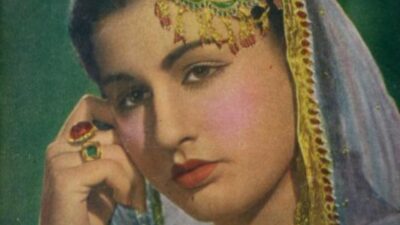
'छमिया' (1945) का निर्माण और निर्देशन प्रतिमा दासगुप्ता ने अपनी ही संस्था 'पी.डी.जी. पिक्चर्स' के लिए किया, जो जॉर्ज बर्नार्ड शॉ के 'पिग्मेलियन' के रूपांतरण पर आधारित थी; मुख्य भूमिका में बेगम पारा थीं और सहायक भूमिकाओं में हास्य-अभिनेता डेविड, नर्तकी अज़ूरी और दीक्षित। ज्ञान दत्त ने पंडित इंद्र और काबिल अमृतसरी के बोलों पर ग्यारह गीत रचे। फ़िल्म व्यावसायिक रूप से सफल रही और दासगुप्ता के संक्षिप्त निर्देशकीय करियर का शिखर बनी रही; आज यह प्रचलन में नहीं है, इसलिए इसके गीत मुख्यतः सूची-प्रविष्टियों और बचे हुए 78-आरपीएम रिकॉर्डों से ही जाने जाते हैं। दोनों देखी गई सूचियाँ इस शीर्षक की इकलौती आवाज़ के रूप में जी.एम. दुर्रानी को दर्ज करती हैं।
अंग्रेज़ी में पढ़ें · Read in English
Chhamia (1945) was produced and directed by Protima Dasgupta for her own company, P.D.G. Pictures, from an adaptation of George Bernard Shaw's Pygmalion, with Begum Para in the lead and a supporting company that included the comedian David, the dancer Azurie and Dixit. Gyan Dutt supplied eleven songs to lyrics by Pandit Indra and Kabil Amritsari. The picture was a commercial success and remained the high point of Dasgupta's short career behind the camera; it is not in circulation today, so its songs are known chiefly through catalogue listings and surviving 78-rpm discs. G.M. Durrani is credited as the sole voice on this title by both catalogues consulted.
विरासत The Legacy
जी.एम. दुर्रानी के लिए 1945 व्यस्त वर्ष था, उस करियर में जो अगले पाँच वर्षों में बड़ी हद तक मोहम्मद रफ़ी से विस्थापित हो जाने वाला था — वही गायक जिसने खुलकर दुर्रानी को अपना आदर्श माना था और अंततः उनका क्षेत्र भी उन्हीं से लिया। 'छमिया' उसी उत्तर-शिखर की फ़िल्म है, और यह गीत कभी पुनः जारी नहीं हुआ: यह दुर्रानी के संकलनों में नहीं है, जो बेहतर वितरित स्टूडियो-फ़िल्मों पर टिके हैं। यह एक शीर्षक, एक संगीतकार-श्रेय और एक गायक-श्रेय के रूप में बचा है — जो 1945 की एक स्वतंत्र रूप से निर्मित फ़िल्म के लिए अधिकांश गीतों से अधिक ही है।
अंग्रेज़ी में पढ़ें · Read in English
G.M. Durrani's 1945 was a busy year in a career that would be largely displaced within five years by Mohammed Rafi — a singer who had openly modelled himself on Durrani and who ended up inheriting his territory. Chhamia belongs to that late peak, and this song has not been reissued: it is absent from the Durrani compilations, which draw on the better-distributed studio films. It survives as a title, a composer credit and a singer credit, which for an independently produced 1945 film is more than most songs manage.
वर्गीकरण
ClassificationGenre
अन्य विवरण
More Details- https://www.hindigeetmala.net/movie/chhamiya.htm
- https://myswar.co/album/chhamiya-1945
- https://en.wikipedia.org/wiki/List_of_Hindi_films_of_1945
- https://en.wikipedia.org/wiki/Begum_Para
- https://indiancine.ma/EDQ/info
References
रोचक तथ्य
Margin Notesजी.एम. दुर्रानी 1940 के दशक के आरंभ की अग्रणी पुरुष पार्श्व-आवाज़ थे और वही गायक जिन्हें युवा मोहम्मद रफ़ी ने खुलकर अपना आदर्श माना; 'छमिया' के पाँच वर्षों के भीतर रफ़ी ने बड़ी हद तक उनका क्षेत्र ले लिया था।
अंग्रेज़ी में पढ़ें · Read in English
G.M. Durrani was the leading male playback voice of the early 1940s and the singer the young Mohammed Rafi openly took as his model; within five years of Chhamia, Rafi had largely taken over his repertoire.
यह फ़िल्म जॉर्ज बर्नार्ड शॉ के नाटक 'पिग्मेलियन' से रूपांतरित थी — इस नाटक का एक आरंभिक भारतीय रूपांतरण। 'छमिया' हिंदुस्तानी बोलचाल में मुखर, भड़कीले कपड़ों वाली युवती के लिए प्रयुक्त शब्द है, और यही फ़िल्म की 'एलाइज़ा डूलिटल' का नाम है।
अंग्रेज़ी में पढ़ें · Read in English
The film was adapted from George Bernard Shaw's Pygmalion — an early Indian transposition of the play. 'Chhamiya' is colloquial Hindustani for a loud, showily dressed young woman, and names the film's Eliza Doolittle figure.
'छमिया' प्रतिमा दासगुप्ता की बतौर निर्देशक पहली फ़िल्म थी; उन्होंने इसे अपने ही बैनर 'पी.डी.जी. पिक्चर्स' के तहत बनाया और इसमें अभिनय भी किया — जिससे यह 1940 के दशक की उन गिनी-चुनी हिंदी फ़िल्मों में शामिल हो जाती है जिनकी रचनात्मक कमान एक स्त्री के हाथ में थी।
अंग्रेज़ी में पढ़ें · Read in English
Chhamia was the directorial debut of Protima Dasgupta, who also produced it under her own banner, P.D.G. Pictures, and acted in it — making it one of a bare handful of Hindi features of the 1940s controlled above the line by a woman.
नमूना-पट्टी
The Specimen Table| शीर्षक | मेरा चना मसालेदार · Mera Chana Masaledaar |
|---|---|
| फ़िल्म | छमिया · 1945 |
| वर्ष · युग | 1945 |
| गायक | G.M. Durrani |
| गीतकार | Pandit Indra, Kabil Amritsari |
| संगीतकार | Gyan Dutt |
| स्वरूप | एकल पुरुष |
| भाषा | hindi |
| भाव | उत्सव · चुलबुला |
| लोकप्रियता | Obscure |
| बोल-स्थिति | केवल झलक |
जुड़े हुए पन्ने
Connected Plates · The Graph Made Visibleअटलस में कोई पन्ना अकेला नहीं — इस गीत से जुड़े गीत, कलाकार, फ़िल्म, राग-ताल-विधा, सब यहाँ से खुलते हैं।
मिलते-जुलते गीत · Related Songs
कलाकार · The Artists
फ़िल्म · The Film
साझा कीजिए · Share this Plate