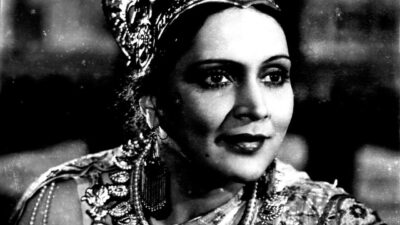
गीत विंग · गीत-पट्टिका · Song Plate
मैं राजा को अपने रिझा के रहूँगी
Main Raja Ko Apne Rijha Ke Rahungi
बेगम अख़्तर की आवाज़ में एक विरल चुलबुला गीत — ठीक उसी वर्ष 'पन्ना दाई' के लिए रिकॉर्ड हुआ जब उन्होंने विवाह करके फ़िल्मी गायन छोड़ दिया।
भावउत्सव · चुलबुला · रोमांटिक
भाषाhindi गतिमध्यम स्वरूपएकल महिला
श्रेय
The Creditsसूत्र-वाक्य · The Hook
सूत्र-वाक्य
बेगम अख़्तर की आवाज़ में एक विरल चुलबुला गीत — ठीक उसी वर्ष 'पन्ना दाई' के लिए रिकॉर्ड हुआ जब उन्होंने विवाह करके फ़िल्मी गायन छोड़ दिया।
In EnglishA rare flirtatious song in Begum Akhtar's voice — cut for Pannadai in the very year she married and left film singing behind.
पट्टिका-लेख
The Monographपरिचय Overview
'पन्ना दाई' (1945) के लिए ज्ञान दत्त ने बेगम अख़्तर की आवाज़ में जो दो गीत रिकॉर्ड किए, यह उनमें से एक है — तब वे 'अख़्तरी फ़ैज़ाबादी' के नाम से गाती थीं। उनके गीत-संग्रह में यह अपनी हलकी-फुलकी मुद्रा के कारण चौंकाता है: यह विलाप नहीं, दावा है — एक स्त्री घोषित करती है कि वह अपने राजा को रिझाकर ही रहेगी। अतुल्स सॉन्ग अ डे इसे उस गायिका का शायद पहला चुलबुला गीत बताता है जो लगभग पूरी तरह गंभीर ग़ज़लों, दादरों और ठुमरियों के लिए जानी जाती हैं। प्रचलन में केवल ऑडियो बचा है, इसलिए यह किस पर फ़िल्माया गया था, यह प्रमाणित नहीं।
अंग्रेज़ी में पढ़ें · Read in English
One of two songs Gyan Dutt recorded with Begum Akhtar — still billed then as Akhtari Faizabadi — for Pannadai (1945). It is startling in her discography for its lightness: a boast rather than a lament, a woman announcing she will win her king over and keep him won. Atul's Song A Day notes it as perhaps the first playful song its writer had come across from a singer known almost entirely for grave ghazals, dadras and thumris. Only the audio survives in circulation, so who the song was picturised on is not established.
संगीत The Music
ज्ञान दत्त ग़ज़ल गायिका के विरुद्ध नहीं, उसके अनुकूल लिखते हैं: धुन उसी उपशास्त्रीय दायरे में रहती है जिसमें अख़्तरी फ़ैज़ाबादी बिना श्रम के विचर सकती थीं, पर पंक्तियाँ छोटी और आगे बढ़ती हुई रखी गई हैं ताकि गीत महफ़िल की प्रस्तुति नहीं, नोक-झोंक लगे। नतीजा फ़िल्मी गीत और हलकी ठुमरी के संधि-बिंदु पर बैठता है — वही मुहावरा जिसे ज्ञान दत्त 1940 के दशक के आरम्भ में रणजीत की अपनी उपशास्त्रीय आवाज़ों के साथ बार-बार बरतते रहे।
अंग्रेज़ी में पढ़ें · Read in English
Gyan Dutt writes for the ghazal singer rather than against her: the tune stays inside the light-classical register that Akhtari Faizabadi could inhabit without effort, but keeps the phrases short and forward-moving so the song reads as banter rather than as a recital piece. The result sits at the meeting point of the film song and the light thumri — the idiom Gyan Dutt used repeatedly with his semi-classical voices at Ranjit through the early 1940s.
काव्य The Poetry
दीवान शरर के बोल याचना पर नहीं, घोषणा पर टिके हैं — और यही उन्हें अपने समय और अपनी गायिका, दोनों के लिए असामान्य बनाता है। वक्ता यह नहीं पूछती कि उसे प्रेम मिलेगा या नहीं; वह तय बात की तरह कहती है कि वह अपने राजा को रिझाएगी और रिझाती रहेगी। 1945 के उर्दू-हिंदी फ़िल्मी मुहावरे में स्त्री-स्वर प्रायः प्रतीक्षा करता, उलाहना देता या सहता हुआ स्वर होता है; इसलिए पहल अपने हाथ में लेती स्त्री — और वह भी चुनौती के नहीं, विनोद के लहजे में — इस गीत को एक ऐसा तेवर देती है जिसका बेगम अख़्तर के रिकॉर्ड किए काम में लगभग कोई जोड़ नहीं।
अंग्रेज़ी में पढ़ें · Read in English
Dewan Sharar's lyric is built on a declaration rather than a plea, which is what makes it unusual for its period and for its singer. The speaker does not ask whether she will be loved; she states as settled fact that she will charm her raja and go on charming him. In the Urdu-Hindi film idiom of 1945 the female voice is far more often the one waiting, reproaching or enduring, so a woman claiming the initiative — and claiming it with amusement rather than defiance — gives the song a tone that has almost no counterpart in Begum Akhtar's recorded work.
कहानी The Story
'पन्ना दाई' (1945) का निर्माण कमलाबाई मंगलोरेकर ने प्रदीप पिक्चर्स, बंबई के लिए किया और निर्देशन राम दरयानी ने; शीर्षक भूमिका में दुर्गा खोटे थीं तथा चंद्रमोहन, मीनाक्षी शिरोडकर, मास्टर विट्ठल, मुबारक, एम. इस्माइल, गोप और नानासाहेब फाटक सहयोगी भूमिकाओं में। फ़िल्म सोलहवीं सदी के मेवाड़ के उस प्रसंग को कहती है जिसमें बालक उत्तराधिकारी उदय सिंह द्वितीय की धाय पन्ना दाई ने अपने ही पुत्र चंदन को राजकुमार की शय्या पर लिटा दिया ताकि हड़पने वाला बनवीर उसी को मार डाले, और फिर उत्तराधिकारी को कुम्भलगढ़ तक सुरक्षित पहुँचाया। ज्ञान दत्त ने इसके लिए दस गीत रचे, जिनके बोल डी.एन. माधोक और दीवान शरर के बीच बँटे थे।
अंग्रेज़ी में पढ़ें · Read in English
Pannadai (1945) was produced by Kamalabai Mangalorekar for Pradeep Pictures, Bombay, and directed by Ram Daryani, with Durga Khote in the title role and Chandra Mohan, Meenakshi Shirodkar, Master Vithal, Mubarak, M. Ismail, Gope and Nana Saheb Phatak in support. The film retells the sixteenth-century Mewar episode in which Panna Dhai, nursemaid to the child heir Udai Singh II, put her own son Chandan in the prince's bed so the usurper Banbir would kill him instead, then carried the heir to safety at Kumbhalgarh. Gyan Dutt wrote ten songs for it, with lyrics split between D.N. Madhok and Dewan Sharar.
विरासत The Legacy
यह गीत बेगम अख़्तर के पहले फ़िल्मी दौर के अंतिम छोर का है। 1945 में उन्होंने लखनऊ के बैरिस्टर इश्तियाक़ अहमद अब्बासी से विवाह किया और उस घर की बंदिशों में लगभग पाँच वर्ष सार्वजनिक रूप से नहीं गाईं; फ़िल्मों में वे 'दाना पानी' (1953) और 'एहसान' (1954) से ही लौटीं, और उनकी अंतिम परदे पर उपस्थिति सत्यजित राय की 'जलसाघर' (1958) में रही। इसलिए 'पन्ना दाई' की ये दो रिकॉर्डिंग्स फ़िल्म से अधिक गायिका के कारण महत्वपूर्ण हैं — ये उस आवाज़ को सहेजती हैं जो स्टूडियो से ओझल होने ही वाली थी, और यह गीत उस मिज़ाज को सहेजता है जो उनके अन्यत्र रिकॉर्ड किए काम में ज्ञात नहीं।
अंग्रेज़ी में पढ़ें · Read in English
The song belongs to the last stretch of Begum Akhtar's first film career. In 1945 she married the Lucknow-based barrister Ishtiaq Ahmed Abbasi and, under the restrictions of that household, did not sing publicly for roughly five years; she returned to films only with Dana Pani (1953) and Ehsan (1954), and her last screen appearance was in Satyajit Ray's Jalsaghar (1958). The two Pannadai recordings therefore matter more for the singer than for the film — they preserve a voice on the point of disappearing from the studios, and this one preserves a mood she is not otherwise known to have recorded.
वर्गीकरण
Classification- Tempo
- Medium
Genre
अन्य विवरण
More Details- https://www.hindigeetmala.net/movie/panna_dai.htm
- https://en.wikipedia.org/wiki/List_of_Hindi_films_of_1945
- https://atulsongaday.me/tag/panna-dai/
- https://atulsongaday.me/2024/06/03/main-raajaa-ko-apne-rijhaa-ke-rahoongee/
- https://www.millenniumpost.in/sundaypost/beacon/ahead-of-times-gyan-dutt-394310
- https://en.wikipedia.org/wiki/Begum_Akhtar
References
रोचक तथ्य
Margin Notesइस रिकॉर्ड पर बेगम अख़्तर का नाम 'अख़्तरी फ़ैज़ाबादी' दर्ज है — वही नाम जिससे वे 1945 के विवाह से पहले गाती और रिकॉर्ड कराती थीं।
अंग्रेज़ी में पढ़ें · Read in English
Begum Akhtar is credited on this record as Akhtari Faizabadi, the name she performed and recorded under before her 1945 marriage.
ज्ञान दत्त ने इसी एक फ़िल्म के लिए उनसे दो गीत रिकॉर्ड कराए: यह चुलबुला गीत और 'फ़स्ल-ए-गुल आई' का विषाद-भरा रूप।
अंग्रेज़ी में पढ़ें · Read in English
Gyan Dutt recorded two songs with her for this one film: this playful number and the sorrowing version of 'Fasl-e-Gul Aayi'.
नमूना-पट्टी
The Specimen Table| शीर्षक | मैं राजा को अपने रिझा के रहूँगी · Main Raja Ko Apne Rijha Ke Rahungi |
|---|---|
| फ़िल्म | पन्ना दाई · 1945 |
| वर्ष · युग | 1945 |
| गायक | Begum Akhtar |
| गीतकार | Deewan Sharar |
| संगीतकार | Gyan Dutt |
| स्वरूप | एकल महिला |
| गति | मध्यम |
| भाषा | hindi |
| भाव | उत्सव · चुलबुला · रोमांटिक |
| लोकप्रियता | Known |
| बोल-स्थिति | केवल झलक |
जुड़े हुए पन्ने
Connected Plates · The Graph Made Visibleअटलस में कोई पन्ना अकेला नहीं — इस गीत से जुड़े गीत, कलाकार, फ़िल्म, राग-ताल-विधा, सब यहाँ से खुलते हैं।
मिलते-जुलते गीत · Related Songs
कलाकार · The Artists
फ़िल्म · The Film
साझा कीजिए · Share this Plate