गीत विंग · गीत-पट्टिका · Song Plate
किसी के कूचे में गर्दन कटाने जाते हैं
Kisi Ke Kooche Mein Gardan Kataane Jaate Hain
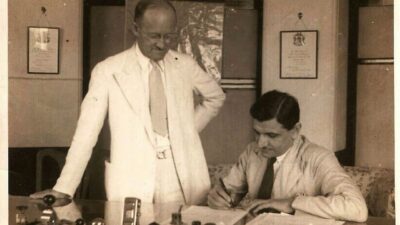
जी.एम. दुर्रानी उस आदमी की रचना गाते हुए जिसे वे अपना गुरु कहते थे — आशिक़ जो आदतन और अपनी मर्ज़ी से महबूब के कूचे में गर्दन कटाने चला जाता है।
भावतीव्र · उदास
भाषाurdu गतिमध्यम स्वरूपएकल पुरुष
श्रेय
The Creditsसूत्र-वाक्य · The Hook
सूत्र-वाक्य
जी.एम. दुर्रानी उस आदमी की रचना गाते हुए जिसे वे अपना गुरु कहते थे — आशिक़ जो आदतन और अपनी मर्ज़ी से महबूब के कूचे में गर्दन कटाने चला जाता है।
In EnglishG.M. Durrani singing a composition by the man he called his guru — the lover walking, habitually and by choice, into the beloved's lane to be executed.
पट्टिका-लेख
The Monographपरिचय Overview
'एक दिन का सुल्तान' (1945) के लिए रफ़ीक़ ग़ज़नवी के तीन गीतों में पहला, और फ़िल्म में जी. एम. दुर्रानी के दो गीतों में पहला। शीर्षक शास्त्रीय उर्दू की उस कल्पना का सीधा कथन है जिसमें आशिक़ स्वेच्छा से बलि है: महबूब का कूचा वही जगह है जहाँ गर्दनें पेश की जाती हैं, और बहुवचन वर्तमान इसे घटना नहीं, आदत बना देता है। बोल वली साहब के।
अंग्रेज़ी में पढ़ें · Read in English
The first of Rafiq Ghaznavi's three numbers for Ek Din Ka Sultan (1945), and the first of two songs G. M. Durrani sings in the film. The title is a straight statement of the classical Urdu conceit of the lover as willing victim: the beloved's lane is where necks are offered, and the plural present tense makes it a habit rather than an event. Wali Saheb wrote it.
संगीत The Music
इस श्रेय की असली दिलचस्पी उसके पीछे के रिश्ते में है। रफ़ीक़ ग़ज़नवी — जन्म 1907, रावलपिंडी; पटियाला घराने के उस्ताद आशिक़ अली और आसिफ़ अली से तालीम — वही संगीतकार थे जिन्हें जी. एम. दुर्रानी खुलकर 'मेरे गुरु' कहते थे। दुर्रानी, जन्म 1919, पेशावर, पश्तो-भाषी, जो ऑल इंडिया रेडियो के लाहौर, दिल्ली और बंबई केंद्रों से होते हुए फ़िल्मों में आए, जान-बूझकर उस के. एल. सैगल-शैली में नहीं गाते थे जो उस दौर की पुरुष पार्श्व-आवाज़ पर छाई थी — इसी फ़ैसले ने अगली पीढ़ी को, मोहम्मद रफ़ी सहित, एक वैकल्पिक नमूना दिया। सो यह शिष्य का गुरु से एक ग़ज़ल-अंदाज़ गीत लेना है, उस मोड़ पर जब गुरु मोदी की 'सिकंदर' (1941) और महबूब की 'तक़दीर' (1943) का संगीत दे चुके थे। रिकॉर्डिंग नहीं मिली, इसलिए स्वर-रचना का वर्णन संभव नहीं।
अंग्रेज़ी में पढ़ें · Read in English
The interest of this credit is the relationship behind it. Rafiq Ghaznavi, born in Rawalpindi in 1907 and trained by the Patiala gharana ustads Ashiq Ali and Asif Ali, was the composer G. M. Durrani openly called 'my guru'. Durrani, born in Peshawar in 1919, a Pashto speaker who had come to films from All India Radio's Lahore, Delhi and Bombay stations, made a deliberate point of not singing in the K. L. Saigal manner that dominated the male playback voice of the period — a decision that gave the next generation, Mohammed Rafi included, an alternative model to work from. So this is the pupil taking a ghazal-manner song from the teacher, at the point where the teacher had already scored Modi's Sikandar (1941) and Mehboob's Taqdeer (1943). The recording has not been traced, so the setting itself cannot be described.
काव्य The Poetry
'कूचा' — गली, वह मोहल्ला जहाँ महबूब रहता है — उर्दू ग़ज़ल के कल्पित भूगोल की तय जगहों में है, और वह प्रायः 'मक़्तल', यानी वधस्थल, भी है। वहाँ जाने वाला आशिक़ प्यार पाने नहीं जाता; वह क़त्ल होने जाता है, और जाना ही पूरी बात है। वली साहब 'जाते हैं' से जो जोड़ते हैं वह दोहराव और उत्तम-पुरुष बहुवचन है: यह कोई एक वीरतापूर्ण यात्रा नहीं, एक चलती हुई रीत है, कुछ ऐसा जो वक्ता और उसके जैसे लोग करते हैं — शहादत नहीं, जुलूस। यह बहुवचन पंक्ति से आत्म-दया निचोड़ देता है और उसे एक सूखी, लगभग मिलनसार विडंबना दे देता है — वही लहजा जिसकी ओर उर्दू शायरी तब जाती है जब वह भक्ति को किसी रोज़मर्रा के काम-सा सुनाना चाहती है। यह वह रंग है जिसे दुर्रानी — जो दर्द भरे गीतों, ग़ज़लों और क़व्वालियों, तीनों के लिए जाने जाते थे — बख़ूबी उठा सकते थे।
अंग्रेज़ी में पढ़ें · Read in English
Kucha — the lane, the quarter where the beloved lives — is one of the fixed places of the Urdu ghazal's imagined geography, and it is routinely also the maqtal, the place of execution. The lover who goes there does not go to be loved; he goes to be killed, and the going is the whole point. What Wali Saheb adds with 'jaate hain' is repetition and the first person plural: this is not one heroic walk but a standing practice, something the speaker and his kind do, a procession rather than a martyrdom. That plural drains the line of self-pity and gives it a dry, almost sociable irony — the tone Urdu poetry reaches for when it wants devotion to sound like a job of work. It is a register Durrani, who was known equally for sad songs, ghazals and qawwalis, was well placed to carry.
कहानी The Story
सोहराब मोदी की 'एक दिन का सुल्तान' उस मुग़ल क़िस्से पर टिकी है जिसमें एक भिश्ती ने 1539 में चौसा में हुमायूँ की जान बचाई और उसे एक दिन का तख़्त मिला — गर्दन गली में नहीं, नदी में दाँव पर लगी, पर कहानी स्वेच्छा से किए गए बलिदान की ही है। रफ़ीक़ ग़ज़नवी के तीन गीत फ़िल्म का सबसे उर्दू-रंगा हिस्सा हैं, जो किसी मिनर्वा फ़िल्म के अनुरूप ही है: मोदी के ऐतिहासिक उद्घोषक उर्दू संवाद पर बने थे और वे ग़ज़नवी को 'सिकंदर' (1941) में पहले आज़मा चुके थे। यह गीत फ़िल्म में कहाँ आता है, दर्ज नहीं।
अंग्रेज़ी में पढ़ें · Read in English
Sohrab Modi's Ek Din Ka Sultan turns on the Mughal anecdote of a water-carrier who saved Humayun's life at Chausa in 1539 and was given the throne for a single day — a story about a neck risked in a river rather than in a lane, but a story about willing sacrifice all the same. Rafiq Ghaznavi's block of three songs is the film's most Urdu-inflected, which is consistent with a Minerva production: Modi's historicals were built on declamatory Urdu dialogue and he had used Ghaznavi before, on Sikandar (1941). Where this song sits in the film is not documented.
विरासत The Legacy
इस गीत की कोई रिकॉर्डिंग नहीं मिली और यह कभी पुनः जारी नहीं हुआ; यह फ़िल्म की दर्ज गीत-सूची में मौजूद है और सुनाई कहीं नहीं देता। आज इसका मूल्य 1945 में सक्रिय ग़ज़नवी–दुर्रानी परंपरा-संचरण के प्रमाण के रूप में है — पटियाला-सधे संगीतकार का एआईआर-सधे गायक के लिए लिखना, जो उस वक़्त वही जान-बूझकर ग़ैर-सैगल पुरुष-स्वर गढ़ रहा था जिसे 1947 के बाद का उद्योग विरासत में लेगा। विभाजन के बाद ग़ज़नवी पाकिस्तान चले गए और रेडियो पाकिस्तान पर करियर पूरा किया; दुर्रानी यहीं रहे, 1950 के दशक में लगातार गाया और फिर बहुत कम, और 1988 में बंबई में उनका निधन हुआ।
अंग्रेज़ी में पढ़ें · Read in English
No recording of this song has been traced and it has never been reissued; it exists in the film's documented song list and nowhere audible. Its value now is as evidence of the Ghaznavi–Durrani line of transmission at work in 1945 — the Patiala-trained composer writing for the AIR-trained singer who was, at that moment, building the deliberately non-Saigal male voice that the post-1947 industry would inherit. Ghaznavi moved to Pakistan after Partition and ended his career at Radio Pakistan; Durrani stayed, sang steadily through the 1950s and then very little, and died in Bombay in 1988.
वर्गीकरण
Classification- Tempo
- Medium
Genre
अन्य विवरण
More Details- https://en.wikipedia.org/wiki/Ek_Din_Ka_Sultan
- https://www.hindigeetmala.net/movie/ek_din_ka_sultan.htm
- https://en.wikipedia.org/wiki/List_of_Hindi_films_of_1945
- https://en.wikipedia.org/wiki/Sohrab_Modi
- https://en.wikipedia.org/wiki/G._M._Durrani
- https://en.wikipedia.org/wiki/Rafiq_Ghaznavi
References
रोचक तथ्य
Margin Notesजी. एम. दुर्रानी रफ़ीक़ ग़ज़नवी को 'मेरे गुरु' कहते थे; इस फ़िल्म में शिष्य गुरु की तीन रचनाओं में से एक गाता है।
अंग्रेज़ी में पढ़ें · Read in English
G. M. Durrani called Rafiq Ghaznavi 'my guru'; in this film the pupil sings one of the teacher's three compositions.
दुर्रानी ने 1930-40 के दशक की पुरुष पार्श्व-गायकी पर छाई के. एल. सैगल शैली में गाने से जान-बूझकर इनकार किया और अपनी अलग पहचान बनाने पर काम किया।
अंग्रेज़ी में पढ़ें · Read in English
Durrani consciously refused to sing in the K. L. Saigal style that dominated male playback in the 1930s and 1940s, working instead to build an identity of his own.
फ़िल्मों से पहले दुर्रानी ऑल इंडिया रेडियो के लाहौर, दिल्ली और बंबई केंद्रों पर रेडियो-नाटक कलाकार और नियमित गायक थे, 70 रुपये मासिक वेतन पर।
अंग्रेज़ी में पढ़ें · Read in English
Before films, Durrani was a radio drama artist and staff singer at All India Radio's Lahore, Delhi and Bombay stations, on a salary of Rs 70 a month.
नमूना-पट्टी
The Specimen Table| शीर्षक | किसी के कूचे में गर्दन कटाने जाते हैं · Kisi Ke Kooche Mein Gardan Kataane Jaate Hain |
|---|---|
| फ़िल्म | एक दिन का सुल्तान · 1945 |
| वर्ष · युग | 1945 |
| गीतकार | Wali Saheb |
| संगीतकार | Rafiq Ghaznavi |
| स्वरूप | एकल पुरुष |
| गति | मध्यम |
| भाषा | urdu |
| भाव | तीव्र · उदास |
| लोकप्रियता | Obscure |
| बोल-स्थिति | केवल झलक |
जुड़े हुए पन्ने
Connected Plates · The Graph Made Visibleअटलस में कोई पन्ना अकेला नहीं — इस गीत से जुड़े गीत, कलाकार, फ़िल्म, राग-ताल-विधा, सब यहाँ से खुलते हैं।
कलाकार · The Artists
फ़िल्म · The Film
साझा कीजिए · Share this Plate