शास्त्र विंग · वाद्य-पट्टिका · Instrument Plate
कंसाळे
Kamsale
अन्य नामकंसाळे · कंसाले · बीसु कंसाळे (Beesu Kamsale - dance form) · कैताल (Kaitala - ancient texts)
परिचय
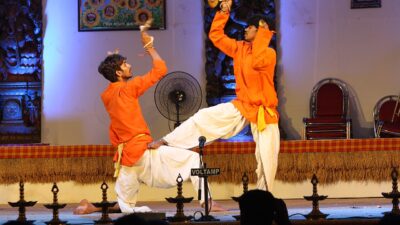
Overviewकंसाळे कर्नाटक की माटी का कांसे का ताल-वाद्य है — दो असमान तश्तरियाँ, कटोरेनुमा 'आदि बट्टलु' और चपटा 'गरि', जिन्हें माले महादेश्वर के देवारगुड्डा भक्त शरीर के चारों ओर घुमाते हुए 'बीसु कंसाळे' नृत्य में बजाते हैं। संस्कृत 'कंस्य-ताल' से नामित, 11वीं सदी के कन्नड़ ग्रंथों में 'कैताल' रूप में दर्ज, यह भक्ति और मार्शल-कौशल को एक ही धड़कन में पिरो देता है।
अंग्रेज़ी में पढ़ें · Read in English
The kamsale is a bronze rhythm-instrument of Karnataka's soil — two unequal discs, the cup-shaped 'adi battalu' and the flat 'gari', which the Devaragudda devotees of Male Mahadeshwara whirl around the body in the 'Beesu Kamsale' dance. Named from Sanskrit 'kamsya-tala' and recorded as 'Kaitala' in 11th-century Kannada texts, it threads devotion and martial skill into a single pulse.
वर्गीकरण
ClassificationNatya Shastra Category
घन (Ghana - solid/struck idiophones)
कंसाळे नाट्यशास्त्र की घन वाद्य श्रेणी में आता है — वे वाद्य जो अपने ठोस धातु-शरीर के आपस में टकराने से ध्वनि उत्पन्न करते हैं, बिना किसी तार, झिल्ली या फूँक के। कांसे/पीतल की एक जोड़ी को परस्पर प्रहार कर लय उत्पन्न की जाती है।
Kamsale belongs to the Ghana (solid idiophone) category of the Natya Shastra — instruments that produce sound from the vibration of their own solid metallic body when struck against each other, without strings, membranes, or breath. Rhythm is produced by striking a pair of bronze/brass discs against one another.
Western Category
Idiophone (concussion / struck idiophone)
Western Family
Cymbal family (related to hand-cymbals and clash-plates, but with two dissimilar cup-and-disc parts rather than a matched pair)
Sub Classification
बनावट
PhysicalDescription Hindi
कंसाळे कांसे (या कभी-कभी पीतल) से ढाले गए दो असमान अंगों की एक जोड़ी है, जो हथेली-आकार की झाँझ जैसे दिखते हैं परंतु एक-दूसरे के समान नहीं होते। एक अंग गहरा और कटोरे जैसा होता है, दूसरा चपटी तश्तरी जैसा; दोनों को हाथों में पकड़कर परस्पर प्रहार से नाद उत्पन्न होता है।
Description English
The kamsale is a pair of two dissimilar bronze (occasionally brass) pieces resembling large hand-cymbals, but — unlike matched cymbals such as the jalra or manjira — the two halves are deliberately unequal. One half is deep and cup-shaped, the other a flatter disc; held one in each hand, they are struck together to produce the ringing beat.
Body
Two-part concussion idiophone: one cup-shaped bell with a broad base, one shallow flat disc
दो-भाग वाला घन वाद्य: एक चौड़े आधार वाला कटोरेनुमा घंटा, एक उथली चपटी तश्तरी
Cast bronze (kamsya) — occasionally brass; heavy bell-metal for a sustained ring
ढला हुआ कांसा (कंस्य) — कभी-कभी पीतल; लम्बे गुंजार के लिए भारी घंटा-धातु
12-20 (diameter of the disc/cup pieces)
The cup-shaped adi battalu itself acts as a small bell-resonator, giving the clash a lingering, humming tail rather than a dry click
अंग
Cord
डोरी / गुच्छ
Cord / tassel
A short cord or cloth loop is threaded through a central hole in each piece so the performer can grip, spin and swing the discs around the body without dropping them
प्रत्येक भाग के मध्य छेद में एक छोटी डोरी या कपड़े का फंदा पिरोया जाता है, जिससे कलाकार तश्तरियों को शरीर के चारों ओर घुमा और झुला सके और वे हाथ से न छूटें।
Strings
Not applicable — kamsale is a struck idiophone with no strings
Frets
कंसाळे में तार, फ्रेट या झिल्ली नहीं होती — यह विशुद्ध रूप से लयवाद्य है; स्वर नहीं, ताल इसका धर्म है।
The kamsale has no strings, frets, or membrane — it is a purely rhythmic instrument; it carries tala (rhythm), not melody.
ध्वनि-चरित्र
SoundTonal Character Hindi
कंसाळे की ध्वनि तीक्ष्ण, धात्विक और भेदक होती है, जिसके पीछे कांसे की एक गूँजती पूँछ लटकती रहती है। खुले मैदान और मंदिर-प्रांगण में यह दूर तक पहुँचती है और भक्तों को एकत्र करती है; तीव्र गति में यह मानो घंटियों की झड़ी बन जाती है।
Tonal Character English
The kamsale's sound is sharp, metallic and penetrating, trailed by the humming sustain of bell-bronze. In open grounds and temple courtyards it carries far and gathers devotees; at fast tempo it becomes a cascading shower of bell-strokes.
Timbre
Bright, ringing, bell-like with a shimmering metallic decay (from the cup-shaped adi battalu)
Range
Non-pitched percussion; a single clashing register with overtone shimmer rather than defined notes
Dynamic Range
Wide — from a soft devotional pulse under sung padas to a thunderous open-air roar during vigorous beesu passages
Techniques
सुनने का मार्गदर्शन
The Listening Guideकंसाळे का रस लेना हो तो बीसु कंसाळे का कोई वीडियो देखिए — यह केवल कान की नहीं, आँख की भी कला है। पहले धीमे 'सलु कंसाळे' में महादेश्वर का पद सुनिए, जहाँ लय गीत को थामती है; फिर 'बीसु' के उत्कर्ष तक पहुँचिए, जहाँ कांसे की तश्तरियाँ शरीर के चारों ओर बिजली-सी घूमती हैं और हर घुमाव ठीक ताल पर आ मिलता है।
अंग्रेज़ी में पढ़ें · Read in English
To appreciate the kamsale, watch a Beesu Kamsale video — listening alone is not enough, for this is an art of both eye and ear. Begin with the slow 'Salu Kamsale', where the beat supports the deity's devotional song; then follow the build to the 'Beesu' climax, where the discs whirl like lightning around the body and every spin clashes exactly on the beat. Watch how devotion and physical daring become a single pulse.
परिचय
Identity- Year Of Origin
- 1000
अन्य विवरण
More DetailsConstruction
Timbre
Bright, ringing, bell-like with a shimmering metallic decay (from the cup-shaped adi battalu)
रोचक तथ्य
Margin Notesआकाश और पृथ्वी का वाद्य — कंसाळे के दो असमान अंग केवल आकृति में भिन्न नहीं हैं — इनमें प्रतीक भी छिपा है। कटोरेनुमा 'आदि बट्टलु' को आकाश और चपटे 'गरि' को पृथ्वी माना जाता है; इनका प्रत्येक आघात आकाश-पृथ्वी के मिलन का लौकिक रूपक है।
The two unequal halves of the kamsale differ not merely in shape — they carry symbolism. The cup-shaped 'adi battalu' is held to be the sky and the flat 'gari' the earth; each of their strikes is a cosmic metaphor for the meeting of heaven and earth.
कैताल और बटलु — ग्रंथों में कंसाळे — कंसाळे का उल्लेख 11वीं-13वीं सदी के कन्नड़ साहित्य में मिलता है — भीम कवि के 'बसव पुराण', विरूपाक्षपंडित के 'चेन्नबसव पुराण', हरिहर के 'गिरिजा कल्याण' और केशिराज के व्याकरण-ग्रंथ 'शब्दमणिदर्पण' में इसके प्राचीन नाम 'कैताल' और 'बटलु' दर्ज हैं।
The kamsale is mentioned in 11th-13th-century Kannada literature — Bheema Kavi's Basava Purana, Virupakshapandita's Chennabasava Purana, Harihara's Girija Kalyana and Keshiraja's grammar Shabdamanidarpana record its ancient names 'Kaitala' and 'Batlu'.
देवारगुड्डा — देवता के दास — कंसाळे बजाने वाले भक्त 'देवारगुड्डा' कहलाते हैं और हालुमत (कुरुबा गौड़ा) समुदाय से आते हैं। वे माले महादेश्वर के दीक्षित सेवक होते हैं, जिनके लिए कंसाळे केवल वाद्य नहीं, दीक्षा और पहचान का चिह्न है।
The devotees who play the kamsale are called 'Devaragudda' and come from the Halumatha (Kuruba Gowda) community. They are initiated servants of Male Mahadeshwara, for whom the kamsale is not merely an instrument but a mark of initiation and identity.
सलु और बीसु — दो रूप — कंसाळे की दो शैलियाँ हैं: 'सलु कंसाळे', जिसमें खड़े होकर देवता के पद गाते हुए संयत लय बजाई जाती है; और 'बीसु कंसाळे', जिसमें तश्तरियों को शरीर के चारों ओर घुमाते हुए तीव्र, नृत्यमय, युद्ध-कौशल भरा प्रदर्शन होता है।
The kamsale has two styles: 'Salu Kamsale', a restrained standing form that accompanies the sung devotional padas; and 'Beesu Kamsale', a fast, dance-like, martial display in which the discs are whirled around the body.
सवाल-जवाब
Questions & Answersकंसाळे क्या है?
कंसाळे कर्नाटक का एक कांसे का घन-वाद्य (ताल-वाद्य) है, जिसमें दो असमान अंग होते हैं — कटोरेनुमा 'आदि बट्टलु' और चपटा 'गरि'। इसे परस्पर प्रहार कर बजाया जाता है और यह माले महादेश्वर के भक्तों की भक्ति और बीसु कंसाळे नृत्य का प्रमुख वाद्य है।
कंसाळे नाम कहाँ से आया?
कंसाळे नाम संस्कृत 'कंस्य-ताल' (कांसे की झाँझ) से व्युत्पन्न है। 11वीं-13वीं सदी के कन्नड़ ग्रंथों में इसका उल्लेख 'कैताल' और 'बटलु' नामों से मिलता है।
बीसु कंसाळे क्या है?
बीसु कंसाळे कंसाळे का नृत्य-रूप है, जिसमें कलाकार कांसे की तश्तरियों को शरीर के चारों ओर, सिर के ऊपर और पैरों के बीच से घुमाते हुए ठीक ताल पर टकराते हैं। इसमें भक्ति और युद्ध-कौशल एक साथ प्रकट होते हैं।
कंसाळे कौन बजाता है?
कंसाळे मुख्यतः 'देवारगुड्डा' भक्त बजाते हैं, जो हालुमत (कुरुबा गौड़ा) समुदाय से आते हैं और माले महादेश्वर के दीक्षित सेवक होते हैं। यह दक्षिण कर्नाटक — चामराजनगर, मैसूर, मंड्या — में लोकप्रिय है।
कंसाळे के दो भाग असमान क्यों होते हैं?
मंजीरा या जलरा जैसी झाँझ के विपरीत, कंसाळे के दोनों अंग जानबूझकर असमान होते हैं। कटोरेनुमा 'आदि बट्टलु' को आकाश और चपटे 'गरि' को पृथ्वी का प्रतीक माना जाता है — इनका मिलन एक ब्रह्मांडीय रूपक है।
नमूना-पट्टी
The Specimen Table| नाम | कंसाळे · Kamsale |
|---|---|
| अन्य नाम | कंसाळे · कंसाले · बीसु कंसाळे (Beesu Kamsale - dance form) · कैताल (Kaitala - ancient texts) · बटलु (Batlu - ancient texts) · Kamsale (also: Kamsaale, KamsaLe) |
| उद्गम | 1000 |
| प्रकार | वाद्य · Instruments |
साझा कीजिए · Share this Plate