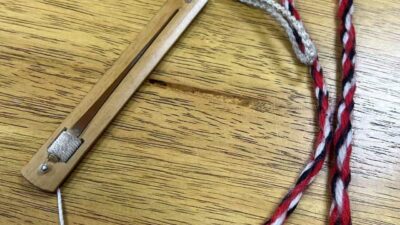
शास्त्र विंग · वाद्य-पट्टिका · Instrument Plate
घोरालियो
Ghoralio
अन्य नामघुरालियो · घोड़यूॅ · बाँस का बाजा (कोटड़ा/उदयपुर क्षेत्र) · Ghuraliyo
परिचय
Overviewघोरालियो राजस्थान के भील-गरासिया-कालबेलिया अंचल का नन्हा बाँस-मुखवाद्य है — पाँच-छह इंच की पट्टी में तराशी एक कँपकँपाती जीभ, सिरे पर बँधा धागा, और अनुनादक के रूप में वादक का अपना मुँह। लोहे के मोरचंग का यह बाँस-चचेरा भाई भव्यता का नहीं, अंतरंगता व लय का साज़ है।
अंग्रेज़ी में पढ़ें · Read in English
The ghoralio is a tiny bamboo mouth-harp of Rajasthan's Bhil-Garasiya-Kalbelia belt — a quivering tongue carved into a five-to-six-inch strip, a thread at its tip, and the player's own mouth as the resonator. This bamboo cousin of the iron morchang is an instrument not of grandeur but of intimacy and rhythm.
वर्गीकरण
ClassificationNatya Shastra Category
घन (Ghana - solid, self-sounding idiophones)
नाट्यशास्त्र के चार वाद्य-वर्गों में घोरालियो 'घन वाद्य' है — अर्थात् स्वयं-ध्वनि (self-sounding) यंत्र, जिसमें न तार होते हैं, न ताँत, न झिल्ली। बाँस की अपनी कटी हुई जीभ (लमेला) के कंपन से ध्वनि उत्पन्न होती है, इसलिए यह मंजीरा-घुँघरू के समान घन-श्रेणी में आता है, भले ही इसे मुँह के पास बजाया जाता है।
Among the four instrument classes of the Natya Shastra, the ghoralio is a 'Ghana' (idiophone) — a self-sounding instrument with neither strings, gut, nor membrane. Sound arises from the vibration of a tongue (lamella) cut from the bamboo itself, placing it in the same idiophone family as the manjira and ghungroo, even though it is sounded at the mouth.
Western Category
Plucked idiophone — jaw harp (also called Jew's harp / mouth harp)
Western Family
Idioglot bamboo jaw harp family (kin to the Assamese gagana, the Filipino kubing and the Vietnamese đàn môi; distinct from the iron, heteroglot morchang and morsing)
Sub Classification
बनावट
PhysicalDescription Hindi
घोरालियो एक छोटा-सा बाँस का मुखवाद्य है। इसे पाँच-छह इंच लंबी बाँस की पतली पट्टी से बनाया जाता है, जिसके एक सिरे से परत छीलकर बीच में एक पतली, लचीली जीभ (जिह्वा/लमेला) काट दी जाती है। इसी जीभ के सिरे पर एक धागा या डोरी बाँधी जाती है। यह इसके लोहे के चचेरे भाई मोरचंग से मूलतः भिन्न है — मोरचंग लोहे का बना (हेटरोग्लॉट) होता है, जबकि घोरालियो पूरी तरह बाँस से एक ही टुकड़े में तराशा (इडियोग्लॉट) होता है।
Description English
The ghoralio is a small bamboo mouth instrument. It is fashioned from a thin bamboo strip about five to six inches long; one side is peeled and a slender, flexible tongue (lamella) is cut into the middle. A thread or cord is tied to the tip of this tongue. It differs fundamentally from its iron cousin, the morchang: the morchang is forged from iron (heteroglot), whereas the ghoralio is carved in a single piece entirely from bamboo (idioglot).
Frame
बाँस की पट्टी (ढाँचा)
Bamboo strip (frame)
Long, narrow flat lath tapering at the ends
लंबी, पतली चपटी पट्टी, सिरों की ओर संकरी होती हुई
Seasoned bamboo (a single split length)
पका हुआ बाँस (एक ही चीरी हुई पट्टी)
12-15 (approx. 5-6 inches)
Tongue
जीभ / जिह्वा (लमेला)
Tongue (lamella)
पट्टी के भीतर से ही काटी गई एक पतली, लचीली पट्टिका जो कंपन करके ध्वनि पैदा करती है। यही घोरालियो का 'सुर-स्रोत' है।
A thin, springy blade cut from within the strip itself; its vibration produces the sound. This is the ghoralio's true 'voice'.
Idioglot — integral to the bamboo frame, not a separate fitted reed
Actuation
डोरी / धागा (व लकड़ी की तीली)
Cord / thread (and a small stick)
जीभ के सिरे से बँधे धागे को झटके से खींचकर व ढील देकर जीभ को कंपन दिया जाता है; कुछ शैलियों में एक छोटी तीली या उँगली से जीभ को झटका जाता है।
The thread tied to the tongue is jerked taut and released to set the tongue vibrating; in some styles the tongue is flicked directly with a small stick or the finger.
The bamboo frame is pressed against the teeth/lips so the mouth becomes the resonator
Resonator
मुख-गुहा (प्राकृतिक अनुनादक)
Mouth cavity (natural resonator)
घोरालियो स्वयं लगभग मौन है — इसकी असली आवाज़ तभी खुलती है जब इसे दाँतों/होंठों से सटाकर बजाया जाए और वादक अपने मुँह की गुहा से अनुरणन को आकार दे।
The ghoralio is nearly silent on its own — its true tone opens only when held to the teeth/lips and the player shapes the resonance with the cavity of the mouth.
Dimensions
लगभग 12-15 सेमी (5-6 इंच)
About 12-15 cm (5-6 inches)
A few grams — light enough to carry tucked in a waistband or pouch
Strings
घोरालियो में कोई तार नहीं होते — ध्वनि केवल बाँस की कटी जीभ के कंपन से आती है।
The ghoralio has no strings — sound comes solely from the vibrating bamboo tongue.
Frets
फ्रेट या सुर-पर्दे नहीं होते; स्वर-परिवर्तन जीभ के मूल कंपन पर नहीं, बल्कि वादक द्वारा मुँह की आकृति व साँस बदलकर उभारे गए अधिस्वरों (overtones) से होता है।
There are no frets; pitch shaping comes not from the tongue's fixed fundamental but from the overtones the player selects by changing mouth shape and breath.
ध्वनि-चरित्र
SoundTonal Character Hindi
घोरालियो की ध्वनि एक गूँजती, भिनभिनाती 'टँय-टँय' है — एक स्थिर मूल स्वर (ड्रोन) जिस पर मुँह की आकृति बदल-बदल कर अधिस्वरों की लहरें तैरती हैं। यह गहरी या भव्य नहीं, बल्कि अंतरंग, लयात्मक और सम्मोहक है — पहाड़ी रातों और पशु-चराई की एकांत का साथी।
Tonal Character English
The ghoralio's sound is a resonant, buzzing 'twang' — a steady fundamental drone over which waves of overtones drift as the mouth changes shape. It is not deep or grand but intimate, rhythmic and hypnotic — a companion of hill nights and the solitude of grazing herds.
Timbre
Reedy, buzzing, harmonic-rich; softer and woodier than the metallic ring of the iron morchang
Range
Effectively a single fixed fundamental with a series of selectable overtones (harmonics) shaped in the mouth — not a full melodic scale
Dynamic Range
Soft and close — an instrument of intimate settings; it does not project far without amplification
Techniques
सुनने का मार्गदर्शन
The Listening Guideघोरालियो को सुनते समय 'धुन' मत ढूँढिए — इसका रस लय और अनुनाद में छिपा है। एक ठहरे हुए मूल स्वर पर, जैसे-जैसे वादक मुँह की आकृति बदलता है, अधिस्वरों की चमक ऊपर-नीचे तैरती है — मानो बाँस फुसफुसाकर बात कर रहा हो। शुद्ध घोरालियो रिकॉर्डिंग दुर्लभ है, इसलिए इसके रिश्तेदार मोरचंग को सुनकर ही इसकी झंकार की कल्पना कीजिए।
अंग्रेज़ी में पढ़ें · Read in English
When listening to the ghoralio, don't hunt for a 'tune' — its magic lies in rhythm and resonance. Notice how, over a single fixed pitch, the shimmer of overtones floats up and down as the mouth changes shape, as if the instrument were whispering speech. Because clean recordings of the ghoralio itself are rare, the nearest way to imagine its sound is to hear its relative, the morchang, and other bamboo jaw harps.
अन्य विवरण
More DetailsTimbre
Reedy, buzzing, harmonic-rich; softer and woodier than the metallic ring of the iron morchang
रोचक तथ्य
Margin Notesबाँस बनाम लोहा — घोरालियो 'इडियोग्लॉट' है — इसकी कंपन करने वाली जीभ उसी बाँस-पट्टी से काटी जाती है। इसके विपरीत मोरचंग 'हेटरोग्लॉट' है — उसकी लोहे की जीभ अलग से जोड़ी जाती है। यही संरचनात्मक अंतर दोनों की ध्वनि-रंगत को भी बदल देता है।
The ghoralio is 'idioglot' — its vibrating tongue is cut from the same bamboo strip. The morchang, by contrast, is 'heteroglot' — its iron tongue is fitted separately. This structural difference also changes the tone-colour of each.
समुदाय जो इसे जीवित रखते हैं — घोरालियो को मुख्यतः भील, गरासिया और कालबेलिया समुदाय बजाते व बनाते आए हैं। कालबेलिया अपनी विश्व-प्रसिद्ध नृत्य-परंपरा (यूनेस्को अमूर्त सांस्कृतिक धरोहर) के लिए जाने जाते हैं, और घोरालियो उनके घन-वाद्यों में गिना जाता है।
The ghoralio has chiefly been played and made by the Bhil, Garasiya and Kalbelia communities. The Kalbelia are famed for their world-renowned dance tradition (a UNESCO intangible cultural heritage), and the ghoralio counts among their idiophones.
जेब में समाने वाला साज़ — कुछ ग्राम भर का, चंद इंच लंबा घोरालियो 'आम आदमी का साज़' है — इसे कमरबंद में खोंसकर या थैली में डालकर कहीं भी ले जाया जा सकता है और चरवाहे की तन्हाई में तुरंत निकालकर बजाया जा सकता है।
Weighing a few grams and only inches long, the ghoralio is 'the common person's instrument' — tucked into a waistband or a pouch, it can be carried anywhere and pulled out to play in a herder's solitude.
नाम की उलझन — इंटरनेट पर 'घोरालियो/घोड़ालियो' खोजने पर अक्सर बाबा रामदेव के 'घोड़लियो' भजन मिल जाते हैं। यह एक लोकगीत-शैली है, वाद्य नहीं — दोनों का आपस में कोई संबंध नहीं।
Searching the internet for 'ghoralio/ghodaliyo' often turns up Baba Ramdev 'ghodaliyo' devotional songs. That is a folk-song genre, not the instrument — the two are unrelated.
सवाल-जवाब
Questions & Answersघोरालियो क्या है?
घोरालियो राजस्थान के आदिवासी अंचल का एक बाँस-निर्मित जॉ हार्प (मुखवाद्य) है। पाँच-छह इंच की बाँस-पट्टी में एक कँपकँपाती जीभ काटी जाती है और सिरे पर धागा बाँधा जाता है; इसे दाँतों से सटाकर, डोरी खींचकर बजाया जाता है। यह भील, गरासिया व कालबेलिया समुदायों का लोक-वाद्य है।
घोरालियो और मोरचंग में क्या अंतर है?
दोनों राजस्थान के जॉ हार्प हैं और एक जैसे बजते हैं, पर सामग्री अलग है। घोरालियो बाँस से एक ही टुकड़े में तराशा जाता है (इडियोग्लॉट), जबकि मोरचंग लोहे का बना होता है और उसकी जीभ अलग से जुड़ी होती है (हेटरोग्लॉट)। मोरचंग की झंकार धातुई होती है, घोरालियो की ध्वनि नरम व लकड़ीली।
घोरालियो कौन बजाता है?
यह मुख्यतः दक्षिणी राजस्थान के भील, गरासिया और कालबेलिया आदिवासी समुदायों का वाद्य है। इसे प्रायः स्वयं बनाया जाता है और चराई, यात्रा, एकांत तथा सामूहिक गीत-नृत्य में बजाया जाता है।
क्या घोरालियो से राग बजाए जा सकते हैं?
नहीं। घोरालियो राग-आधारित वाद्य नहीं है। यह एक स्थिर मूल स्वर बजाता है जिसके अधिस्वरों को वादक मुँह की आकृति बदलकर उभारता है, इसलिए यह लयात्मक व लोक-सुरीले प्रयोगों का यंत्र है, शास्त्रीय राग-विस्तार का नहीं।
घोरालियो को और किन नामों से जाना जाता है?
इसे घुरालियो और घोड़यूॅ भी कहा जाता है, और उदयपुर के कोटड़ा अंचल के आदिवासी इसे सीधे 'बाँस का बाजा' कहते हैं। ध्यान रहे कि 'घोड़लियो' नामक बाबा रामदेव भजन-शैली इस वाद्य से अलग है।
नमूना-पट्टी
The Specimen Table| नाम | घोरालियो · Ghoralio |
|---|---|
| अन्य नाम | घुरालियो · घोड़यूॅ · बाँस का बाजा (कोटड़ा/उदयपुर क्षेत्र) · Ghuraliyo · Ghoralio (bamboo jaw harp) |
| प्रकार | वाद्य · Instruments |
साझा कीजिए · Share this Plate