शास्त्र विंग · वाद्य-पट्टिका · Instrument Plate
घड़ा
Ghara
अन्य नामघड़ा · ਘੜਾ (Gurmukhi) · गड़ा / घड़ा (regional variants) · Gharha
परिचय
Overviewघड़ा पंजाबी लोक-संगीत का मिट्टी से बना ताल-वाद्य है — वही रोज़मर्रा का मटका, जिसे उठाकर, उँगलियों में धातु के छल्ले पहनकर बजाया जाता है। इसकी गहरी 'गुम्म' बास मुँह पर हथेली रखकर साधी जाती है और छल्लों की चमकीली खनक भांगड़ा-गिद्धा की धमक में एक हल्की, नृत्यमय परत जोड़ती है। यह दक्षिण भारत के घटम का उत्तरी लोक-भाई है — कम परिष्कृत, अधिक सुलभ, और उतना ही जीवंत।
अंग्रेज़ी में पढ़ें · Read in English
The ghara is the clay percussion instrument of Punjabi folk music — the very everyday matka, lifted up and played with metal rings on the fingers. Its deep 'gumm' bass is shaped by the palm over the mouth, and the bright jingle of its rings adds a light, danceable layer to the thump of bhangra and giddha. It is the northern folk brother of South India's ghatam — less refined, more accessible, and every bit as alive.
वर्गीकरण
ClassificationNatya Shastra Category
घन (Ghana - solid/struck idiophones)
घड़ा 'घन वाद्य' वर्ग में आता है — अर्थात् एक ठोस, बजाने पर स्वयं कंपित होने वाला वाद्य। इसमें न कोई तार होता है, न कोई खिंची हुई झिल्ली; पकी हुई मिट्टी का घड़ा स्वयं आघात से गूँजता है। यह घटम का पंजाबी लोक-रूप है।
The ghara belongs to the 'Ghana Vadya' (solid/struck idiophone) class of the Natya Shastra — an instrument whose own body vibrates when struck. It has no strings and no stretched membrane; the baked-clay pot itself resonates on impact. It is the Punjabi folk form of the ghatam.
Western Category
Struck idiophone (percussion vessel / clay-pot drum)
Western Family
Vessel percussion — Hornbostel-Sachs percussion pot (related to the South Indian ghatam and the West Asian earthenware pot-drum)
Sub Classification
बनावट
PhysicalDescription Hindi
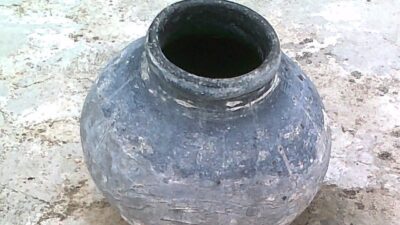
घड़ा एक साधारण पकी हुई मिट्टी का जल-पात्र है जिसे पंजाबी लोक-संगीत में ताल-वाद्य के रूप में बजाया जाता है। इसका गोल फूला हुआ पेट, सँकरा गला और बाहर की ओर मुड़ा हुआ मुँह इसे एक प्राकृतिक अनुनाद-कक्ष बना देते हैं। रोज़मर्रा के मटके को उठाकर, कलाकार उँगलियों में धातु के छल्ले पहनकर इसे बजाता है — यही घड़े की विशेषता है।
Description English
The ghara is an ordinary baked-clay water pot played as a rhythm instrument in Punjabi folk music. Its rounded bulging belly, narrow neck and outward-flaring mouth make it a natural resonating chamber. Lifting an everyday matka, the player performs on it wearing metal rings on the fingers — this is the ghara's signature feature.
Body
Rounded, bulbous pot with a narrow neck and an outward-flaring mouth-rim
गोल, फूला हुआ घड़ा जिसका गला सँकरा और मुँह बाहर की ओर मुड़ा हुआ
Baked terracotta clay (fired earthenware), often the same matka used for storing water
पकी हुई मिट्टी (टेराकोटा) — प्रायः वही मटका जो जल-भंडारण में काम आता है
25-40
The hollow clay belly acts as a single sealed air chamber; the mouth is the sound-hole through which bass tone is projected and modulated
Mouth
मुँह
Mukh (mouth / opening)
घड़े का बाहर की ओर मुड़ा हुआ मुँह मुख्य ध्वनि-छिद्र है। कलाकार हथेली को मुँह पर रखकर या हटाकर गहरी 'गुम्म' (बास) ध्वनि उत्पन्न करता है — ठीक जैसे घटम में किया जाता है।
The ghara's flaring mouth is the primary sound-hole. By cupping or releasing the palm over the mouth, the player produces a deep 'gumm' (bass) tone — exactly as on the ghatam.
Playing Surfaces
घड़े का पूरा शरीर वादन-सतह है। पेट पर खुली थाप ऊँची, खनकती ध्वनि देती है; गले के पास आघात मध्य-स्वर देता है; और मुँह के किनारे पर छल्लों की चोट तीव्र धात्विक 'टिक' पैदा करती है।
The entire pot is a playing surface. Open slaps on the belly give a bright ringing tone; strikes near the neck give a mid-tone; and ringed-finger blows on the mouth-rim produce sharp metallic 'tik' accents.
Rings
छल्ले / अंगूठियाँ
Chhalle (metal finger rings)
घड़े की सबसे विशिष्ट सामग्री — कलाकार दोनों हाथों की उँगलियों (अँगूठा, तर्जनी, मध्यमा, अनामिका) में धातु के छल्ले पहनता है। मिट्टी पर छल्लों के आघात से एक चमकीली, खनकती धात्विक ध्वनि उत्पन्न होती है जो नंगी उँगलियों की मंद थाप से बिलकुल अलग है।
The ghara's most distinctive accessory — the player wears metal rings on the fingers (thumb, index, middle, ring) of both hands. Ring-strikes on the clay create a bright, jingling metallic sound quite unlike the soft thud of bare fingertips. Players vary in how many rings and fingers they use.
Tuning
घड़ा 'बेसुरा' (अ-सुरबद्ध) वाद्य नहीं, बल्कि एक ताल-वाद्य है — इसका मूल स्वर घड़े के आकार से तय होता है। बड़ा घड़ा गहरी ध्वनि, छोटा घड़ा ऊँची ध्वनि देता है। स्वर बदलने का एकमात्र उपाय है मुँह पर हथेली का दबाव।
The ghara is a rhythm instrument rather than a melodic one — its base pitch is set by the pot's size (a larger pot sounds deeper, a smaller one higher). The only way to bend the tone is by pressure of the palm over the mouth.
Decoration
प्रदर्शन के लिए बने घड़े प्रायः सादे टेराकोटा रंग के होते हैं; कभी-कभी उन पर लोक-चित्रकारी या रंग-रोगन किया जाता है। मंच पर इसे कपड़े या रस्सी से गले में लटकाया या गोद में रखा जाता है।
Performance gharas are usually plain terracotta; sometimes decorated with folk painting or lacquer. On stage it is slung by cloth or cord or held in the lap.
ध्वनि-चरित्र
SoundTonal Character Hindi
घड़े की ध्वनि मृदु, गोल और मिट्टी-सी गर्म होती है — एक गहरी 'गुम्म' बास और उस पर छल्लों की चमकीली खनक का मेल। यह ढोल की गड़गड़ाहट को हल्का, नृत्यमय रंग देती है और भांगड़ा की धमक में एक झिलमिलाती परत जोड़ती है।
Tonal Character English
The ghara's tone is soft, round and earthy-warm — a deep 'gumm' bass overlaid with the bright jingle of the rings. It lends a light, danceable colour to the dhol's thunder and adds a shimmering layer to the pulse of bhangra.
Timbre
Warm, woody-clay resonance with a metallic ring overlay; drier and higher-pitched than the larger Carnatic ghatam
Range
Untuned percussion; a two-to-three-tone rhythmic palette (bass / mid / ring-accent) rather than a melodic range
Dynamic Range
Moderate — from soft finger patter to sharp ringing accents; naturally acoustic, blends under the dhol
Techniques
सुनने का मार्गदर्शन
The Listening Guideघड़ा सुनना हो तो भांगड़ा की किसी लोक-रिकॉर्डिंग में ढोल की गहरी गड़गड़ाहट के ऊपर उस हल्की, चमकीली, खनकती परत पर कान लगाइए — वही घड़ा है। सुनिए कैसे पेट की खुली थाप, मुँह की 'गुम्म' बास और छल्लों की तीव्र 'टिक' मिलकर एक नाचती हुई लय बुनते हैं। यह किसी दरबार का गंभीर वाद्य नहीं, बल्कि खेत और आँगन का उत्सवी साथी है।
अंग्रेज़ी में पढ़ें · Read in English
When you listen to the ghara, seek out the light, jingling layer above the dhol's thunder — that is the ghara. Notice how the open belly-slap, the deep mouth-bass and the sharp ring-'tik' weave together into a danceable rhythm. Begin with a bhangra folk recording, where the ghara seems to converse with the dhol.
अन्य विवरण
More Details- Tunable
- Description English
- The ghara is a rhythm instrument rather than a melodic one — its base pitch is set by the pot's size (a larger pot sounds deeper, a smaller one higher). The only way to bend the tone is by pressure of the palm over the mouth.
- Description
- घड़ा 'बेसुरा' (अ-सुरबद्ध) वाद्य नहीं, बल्कि एक ताल-वाद्य है — इसका मूल स्वर घड़े के आकार से तय होता है। बड़ा घड़ा गहरी ध्वनि, छोटा घड़ा ऊँची ध्वनि देता है। स्वर बदलने का एकमात्र उपाय है मुँह पर हथेली का दबाव।
Tuning
Timbre
Warm, woody-clay resonance with a metallic ring overlay; drier and higher-pitched than the larger Carnatic ghatam
रोचक तथ्य
Margin Notesघर की वस्तु से वाद्य — घड़ा शायद दुनिया के सबसे सुलभ वाद्यों में से एक है — किसी विशेष निर्माण की आवश्यकता नहीं। पंजाब के गाँव में हर घर में मौजूद पानी का मटका ही उठाकर, उँगलियों में छल्ले पहनकर, ताल-वाद्य बन जाता है।
The ghara is perhaps one of the world's most accessible instruments — no special making required. In a Punjab village, the very water-matka present in every home is lifted up, rings put on the fingers, and it becomes a percussion instrument.
छल्लों की खनक — घड़े की विशिष्ट धात्विक ध्वनि नंगी उँगलियों से नहीं, बल्कि उँगलियों में पहने धातु के छल्लों से आती है। कलाकार अपनी शैली के अनुसार छल्लों की संख्या और उँगलियाँ चुनता है, इसलिए हर वादक की खनक थोड़ी अलग होती है।
The ghara's distinctive metallic sound comes not from bare fingers but from the metal rings worn on them. Players choose the number of rings and fingers to suit their style, so every performer's jingle is slightly different.
उत्तर का लोक-घटम — जहाँ दक्षिण भारत का घटम शास्त्रीय कर्नाटक संगीत की परिष्कृत संगत करता है, वहीं उसका पंजाबी लोक-भाई घड़ा भांगड़ा और गिद्धा की खुली, नृत्यमय ऊर्जा को साथ देता है। दोनों एक ही मिट्टी की परंपरा के दो चेहरे हैं।
Where South India's ghatam accompanies refined classical Carnatic music, its Punjabi folk brother the ghara supports the open, danceable energy of bhangra and giddha. Both are two faces of one clay tradition.
पोर्टेबल और सस्ता — घड़ा दक्षिणी घटम से छोटा और हल्का होता है, जिससे इसे नाचते-गाते ले जाना आसान है। इसकी सस्ती, टूटने वाली मिट्टी की देह ही इसकी लोकप्रियता का कारण है — टूट जाए तो नया मटका ही घड़ा बन जाता है।
The ghara is smaller and lighter than the southern ghatam, making it easy to carry while dancing and singing. Its cheap, breakable clay body is the very reason for its popularity — if it breaks, a fresh matka simply becomes the new ghara.
सवाल-जवाब
Questions & Answersघड़ा क्या है?
घड़ा पकी हुई मिट्टी का एक ताल-वाद्य है — वही रोज़मर्रा का मटका जिसे उँगलियों में धातु के छल्ले पहनकर बजाया जाता है। यह पंजाबी लोक-संगीत, विशेषकर भांगड़ा और गिद्धा में प्रयोग होता है और दक्षिण भारत के घटम का लोक-रूप है।
घड़ा कैसे बजाया जाता है?
कलाकार दोनों हाथों की उँगलियों में धातु के छल्ले पहनता है और घड़े के पेट, गले तथा मुँह के किनारे पर आघात करता है। मुँह पर हथेली रखकर या हटाकर गहरी बास ध्वनि साधी जाती है, जबकि छल्लों की चोट चमकीली धात्विक खनक पैदा करती है।
घड़ा और घटम में क्या अंतर है?
दोनों पकी मिट्टी के घड़े हैं और एक ही परिवार के हैं। घटम दक्षिण भारत के शास्त्रीय कर्नाटक संगीत का सुरबद्ध, परिष्कृत वाद्य है, जबकि घड़ा पंजाबी लोक-संगीत का सहज रूप है, जो प्रायः धातु के छल्लों से बजाया जाता है और घटम से छोटा तथा अधिक पोर्टेबल होता है।
घड़ा किस संगीत में प्रयोग होता है?
घड़ा मुख्यतः पंजाबी लोक-संगीत में प्रयोग होता है — भांगड़ा (पुरुषों का फ़सल-नृत्य), गिद्धा (स्त्रियों का लोक-नृत्य), वैसाखी के फ़सल-गीत, विवाह और मेले। यह ढोल, चिमटा, तुम्बी और अलगोज़े के साथ बजता है।
नमूना-पट्टी
The Specimen Table| नाम | घड़ा · Ghara |
|---|---|
| अन्य नाम | घड़ा · ਘੜਾ (Gurmukhi) · गड़ा / घड़ा (regional variants) · Gharha · Ghada · Ghaṛā (IAST) |
| प्रकार | वाद्य · Instruments |
साझा कीजिए · Share this Plate