शास्त्र विंग · वाद्य-पट्टिका · Instrument Plate
तविल
Thavil
अन्य नामतविल · தவில் (Tavil, Tamil) · തവിൽ (Malayalam) · Tavil (also spelled Thavil / Dhavil)
परिचय
Overviewतविल तमिलनाडु का द्विमुखी, पीपे जैसा ढोल है — कटहल की लकड़ी से तराशा, एक ओर उँगली-टोपियों से चटख़ती तीखी थाप और दूसरी ओर छड़ी की गहरी गड़गड़ाहट। नादस्वरम् के साथ 'पेरिय मेलम' की जोड़ी में यह मंदिर-उत्सव, विवाह और रथयात्रा की मंगल-लय रचता है, और वलयपट्टी सुब्रमण्यम व हरिद्वारमंगलम पालनिवेल जैसे उस्तादों ने इसे एकल-मंच तक पहुँचाया।
अंग्रेज़ी में पढ़ें · Read in English
The thavil is Tamil Nadu's double-headed, barrel-shaped drum — carved from jackfruit wood, with a bright, cracking treble struck by thimble-capped fingers on one side and a deep boom of the stick on the other. Paired with the nadaswaram in the 'periya melam', it weaves the auspicious rhythm of temple festivals, weddings, and chariot processions, and masters like Valayapatti Subramaniam and Haridwaramangalam Palanivel carried it onto the solo stage.
वर्गीकरण
ClassificationNatya Shastra Category
अवनद्ध (Avanaddha - membranophone / drum instruments)
नाट्यशास्त्र के अवनद्ध वर्ग में वे वाद्य आते हैं जिनके मुख पर चमड़े की झिल्ली मढ़ी होती है और जिन्हें आघात से बजाया जाता है। तविल एक द्विमुखी (दो मुख वाले) पीपे के आकार का ढोल है, अतः यह पूर्णतः अवनद्ध वर्ग का वाद्य है।
In the Avanaddha (membranophone) category of the Natya Shastra fall instruments whose mouths are covered with a stretched animal-skin membrane and which are sounded by striking. The thavil is a double-headed, barrel-shaped drum and therefore belongs squarely to the Avanaddha class.
Western Category
Membranophone (double-headed barrel drum)
Western Family
Barrel-drum family — comparable in shell construction to the mridangam and dhol, but distinguished by its unique playing method: hardened finger-thimbles on one head and a short curved stick on the other
Sub Classification
बनावट
PhysicalDescription Hindi
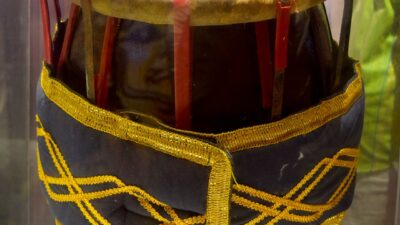
तविल एक द्विमुखी, पीपे (बैरल) के आकार का ढोल है जिसे कटहल की एक ठोस लकड़ी को खोखला करके तराशा जाता है। इसके दोनों सिरों पर अलग-अलग मोटाई की चमड़े की झिल्लियाँ मढ़ी होती हैं — एक ऊँचे स्वर वाली (तार) और दूसरी गहरे स्वर वाली (बास)। बजाने वाला इसे कपड़े की पट्टी से कंधे पर या कमर पर बाँधकर, बाएँ जाँघ के सहारे क्षैतिज रखता है। एक हाथ की उँगलियों पर कठोर टोपियाँ (थिम्बल) चढ़ी होती हैं और दूसरे हाथ में एक छोटी मुड़ी हुई छड़ी होती है।
Description English
The thavil is a double-headed, barrel-shaped drum carved by hollowing out a single solid block of jackfruit wood. Its two ends are covered with animal-skin membranes of differing thickness — one high-pitched (treble) and one deep-pitched (bass). The player slings it across the shoulder or waist with a cloth strap, resting it horizontally against the left thigh; the fingers of one hand are fitted with hardened caps (thimbles) while the other hand wields a short curved stick.
Shell
Bulging barrel / cylindrical drum, wider at the centre and tapering slightly toward the two rims
उभरे हुए पीपे (बैरल) जैसा — बीच में चौड़ा, दोनों किनारों की ओर थोड़ा पतला
Single hollowed block of jackfruit wood (Artocarpus heterophyllus, Tamil: palā maram)
कटहल की एक ठोस लकड़ी (पला मरम) को खोखला करके बनाया गया
35-45 (approximate; varies by regional style)
The single wooden shell acts as the resonating chamber, projecting the loud, penetrating sound needed for open-air temple processions
Heads
दोनों मुख नादस्वरम् की श्रुति (आधार स्वर) से मिलाए जाते हैं, ताकि ढोल स्वर-संगति में रहे।
Both heads are tuned to the sruti (tonic) of the accompanying nadaswaram so the drum stays in tonal agreement with the ensemble.
Thimbles
उँगली-टोपियाँ (सोरु / कठोर लेप)
Finger-thimbles (soru)
एक हाथ की उँगलियों पर चावल के आटे/चूने के मिश्रण से बनी कठोर टोपियाँ चढ़ाई जाती हैं जो सूखकर पत्थर जैसी सख़्त हो जाती हैं। इन्हीं से तविल की तीखी, चटख़दार ध्वनि निकलती है।
Hardened caps — traditionally moulded from a paste of rice flour and lime that sets rock-hard — are fitted over the fingers of one hand. These thimbles give the thavil its characteristic sharp, cracking attack.
Stick
छड़ी (कुच्ची)
Stick (kucci)
एक छोटी, हल्की मुड़ी हुई लकड़ी की छड़ी, जिससे गहरे स्वर वाले (बास) मुख पर आघात कर बलदार, गूँजती हुई थाप उत्पन्न की जाती है।
A short, lightly curved wooden stick used to strike the bass head, producing powerful, resonant beats.
Lacing And Tuning
कसाव (चमड़े की डोरियाँ व लकड़ी के छल्ले)
Lacing and tuning (leather braces and wooden hoops)
दोनों झिल्लियाँ लकड़ी के छल्लों पर मढ़कर चमड़े या रस्सी की डोरियों से पूरे पीपे की लंबाई में कसी जाती हैं। छल्लों को ठोंककर और डोरियों का तनाव बदलकर स्वर ऊँचा-नीचा किया जाता है।
Each membrane is mounted on a wooden hoop and laced the full length of the barrel with leather or rope braces. Pitch is raised or lowered by tapping the hoops and adjusting the tension of the braces.
Carrying
वहन-पट्टी
Carrying strap
प्रदर्शन में तविल को कपड़े की पट्टी से कंधे/कमर पर बाँधा जाता है, ताकि मंदिर के जुलूस में चलते-चलते भी बजाया जा सके; बैठकर संगत करते समय इसे जाँघ या गोद के सहारे रखा जाता है।
In performance the thavil is strapped over the shoulder or waist so it can be played while walking in a temple procession; in seated concert accompaniment it rests against the thigh or lap.
ध्वनि-चरित्र
SoundTonal Character Hindi
तविल की ध्वनि तीव्र, भेदक और उत्सवमयी है — इतनी बुलंद कि खुले मैदान और मंदिर के जुलूस में बिना किसी ध्वनि-विस्तारक के दूर तक गूँजती है। तार मुख की चटख़ थापें और बास मुख की गहरी गड़गड़ाहट मिलकर एक जोशीली, मंगलमय लय रचती हैं।
Tonal Character English
The thavil's tone is loud, penetrating, and festive — powerful enough to carry across open grounds and temple processions with no amplification. The crisp cracks of the treble head and the deep rumble of the bass head together weave a vigorous, auspicious rhythm.
Timbre
Bright, sharp treble (from the thimbled fingers) over a booming, resonant bass; overall brilliant and cutting
Range
Two tuned pitches (treble head and bass head) set to the nadaswaram's tonic; not a melodic instrument but capable of wide dynamic and rhythmic nuance
Dynamic Range
Very wide and generally very loud — built for open-air projection, yet capable of soft, filigree rolls in concert settings
Techniques
सुनने का मार्गदर्शन
The Listening Guideतविल को समझने के लिए पहले नादस्वरम्-तविल की जोड़ी साथ सुनिए — देखिए कैसे तविल की चटख़ थाप नादस्वरम् के सुरों को लय देती है। फिर मंदिर की 'मल्लारि' सुनिए, जिसकी चाल पैरों से मिलती है, और अंत में एक 'तनि आवर्तनम्' — तभी इस वाद्य की गणित और गति खुलकर सामने आती है।
अंग्रेज़ी में पढ़ें · Read in English
To appreciate the thavil, first hear the nadaswaram-thavil pair together — notice how the thavil's crisp strokes give a rhythmic thread to the nadaswaram's melody. Then listen to a temple 'mallari', whose rhythm matches the tread of walking feet. Finally, hear a 'thani avartanam' (solo), where the player alone unfolds mathematics and speed within the tala — only then does the instrument's true craft reveal itself.
अन्य विवरण
More DetailsTimbre
Bright, sharp treble (from the thimbled fingers) over a booming, resonant bass; overall brilliant and cutting
रोचक तथ्य
Margin Notesपेरिय मेलम — बड़ा वाद्य-वृंद — नादस्वरम्, तविल, ओट्टु (द्रोण-सुर देने वाली दूसरी शहनाई) और ताल — इन्हें मिलाकर 'पेरिय मेलम' कहते हैं। इसमें तविल लय-हृदय की भूमिका निभाता है, जबकि मृदंगम-प्रधान वाद्य-वृंद को 'चिन्न मेलम' (छोटा मेलम) कहा जाता है।
The nadaswaram, thavil, ottu (a second drone-reed), and talam together form the 'periya melam' (big ensemble), in which the thavil plays the rhythmic heart, while the mridangam-led ensemble is called the 'chinna melam' (small ensemble).
तंजावुर बनाम चेन्नई शैली — तविल-वादन में मुख्यतः दो शैली-परंपराएँ मानी जाती हैं — तंजावुर (कावेरी डेल्टा) शैली और चेन्नई शैली। इनकी वादन-तकनीक, थिम्बल का प्रयोग और लयकारी की बारीकियाँ एक-दूसरे से भिन्न होती हैं।
Thavil playing is broadly held to have two stylistic traditions — the Thanjavur (Kaveri delta) style and the Chennai style — which differ in playing technique, use of thimbles, and rhythmic detail.
मल्लारि — चलती-फिरती लय — मंदिर के जुलूस में जब देव-मूर्ति को घुमाया जाता है, तब नादस्वरम् 'मल्लारि' रचना बजाता है और तविल उसकी लय को चलते हुए कदमों से मिलाता है। यह चलती-फिरती संगत तविल की सबसे विशिष्ट भूमिकाओं में से एक है।
During temple processions when the deity is carried out, the nadaswaram plays the 'mallari' composition and the thavil matches its rhythm to the marching footsteps. This moving accompaniment is one of the thavil's most distinctive roles.
सवाल-जवाब
Questions & Answersतविल क्या है?
तविल तमिलनाडु का एक द्विमुखी, पीपे के आकार का ढोल है, जिसे कटहल की लकड़ी से तराशा जाता है। इसे एक हाथ की उँगलियों पर कठोर टोपियाँ पहनकर और दूसरे हाथ में छोटी छड़ी से बजाया जाता है। यह नादस्वरम् का प्रमुख लय-साथी और तमिल मंदिर-उत्सवों व विवाहों का मंगल वाद्य है।
तविल कैसे बजाया जाता है?
तविल के दो मुख होते हैं — एक ऊँचे स्वर वाला और एक गहरे स्वर वाला। एक हाथ की उँगलियों पर चावल-आटे/चूने की कठोर टोपियाँ चढ़ाकर तार मुख पर तीखी थापें दी जाती हैं, जबकि दूसरे हाथ में पकड़ी छोटी छड़ी से बास मुख पर गहरी थाप उत्पन्न की जाती है।
'पेरिय मेलम' क्या है?
'पेरिय मेलम' (बड़ा वाद्य-वृंद) नादस्वरम्, तविल, ओट्टु (द्रोण-रीड) और ताल का पारंपरिक तमिल वाद्य-वृंद है। इसमें तविल लय-हृदय की भूमिका निभाता है। इसकी तुलना में मृदंगम-प्रधान गायन-वृंद को 'चिन्न मेलम' कहा जाता है।
क्या तविल हिंदी फ़िल्म-संगीत में प्रयुक्त होता है?
तविल मूलतः दक्षिण भारतीय वाद्य है और दक्षिण भारतीय (तमिल-तेलुगु) फ़िल्म-संगीत में कहीं अधिक प्रचलित है। मुख्यधारा के हिंदी सिनेमा में यह विरल है, पर दक्षिण-भारतीय परिवेश, मंदिर या विवाह के दृश्यों में इसकी मंगल-ध्वनि कभी-कभी सुनाई देती है।
तविल के कुछ प्रसिद्ध विद्वान कौन हैं?
प्रसिद्ध तविल-विद्वानों में वलयपट्टी ए. आर. सुब्रमण्यम (पद्मश्री 2017), हरिद्वारमंगलम ए. के. पालनिवेल और नीडामंगलम मीनाक्षीसुंदरम पिल्लै शामिल हैं, जिन्होंने तविल को मंदिर-प्रांगण से कच्चेरी और अंतरराष्ट्रीय मंच तक पहुँचाया।
नमूना-पट्टी
The Specimen Table| नाम | तविल · Thavil |
|---|---|
| अन्य नाम | तविल · தவில் (Tavil, Tamil) · തവിൽ (Malayalam) · Tavil (also spelled Thavil / Dhavil) |
| प्रकार | वाद्य · Instruments |
साझा कीजिए · Share this Plate